Dallas Cowboys’ $629M Profit Is Jerry Jones’ Real Scoreboard
$629 million in operating profit. No Super Bowl since 1995. Jerry Jones built a cash machine so good the football team became almost beside the point.
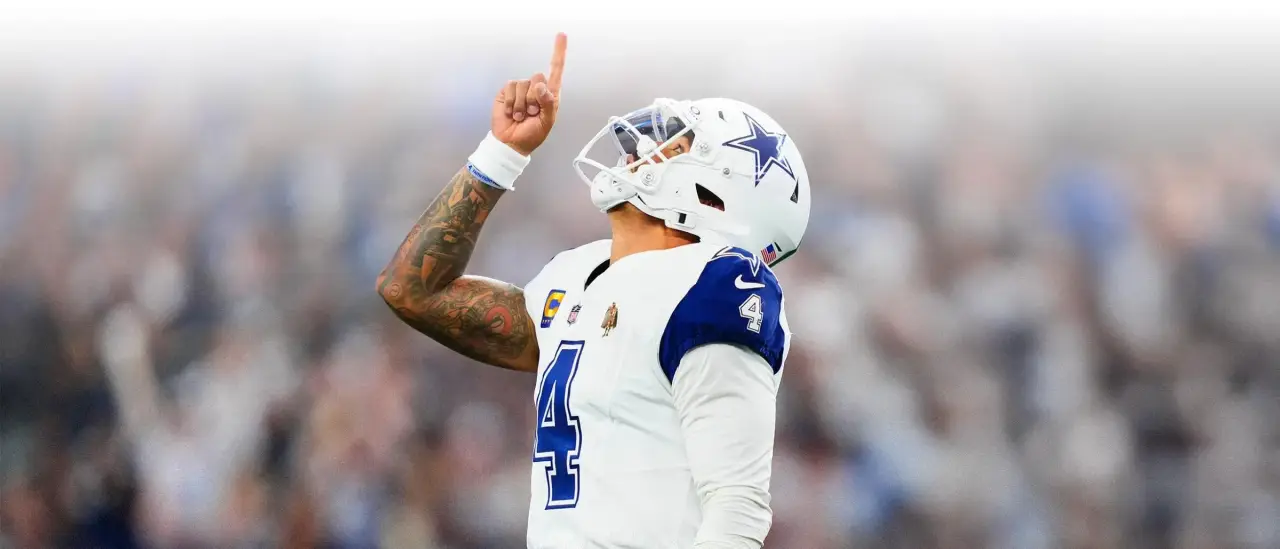
The Dallas Cowboys made $629 million in operating profit in their most recent reported season. That is more profit than 16 NFL teams made in total revenue.
And before Cowboys fans start throwing beer cans at me: that is not a compliment about football. It is a verdict on what Jerry Jones has actually built.
Dallas is worth an estimated $13 billion, while Dak Prescott and CeeDee Lamb carry the on-field product into another season with the usual Super Bowl-or-bust soundtrack playing in the background. But the business has already won. By a mile. Forbes estimates the Cowboys produced $1.2 billion in revenue in 2024, with roughly $629 million in operating income. The next-most-profitable sports team, the Golden State Warriors, came in at $409 million.
That is a $220 million gap between first and second in a business where everyone tells you competition is everything.
It isn’t. Not in the way fans think.
Jerry Jones built a platform, not just a team
Most sporting clubs are still run emotionally. Owners want trophies, fans want heroes, coaches want another striker or edge rusher, and everyone finds a tidy story for why spending more is the answer.
Jones understood something colder: an elite sports franchise is a media, property, hospitality and licensing platform with a football team at the centre of it.
The Cowboys have not won a Super Bowl since the 1995 season. That is three decades of football frustration. Yet the franchise has become the most valuable in world sport, and it is still widening the financial gap.
The lazy explanation is brand. “America’s Team.” The star on the helmet. Generations of fans. All true, but incomplete. Plenty of famous brands turn nostalgia into a museum shop and call it strategy.
Dallas monetised its identity across every possible surface.
AT&T Stadium is not merely where Prescott throws passes to Lamb. It is a year-round commercial asset: premium seating, sponsorship inventory, concerts, events and a physical billboard for corporate America. The Cowboys also operate in a league with national revenue sharing powerful enough to give every club a massive base before it sells one local sponsorship or one suite.
Forbes estimates every NFL club received about $440 million from the league office in the 2024 season, largely from national media, sponsorship, merchandise and pooled ticket revenue. Strip that shared money from Dallas’s $1.2 billion revenue, and the Cowboys still generated nearly $800 million locally.
That is the bit worth paying attention to.
Shared revenue makes you safe. Local revenue makes you formidable.
The NFL has created the cleanest profit machine in sport
Sports owners love talking about passion. Investors should look at the plumbing.
The NFL’s real trick is not that it has 32 popular teams. It is that it has built an economic system designed to protect the downside while leaving room for the best operators to run away on the upside.
The salary cap puts boundaries around player costs. National media rights create enormous centrally shared income. Revenue sharing stops weak markets from becoming permanent basket cases. Scarcity does the rest: there are only 32 NFL control stakes, and ordinary rich people cannot simply start another Cowboys.
That is why Forbes estimated no NFL team produced operating income below $21 million in 2024, with the league average at $127 million. In a normal business, that sort of floor would make investors very happy indeed.
The economics explain the crazy prices paid for minority stakes. They also explain why team valuations keep jumping even when the football is average, the coach is under pressure, or the fan base is furious on talkback radio.
The product is less volatile than it looks from the stands.
On a Sunday, the Cowboys can lose. As an enterprise, they keep collecting.
The $629 million number has a catch
Now for the part too many people miss when they see a sports-profit ranking: operating income is not cash magically falling into Jerry Jones’s pocket.
Forbes’ measure is EBITDA: earnings before interest, taxes, depreciation and amortisation. It is a useful gauge of operating performance, but it is not the same thing as net profit or free cash flow.
And Forbes’ 2026 profitability ranking uses the latest seasons with available data: 2024 for NFL, MLB and MLS, 2024-25 for NBA and NHL, and 2023-24 for European football. So this is not a live score from yesterday afternoon. It is an estimate of underlying earning power from the latest comparable financial periods.
That distinction matters because sports finance is full of blokes waving around valuation figures as if they are bank balances.
A $13 billion valuation does not mean somebody is wiring Jones $13 billion tomorrow. A $629 million operating-income estimate does not mean every dollar is distributable. Stadium costs, capital expenditure, debt, tax and reinvestment are all real.
But don’t use those caveats as an excuse to ignore the signal. The signal is enormous.
Dallas has created a business that generates a level of operating profit most global companies would envy — from a league team playing fewer than 20 regular-season games.
The Warriors, Rams and Mercedes prove this is bigger than football
The Cowboys are the outlier, but they are not alone in proving that sports has become a serious operating business.
The Golden State Warriors generated an estimated $409 million in operating income and are valued at $11 billion. The Edmonton Oilers and Los Angeles Rams tied at $244 million. Mercedes’ Formula 1 team made an estimated $227 million, a reminder that the F1 cost cap has done more than tighten racing — it has made the teams easier to run as businesses.
Then there is Stan Kroenke. He owns the Rams and Arsenal. Their combined operating income was estimated at $417 million — a huge number by any sane standard — and still more than $200 million behind Dallas alone.
This is what scale looks like when it is paired with scarce assets, a hard spending framework and global media demand.
The NBA deserves a close watch, too. Forbes puts average NBA operating income at $113 million in the most recent period, before the full effect of the league’s new 11-year, $76 billion media package with ESPN, NBC and Amazon. That deal does not guarantee every franchise becomes a Cowboys-level money printer. But it gives owners a much fatter floor from which to operate.
Smart investors don’t just ask who is winning today. They ask which industry’s economics are about to improve before the income statement catches up.
The overlooked lesson: winning is valuable, but control is priceless
Here is the contrarian bit: sporting success is not the highest-return asset in sport.
Control of the commercial engine is.
Winning helps ticket demand, merchandise sales, sponsorship interest and media relevance. Of course it does. But championships are lumpy, uncertain and dependent on injuries, drafts, referees, competitors and human beings doing human things under pressure.
Owning the stadium economics, the customer data, the premium inventory, the local partnerships and the brand relationship is more durable.
That is why some clubs can be financially brilliant while making supporters miserable. It is also why a team can win consistently and still leave money on the table if it rents its home, underprices premium experiences or treats sponsorship as a logo on a jersey rather than a commercial product.
The Cowboys’ weakness as a football operation and strength as a commercial operation are not unrelated. A franchise that relentlessly protects the business can survive sporting mediocrity far longer than fans think it should.
That may be annoying. It is also useful.
You do not need to admire every outcome to understand the system producing it.
What this means for you
If you run a business, take the Cowboys lesson without copying the chest-beating.
First, build recurring revenue before heroic revenue. The NFL’s shared media money is recurring. Dallas’s sponsorship and premium-seat machine is recurring. Your version might be contracts, subscriptions, retainers, maintenance plans or repeat purchasing. One-off sales are exciting; predictable revenue lets you sleep.
Second, own the scarce part of your value chain. Jones does not merely sell football tickets. The Cowboys control a globally recognisable brand and a stadium ecosystem. Ask yourself what asset customers cannot easily replace: distribution, data, community, intellectual property, a location, a trusted brand or a relationship. Own more of that.
Third, separate applause from economics. Fans judge Dallas by Lombardi Trophies. The market judges it by earnings power and scarcity. In your business, plenty of things that get applause do not create value. Track the boring numbers: margin, retention, customer acquisition payback, cash conversion and pricing power.
Finally, do not confuse size with quality. The Cowboys’ $629 million is impressive because of the system behind it, not because the number looks sexy on a headline. Big revenue with no margin is a hobby wearing a suit. A modest business with loyal customers, controlled costs and recurring cash flow is often the better asset.
Jerry Jones has spent 30 years proving that the loudest scoreboard is not always inside the stadium.
That should make every founder and investor slightly uncomfortable. Good. The uncomfortable truth is usually where the money is.