Dallas Stars Lost Double-Digit Millions After Victory+ Paid Just 2%
The Dallas Stars got 2% of the money Victory+ owed them—and lost double-digit millions. “Free” local sports was never free; somebody was always meant to wear the bill.
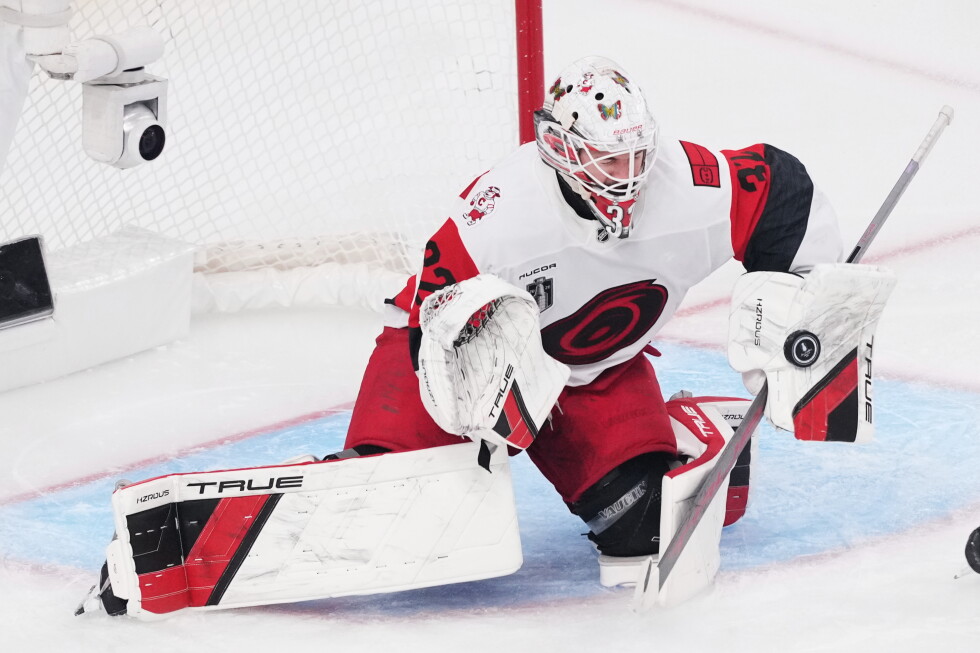
The Dallas Stars received just 2% of the money Victory+ owed them over the past year. That is not a streaming hiccup. That is a commercial car crash wearing a nice app interface.
Brad Alberts, the Stars’ president and CEO, says the collapse cost the club double-digit millions of dollars. The team then moved its local broadcasts to Amazon Prime Video for the 2026–27 NHL season. Fans will understandably focus on whether they can still watch Jason Robertson, Mikko Rantanen and Miro Heiskanen without stuffing around with another app.
I’m focused on the more useful lesson: a business model that promises customers something for nothing had better have a brutally credible answer to one question—who pays, when, and from what cash flow?
Victory+ did not.
The deal that turned into a receivable
The Dallas Stars were not merely a customer of Victory+. They were an early partner and an investor in the local-sports streaming business. Victory+ launched into a market desperate for an alternative after the old regional sports network model started falling apart.
For years, regional sports networks had a lovely little arrangement: cable bundles forced plenty of households to subsidise local sport whether they watched it or not. Cord-cutting wrecked that. Suddenly, teams in the NHL, NBA and MLB needed a way to get local games to fans and replace a revenue stream that had once delivered serious money.
Victory+ pitched an appealing answer. Make team channels free to fans in the local market. Pay for the product through advertising. Build direct relationships with viewers instead of handing everything to a cable distributor. Add FAST channels and extra programming around the live games. On a PowerPoint slide, it makes perfect sense.
The Stars, Anaheim Ducks, Texas Rangers, Minnesota Lynx, Atlanta Dream and several NWSL clubs were among the teams drawn into the orbit. The theory was obvious: if fans can watch easily and free, reach grows; if reach grows, advertisers pay; if advertisers pay, clubs receive their rights fees.
The issue is that rights fees are not theoretical. They are contractual cash obligations. Players, production crews, arenas, sales teams and broadcasters do not accept “engagement” as payment.
By early September, Victory+ had ceased operations after a rapid team exodus. Alberts said the Stars had received only 2% of what they were owed for the prior season. He blamed financial mismanagement and said owner Tom Gaglardi declined to keep pouring money into a rescue effort.
Correct call. There is a point where loyalty to a strategy becomes a refusal to read the numbers.
Amazon Prime Video is not the saviour. It is the adult in the room.
From this season, Amazon Prime Video will carry the Stars’ non-nationally televised games for in-market fans across Texas, Oklahoma, Louisiana and Arkansas. There is no extra charge beyond an Amazon Prime membership. Prime Video is also becoming the exclusive local streaming home for the Carolina Hurricanes, Anaheim Ducks, Columbus Blue Jackets, Minnesota Wild and St. Louis Blues.
That is a significant move, but let’s not get misty-eyed about it.
Amazon did not step in because local hockey suddenly became easy money. Amazon stepped in because it already has the infrastructure, consumer relationship, billing system, video technology, advertising operation and distribution footprint. It can make a local sports package more useful to its broader Prime ecosystem, even if the standalone economics are not spectacular on day one.
That is the difference.
Victory+ needed local sports to work as the business. Amazon can use local sports to make Prime more valuable as a bundle. One company needed the match to pay for the stadium. The other can afford to own the stadium, the car park and the road leading to it.
This is why founders get themselves into trouble when they confuse a good product with a durable business. Victory+ reportedly had downloads, viewership growth and an increasingly impressive client list. None of that matters if your collection process is rubbish and your obligations outrun your cash.
Downloads do not pay rights fees. Revenue does. Better still, cash collected does.
The Stars have changed homes three times in just over two years
The Dallas Stars left the failing Bally Sports regional sports network setup in July 2024, moved to Victory+, and now land on Prime Video. That is three local broadcast homes in a little more than two years.
For a fan, it is annoying. For a club, it is a warning about operational drag.
Every platform change creates friction: new customer-support problems, new advertising sales processes, new data arrangements, new production workflows and another round of explaining access to sponsors and season-ticket holders. Even if the hockey remains excellent, instability makes it harder to turn attention into dependable commercial revenue.
The Stars’ on-ice product is not the issue. The business has stars to sell. Robertson is a marquee scorer, Rantanen is one of hockey’s recognisable elite names, and Heiskanen is exactly the sort of player a serious local sports product should be built around.
But sport is not sold one shift at a time. It is sold through habit. Fans need to know where the game is, how much it costs, whether it works on the telly in the lounge room, and whether they will still find it there next month.
Alberts reportedly hopes Prime Video will be the Stars’ home for the next two, three or four years. The phrasing tells you plenty. Stability is now part of the product.
The overlooked problem: free is often the most expensive price
Here is the contrarian bit: I do not think the lesson is that ad-supported local sports is impossible.
The lesson is that free is a pricing decision, not a business model.
“Free for the fan” can work beautifully. But it requires someone with a balance sheet, sales capability and distribution muscle to underwrite the time between spending money and collecting it. It also requires management that treats rights payments as sacred, not optional.
The instinct in media is to chase the biggest possible audience. Fair enough. But an audience is not automatically an asset. It becomes one only when you have a credible mechanism to monetise it repeatedly and a disciplined system for getting paid.
This is where operators should pay attention. The most dangerous businesses are often not the obviously stupid ones. They are the businesses built around a seductive half-truth:
- Customers love free access. - Advertisers want engaged audiences. - Teams want direct-to-consumer distribution. - Technology makes delivery cheaper.
All true.
Yet the missing line is the only one that matters: does the cash arrive before the company runs out of it?
Victory+ apparently had enough promise to attract major teams and investors. It still failed at the essential job of paying partners. That is not a marketing failure. It is not a product failure. It is a governance and capital-discipline failure.
Amazon and DAZN are buying optionality, not just games
The Prime deal is also part of a wider scramble for local rights. DAZN is accumulating NBA local-rights agreements, while Prime Video is expanding its footprint across NHL teams and existing regional-sports relationships.
The clever play is not simply owning a game. It is becoming the place where fans already are when a game starts.
That is why the next winners in sports media will likely be platforms that combine live sport with everything around it: discovery, subscriptions, advertising, customer data, commerce, highlights, betting-adjacent engagement where legal, and year-round programming. Local rights by themselves are messy. Local rights inside a giant consumer platform are strategically useful.
For the NHL, this is an important test. The six-team Prime arrangement gives clubs a more familiar front door for local viewers. It also gives Amazon more evidence about what local sports can do for retention, advertising and customer behaviour.
The club does not need to beat Amazon at technology. It needs a partner that can reliably deliver the broadcast, pay what it owes and help keep fans inside the funnel.
Frankly, that is a far better deal than owning a shiny platform that cannot settle its invoices.
What this means for you
If you run a business, take the Stars’ Victory+ mess as a practical checklist—not a sports-media curiosity.
First: never confuse usage with economics. Downloads, views, followers and press coverage are inputs. Ask what each one becomes in gross profit, then ask when the cash actually lands in the bank.
Second: protect the downside before you celebrate the upside. The Stars were exposed as both a rights holder and investor. Whenever you have two roles in a deal, your enthusiasm can quietly blind you to concentration risk. Separate the investment case from the customer contract. Make both survive scrutiny on their own.
Third: audit payment risk like it is your own payroll. If a partner owes you meaningful money, monitor collections relentlessly. A receivable is not revenue you can spend. It is a claim on someone else’s competence.
Fourth: choose partners with distribution and a balance sheet. Startups can be brilliant. I build one myself. But when the product is mission-critical—your broadcasts, payroll, supply chain or core customer access—cheap experimentation is not cheap if failure forces a rushed migration.
The Dallas Stars did the sensible thing: stopped chasing good money with bad, moved Robertson, Rantanen and Heiskanen onto a platform fans already understand, and got on with running a hockey club.
That is not glamorous. It is better.
Business is full of people selling the romance of disruption. The grown-up version is less exciting: make a clear promise, fund it properly, collect cash, pay your partners, and still be there next season.