Dan Friedkin’s $2B NHL Bet Has No City Yet
$2 billion does not buy Dan Friedkin an NHL team. It buys exclusive rights to solve an arena in Houston or Austin—or own a very expensive problem.
The NHL is not selling Dan Friedkin a hockey team for $2 billion. It is selling him a very expensive excuse to build an arena.
That distinction matters, because people see a massive expansion fee and assume the league has done the hard work. It has not. The hard work is turning a building, a schedule and a fan base into a cash machine for decades after the novelty jerseys stop flying off the shelves.
The $2 billion cheque comes with a $3.5 billion problem
On August 22, NHL deputy commissioner Bill Daly said the league could approve a 33rd franchise for Texas by the end of 2026, with a projected start in the 2029-30 season. Dan Friedkin’s Pursuit Sports has agreed to pay a $2 billion expansion fee, subject to securing an arena in either Houston or Austin and final approval from the NHL Board of Governors.
That is the headline figure. It is also the least interesting one.
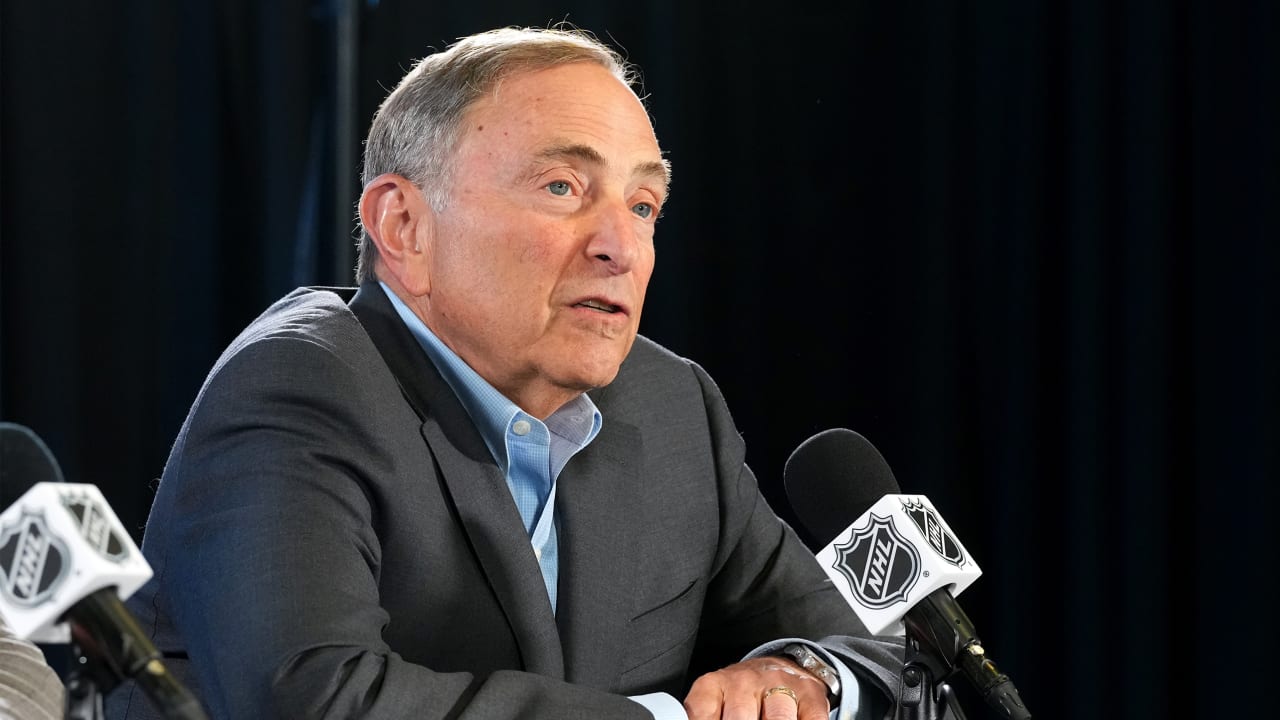
Back in June, NHL commissioner Gary Bettman put the broader commitment at roughly $3.5 billion, including the expansion fee and a new arena. That means Friedkin is not merely buying the right to draft players, sell sweaters and try to nick fans from the Dallas Stars. He is underwriting a full-blown property-and-entertainment business.
The league has given Pursuit Sports exclusive rights to explore an NHL team in Texas, focused on Houston and Austin. Friedkin is not some bloke who woke up last Tuesday and decided hockey looked fun. His family already owns AS Roma in Italy’s Serie A and Everton in the Premier League. He understands that a sports club can be a global content brand, a hospitality engine and a cultural asset—not just a weekly game.
But hockey expansion has a brutal little truth hidden beneath the glamour: the team plays about 41 regular-season home games. The arena has to pay its keep for the other 324 days of the year.
Concerts. Corporate boxes. Sponsorship. Food and beverage. Premium seating. Naming rights. Parking. Convention activity. Adjacent real estate. The team may be the hero asset, but the building is where the arithmetic either sings or starts crying.
Why the NHL is asking $2 billion now
The number is not insane because hockey suddenly became twice as good. It is insane because live sport has become one of the few assets that still forces people to show up at the same time.
The Vegas Golden Knights paid a $500 million expansion fee when they entered the NHL in 2017-18. The Seattle Kraken paid $650 million to become the 32nd franchise, beginning play in 2021-22. Friedkin’s reported $2 billion fee is therefore four times Vegas’s price and more than three times Seattle’s.
That is not normal inflation. That is asset repricing.
Existing NHL owners are watching the market tell them their clubs are worth more than they thought. A new owner paying $2 billion does not guarantee every incumbent franchise is suddenly worth $2 billion-plus, of course. Markets, arena deals, local media and ownership quality still matter. But it creates a very useful comparable sale in a business where scarcity does half the selling.
That is why leagues love expansion fees. They are upfront money from a new entrant, not a promise of future operating profit. And the NHL has made clear that the key tests are ownership, market and arena. That is sensible. A weak owner creates chaos. A weak market limits upside. A weak arena poisons everything.
Vegas and Seattle also gave the league a very attractive proof of concept. Vegas arrived with spectacle, a strong home-game identity and immediate on-ice success. Seattle showed that a new team paired with a serious arena can turn a city into a hockey market quickly. Neither outcome is automatic, but both make the next sales pitch far easier.
Houston and Austin are options. The arena decides.
The only honest answer today is that neither Houston nor Austin has won this. Pursuit Sports has exclusive rights to explore an NHL team in Texas, focused on both cities, and the $2 billion expansion fee remains subject to securing an arena in either Houston or Austin.
I will say the impolite bit: Houston looks like the commercial decision. Austin looks like the strategic temptation.
Houston is the bigger established market and the more obvious fit for a major-league arena proposition. It has corporate depth, a huge population base and a sports infrastructure people already understand. It also gives the NHL a natural intrastate rivalry with the Dallas Stars, which is not a trivial bonus. Rivalries sell tickets, television, sponsor packages and grudges—usually in that order.
Austin has a different pitch. It is a high-growth city with money, technology, younger demographics and less direct competition from the traditional major North American leagues. It could create an identity from scratch in a way Houston cannot. New markets can be wonderful when they feel like they own something distinctive.
But “could” is doing an awful lot of work there.
Austin would need an NHL-standard arena solution. Houston would as well, depending on the final plan. And that is the point: this is not truly a contest over who likes hockey more. It is a contest over which city can offer Friedkin the cleanest path to a building with the right location, control, event calendar, commercial rights and long-term economics.
City leaders regularly get hypnotised by the words “major league.” They start talking about prestige before they have worked out who carries construction risk, what happens if costs blow out, who controls parking, who keeps naming-rights revenue and whether the building can realistically book 150-plus profitable event nights.
That is how taxpayers and investors end up holding the wrong end of a shiny deal.
The overlooked angle: Friedkin is buying optionality, not just hockey
Most commentary will frame this as Houston versus Austin. That is too narrow.
Friedkin is buying a rare option on a scarce American sports asset. The NHL has said a Texas team could be followed by a 34th franchise, with discussions continuing in Phoenix and Atlanta. But there are only so many expansion opportunities, only so many credible ownership groups, and only so many cities capable of supporting a modern arena.
Exclusive rights matter because they reduce competitive uncertainty while the real work gets done. Friedkin can test sites, negotiate with local stakeholders, study arena economics and decide which market gives him the better risk-adjusted return.
That is the valuable bit: time to make a disciplined decision before the asset formally exists.
It is also why I would not get overly excited about a 2029-30 launch date. The NHL can approve a franchise. It cannot magically pour concrete, solve transport problems, negotiate every commercial agreement or guarantee construction finishes on schedule. Arena projects have a magnificent ability to discover new costs after everybody has already held the press conference.
The sensible operator treats the date as a target, not a fact.
Don’t confuse a franchise fee with a business model
Here is the contrarian view: paying $2 billion may be the cheapest part of this deal if Friedkin gets the arena wrong.
A great venue creates several revenue lines that reinforce one another. Premium customers bring sponsors. Sponsors want broadcast visibility and hospitality. Concert promoters want predictable operations. Fans want access, transport and an experience worth repeating. The team gives all of it emotional gravity.
A bad venue does the opposite. It creates traffic pain, thin margins, sterile corporate space, empty non-game dates and endless arguments over who pays for upgrades. You can have a good hockey team in a bad economic structure and still own a headache.
This is why sports owners increasingly look like property operators, media investors and hospitality executives wearing team caps. The club is the brand people fall in love with. The surrounding commercial system is what pays for the love.
Friedkin has the advantage of starting from zero. No legacy lease. No ancient building. No old operating model that needs to be pulled apart with a crowbar. That can be enormously valuable—provided he refuses to rush the site decision just to announce a winner.
What this means for you
You do not need $3.5 billion or an NHL expansion team to use the lesson here.
First, separate the headline asset from the economic engine. In your business, the thing everyone talks about is often not where the profit sits. A restaurant is not just food; it is leases, labour, throughput and repeat custom. A software company is not just the product; it is distribution, retention and customer-acquisition cost. An NHL team is not just hockey; it is an arena calendar and commercial control.
Second, treat scarcity with respect, not stupidity. Scarce assets can be fantastic investments, but scarcity does not rescue bad execution. Friedkin may be buying into a market with limited supply, yet the returns will still depend on boring things: site selection, contracts, capital discipline and management.
Third, when a deal looks expensive, ask what is really being bought. The $2 billion number gets the attention. The exclusive rights, arena control, sponsor inventory, premium seating and decades of optionality may be where the value actually lives.
That is the operator’s job: ignore the shiny object long enough to find the cash register behind it.
Sources
- NHL exploring Texas expansion opportunities in Houston, Austin
- NHL exploring Texas expansion in Houston or Austin with billionaire Dan Friedkin and family
- NHL executive says a Texas expansion team could be approved and announced by year’s end
- Seattle approved as 32nd NHL franchise, to start play in 2021-22