D'Andre Swift's $33.75M Bears Deal Could Turn Ugly Fast
The Bears just guaranteed D’Andre Swift $27.5 million through 2029. If Chicago gets lazy with his workload, this deal can turn ugly fast.
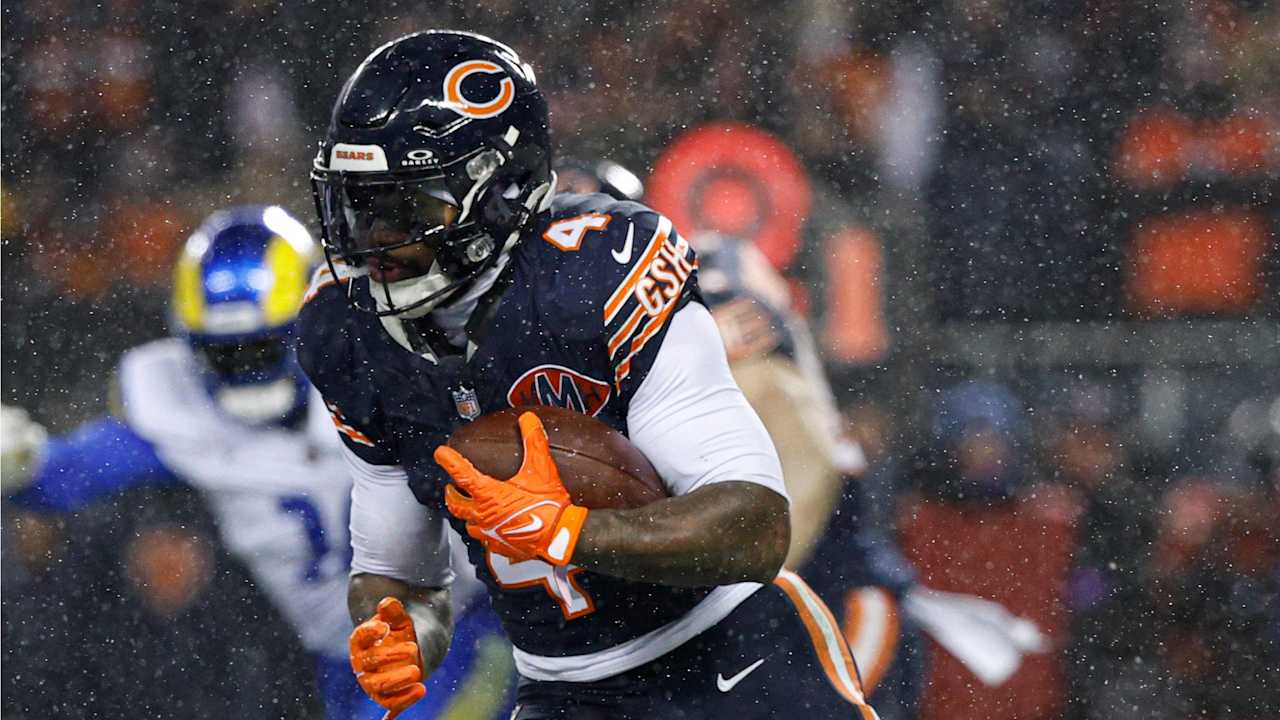
The Bears just guaranteed a running back $27.5 million
The Chicago Bears have guaranteed D’Andre Swift $27.5 million through the 2029 season. For a running back who turns 28 in January, that is not harmless roster housekeeping. It is a proper bet. ([upi.com](https://www.upi.com/Sports_News/NFL/2026/09/11/Chicago-Bears-DAndre-Swift-contract/8101789166088/))
Swift and Chicago agreed on a three-year, $33.75 million extension on September 11, 2026. It adds to the final year of the three-year, $24 million deal he signed in 2024, meaning he is now locked in with the Bears through 2029. The headline number works out to $11.25 million a year. More important, 81.5% of it is guaranteed.
That last number is where the story lives.
NFL teams love saying they value their players. Guarantees are where they stop talking and start paying if they are wrong. Chicago has made a very clear statement: D’Andre Swift is not merely a useful bloke for this season. He is part of the Caleb Williams-era plan.
I like decisiveness. I hate expensive nostalgia dressed up as decisiveness. The Bears have earned the right to make this call after Swift’s 2025 season—but now they have to prove they understand what they actually bought.
What Chicago paid for—and what it did not
Swift’s production last season makes the extension understandable. He posted career highs of 1,087 rushing yards, nine rushing touchdowns, 1,386 yards from scrimmage and 10 total touchdowns. He added 34 catches for 299 yards and a receiving score across 16 starts. ([upi.com](https://www.upi.com/Sports_News/NFL/2026/09/11/Chicago-Bears-DAndre-Swift-contract/8101789166088/))
Under coach Ben Johnson, the Bears finished third in the NFL with 2,456 rushing yards. Swift and seventh-rounder Kyle Monangai gave Chicago something every offensive coach claims to want: different tools for different jobs. Swift brings speed, receiving value and movement in space. Monangai brings the more physical, grind-it-out element.
That matters because the Bears have not paid Swift as though he must carry the ball 350 times and impersonate 1998. They have paid for a versatile player who fits a functioning offensive system.
That is the sensible reading, anyway.
The careless reading is simpler: Chicago saw one strong season, got excited two days before its opener against the Carolina Panthers, and paid a running back before the market could cool down. That can happen too. NFL front offices are no less susceptible to recency bias than anyone else. They just get more television coverage when they do it.
Swift was entering the final year of his previous contract. If the Bears let him play 2026 without an extension, they would have accepted more uncertainty: another good season could have made him more expensive, while a poor or injured season could have made the decision easy. General manager Ryan Poles chose certainty instead.
That choice has a price. The price is not only $33.75 million. It is the opportunity cost of tying up $27.5 million in guaranteed cash at a position where decline can arrive faster than a bad Monday morning.
The context: running backs are cheap until they suddenly are not
For years, the NFL treated running backs as disposable. Often brutally so. The logic was simple: players take repeated hits, their peak is short, fresh draft picks are cheaper, and good offensive lines can make ordinary backs look far better than they are.
There is truth in that. A club should not hand out a sentimental contract because a player was popular, tough or excellent three years ago. That is how you end up paying yesterday’s performance with tomorrow’s cap room.
But the market has pushed back lately because the best backs do more than run into large men. They protect the quarterback, change formations, catch the ball, create mismatches and make an offence less predictable. If you have a young franchise quarterback, that versatility has value well beyond the box score.
Chicago’s circumstances are particularly important. Swift initially joined the Bears in March 2024, one month before the franchise drafted Caleb Williams. He is no longer being paid to help a team find its direction. He is being paid to make life easier for the quarterback the Bears have built around. ([nfl.com](https://www.nfl.com/news/bears-d-andre-swift-agree-to-three-year-33-75-million-extension))
That is why I would not judge this deal against the old “never pay a running back” slogan. Slogans are for people who do not want to examine the actual player, the actual offence and the actual quarterback situation.
The proper question is narrower: can Swift remain a productive, flexible weapon while Chicago avoids making him the sole engine of its ground game?
If the answer is yes, $11.25 million annually is defensible. If the Bears turn him into a 300-carry battering ram, they will have converted a smart system fit into an avoidable liability.
Chicago is buying certainty before the price rose
There is a football lesson here that people routinely get wrong. They think extending a player early means overpaying. Sometimes it does. Other times it is the cheapest way to remove a major contract decision from the board.
Swift’s old deal paid him $8 million a year. This extension raises that average by $3.25 million annually. That is not pocket change. But it is also not a panic-level number for a player coming off his best season, entering a contract year, and central to an offence that finished third in league rushing.
The Bears have effectively said: we know the player, we know the system, we know the quarterback we are protecting, and we would rather price the next three years now than discover next March that everyone else values him too.
That is a perfectly legitimate strategy when a team understands exactly how a player fits its offence.
The trap is when familiarity gets mistaken for insight. Just because a team knows a player well does not mean his next three years will resemble his last one. Comfort makes front offices lazy. They stop asking whether the underlying football reality has changed.
For Chicago, that reality is obvious. Swift has had a heavy professional workload since the Detroit Lions drafted him in the second round in 2020. He also spent one season with the Philadelphia Eagles before signing with the Bears. He has now played six NFL seasons. ([upi.com](https://www.upi.com/Sports_News/NFL/2026/09/11/Chicago-Bears-DAndre-Swift-contract/8101789166088/))
That does not mean he is finished. It means the Bears need to be ruthless about workload management, depth and offensive-line investment. Paying the runner while neglecting the blockers is how a good contract becomes a stupid one.
The overlooked angle: Kyle Monangai makes this deal safer
Most people will look at Swift’s extension and assume Monangai is being squeezed out. I see it differently.
Monangai’s presence is precisely what can make the Swift deal work.
The Bears do not need Swift to be every kind of back. They need him healthy, explosive and involved in high-value touches: catches, space plays, red-zone opportunities, outside runs and situations where defenders have to respect both the pass and the run. Monangai can take some of the blunt-force work.
That is a much better use of a talented backfield than pretending one expensive player must do everything because he got paid.
This is where teams regularly stuff it up. They pay for talent, then feel compelled to maximise its visible usage to justify the cheque. Wrong. Once you have a valuable player, your job is to protect what makes him valuable—not flog him to prove you were brave enough to extend him.
If Ben Johnson splits the workload intelligently, Chicago can get more effective football from Swift at age 28, 29 and 30 than a team that chases raw carry totals. The extension then becomes less of a running-back bet and more of an offensive-design bet.
That is the contrarian bit: I do not think this deal will be decided mainly by Swift. It will be decided by whether the Bears’ coaching staff can resist using him like a rental car.
The real risk is not the $33.75 million
The real risk is false confidence.
Chicago has a young quarterback in Caleb Williams, a coach whose first season produced one of the league’s best rushing attacks, and a back coming off career-best numbers. That is a seductive setup. It makes continuity feel inevitable.
It is not.
In football, continuity only pays when the line stays competent, the quarterback develops, the play-caller evolves and injuries do not smash the plan. Swift’s $27.5 million guarantee means the Bears have limited room to be casual about any of those things.
The upside, though, is meaningful. A reliable run game gives a young quarterback easier down-and-distance situations, more play-action credibility and fewer moments where he must be Superman on third-and-eight. That might be worth more to Williams’ development than another shiny peripheral signing.
The smartest part of this deal is not that Chicago paid Swift. It is that the Bears appear to be committing to an identity: make life easier for their quarterback, make defences defend every blade of grass, and keep capable players around before they become impossible to retain.
The dumbest possible follow-up would be assuming the contract itself creates that identity. It does not. Contracts do not fix execution. They merely make the bill more permanent.
What this means for you
If you are a Bears fan, the useful question is not whether $33.75 million sounds like too much for a running back. The useful question is whether Chicago has a specific plan that makes Swift’s best traits more valuable over the next three years.
Do not judge this extension purely on carries, rushing yards or whether Swift repeats every number from his 2025 season. Judge it on whether the Bears can clearly answer three questions.
First: What exactly are they buying? Chicago should be buying Swift’s versatility, not blindly buying rushing attempts.
Second: What protects the investment? For the Bears, that is workload sharing with Kyle Monangai, solid blocking and a scheme that creates space. If Swift is healthy and dangerous late in the season, that matters more than forcing him to lead the league in carries.
Third: What gets more expensive if they wait? The Bears clearly believed Swift’s value would rise after a career-best year in an offence that finished third in the NFL in rushing. They chose to pay now rather than gamble on next March.
D’Andre Swift’s $33.75 million deal is neither genius nor madness on its own. It is a disciplined wager with a very expensive downside if Chicago gets lazy.
That is the Bears’ real test. Writing the cheque was easy. Building an offence that makes the cheque worth it is the hard part.