Dangote’s 10% Refinery IPO Is a $20B Test of African Capital
A $20 billion refinery can still leave public investors with a passenger seat. Dangote’s 10% IPO will test whether African markets can price, settle and trust it.
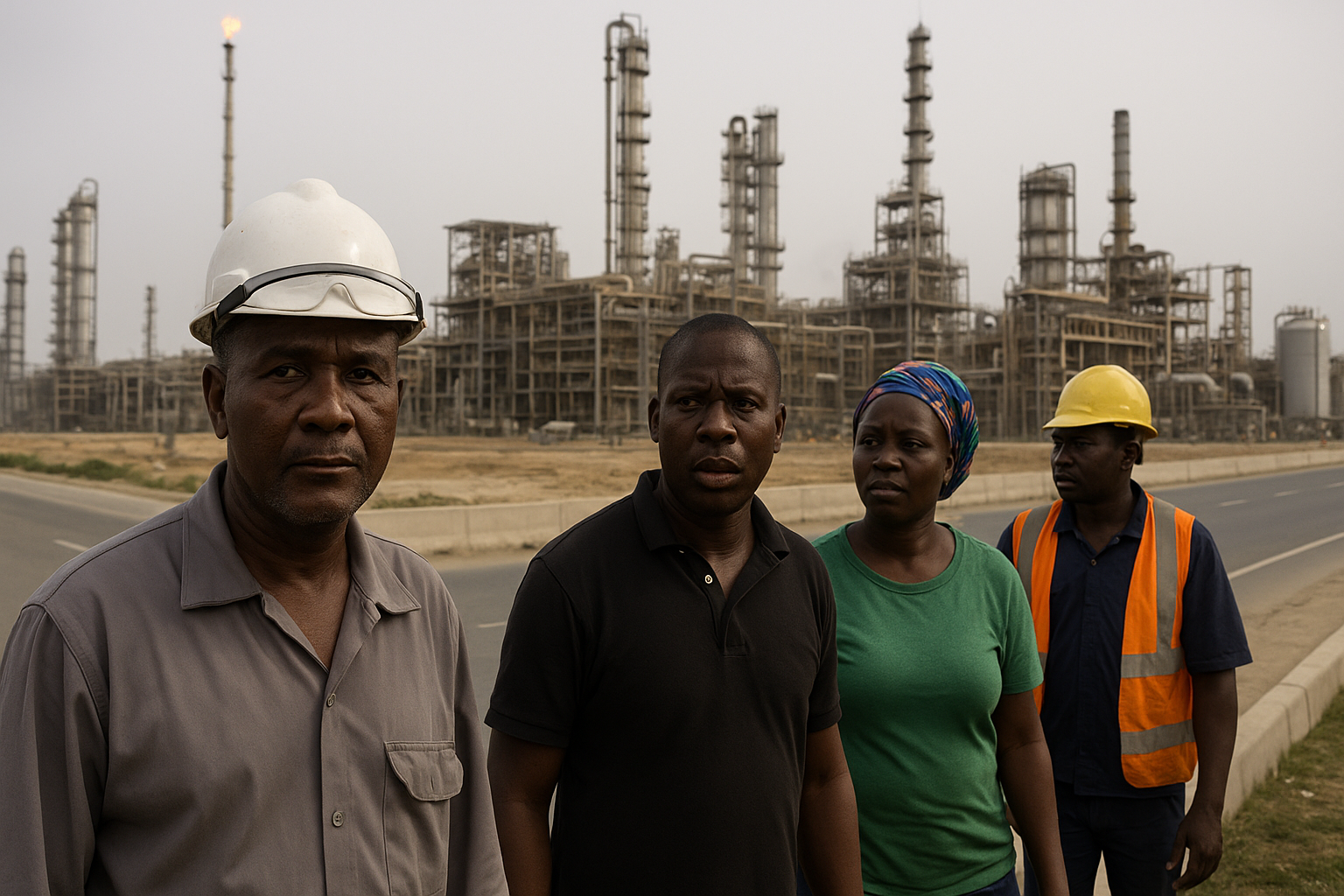
A $20 billion refinery can still leave public investors with a passenger seat. Aliko Dangote’s plan to sell about 10% is a test of whether African capital markets can finance the assets that actually make a continent richer — without asking minority investors to swallow all the risk.
That is the real wager behind the proposed listing of Dangote Petroleum Refinery and Petrochemicals. Not the headline stake sale. Not the inevitable frenzy around Africa’s most famous industrialist. The wager is whether a refinery built at roughly $20 billion can turn from a privately controlled monument into an investable, trusted, liquid public asset for African investors.
The deal: 10% of a refinery, spread across a continent
Dangote has said he plans to sell about 10% of Dangote Petroleum Refinery and Petrochemicals through an IPO across multiple African exchanges. He said the refinery would pay dividends in US dollars after the listing. Stanbic IBTC Capital, Vetiva Advisory Services and FirstCap have been named as advisers.
On paper, it sounds straightforward: sell a minority stake, pull in fresh capital, keep control, fund the next phase of expansion.
In reality, it is a much tougher job.
The refinery sits in Lekki, Lagos, and was built with capacity of 650,000 barrels per day. It started production in January 2024 after a long, expensive build. It is not a software company with a deck, a hoodie and a promise to “disrupt”. It is a giant physical machine that needs crude supply, power, logistics, maintenance, working capital, competent operators and customers willing to pay.
That is precisely why it matters.
Africa does not lack entrepreneurial talent. It lacks enough large, investable businesses that ordinary local savers, pension funds and institutions can own with confidence. Too much value gets built privately, financed offshore, sold offshore, or trapped inside family empires until the founder dies and the lawyers have a field day.
A successful cross-border refinery IPO would challenge that model.
Dollar dividends are not a cute feature. They are the pitch.
The cleverest part of Dangote’s proposal is not the 10% sale. It is the promise of dividends in US dollars.
That tells you exactly what problem he is trying to solve.
Investors do not just ask, “Will this refinery make money?” They ask, “If it makes money, what currency will I receive it in — and what will that money be worth by the time it reaches me?”
That is not cynicism. That is investing.
For a refinery that can earn hard currency through fuel exports, dollar dividends are a direct attempt to make the equity more attractive to foreign investors, diaspora capital and local institutions worried about currency depreciation. It says: this is not merely a Nigerian asset with Nigerian-currency returns. It is meant to be an African industrial asset with a claim on globally priced energy cash flows.
Fair enough. But this is where founders need to stop clapping at the PowerPoint and start reading the plumbing.
A dollar dividend promise only has value if the company can reliably generate dollars, move them legally, allocate them fairly and keep enough money inside the business to survive ugly commodity cycles. A refinery is not a bond. Margins move. Crude supply moves. Governments change rules. Subsidies come and go. Working capital can eat cash faster than a boardroom full of bankers at lunch.
So the right question is not whether the dividend will be paid in dollars. The right question is whether free cash flow will still be there after maintenance, debt service, inventory, tax, expansion spending and the inevitable surprises that come with operating a refinery at this scale.
The asset is enormous. The execution risk is bigger than most buyers realise.
Dangote’s refinery was built to reduce Nigeria’s dependence on imported refined fuel. That is a serious commercial and national-economic prize. Nigeria is a major crude producer, yet for years relied heavily on importing fuels that it could theoretically make at home. That is the sort of contradiction entrepreneurs should attack: exporting the raw material, then buying back the finished product at a markup is a mug’s game.
If the refinery runs reliably, it can reduce that leakage, support domestic supply and increase export earnings. The Economist Intelligence Unit has said the ramp-up has already reshaped Nigeria’s downstream sector and that higher refinery output and exports can support growth and foreign-exchange earnings.
But investors should not confuse strategic importance with automatic shareholder returns.
Governments love strategically important assets right up until fuel prices rise, voters get angry or foreign exchange gets tight. Then suddenly the “national champion” becomes the national shock absorber. That can mean pressure to sell cheaply, source locally regardless of economics, invest before returns justify it, or prioritise political goals over dividends.
That is the dark side of owning infrastructure that matters to everybody.
I have made enough investments to know this: the businesses that look safest from 30,000 feet can be the most complicated at ground level. A refinery has no shortage of reasons to disappoint you. A single operational bottleneck, procurement failure, crude-supply dispute or regulatory intervention can turn a beautiful spreadsheet into expensive wallpaper.
The overlooked angle: this is really a market-infrastructure deal
Everyone will focus on Dangote: his wealth, his ambition, the refinery’s valuation and how many people want a piece of it.
I would focus on the exchanges.
A multi-exchange African listing is not just a corporate-finance exercise. It forces hard questions about cross-border custody, settlement, disclosure standards, exchange-rate conversion, investor access, regulatory coordination and whether a shareholder in Nairobi or Johannesburg gets the same practical experience as one in Lagos.
The Nigerian Exchange Group has convened leaders from exchanges including Johannesburg, Ghana, Ethiopia, the BRVM and Nairobi around the ambition of cross-border listings. That is encouraging. But a meeting is not a market.
A market works when an investor can buy without ridiculous friction, hold securely, receive distributions cleanly, sell when needed and trust that the rules apply to people with famous surnames as much as everyone else.
That last bit is the whole game.
The Nigerian Securities and Exchange Commission made the point bluntly in June: no application for registration of an IPO or public offer of refinery shares had been filed with or approved by it at that time. That should not be read as a verdict on the refinery. It is a reminder that a headline is not a prospectus and an ambition is not a regulated offer.
Too many investors learn this lesson after wiring money.
Until there is a formal, approved offer document, the serious work has not even begun from an investor’s perspective. You need audited numbers, debt details, dividend policy, governance rights, related-party disclosures, risk factors and a clear explanation of how public minority shareholders will be treated.
The contrarian take: keeping 90% may be the problem
A founder selling 10% and retaining 90% is usually celebrated as confidence. Sometimes it is. It can show the owner is not desperate for an exit and still has serious skin in the game.
But minority ownership is not automatically investor-friendly.
At 90%, the controlling shareholder can effectively decide the tempo of capital spending, leverage, acquisitions, executive appointments and distributions. A minority investor may own a slice of an excellent asset while having almost no practical influence over what happens to the cash it generates.
This is not an argument against founder control. I like founders with skin in the game. I have far more faith in an owner-operator than in a career manager polishing quarterly slides.
It is an argument for being honest about what you are buying.
You are not buying control. You are buying exposure to Dangote’s operating ability, governance standards and capital-allocation discipline. That can be a terrific bet. But it is a different bet from owning an asset with meaningful shareholder checks and balances.
The public should demand proper protections: independent directors with teeth, transparent related-party rules, audited reporting, a credible capital-allocation framework and a dividend policy that does not disappear the moment expansion becomes fashionable.
What this means for you
For founders: do not wait until you want an IPO to build IPO-grade habits. Produce clean monthly reporting. Separate family, founder and company money. Document related-party transactions. Make it easy for a stranger to understand where every dollar comes from and where it goes. The market pays up for trust because trust lowers perceived risk.
For investors: never buy the headline. Buy the cash-flow mechanics. Before you touch any big infrastructure float, ask five questions:
1. What is the actual approved offer? A press interview is not a prospectus. 2. What debt sits ahead of equity holders? Equity gets what is left after everyone else is paid. 3. What is the maintenance capital requirement? Refineries need constant spending to remain productive and safe. 4. How will dividends be determined and paid? “Dollar dividends” is not enough; you need the policy, priority and legal pathway. 5. What can the controlling shareholder do without minority approval? This tells you whether you own a business or merely a passenger seat.
For operators everywhere, the broader lesson is simpler: the biggest opportunities are often not in inventing another app. They are in taking an asset people already need — energy, logistics, payments, housing, food — and making ownership, delivery and economics work properly.
Dangote’s proposed 10% sale will be judged by how much money it raises. That is the shallow read.
The deeper read is whether it gives African savers a genuine chance to own a piece of the industrial engine, with rules good enough that they can trust the ticket. If it does, that will matter far more than one IPO.