DeepSeek’s 160,000 Huawei Chips Turn AI Into a Supply-Chain War
The AI race is no longer won by whoever builds the cleverest model. It is won by whoever can actually get 160,000 chips delivered before the next bottleneck shuts the factory door.
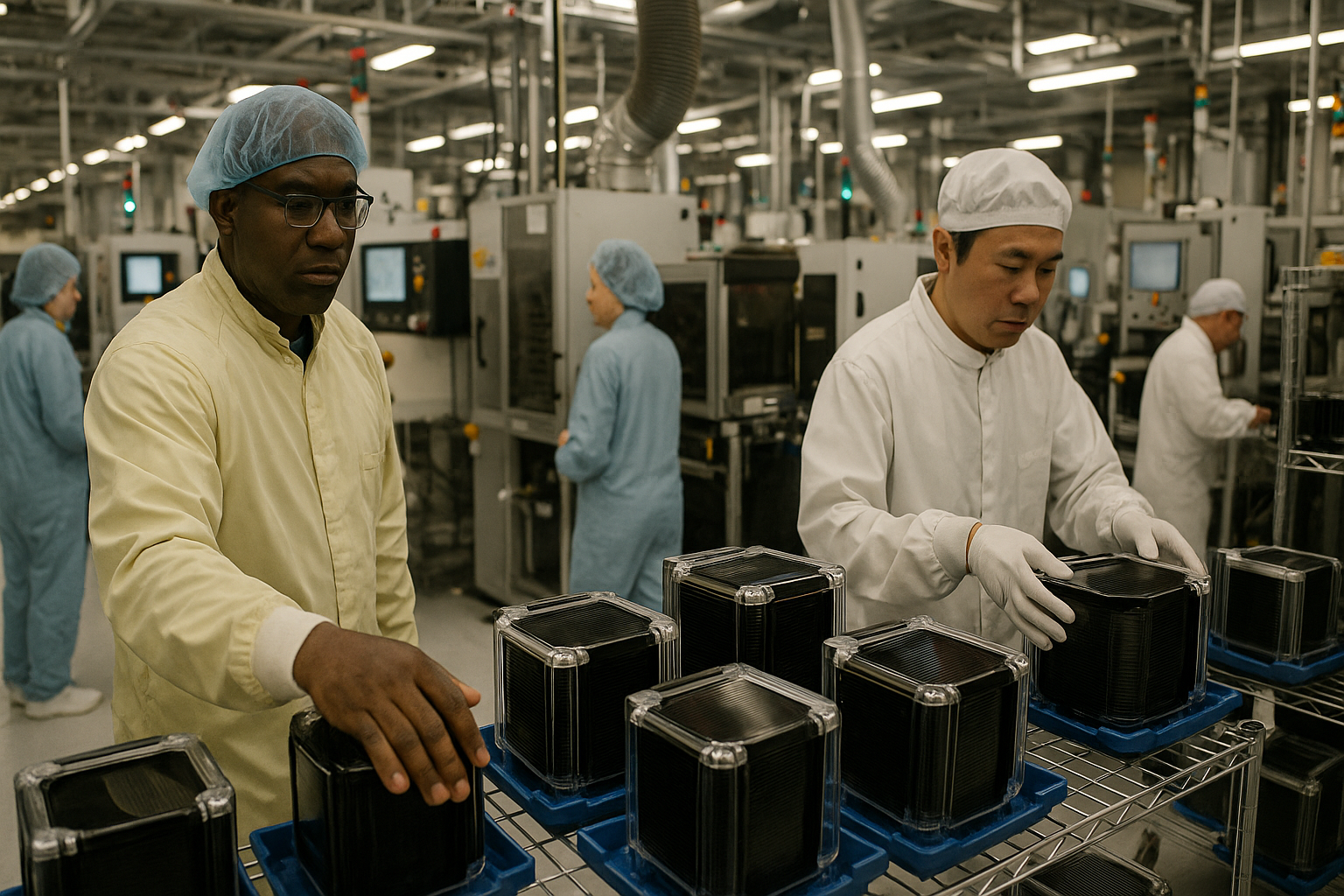
DeepSeek’s reported plan to install at least 160,000 Huawei AI chips is not a victory lap for China. It is a punch-in-the-spreadsheet moment for every founder and investor who still thinks AI is mainly a software business.
The clever model matters. The talent matters. The product matters.
But when you need 160,000 accelerators to run the thing, the business is also a power company, a construction company, a memory-procurement business and a supply-chain negotiation wearing an AI hoodie.
Bloomberg reported on September 4 that DeepSeek plans to deploy at least 160,000 of Huawei’s next-generation Ascend 950DT accelerators at a data centre it is building in Inner Mongolia. The cluster would be among the largest known concentrations of Huawei AI chips. That is a proper industrial bet, not another startup press release dressed up as a revolution.
The important number is 160,000 — but the important detail is inference
Here is the part most people will miss: DeepSeek reportedly wants the Ascend 950DT chips to operate its models, not currently to train them.
That distinction matters enormously.
Training is the expensive, headline-grabbing work of creating or materially improving a frontier model. Inference is the less glamorous job of serving the model to actual users — answering queries, writing code, generating images, running agents and handling millions of mundane requests without the system falling over.
Training creates the celebrity. Inference pays the bills.
Every AI company can get attention with a benchmark chart. Far fewer can afford to serve a successful product at scale. The bill arrives every time a user asks a question, every time an agent runs a task and every time some bloke gets a chatbot to rewrite an email he could have written himself in 45 seconds.
DeepSeek’s reported 160,000-chip plan says something blunt: China is not waiting to prove it can beat Nvidia chip-for-chip before building an AI economy around domestic hardware. It is trying to secure enough capacity to run AI products at industrial scale.
That is strategically smarter than the lazy headline — “China replaces Nvidia” — suggests.
You do not need to win every technical contest on day one. You need enough reliable capacity to serve users, build developer habits, collect feedback, improve the software stack and keep the economic flywheel moving. If you can do that on hardware that is available to you, then you have bought yourself time.
And in technology, time is often the whole game.
Huawei is selling more than chips. It is selling an escape route.
The Ascend 950DT is not just another semiconductor. It is part of China’s attempt to reduce its exposure to US technology restrictions and to Nvidia’s dominance in AI computing.
Bloomberg reported that Huawei expects to make around 1.6 million Ascend dies in 2026 — enough base components for about 600,000 of its marquee 910C chips, plus smaller quantities of other products. That sounds huge until you remember what the AI arms race has become.
DeepSeek’s proposed 160,000-chip deployment would consume a very meaningful chunk of a production ecosystem that is still constrained by high-end components and manufacturing capacity. The installation timeline is reportedly dependent on Huawei’s ability to produce the chips.
That is the catch. Everyone loves saying “build your own stack” until they discover the stack has a waiting list.
Huawei’s 950DT is generally viewed as comparable with Nvidia’s previous Hopper generation, according to Bloomberg. That is not nothing. But it also tells you why raw chip counts can be a mug’s game. A stack is not simply a pile of silicon cards on a floor.
Performance depends on the chips, yes. It also depends on memory, networking, cooling, software tools, compilers, reliability, developer familiarity and how efficiently thousands of machines communicate with each other. One weak link can turn a heroic procurement number into a very expensive warehouse ornament.
Nvidia’s real moat has never been only the GPU. It is the surrounding machinery: CUDA, the developers trained on it, the libraries, the integrations, the operational knowledge and the habit of companies building their businesses around it.
Huawei is trying to build the alternative. DeepSeek is giving that alternative a live commercial workload, at ridiculous scale.
That is why this matters.
This is the AI race growing up
For the past few years, AI has been marketed like a school science fair: bigger model, better score, cleverer demo, more funding.
That phase is ending.
The winners from here will be the firms that can turn intelligence into dependable, cheap and widely distributed utility. Not just a video of a model doing something impressive once. A system that handles real demand, makes unit economics work and does not collapse because a supplier, government or data-centre operator sneezed.
The DeepSeek plan is a useful reminder that AI infrastructure is now strategic infrastructure. Think railways, energy grids and shipping lanes — except the factories are data centres and the fuel is chips, electricity and memory bandwidth.
Six months ago, a reported 10,000-chip Huawei Ascend cluster in Shenzhen was described as China’s first intelligent-computing cluster of that scale. A proposed 160,000-chip DeepSeek installation is a completely different order of ambition.
It also exposes the absurdity of treating AI investment as a clean software multiple.
Software investors have spent decades loving asset-light businesses: build code once, sell it repeatedly, enjoy fat margins. AI can still produce brilliant software businesses. But frontier AI is dragging plenty of companies back into capital intensity. Compute is rented or owned. Power is contracted. Facilities are built. Hardware supply is fought over. Margins are determined not only by customer demand but by the cost of serving each request.
That does not make AI a bad business. It makes it a business where operational competence matters again.
Good. It should.
The contrarian take: DeepSeek is not necessarily trying to beat Nvidia
The obvious read is that DeepSeek’s Huawei order is a direct assault on Nvidia. That is partly true, but it is too simplistic.
DeepSeek does not need to prove that Huawei is superior across every workload. It needs to reduce a strategic dependency where it can.
Running models at scale is a logical place to do that. Inference workloads can be engineered, standardised and improved over time. The software can be tuned around known models and known hardware. If domestic chips are good enough for large chunks of serving demand, then every workload moved across is less demand that depends on an external supplier.
That is not a dramatic overnight replacement. It is more dangerous than that: slow substitution.
This is how incumbencies get eroded. Not because a competitor wakes up one morning with a perfect product, but because it becomes good enough in a specific use case, then another, then another. The customer does not need to abandon the old platform completely. They merely need to stop buying quite so much of it.
For Nvidia, this does not mean panic. It still means pressure. A giant market where domestic alternatives become serviceable is a market where the long-term ceiling is lower than it otherwise would have been.
For Huawei, the prize is bigger than revenue from one customer. If a recognised AI lab can run serious workloads on Ascend hardware, it gives the broader ecosystem a reason to invest in tools, training and compatibility. That is how a hardware platform becomes a platform rather than a government-backed procurement project.
The bottleneck nobody should ignore
The most useful part of this story is not the chip count. It is the production dependency.
DeepSeek can want 160,000 chips. Huawei can design them. Political leaders can cheer them on. None of that guarantees delivery on time, at scale, with consistent quality and a workable cost base.
That is the brutal lesson for operators everywhere: strategy without supply is a wish.
I have seen businesses waste years treating an important external dependency as someone else’s problem. It never is. If a supplier, platform, bank, cloud provider or regulator can halt your growth, that relationship belongs on the CEO’s dashboard. Not buried in procurement or pushed down to an ops manager who has no leverage.
DeepSeek’s build-out will live or die on execution across a whole chain: chips, advanced memory, data-centre construction, electricity, networking and software. The model gets the headlines. The boring bits decide whether the headline becomes a business.
What this means for you
If you are a founder, stop saying you have an AI strategy until you can answer three questions.
First: what does each successful customer cost you to serve? Not your average cloud bill. Your real marginal cost when usage takes off. If your product gets 10 times more popular, do your gross margins improve, hold up or get smashed?
Second: where is your single point of failure? It may be one model provider, one cloud, one app-store rule, one chip supplier or one data source. Name it. Price the downside. Build an alternative before you desperately need one.
Third: what work actually needs the premium model? Most companies are spending like every task needs a Formula One car. Route simple work to cheaper systems, reserve expensive intelligence for high-value decisions and measure the difference. That is not penny-pinching. That is adult management.
If you are an investor, be wary of AI businesses that show you growth but cannot explain inference economics. Revenue with an unlimited compute bill is not a moat. It is a future board meeting from hell.
And if you are a saver watching this circus from the sidelines, remember this: the valuable AI companies will not necessarily be the ones with the flashiest demos. They will be the ones that secure supply, control costs, earn trust and keep serving customers when everyone else discovers that GPUs, power and cash are finite.
DeepSeek’s 160,000-chip plan is not proof that the race is over. It is proof that the race has changed.
The next winners will not just invent intelligence. They will industrialise it.