Deshaun Watson’s $230M Browns Deal Is Now a Sunk-Cost Trap
The Cleveland Browns are starting Deshaun Watson because admitting a $230 million mistake is harder than making one. That is not leadership. It is expensive denial.
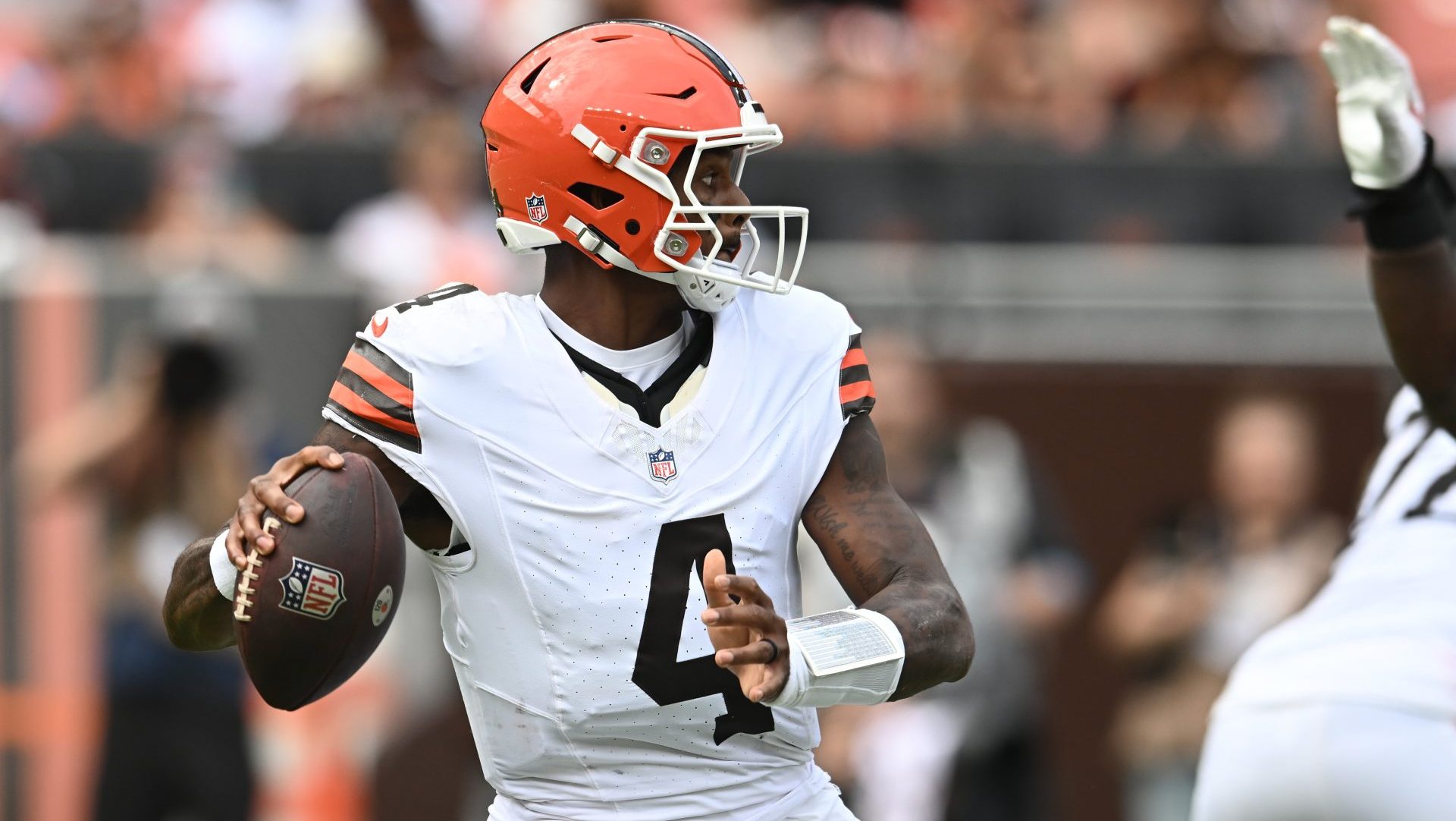
The Cleveland Browns are starting Deshaun Watson because admitting a $230 million mistake is harder than making one.
That is not leadership. It is expensive denial dressed up as football judgment.
On September 13, Watson will start against the Jacksonville Jaguars, ahead of Shedeur Sanders, in the final season of the fully guaranteed five-year, $230 million contract Cleveland handed him after trading for him in 2022. The Browns gave up three first-round picks in the deal. Watson has since played 19 games in four seasons for Cleveland.
I have made bad bets in business. Everyone who has built anything has. The real damage does not come from the original bad bet. It comes when you keep feeding it capital, attention and opportunity because you cannot stomach writing down the loss.
That is where the Browns are now.
The $230 million decision Cleveland cannot escape
Todd Monken, the Browns’ first-year head coach, says Watson gives Cleveland its best chance to move the ball and score. Fair enough. Coaches are paid to make football calls, not write shareholder letters.
But owners and executives need to answer the bigger question: are they choosing the player most likely to help them win, or are they choosing the man attached to the invoice they have already paid?
Watson’s recent numbers make the answer uncomfortable. He has thrown 19 touchdown passes and 12 interceptions across those 19 Browns appearances. He missed all of last season after a second rupture of his right Achilles tendon. In Cleveland’s August 22 preseason loss to Buffalo, he went 5-for-12 for 36 yards and an interception while home fans booed him.
Then came the part nobody in charge enjoys: the crowd telling you your spreadsheet has become a farce.
Watson called the boos disrespectful before later apologising and saying his emotions got the better of him. I do not care much about a bloke having an emotional postgame moment. What matters is the commercial and competitive reality underneath it. A franchise has put its most expensive employee back in front of a fan base that has seen very little return for its investment.
Cleveland will carry a $40.9 million cap hit for Watson in 2026. That money is not a reason to start him. It is a reason the organisation needs to become ruthlessly clear-eyed about every remaining decision around him.
The $230 million is already history. The question is whether the Browns now waste another season trying to prove history was sensible.
This was never just a contract. It was a whole-company bet.
NFL teams love pretending player contracts are isolated transactions. They are not. A quarterback decision changes draft strategy, coaching plans, locker-room hierarchy, ticket-holder patience, media pressure and the career prospects of everyone in the building.
Cleveland did not merely buy Deshaun Watson. It committed three first-rounders, a record-setting guarantee at the time, and years of organisational oxygen to one thesis: elite quarterback play would turn a good roster into a genuine contender.
Watson arrived after being a three-time Pro Bowler with the Houston Texans and winning the NFL passing title in 2020. He had obvious talent. The Browns were not betting on a random punter becoming Tom Brady.
But high upside does not make a deal well-priced. It makes discipline more important.
The original error was not simply paying a massive sum. Rich teams can survive expensive mistakes. The error was removing nearly all the normal protection for being wrong. A fully guaranteed five-year deal meant Cleveland had little practical leverage if Watson’s form collapsed, injuries hit, or the fit went sideways.
That is why guarantees matter so much. They do not just transfer cash. They transfer negotiating power.
Once the Browns made the deal, Watson no longer needed to keep proving his value to get paid. Cleveland needed him to perform because it had built the next several years around that expectation. That is a terrible power imbalance when the asset is a human being playing the NFL’s most violent position.
The club then had to manage an 11-game suspension in 2022, a shoulder injury that ended Watson’s 2023 season, an Achilles injury in 2024, then the second Achilles rupture that wiped out 2025. Now it enters 2026 with a 30-year-old quarterback returning from major injuries, an unhappy public, and a decision that looks less like conviction than inertia.
Shedeur Sanders is the part of this story that matters next
This is not only about Watson. It is about what Cleveland does to Shedeur Sanders by keeping him on the bench.
Sanders, a fifth-round pick in 2025, ended last season as the Browns’ starter. In this preseason, he completed 15 of 22 passes for 153 yards, one touchdown and two interceptions. Watson completed 16 of 27 for 162 yards, no touchdowns and one interception.
Preseason stats are not gospel. Anyone treating August football like a board meeting needs to have another drink and lie down. But development is real. Repetitions matter. First-team snaps matter. Live decision-making matters.
Monken says this is not a week-to-week decision, and that he is excited about Sanders’s future. Good. Then Cleveland needs a precise definition of “future.”
If Watson is genuinely the better quarterback today, start him. But set measurable performance standards, review dates and a succession plan. Do not let “we paid him a fortune” become the unspoken KPI.
The worst possible outcome is not Watson failing. That has already happened in a financial sense. The worst outcome is Cleveland delaying an honest evaluation of Sanders, burning games that could have answered the franchise’s next quarterback question, then finding itself back at square one next offseason.
The overlooked angle: cutting him would not cure the problem
Here is the contrarian bit: benching Watson is not necessarily a magic fix, and cutting him would not make the $230 million vanish.
That is precisely why bad guarantees are so dangerous. They can turn a performance decision into an accounting problem. The Browns are carrying the cap consequences regardless. The money cannot be unspent just because everyone wishes the deal had never happened.
But that does not mean Cleveland should keep treating Watson like a starter to justify the original investment.
There is a big difference between accepting the financial cost and letting it dictate the football decision. Smart operators separate those two things.
In business, if I buy a company that stops performing, I do not keep its underperforming CEO in the job because the acquisition price was high. I take the loss, change the operator, protect the good assets and stop the damage spreading.
The Browns still have valuable assets: a fan base that cares deeply, a roster that needs clarity, a young quarterback worth properly assessing, and a new coach who should not have his tenure defined by a deal made before he arrived.
Watson might still surprise everyone. Athletes have come back from injuries before. But hope is not a strategy, and it certainly is not a capital-allocation framework.
The Browns need a stop-loss, not another speech
Cleveland should treat the opening stretch like an investment committee review, not a referendum on pride.
Give Watson the first games if that is the football decision. Then judge the evidence without sentiment. Is the offence functional? Is he healthy? Is he making throws that win games? Is the team competitive? Is Sanders improving behind the scenes? Is the locker room buying in?
If the answers are poor, change course quickly.
No grand press conference is required. No executive needs to call the contract a disaster on television. Just make the next sensible decision.
That is what separates competent operators from people who confuse stubbornness with conviction. Conviction is making a hard decision with imperfect information. Stubbornness is refusing to change after the information has arrived.
Cleveland has had plenty of information.
What this means for you
Most people do not have a $230 million quarterback problem. They have a smaller version of it: the bad hire they keep defending, the product nobody wants, the customer segment that drains the team, the investment they keep averaging down, or the project that lives because somebody senior promised it would work.
Use this rule tomorrow: separate the money already spent from the value still available.
Ask three brutally simple questions:
1. If I had no prior investment in this decision, would I make it again today? 2. What future cost am I accepting by keeping this alive for another quarter, season or year? 3. What measurable evidence would make me change my mind—and on what exact date will I review it?
Write the answers down. Put dates beside them. Make somebody accountable for bringing the facts, not the excuses.
The Browns cannot recover the draft picks or erase the $230 million guarantee. Neither can you retrieve money, time or reputation already spent on a bad call.
But you can stop paying tuition to the mistake.
That is the difference between being wealthy on paper and being a serious operator.