Diageo’s $1B Reset: Don Julio and Casamigos Face a Brutal Reality Check
Diageo is spending $1.2 billion to fix a business where its tequila stars are falling double-digits. That is not a marketing problem. It is a pricing-and-product problem.
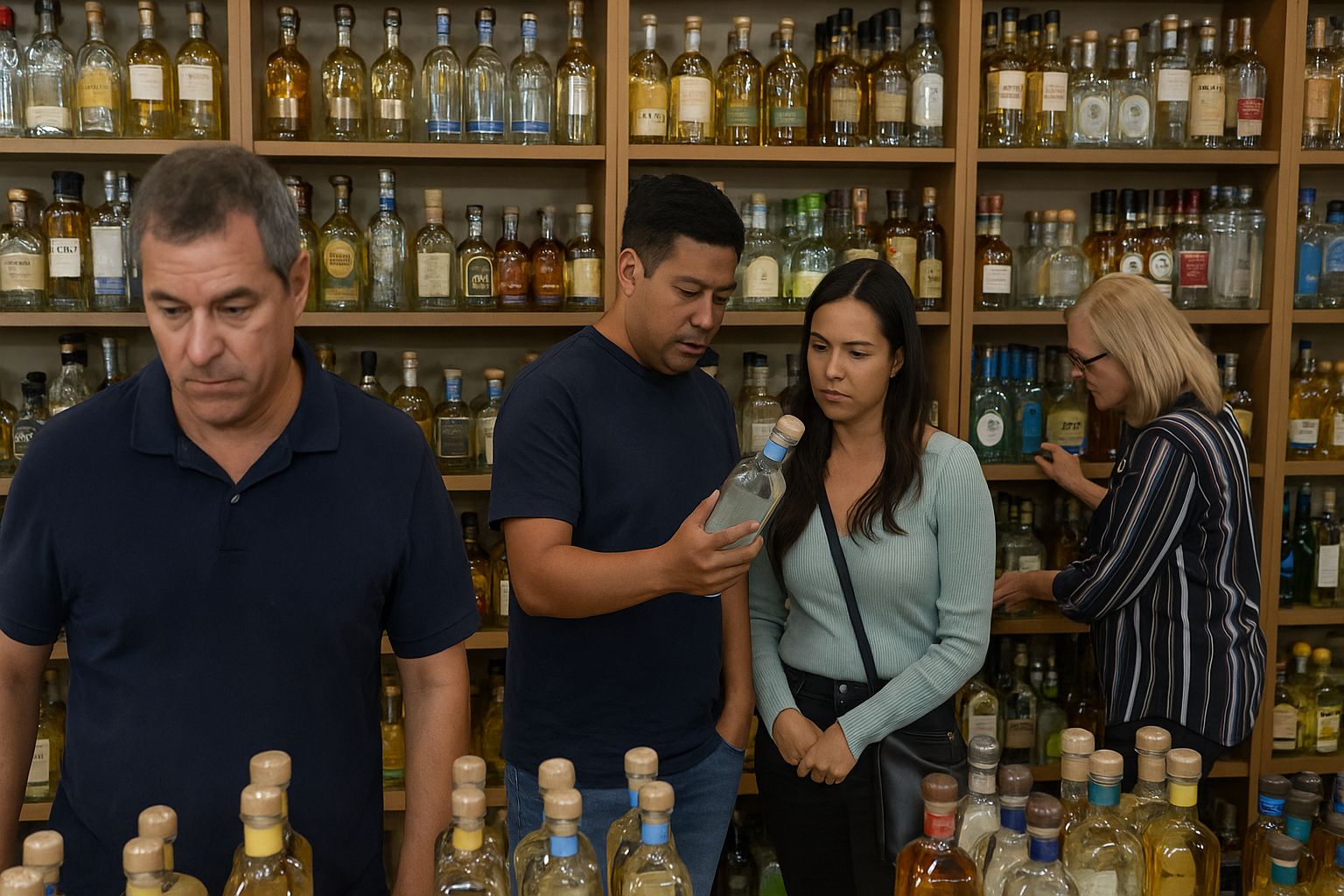
Diageo is spending $1.2 billion to fix a business where Don Julio and Casamigos are falling double-digits. If that doesn’t kill the “premium tequila only goes up” fantasy, nothing will.
For years, the spirits industry treated a fancy bottle, a celebrity story and a higher shelf price as a business model. It worked — until ordinary drinkers started doing what ordinary drinkers always do when money gets tight: they looked at the price tag and walked.
On August 6, Diageo laid out its response. The owner of Don Julio, Casamigos, Johnnie Walker, Smirnoff and Guinness reported a 2% organic net-sales decline for the year ended June 30, 2026. North American organic sales fell 8.4% and volume fell 6.7%. The company is now targeting roughly $1 billion in savings over three years, while taking about $1.2 billion in restructuring costs to get there.
That is the headline. But the tequila lesson is the one founders, investors and brand operators should care about: a premium category is not a licence to ignore value.
The tequila hangover is real
Diageo’s tequila portfolio has been a monster success story. Don Julio became a global signal of aspirational drinking. Casamigos proved celebrity could turn tequila into an everyday luxury purchase. The company bought Casamigos in 2017 in a deal worth up to $1 billion — a deal that looked clever while the category was sprinting.
Now the numbers are less flattering.
Diageo said weakness in North America, its largest tequila region, outweighed growth elsewhere. Don Julio and Casamigos both declined by double digits as consumers pulled back from the upper end of the category. Astral, its more accessible tequila brand, grew double digits — albeit from a much smaller base.
Read that again. The cheaper brand grew. The expensive household names fell.
This isn’t evidence that consumers have suddenly decided tequila tastes bad. It is evidence that the customer is making a more disciplined trade-off. They still want an agave drink. They are simply less willing to pay a prestige tax for it every Friday night.
That distinction matters enormously. Too many founders hear “premium is slowing” and respond by discounting their hero product until it becomes neither premium nor profitable. The smarter response is to give the same customer a credible step-down option before a competitor does.
Diageo is effectively admitting that its portfolio got too dependent on the top shelf in the US. That’s not a catastrophe. But it is expensive tuition.
A $1 billion cost-cutting plan is not a growth strategy
New chief executive Sir Dave Lewis has brought the blunt instrument. Diageo plans about $850 million of savings from redesigning its operating framework and another $150 million from supply-chain initiatives. Roughly 40% of the operating-framework savings are expected in fiscal 2027, with the balance in fiscal 2028. The company says restructuring costs will total about $1.2 billion.
Fair enough. Big companies accumulate duplicated teams, manual processes, country-by-country fiefdoms and more meetings than customers. Cutting that rubbish out is sensible.
But let’s not kid ourselves: cost savings can repair margins, free up cash and buy management time. They cannot make a customer love a bottle again.
Diageo’s fiscal 2026 organic operating profit rose 2%, even as organic sales fell 2%, largely helped by savings. Free cash flow reached $3.211 billion. That is exactly why markets tolerate turnarounds: cash gives you choices.
Still, the company’s own fiscal 2027 outlook tells you how hard the commercial job is. Diageo expects broadly flat organic net sales overall, with North America down by the mid-single digits. Its assumption is that the North American market itself falls about 3%, while Diageo improves its share performance.
In plain English: management does not expect the biggest market to bounce back next quarter. It expects a slog.
The problem is not premium. It is lazy premium.
Here is the contrarian bit: premiumisation is not dead. Lazy premiumisation is.
There is a world of difference between a customer paying more because the liquid, provenance, experience and occasion genuinely warrant it — and paying more because the brand trained retailers to charge more during a boom.
The tequila industry blurred that line. Too many brands appeared with polished bottles, vague agave-field poetry and prices that assumed the good times would never end. Some were excellent. Plenty were just expensive.
That is why I don’t think the lesson from Diageo is “run away from premium tequila.” The lesson is to build a price architecture, not a shrine to your most expensive SKU.
A decent spirits business should know exactly who each bottle is for:
- The customer trying tequila for the first time. - The regular who wants quality without feeling fleeced. - The enthusiast who will pay for scarcity, production detail or genuine craftsmanship. - The collector buying status, not just liquid.
If every answer is “the affluent consumer,” you do not have a strategy. You have a mood board.
While building Agave Finder, I keep seeing the same thing: people are more curious than ever about what is actually in the bottle, who made it, where it came from and whether the price makes sense. That is good news for serious producers. It is bad news for brands relying on a celebrity’s face and a $20 price rise.
The overlooked winner may be the operator with the better data
The genuinely interesting part of Diageo’s reset is not just the cuts. It is the shift toward being more customer-led and more competitive at different price points.
That sounds like corporate language, but the operational version is very simple: know what is selling, where it is selling, at what price, and what consumers switch to when they say no.
Most drinks brands are hopeless at this. They track shipments to distributors and call it demand. They look at broad category reports six months late. They confuse a good launch party with repeat purchase. Then they are shocked when inventory piles up or retailers ask for promotions.
The next winners in agave will be better at seeing demand early. They will watch depletion data, retailer velocity, menu placements, search behaviour, reviews, regional price gaps and the rise of adjacent alternatives. They will distinguish between a consumer trading down within tequila and one leaving the category altogether.
That is not glamorous. Neither is making money.
For investors, it also means you should stop valuing every tequila business as if it owns a permanent piece of George Clooney-era hype. Ask three dull questions instead:
1. How much of growth is volume versus price? Price-led growth looks lovely until it doesn’t. 2. What happens when the hero SKU slows? A company with no credible entry or mid-tier offer is exposed. 3. Is the brand earning repeat purchase without promotions? If not, it may be a launch, not a business.
Diageo has a portfolio advantage — if it actually uses it
This is where Diageo is better positioned than a single-brand tequila startup. It has enormous distribution, a portfolio across price points and categories, and cash flow that smaller rivals would kill for. Its brands are sold in nearly 180 countries.
It also has proof that not everything is broken. In fiscal 2026, Diageo highlighted Guinness, Smirnoff ready-to-drink products and Johnnie Walker as standout performers. Europe, Latin America and the Caribbean, and Africa all delivered organic sales growth, even while North America and Asia Pacific struggled.
The company’s medium-term target is low-single-digit organic sales growth and mid-single-digit organic operating-profit growth from fiscal 2027 through fiscal 2029, alongside about $8 billion in cumulative free cash flow over the three years after exceptional cash costs.
Those are achievable numbers — but only if the company stops treating North America as a premium-pricing machine and starts behaving like a merchant again.
That means better packs, sharper price ladders, cleaner brand roles and fewer internal layers between an insight and a decision. It means earning shelf space with velocity, not just history. And it means accepting that a customer buying a lower-priced bottle from your own portfolio is far better than losing them to someone else entirely.
What this means for you
If you run a brand, do this tomorrow: map every SKU by consumer occasion, margin, repeat rate and price sensitivity. Not by how much your team likes the packaging.
Then find the hole. If your only answer to a stretched customer is “buy less often,” you have handed them to a competitor. Build a product, pack size or serve that protects the relationship without destroying the brand.
If you are an investor, be suspicious of businesses calling price rises “premiumisation” without showing volume resilience. A high-margin product with shrinking velocity is not a moat. It is a warning label.
And if you are a founder, remember this: the market does not owe you a premium multiple because your bottle looks expensive. Customers decide whether you deserve premium pricing one repeat purchase at a time.
Diageo’s $1 billion reset is a very public reminder that even the world’s biggest spirits company can get caught believing its own boom-time story. The good operators will learn from it before they need a $1.2 billion clean-up of their own.