Diageo’s 21.1% Tequila Sales Fall Is a Warning for Every Premium Brand
Tequila did not run out of drinkers. It ran out of people willing to pay fantasy prices for another celebrity bottle. Diageo’s 21.1% tequila sales fall proves it.
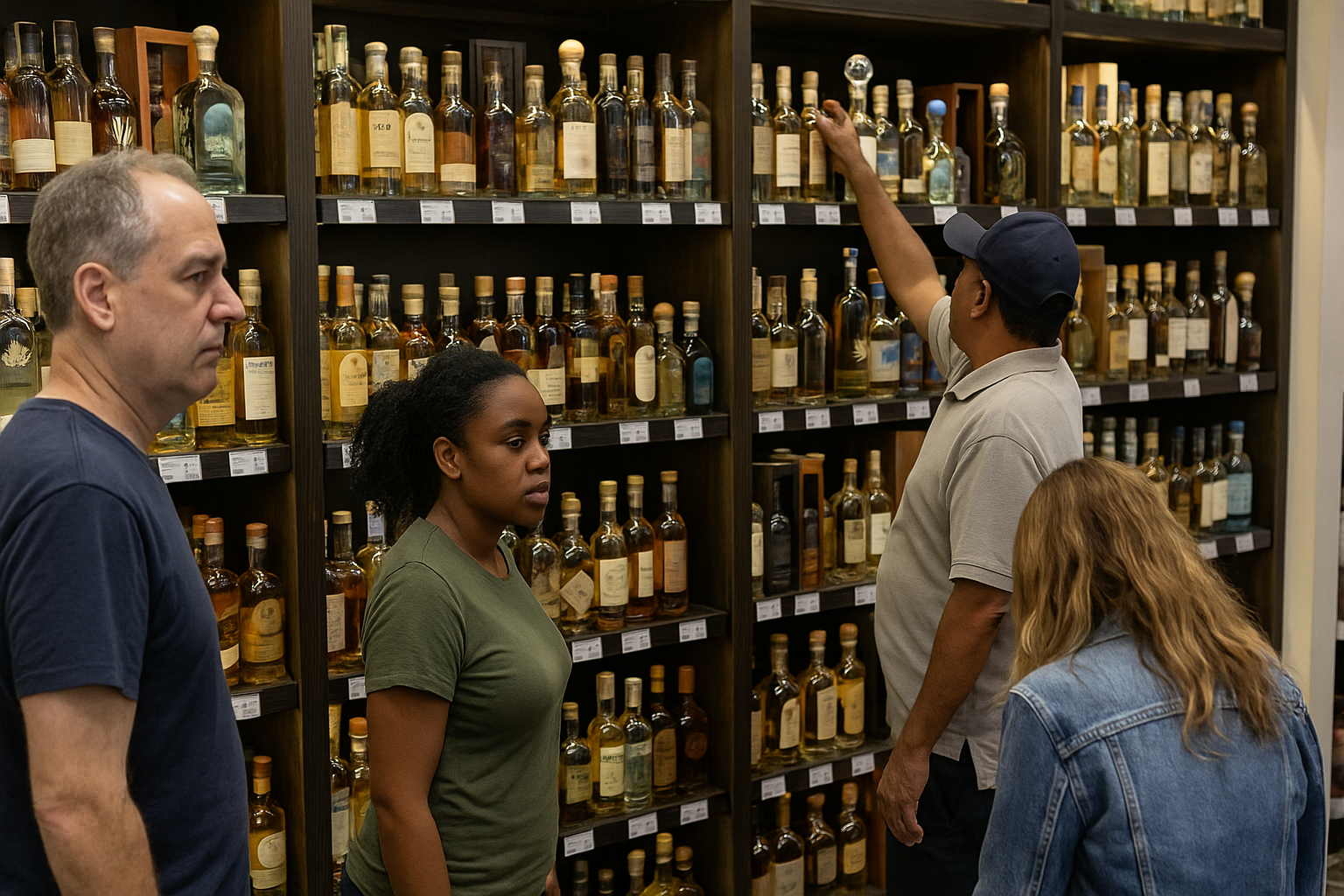
Diageo’s tequila sales fell 21.1% in fiscal 2026. That is not a minor wobble. That is the market taking a baseball bat to one of the spirits industry’s most comfortable stories.
For years, tequila founders, distributors and investors told themselves the same lovely tale: consumers would keep drinking less, but better; premiumisation would march on forever; and a handsome bottle with a celebrity’s name on it could command whatever price the spreadsheet needed.
Rubbish.
The consumer did not suddenly become anti-tequila. They became more selective, more price-conscious and far less interested in funding everybody else’s margin dreams. That distinction matters, because it tells you where the real opportunity is now.
Diageo’s numbers are the bit nobody can ignore
Diageo reported on August 6 that group organic net sales fell 2.0% for the year ended June 30, 2026, while reported net sales fell 3.0% to $19.6 billion. North America was a major problem, but tequila was the clearest signal flare.
Its tequila net sales dropped 21.1%. Don Julio, the flagship premium brand, fell 19.2% in net sales, with depletions down 10.1%. Casamigos fell 27.7%, with depletions down 23.1%.
That word, depletions, is important. It is the stuff actually moving out of distributor warehouses into the trade. It is much closer to real consumer demand than a shipment figure dressed up in a quarterly presentation.
Diageo blamed a softer category, tougher competition and difficult comparisons against the prior year. Fair enough. But the blunt reading is simpler: two massive brands lost share while premium tequila buyers had more options and less willingness to pay up.
Casamigos is the sharper lesson. Diageo agreed in 2017 to pay up to $1 billion for the George Clooney-founded brand. At the time, it looked like a masterstroke: celebrity, clean design, easy drinking, premium price, enormous cultural momentum.
Today, it looks like a case study in why a great acquisition can still meet a lousy part of the cycle.
A brand can be famous and still be overpriced. It can have terrific distribution and still lose relevance. It can sell a mountain of cases during a boom and still discover that its supposedly loyal customer was mainly loyal to the category’s momentum.
That is not a criticism of Casamigos alone. It is a warning to every founder who mistakes category heat for brand equity.
The tequila boom did not die. The easy money did.
There is a lazy conclusion doing the rounds: tequila is finished. That is wrong as well.
Tequila remains a huge, culturally powerful category with global potential. It has genuine provenance, a compelling production story, strong cocktail relevance and a consumer base that understands the difference between cheap mixto and proper 100% agave tequila better than it did a decade ago.
But a mature category is not a gold rush. That is the adjustment underway.
When a market is screaming upward, almost every decision looks clever. You can over-order inventory, inflate pricing, add a celebrity investor, launch a mediocre reposado in a heavy bottle and still convince yourself you have cracked consumer packaged goods.
Then growth slows, shelf space gets crowded and the drinker starts doing basic maths in the bottle shop. Suddenly the product needs to earn its place.
Diageo’s problem is not merely that fewer people bought tequila. Its stated results point to a nastier combination: softer demand, more competition and adverse mix. In normal English, consumers were not only buying less in the premium end; they were choosing differently.
That is what wrecks a business model built on ever-rising price points.
Brown-Forman confirms this is an industry problem, not a Diageo problem
Look across the aisle at Brown-Forman, owner of Herradura and el Jimador. For its fiscal year ended April 30, 2026, its tequila portfolio’s net sales fell 4%, or 6% organically.
Herradura was down 9% in reported net sales and 10% organically, led by lower U.S. volumes. el Jimador declined 2% reported and organic, with declines in the United States and Mexico partly offset by Colombia.
Different company. Different portfolio. Same broad message.
The overlooked figure is sitting right beside it: Brown-Forman’s ready-to-drink portfolio grew 11% in reported net sales and 7% organically. Its New Mix brand grew 41% reported and 33% organically, helped by market-share gains in Mexico and its U.S. launch.
That is not proof that RTDs are a magical safe haven. Nothing is. But it does show where consumer demand is moving: accessible price points, obvious occasions, less friction and less need for a consumer to feel like they need a degree in agave before buying a drink.
The spirits business spent years telling people that complexity was premium. Consumers are now reminding it that convenience is premium too.
Cost cuts are necessary. They are not a growth strategy.
Diageo’s response is a two-year restructuring programme designed to generate about $850 million in savings, starting in fiscal 2027. It recorded roughly $0.9 billion of restructuring charges in fiscal 2026, including about $752 million tied to its new operating framework.
The company also finished June with $20.5 billion of net debt and a net-debt-to-adjusted-EBITDA ratio of 3.1 times.
I have built businesses. I understand the appeal of a cost programme when growth goes sideways. You cut nonsense, simplify decisions, get closer to customers and stop carrying infrastructure built for a world that no longer exists. Good. Do that.
But let’s not kid ourselves: cost savings cannot make a customer suddenly want another $80 tequila.
The danger for big spirits companies is that restructuring becomes a substitute for diagnosis. It is easier to redraw an org chart than admit the portfolio architecture is off, the price ladder is broken, the innovation pipeline is repetitive, or the field team is getting beaten by smaller competitors who care more about one market.
The fix is operational before it is financial. Better products. Better price-pack architecture. Better retailer execution. Better reasons to choose your bottle on a Tuesday, not just at a flashy launch event.
The contrarian view: this could be healthy for tequila
Here is the bit I think most people will miss: a correction may be the best thing that happens to tequila.
The boom brought capital, attention and plenty of new consumers into agave spirits. It also brought lazy launches, fake scarcity, bloated valuations and too many brands confusing a glossy label for a moat.
A tougher market forces a separation.
The brands that survive will have a real reason to exist: liquid quality, credible production, a clear customer, sensible pricing, reliable distribution and a product that works in an actual drinking occasion. Not just a pretty Instagram photo beside a pool.
That is what I see while building Agave Finder. People do not need another sermon about which bottle is “premium.” They need clarity: what it is, where it sits, what it tastes like, what it costs and whether it is worth buying again.
Information reduces marketing fluff. That is good for drinkers, good for serious producers and bad for anyone relying on confusion.
It also creates an opening for smaller brands. The big boys have scale, budgets and distributor muscle. But they are slower when consumer tastes fragment. A focused operator can win one city, one retailer group or one cocktail occasion by being more useful, more distinctive and more disciplined than a global portfolio trying to please everyone.
What this means for you
If you are a founder, stop presenting premiumisation as a strategy. It is an outcome, earned when the product gives customers a reason to pay more. Track repeat purchase, not launch-week noise. Track depletion, not just shipments. And know exactly where your brand sits in the customer’s price ladder against the five bottles they can buy instead.
If you run a spirits brand, build a sensible entry point. Not a cheap version that damages the brand, but a clear route for someone to try you without making a $90 commitment. The next winner may be the brand that makes buying easy, not the brand that makes buying feel exclusive.
If you are an investor, distinguish between a category correction and a broken company. Diageo’s tequila numbers are ugly, but the bigger question is whether management can rebuild relevance without permanently sacrificing pricing power. Watch cash flow, debt, real sell-through and share trends. Do not get hypnotised by a cost-savings headline.
And if you are simply buying tequila, congratulations: you have more power than the industry has enjoyed admitting. Make brands earn the price. Buy the liquid, not the celebrity. If a bottle cannot justify its place after the hype, leave it on the shelf.
That is how markets get better. The customer gets sharper, and the operators who survive have to become sharper too.