Diageo’s 21.1% Tequila Sales Fall Is a Warning for Every Premium Brand
Diageo’s tequila sales fell 21.1% in fiscal 2026. The tequila boom didn’t die — it simply stopped rewarding expensive bottles with lazy positioning.
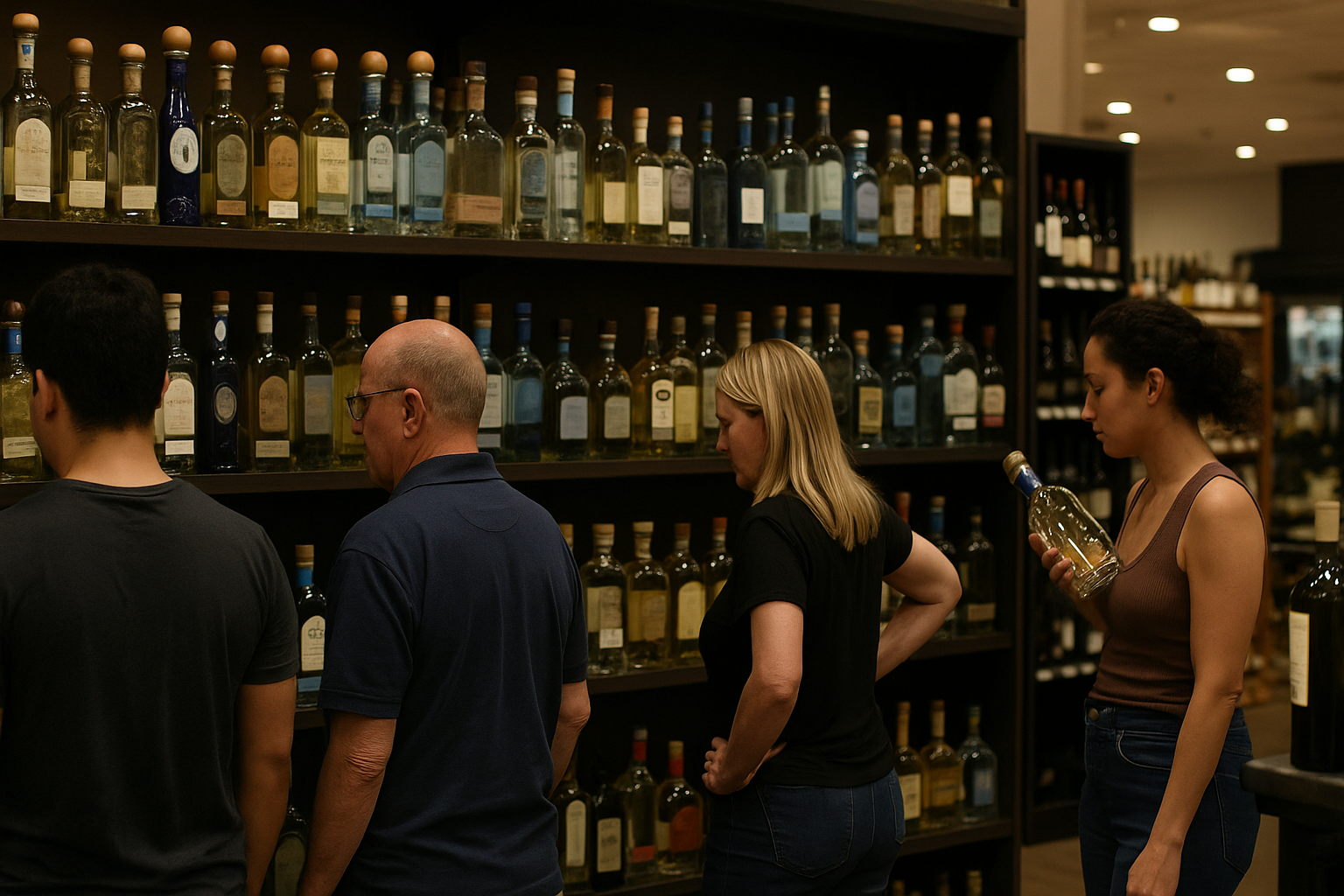
Diageo’s tequila sales fell 21.1% in fiscal 2026. If you still think slapping a premium price on a handsome bottle is a business model, I’ve got bad news: the customer has woken up.
That is the real tequila story right now. Not another celebrity launch. Not a gold-plated limited edition. Not some agency’s breathless report about “elevated occasions”. The world’s biggest spirits companies are getting a very expensive lesson in what happens when a category grows up.
Diageo’s numbers are the hangover
For the year ended June 30, 2026, Diageo reported a 21.1% decline in tequila net sales in its US Spirits business. Don Julio sales fell 19.2%, while Casamigos fell 27.7%. More importantly, this was not merely distributors clearing excess stock from a warehouse: Diageo said Don Julio depletions — bottles actually leaving distributors for retailers and bars — were down 10.1%, and Casamigos depletions were down 23.1%. ([sec.gov](https://www.sec.gov/Archives/edgar/data/835403/000162828026057529/deo-20260630.htm?utm_source=openai))
That is a proper warning light.
Diageo blamed a softer tequila category, more competitive pressure and difficult comparisons with the prior year. All true. But that language is also a very polite corporate way of saying consumers looked at a $50-plus bottle, looked at their mortgage, groceries and credit-card bill, and decided they could get a decent drink without financing somebody else’s brand mythology.
Casamigos is being price-repositioned and given refreshed marketing to improve its competitiveness. Again: sensible. But price repositioning is what companies do after the market has already told them the old price was taking the piss. ([sec.gov](https://www.sec.gov/Archives/edgar/data/835403/000162828026057529/deo-20260630.htm?utm_source=openai))
For founders and investors, this matters because Diageo is not a tiny operator with one bad quarter. It owns Don Julio and Casamigos, has enormous distribution muscle, serious marketing money and a portfolio that gives it leverage with every major retailer. When a business like that admits two flagship tequilas are losing share in a cooling US market, you should pay attention.
The tequila boom did not vanish. Its economics changed.
Tequila remains a much bigger category than it was a decade ago. Industry data cited by Shanken News Daily put US tequila volume at nearly 32 million cases in 2025, up from 14.6 million cases in 2015. Don Julio alone went from roughly 347,000 cases in 2015 to 3.6 million cases in 2025. That is an extraordinary run. ([shankennewsdaily.com](https://www.shankennewsdaily.com/2026/06/09/40021/diageo-looks-to-world-cup-push-to-boost-tequila-brands/?utm_source=openai))
But a category can be structurally healthy while the people who piled in late get absolutely smashed.
That distinction is where most founders lose their shirts. They mistake category growth for permission to be mediocre. They see tequila’s long-run success and assume every new blanco, every celebrity partnership and every $90 añejo has a seat at the table.
It does not.
The first stage of a boom rewards participation. The second stage rewards execution. The third stage clears out anyone confusing social-media attention with repeat purchase.
Tequila is well into that third stage in the United States.
Retail data for the four weeks ended September 5 showed total US spirits sales down 3.3% by dollar value and 3.4% by volume. Yet some tequila brands were growing sharply: LALO was up 48.8% in dollar sales, Cazadores up 36.5%, and Lunazul up 19.5%. In the same period, Don Julio was down 6.8%. ([12x75.com](https://www.12x75.com/tequila-growth-is-back-again/?utm_source=openai))
Don’t read that as “cheap tequila wins.” That is too simplistic, and usually wrong. Read it as: brands that give customers a clear reason to buy are winning. The middle of the market is becoming brutally selective.
The dangerous lie: premium always means expensive
Premium is not a price point. It is the gap between what a customer pays and what they feel they received.
That gap can be created through liquid quality, provenance, bartender advocacy, a properly earned reputation, a strong ritual, a brilliant on-premise strategy or exceptional value. It cannot be sustained by a fancy font, a founder with followers and a story invented by a branding agency over three long lunches.
Diageo’s own results make this painfully clear. In the first half of fiscal 2026, it said Don Julio and Casamigos both declined by double digits in North America as drinkers traded down at the top end of tequila. At the same time, Astral — positioned at a more accessible price point from a much smaller base — grew at a double-digit rate. ([diageo.com](https://www.diageo.com/pdf-viewer.aspx?gid=307336661&src=%2F~%2Fmedia%2FFiles%2FD%2FDiageo-V2%2FDiageo-Corp%2Fpress-release%2F2026%2Ff26-interims-results-press-release.pdf&utm_source=openai))
That does not mean premium tequila is finished. It means the old shortcut is finished.
There will always be customers for rare, excellent, expensive bottles. Wealthy people have not stopped being wealthy, and plenty of drinkers are happy to pay for genuine quality. But there is a massive difference between a product people buy because it is special and a product people buy because they briefly believed it was status.
Status is rented. Trust is owned.
That is why a brand can look enormous on Instagram, sell through a launch allocation, get placed in a few glamorous venues and still be a dreadful business underneath. If the bottle does not move when the hype dies down, you do not own demand. You own inventory risk.
The overlooked angle: this is good news for serious operators
A slowdown is not bad for tequila. It is bad for passengers.
The easy-money era created a lot of noise: too many brands, too much distributor optimism, too many founders assuming a famous mate could substitute for a route to market. A tougher market forces discipline back into the category.
It forces brands to answer basic questions they should have answered before bottling a single drop:
- Why should someone buy us again after the first bottle? - Can a bartender explain us in one honest sentence? - Are we still attractive without a discount? - Do we know our real contribution margin after distributor, retailer, freight, sampling and trade spend? - Are we building a brand, or just buying a temporary audience?
I see this clearly while building Agave Finder. The serious drinkers are becoming more informed, not less. They want to know what is in the bottle, where it comes from, what it tastes like, what it is worth and whether the story stacks up. That is a better market for producers with a genuine point of view — and a terrible one for brands hoping the customer stays confused.
The opportunity is no longer simply to make tequila. The opportunity is to reduce uncertainty for the buyer.
The business that helps somebody confidently choose a bottle, a bar or a producer earns attention before it earns money. The business that merely shouts “luxury” into the void earns neither.
Diageo’s World Cup play is smart — but marketing cannot repeal economics
Diageo has been leaning into the 2026 FIFA World Cup through brands including Don Julio and Casamigos. In its annual results, the company said ready-to-drink and cocktail sales grew 35.1% in US Spirits, helped by the Casamigos ready-to-serve World Cup launch and growth in Casamigos RTD. ([sec.gov](https://www.sec.gov/Archives/edgar/data/835403/000162828026057529/deo-20260630.htm?utm_source=openai))
That is strategically sound. Big cultural moments create reasons to drink, and ready-to-drink formats reduce friction. You don’t need to educate a consumer on how to make a cocktail if you can hand them a cold, credible version of it.
But here is the contrarian bit: a giant sponsorship is an amplifier, not a repair kit.
If your proposition is weak, spending more money simply lets more people see it is weak. If distribution is poor, a campaign creates frustrated demand you cannot capture. If the brand is priced beyond its value, sport will not magically make the maths feel better at the register.
Founders love campaigns because campaigns feel like progress. Distribution, unit economics, product quality and repeat-rate analysis are less glamorous. They are also where the money is.
What this means for you
If you run a consumer brand, stop asking whether your category is “hot.” That question is nearly useless. Ask whether your customer would still choose you if they had to pay full price and explain the purchase to a sceptical friend.
Do this tomorrow:
1. Audit your repeat purchase. Separate first-time buyers from repeat buyers. If you cannot do that, fix your data before spending another dollar on acquisition.
2. Test your price honestly. Don’t ask customers if they like your price. Watch what happens when promotions disappear. Discount-driven volume is not loyalty; it is rented revenue.
3. Get closer to the point of sale. Speak to bartenders, independent retailers and actual buyers. Not your agency. Not the mate who says the bottle looks sick. The people who see what gets reordered.
4. Build a plain-English reason to exist. If you need a five-minute founder speech to explain why your product matters, it probably does not matter enough.
5. Keep cash for the ugly phase. The brands that survive category resets are not always the loudest. They are the ones with enough margin, enough cash and enough humility to adapt before the market forces them to.
Diageo’s 21.1% tequila sales decline is not a verdict on tequila. It is a verdict on lazy premiumisation.
The good brands will emerge sharper. The weak ones will discover that a beautiful bottle is still just glass when nobody wants to buy it.