Dodgers’ $433.1M Spend Tops MLB’s Other 3 Finalists Combined
The Los Angeles Dodgers have spent $433.1 million on a roster facing three LCS rivals costing $360.5 million combined. That is not a payroll gap. It is a labour-war exhibit.
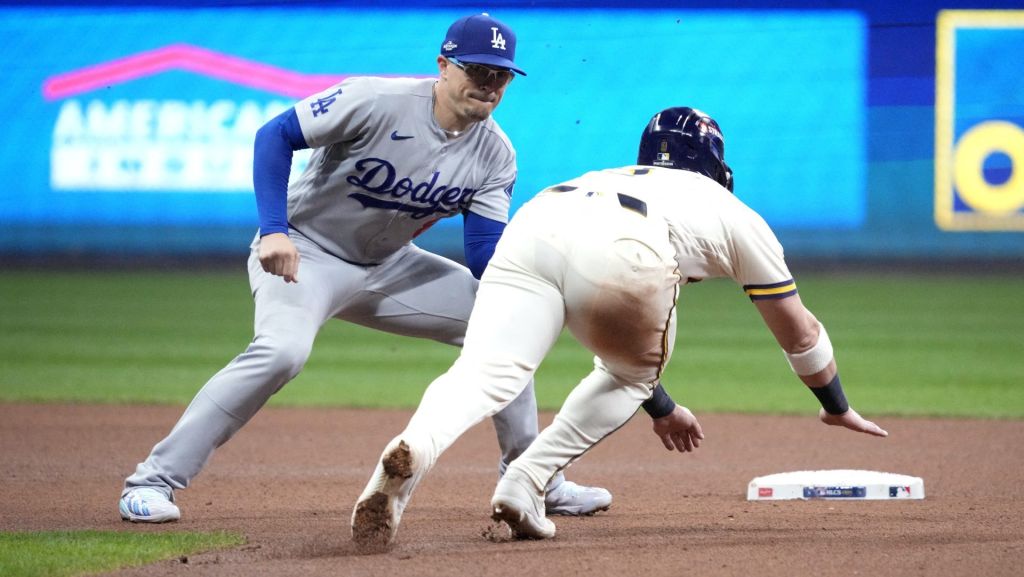
The Los Angeles Dodgers have spent $433.1 million on their luxury-tax payroll—more than the Milwaukee Brewers, Cleveland Guardians and Tampa Bay Rays have spent combined. The other three League Championship Series clubs come to $360.5 million. If you think this is merely a baseball stat, you are missing the real game: it is the opening argument in a fight that could shut the sport down. ([frontofficesports.com](https://frontofficesports.com/article/dodgers-lcs-round-brewers-rays-guardians/))
The Dodgers are not breaking baseball. They are exposing it.
As of October 12, the Dodgers are back in the National League Championship Series for the eighth time in 11 years, chasing a third straight World Series after two consecutive titles. Shohei Ohtani, Mookie Betts, Freddie Freeman and Yoshinobu Yamamoto are not a plucky collection of smart bets. They are the most expensive proof-of-concept in the sport.
Los Angeles lost Game 1 of the NLCS to Milwaukee, which is useful context. Money is not a remote control for October. It cannot guarantee a timely hit, healthy elbow or decent bullpen outing. Anyone saying otherwise is selling a lazy argument.
But money does buy something far more valuable over a 162-game season and four rounds of playoffs: room for error.
The Dodgers can carry stars, depth, insurance policies and bad outcomes simultaneously. A high-priced player has a down year? Fine. Another All-Star is there. A pitcher goes down? There is a serious replacement. A deadline trade is needed? The cheque book is not folded in half before the phone rings.
The Brewers operate in MLB’s smallest media market and have a $154.7 million payroll. Cleveland’s sits at $92.6 million, second-lowest in baseball. Tampa Bay’s is $113.2 million, fourth-lowest. Those clubs have reached the final four by being sharp, ruthless and very good at getting more production per dollar than most front offices. Good on them. But calling that an answer to the structural issue is a bit like telling a bloke who has won a marathon in thongs that everyone should stop buying running shoes. ([frontofficesports.com](https://frontofficesports.com/article/dodgers-lcs-round-brewers-rays-guardians/))
This is really about the 2027 CBA, not the 2026 playoffs
MLB’s current collective-bargaining agreement expires on December 1, 2026. The next fight is already underway, and the word nobody in the players’ union wants to hear is “cap.”
In May, MLB owners proposed a hard salary cap for 2027 of $245.3 million, paired with a payroll floor of $171.2 million. The proposal would also centralise local-media revenue and split baseball revenue 50-50 with players. On the surface, that is a neat bit of symmetry: pull the Dodgers and Mets down, push the low-spenders up, make the whole league look more like the NFL or NBA. ([apnews.com](https://apnews.com/article/96cc8ac5ee5328f3d5c904c55d7cc60f))
But nothing involving billionaires gets this tidy.
Using 2026 opening-day figures, eight teams would have needed to cut payroll to fit under the proposed cap. That group included the Dodgers, New York Mets, New York Yankees, Toronto Blue Jays, Philadelphia Phillies, Boston Red Sox, San Diego Padres and Atlanta Braves. Twelve teams would have been forced to increase payroll by a combined $617 million to reach the floor. ([apnews.com](https://apnews.com/article/96cc8ac5ee5328f3d5c904c55d7cc60f))
That floor matters. It is the bit owners who love yelling about the Dodgers often glide past. A cap without a floor is not competitive balance; it is a permission slip for cheap owners to pocket revenue sharing while pretending their fans should be grateful for a new mascot race.
The floor says Cleveland, Tampa Bay, Pittsburgh, Miami and others cannot simply sit on their hands. If you want the protection and asset growth that comes with owning an MLB club, you must put a credible share of revenue back into the roster.
That is a fair demand. It is also why the players’ union cannot dismiss the entire conversation as just rich owners whingeing about other rich owners. Some clubs plainly have the capacity to spend more than they do.
The cap argument has one massive problem: owners created this mess
Here is the uncomfortable bit for MLB ownership: the Dodgers did not sneak into the room through a window.
They operate inside the rules owners negotiated. They pay the Competitive Balance Tax. They use deferred compensation, a completely legal tool under the CBA. They invest aggressively because their ownership believes elite players, global stars and winning baseball produce returns. That is what competent capital allocation looks like.
In 2025, the Dodgers spent a record $514.6 million in payroll and luxury-tax payments: $345.3 million in payroll and $169.4 million in tax. Their total was more than seven times the Miami Marlins’ $68.7 million payroll. Los Angeles also used deferred money across seven players, reducing the amount counted for payroll-tax purposes by roughly $71 million. ([apnews.com](https://apnews.com/article/3344397c2f24fcd7f81e846a9babf881))
You can dislike the scale of it. You can argue it produces a worse product for fans in smaller cities. Both are reasonable views.
But it is hard to look at an owner who has spent years choosing not to invest, then hear him say the real problem is that another owner has invested too much. That is not always a competitive-balance argument. Sometimes it is an alibi with a blazer on.
The union’s core objection is obvious: a hard cap limits player earnings while franchise values can keep climbing. That suspicion is not paranoid. Sports owners are very good at describing cost control as stewardship when it applies to labour, and strangely less chatty about controlling their own upside.
Still, the owners have a real data point too. MLB’s own analysis says teams in the top half of market size have been six times more likely than bottom-half clubs to reach the World Series from 2015 to 2025, and nine times more likely to win it. The last small-market champion was the Kansas City Royals in 2015. ([mlb.com](https://www.mlb.com/dodgers/news/how-salary-cap-floor-system-affects-teams-based-on-market))
Both things can be true: some small-market owners are too cheap, and baseball’s economics make sustained contention far easier for the biggest markets.
The overlooked angle: October is making both sides look right
This year’s final four is deliciously inconvenient for everyone.
The Dodgers are the owners’ Exhibit A: a payroll so large it eclipses three conference-final rivals combined. They are a direct visual of the imbalance that has fans rolling their eyes before the first pitch.
But the Brewers, Guardians and Rays are the players’ Exhibit A. Three lower-spending, clever clubs have made the LCS. Milwaukee’s player development, Cleveland’s pitching machine and Tampa Bay’s operational discipline demonstrate that money does not erase competence.
That does not mean the system is healthy. It means good operators can beat a bad system occasionally. There is a difference.
The contrarian view is that a cap will not magically create smart baseball organisations. It will simply make mistakes cheaper for the clubs currently making them. Give a mediocre front office a spending ceiling and it may still waste every dollar below it. The NBA has a cap; it also has franchises that manage to make a proper meal of their roster-building every other year.
The better question is not, “Should the Dodgers be stopped?” It is, “How do you make every owner take winning seriously without punishing the clubs that already do?”
A meaningful floor, more equitable media economics, stronger revenue sharing tied to actual roster investment, and sensible guardrails on runaway spending is a harder answer than a simple cap. Hard answers tend to be the useful ones.
What this means for you
Whether you run a startup, invest your own money or manage a team of five, there are three lessons here worth stealing.
First: build a margin for error. The Dodgers’ advantage is not merely star power. It is redundancy. Most businesses are one missed sales target, one key resignation or one delayed payment away from drama because they run with no bench. Keep cash, talent and capacity in reserve. It feels inefficient right until it saves you.
Second: do not confuse scrappiness with a strategy. The Brewers, Guardians and Rays are brilliant because they are disciplined by necessity. But do not romanticise permanent underinvestment. If your business is working, reinvest. You cannot keep asking talented people to perform miracles because you are emotionally attached to being “lean.”
Third: watch incentives, not speeches. Every side in baseball is wrapping its preferred economic outcome in the language of fairness. Owners want cost certainty. Players want earning power. Neither position is evil, but neither is pure. In your own deals, ignore the PowerPoint adjectives and ask one question: who gets richer if this rule changes?
That question will save you a lot of money.
The Dodgers may or may not win another World Series. That is sport. But their $433.1 million roster has already won something more important: it has forced baseball to admit that its next labour deal is about far more than payroll. It is about which owners are serious, which ones are cheap, and who gets to keep the upside when the game keeps getting richer.