DoorDash’s $300M Campus Deal: Why Wonder Sold Its Least Strategic Asset
DoorDash just paid $300 million for a campus-food business Wonder was better off without. The clever bit is the extra $125 million cheque: this is a breakup disguised as a partnership.
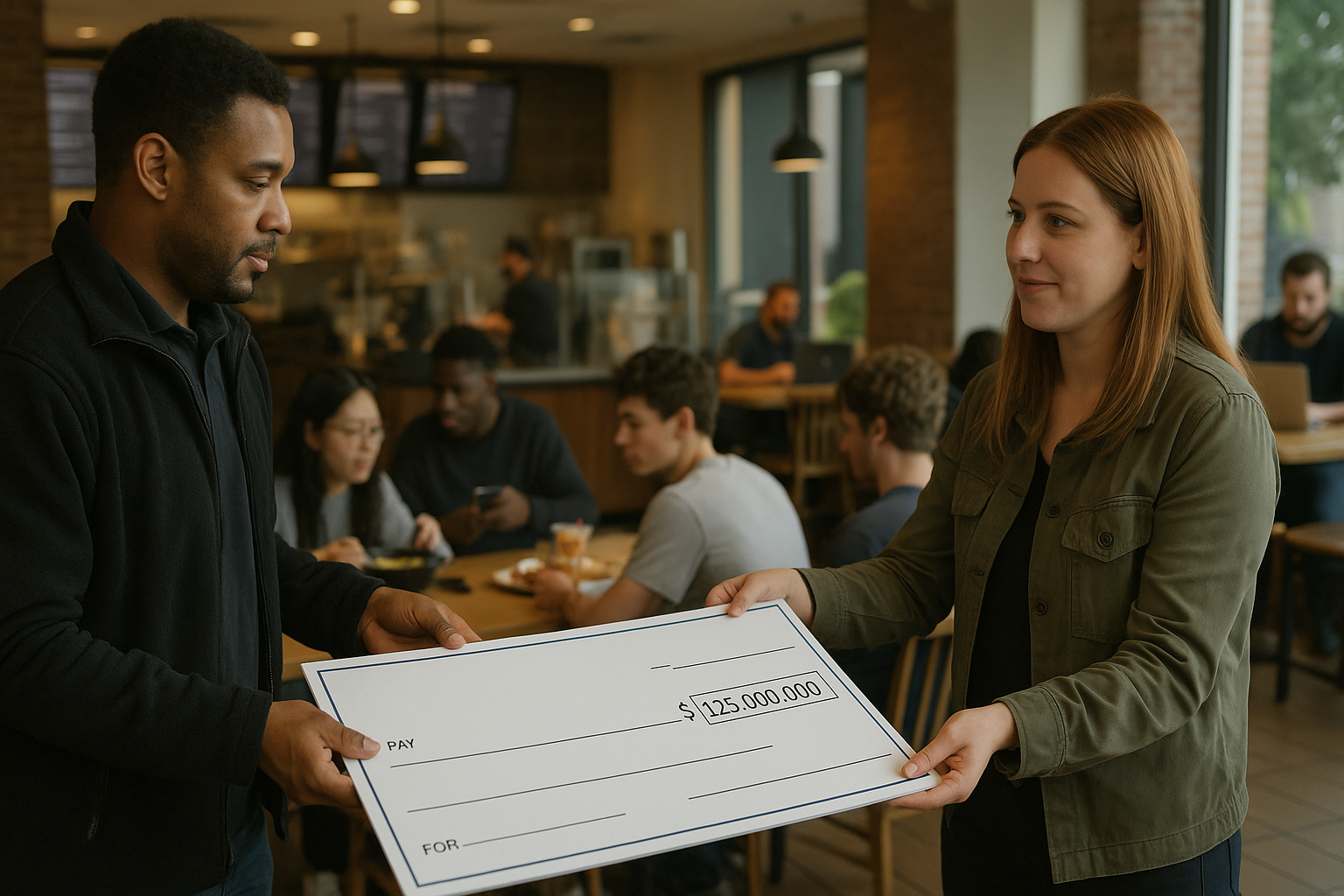
DoorDash just paid $300 million for a campus-food business Wonder was better off without. The clever bit is the extra $125 million cheque: this is a breakup disguised as a partnership.
On September 15, DoorDash agreed to buy Wonder’s Grubhub Campus Dining business for $300 million and invest another $125 million in Wonder’s Series D. The campus operation, formerly Tapingo, works across more than 450 colleges and universities; the deal is expected to close by the first half of 2027, subject to the usual approvals. ([ir.doordash.com](https://ir.doordash.com/news/news-details/2026/DoorDash-and-Wonder-Announce-Strategic-Partnership/default.aspx?utm_source=openai))
Most people will call this a food-delivery deal. That misses the point.
This is a sharp example of what good operators do when they have a big vision: they stop pretending every asset belongs in the same company. Wonder gets cash, a strategic investor and less distraction. DoorDash gets a ready-made foothold in a difficult, high-frequency market. Neither side needs to buy the whole other business and inherit the headaches.
That is grown-up dealmaking. More founders should learn it.
DoorDash bought access, not just a campus app
Grubhub Campus Dining lets students order from campus eateries through an app or kiosk, pay with campus dining dollars and schedule pickup. That sounds mundane until you think about what sits beneath it: university relationships, meal-plan integrations, institutional payment systems, physical dining operations and a concentrated customer base that orders often.
Students are not merely another delivery cohort. They are a captive local-commerce audience living, studying and eating within a tight geographic loop. Get embedded in the campus payment and ordering layer and you are no longer fighting for every dinner order with a promo code. You are part of the operating system.
DoorDash says it plans to expand the platform beyond colleges into stadiums, hotels and similar venues. That is the real acquisition thesis. The company is buying a vertically integrated ordering stack that has already survived the messy reality of institutional food service, then trying to deploy it wherever customers face queues, limited choice and awkward payment systems. ([ir.doordash.com](https://ir.doordash.com/news/news-details/2026/DoorDash-and-Wonder-Announce-Strategic-Partnership/default.aspx?utm_source=openai))
That is a much better use of $300 million than buying another consumer-facing delivery brand and hoping customer acquisition costs magically improve.
DoorDash already has immense scale. In the June quarter, it reported 970 million total orders, up 27% year on year, and Marketplace gross order value of $33.1 billion, up 36%. At that size, the next useful deal is rarely about buying more generic demand. It is about acquiring proprietary distribution, better data and more control over the point where an order begins. ([sec.gov](https://www.sec.gov/Archives/edgar/data/1792789/000179278926000050/dash-20260630.htm?utm_source=openai))
Campus Dining offers all three.
Wonder is selling focus, not surrendering
Marc Lore’s Wonder has spent years assembling a very ambitious meal machine: physical locations, restaurant brands, delivery, meal kits, Grubhub, technology, robotics and AI. In July, it raised $650 million at a $9 billion pre-money valuation to fund expansion and investment in that stack. DoorDash’s $125 million goes into that same Series D. ([about.wonder.com](https://about.wonder.com/news/details/2026/Wonder-Announces-650-Million-Series-D-Round-at-a-9-Billion-Pre-Money-Valuation/default.aspx?utm_source=openai))
Wonder also says it has 157 locations across the Northeast and Mid-Atlantic, more than quadruple its footprint since the start of 2025, with Texas openings planned from January 2027. ([ir.doordash.com](https://ir.doordash.com/news/news-details/2026/DoorDash-and-Wonder-Announce-Strategic-Partnership/default.aspx?utm_source=openai))
That is not the profile of a company that needs another niche software-and-institutional-sales operation competing for management attention. It is the profile of a company that needs to become brutally good at opening sites, making food consistently, reducing kitchen complexity and delivering a proposition customers actually repeat.
I have built businesses. The temptation when things are going well is to keep every asset because it feels like optionality. Usually it is just clutter with a nicer name.
Wonder bought Grubhub for $650 million last year. Now it is selling one business unit for $300 million while bringing in $125 million of fresh capital from the buyer. That does not mean it has somehow recovered its Grubhub purchase price. It means Wonder has found a buyer that values this particular asset more highly in DoorDash’s hands than it is likely to value it inside Wonder’s broader plan. ([techcrunch.com](https://techcrunch.com/2026/09/15/wonder-scores-a-425-million-partnership-with-doordash-as-it-builds-its-food-empire/?utm_source=openai))
That distinction matters.
A business can be good and still be wrong for you. Founders routinely confuse those two ideas, then waste three years trying to force a decent asset into a strategy it does not serve.
The overlooked angle: DoorDash is funding the company it may one day compete with
Here is the part that should make operators sit up: DoorDash is not simply paying Wonder and walking away. It is buying an asset while investing in the seller.
That structure says both sides see value in the other remaining healthy. DoorDash wants the Campus Dining platform. But it also appears comfortable helping Wonder keep building its physical-food and food-technology machine. Wonder gets a serious strategic partner without selling the whole farm.
There is risk in that, obviously. Wonder owns Grubhub, while DoorDash is the far larger delivery platform. The companies will still overlap in food ordering and delivery. But competition does not make partnerships stupid. It makes the boundaries important.
DoorDash is effectively saying: “We want the institutional ordering layer; you keep chasing the end-to-end meal platform.” Wonder is saying: “We will take the capital and let you run the campus asset that does not define our future.”
That is far more intelligent than an all-or-nothing merger. Full mergers are seductive because they give bankers a giant headline and executives a giant integration problem. Partial deals can be better because they isolate the actual strategic prize.
The sharpest takeaway is that corporate development is not just about acquiring companies. It is about deciding which capability needs to be owned, which relationship can be partnered and which division should be sold before it becomes a management tax.
Why the $425 million headline is slightly misleading
Calling this a $425 million acquisition is neat, but not quite right.
DoorDash is paying $300 million to acquire Campus Dining. The other $125 million is an investment in Wonder’s Series D, not consideration for the acquired business. That distinction is not accounting trivia. It changes how you assess the deal.
The $300 million tells you what DoorDash is willing to pay for the unit. The $125 million tells you DoorDash sees enough value in Wonder’s broader future to put capital behind it. Together, the cheques create alignment. But they solve different problems.
Investors should be wary whenever a press release bundles acquisitions, investments and commercial partnerships into one flashy number. Ask three boring questions:
1. What exactly is being bought? 2. What exactly is being funded? 3. What does each side still have to execute after the announcement?
If you cannot answer those questions, you do not understand the deal. You understand the headline.
And headlines do not make money. Understanding incentives does.
What this means for you
If you are a founder, do an asset audit this week. Not a motivational off-site. A proper list.
Write down every product, customer segment, subsidiary, channel and side project in the business. Next to each one, answer: does this make our core strategy stronger, or does it merely make our company more complicated?
Then ask a tougher question: might this asset be worth more to someone else?
That is not failure. It is capital allocation.
If you are an operator, look for the unsexy infrastructure beneath a flashy market. DoorDash did not buy Campus Dining because university lunch is glamorous. It bought embedded payments, institutional integrations and repeat demand. The best opportunities are often hiding in the dull plumbing everyone else ignores.
If you are an investor, separate transaction value from strategic value. DoorDash’s $300 million purchase matters because it can open a new venue-software and ordering lane. The $125 million investment matters because it gives Wonder fuel to pursue a different ambition. Do not lump them together and call it analysis.
And if you are running a growing company, remember this: focus is not saying no to bad ideas. Any idiot can do that. Focus is having the nerve to sell, shut down or partner on a good thing because it is not the thing that will make you great.
Wonder has made that call. DoorDash has paid for the result. Now both sides have to prove the strategy works when the press release wears off.