DraftKings’ $30M HardScope Deal Is a Creator-Marketing Governance Test
DraftKings can spend up to $30 million with a company owned by one of its sitting directors. If it cannot prove the deal beats the alternatives, the governance problem is obvious.
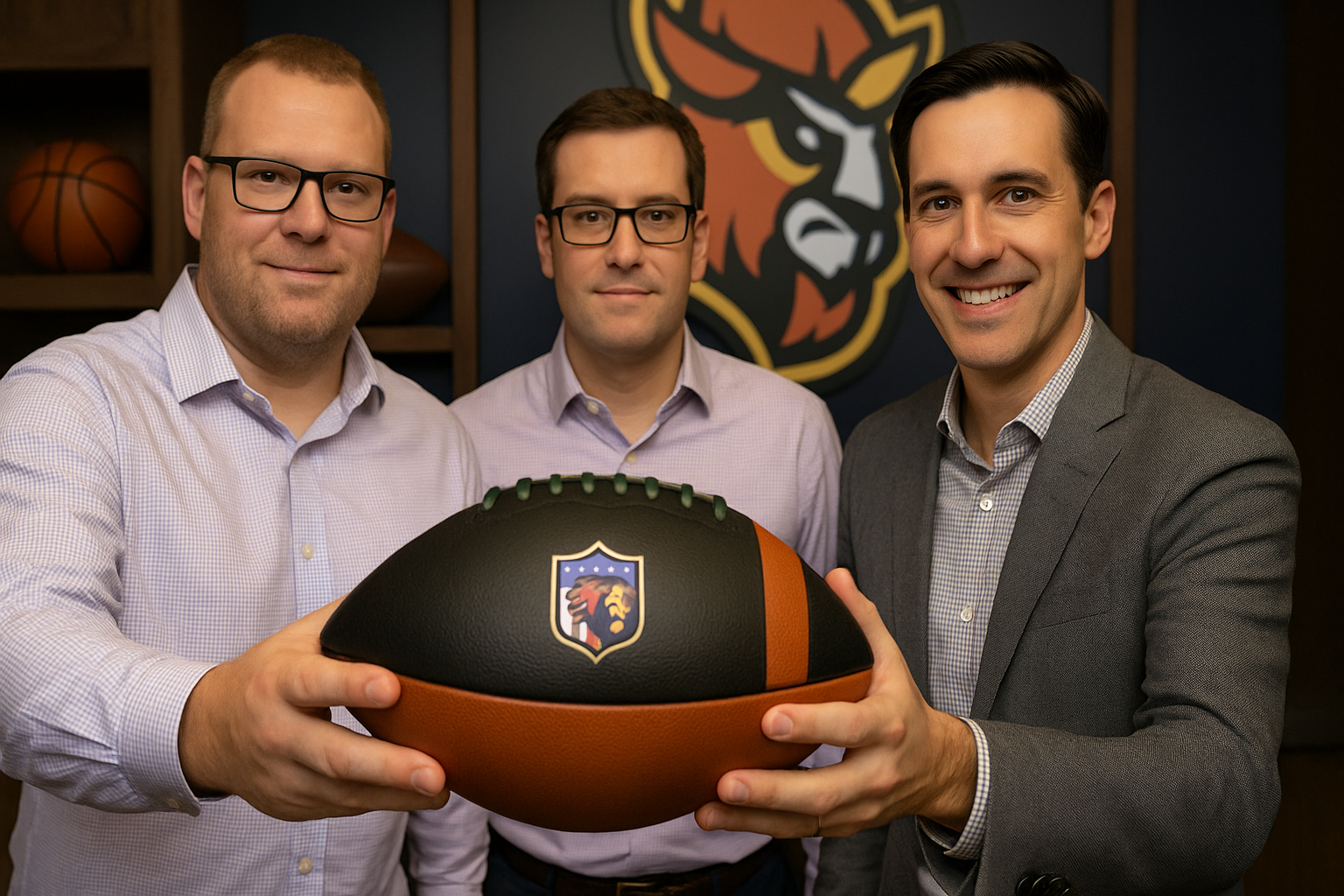
DraftKings can spend up to $30 million with a creator-marketing company owned by Matthew Kalish, its co-founder, former North America president and current director. If it cannot prove this deal beats the alternatives, the governance problem is obvious.
The uncomfortable bit is not that creator marketing costs money. Of course it does. The uncomfortable bit is that the person on the other side of this potential three-year deal is still a DraftKings director, and he helped build the company that is now buying the service.
That is exactly why this story matters to every founder, operator and investor who has decided creators are the new growth channel. They may be. But “creator economy” is not a magic spell that turns weak governance, woolly attribution and expensive middlemen into strategy.
The $30 million arrangement
DraftKings’ proxy statement says certain subsidiaries signed a consulting-services agreement with Kalish’s HardScope on February 17, 2026. Under the deal, DraftKings can use HardScope to secure personal services and name, image and likeness rights from talent for promotional campaigns. The company is not obliged to spend the money, but service fees can total as much as $30 million over three years. HardScope can retain a commission of up to 14% of the related service fee. ([sec.gov](https://www.sec.gov/Archives/edgar/data/1883685/000110465926035176/tm261526-1_def14a.htm))
Do the simple maths: at the maximum theoretical commission rate, that is up to $4.2 million retained by the intermediary. It does not mean HardScope will pocket $4.2 million; the filing says much of the money is expected to compensate talent and cover related costs. But it does mean the incentive is obvious. More campaign spend means more potential commission.
The proxy also says DraftKings had entered one statement of work under the arrangement as of the filing date, but had not incurred fees under it. Its audit committee approved both this agreement and an earlier marketing arrangement under the company’s related-person transaction policy. ([sec.gov](https://www.sec.gov/Archives/edgar/data/1883685/000110465926035176/tm261526-1_def14a.htm))
That approval matters. It means this is not a secret invoice slipped through accounts payable after a long lunch. But a deal can be disclosed, technically compliant and still deserve hard scrutiny. Those are not mutually exclusive things. In fact, that is usually when scrutiny is most useful.
Kalish’s transition was not some distant historical footnote either. DraftKings and Kalish agreed on November 6, 2025 that he would leave his role as President, DraftKings North America. He remained on the board after the transition. The company’s proxy describes 14 years of contribution across fantasy, sportsbook, casino, revenue, marketing, operations and analytics. ([sec.gov](https://www.sec.gov/Archives/edgar/data/1883685/000110465926035176/tm261526-1_def14a.htm))
So the question is not whether Kalish understands DraftKings’ customer. Of course he does. The question is whether DraftKings can prove that this is the best way to buy creator reach, rather than merely the easiest way to buy it from someone already inside the tent.
Why creator marketing is no longer the side hustle
HardScope launched in December 2025 with Kalish as CEO. Its pitch is straightforward: give independent creators the strategic, production, social, distribution and commercial infrastructure required to operate more like real media businesses. The company’s team includes people behind FaZe Clan’s 2024 relaunch and has worked with major livestreaming talent. ([thewrap.com](https://www.thewrap.com/draftkings-cofounder-launches-creator-platform-hardscope/))
That proposition is not silly. It is actually a pretty sensible diagnosis of the market.
Brands have spent years treating creators as a cheaper version of television: pick a face, buy a post, ask for a discount code, then pretend a few million views equal commercial impact. That model is tired. The best creators are not inventory. They are publishers, community leaders, product testers, live broadcasters and, increasingly, businesses with their own leverage.
For DraftKings, the appeal is obvious. Sports betting is a habit-driven category competing in a noisy, expensive market. It needs new customers, repeat customers and cultural relevance. The company’s second-quarter results showed monthly unique payers up about 9% to 3.6 million, while average revenue per payer fell about 13% to $132. Revenue fell 5%, to $1.443 billion, with DraftKings citing customer-friendly sporting outcomes and greater promotional reinvestment tied to customer acquisition across Sportsbook and Predictions. ([ir.aboutdraftkings.com](https://ir.aboutdraftkings.com/news/news-details/2026/DraftKings-Reports-Second-Quarter-Results/default.aspx?utm_source=openai))
In plain English: getting customers in the door remains valuable, but the economics of those customers are under pressure. That is precisely when marketing people start saying words like “authenticity,” “community” and “cultural relevance” with a straight face while quietly asking for a larger budget.
Creator partnerships may genuinely outperform a generic media buy. A host with a trusted sports audience can explain a product, make it feel familiar and earn attention that a banner ad will never get. But that is a reason to demand better measurement, not a reason to suspend it.
The second-order problem: incentives travel faster than disclosures
The real lesson here is bigger than DraftKings. Every decent-sized business is currently building some version of a creator strategy, retail-media strategy, AI-search strategy or community strategy. Most will make the same mistake: they will confuse access with advantage.
Access to creators is not a moat. Every brand can email a talent manager. Every agency can put a creator on a slide deck. Every consultant can call a podcast sponsorship “native integration” and send an invoice large enough to make your finance director blink.
The advantage is in the operating system behind the spend.
Can you identify which creator brought a customer who deposited, purchased, renewed or referred someone else? Can you separate incremental customers from people who would have arrived anyway? Can you track retention by creator cohort after 30, 90 and 180 days? Can you stop paying when the economics turn ugly? And can an independent person in the business answer all of those questions without relying on the agency that earns more when you spend more?
If the answer is no, you are not doing performance marketing. You are buying vibes with a spreadsheet attached.
DraftKings’ arrangement has a sensible structural feature: payment depends on a statement of work, a related talent agreement and delivery of the services and deliverables. ([sec.gov](https://www.sec.gov/Archives/edgar/data/1883685/000110465926035176/tm261526-1_def14a.htm)) That is better than writing a blind cheque. Yet deliverables are not outcomes. A creator can deliver content exactly as promised and still deliver dreadful commercial returns.
That distinction is where many operators get cleaned up. They negotiate the post count, video length, usage rights and exclusivity window with the intensity of a hostage negotiator. Then they barely negotiate the one thing that matters: what happens if the campaign does not create profitable, incremental demand.
The overlooked angle: the deal may be commercially rational—and still poorly designed
Here is the contrarian view: related-party arrangements are not automatically dodgy. Sometimes the former executive is exactly the right supplier. Founders and long-serving operators often have rare domain expertise, hard-won relationships and speed that an outside firm cannot match.
A business should not ban itself from buying the best service simply because the best person used to work there. That would be performative purity, and it is a terrible way to run a company.
But the higher the relationship risk, the higher the proof standard. Full stop.
The board should be able to show that HardScope’s commercial terms beat—or at minimum properly compare with—credible alternatives. It should require campaign-level reporting that separates talent payments, production costs, HardScope’s commission and DraftKings’ attributable customer economics. It should ensure Kalish is completely removed from any board discussion, negotiation, approval or evaluation connected to HardScope. And it should revisit the arrangement at short intervals, not just admire a three-year ceiling and hope for the best.
The $30 million cap is not the scandal. The test is whether DraftKings treats it as a cap on expenditure or as a ceiling it feels compelled to use.
A cap is there to protect discipline. It should not become a target with a nice haircut.
What this means for you
If you are running marketing tomorrow, nick these rules.
First, pay for business outcomes, not creator activity. Set the deliverables, obviously. But build the deal around tracked acquisition, first purchase, gross margin, repeat behaviour and a hard break clause. Impressions are not revenue. Engagement is not retention.
Second, separate the relationship from the rate card. If an insider, former executive, investor, mate or board member can supply the work, obtain independent benchmarks before signing. Keep the comparison in writing. The right supplier should have no problem beating a fair process.
Third, make the middleman earn their margin. A 14% commission can be perfectly reasonable if the intermediary sources better talent, negotiates stronger rights, produces better work and improves customer economics. If it merely forwards emails and invoices, it is a tax on your own indecision.
Fourth, measure cohorts, not launch-week noise. Track each creator’s customers separately for at least 90 days. The loudest campaign is often the least valuable. You want customers who stay, spend and refer—not punters who arrive for a promo and vanish before the second invoice lands.
Finally, treat governance as part of your brand. Customers may not read your proxy statement. Investors do. Employees do. Future partners do. The way you handle conflicts tells people whether you run a serious company or a mates’ club with a marketing budget.
Creator marketing is becoming real infrastructure. Good. It should be held to the standards of real infrastructure: transparent economics, independent oversight and ruthless performance measurement.
Anything less is just expensive content with a famous face on it.