DraftKings’ $30M HardScope Deal Puts Jason Robins’ 88% Vote Under a Microscope
If your company is losing money, the last thing shareholders want is a founder’s new business sitting beside the till. DraftKings says its $30 million deal was properly approved. That is not the same as it being wise.
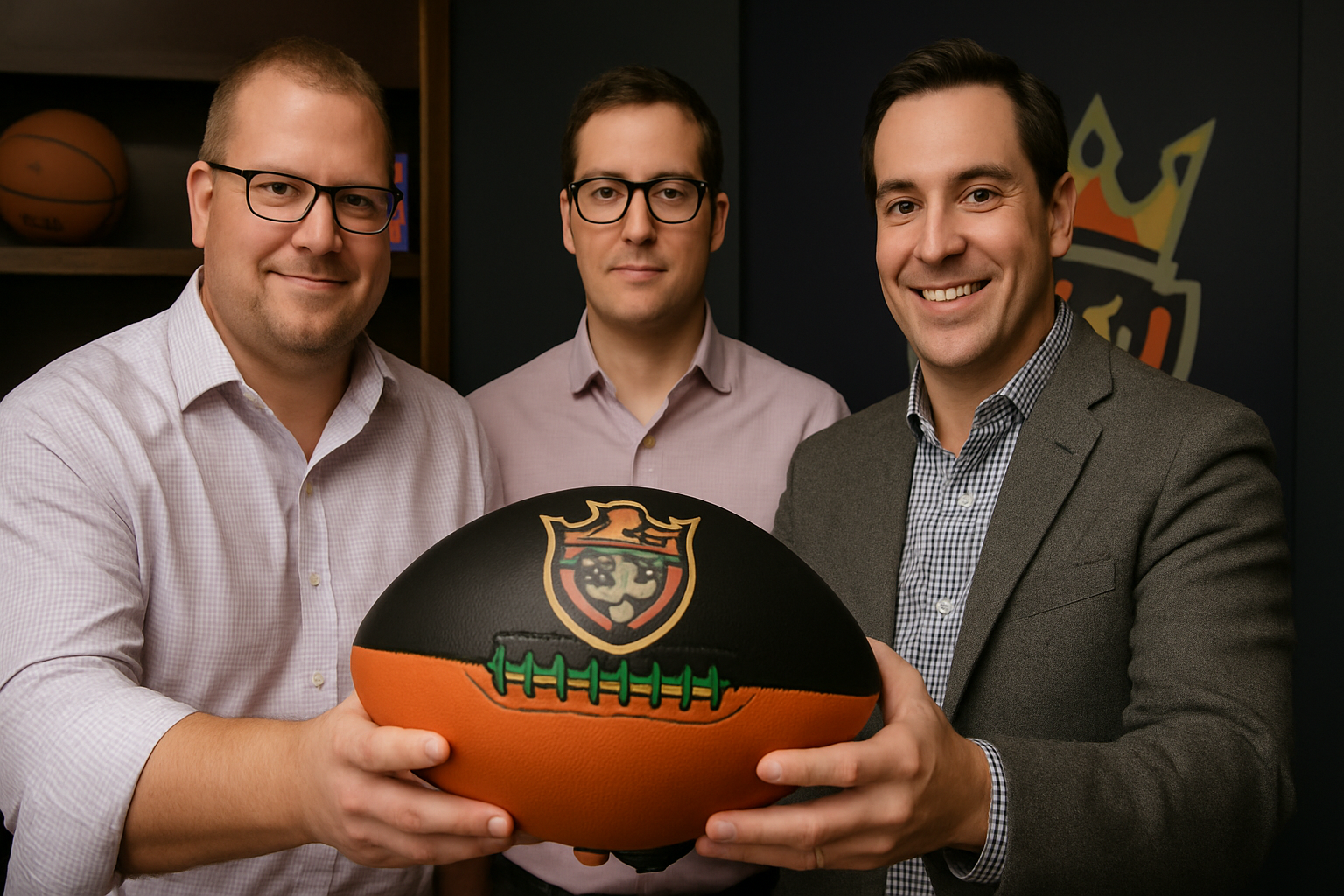
DraftKings has built a business around odds. The ugly irony is that its shareholders are now being asked to take a punt on whether a $30 million deal with a departing cofounder’s new company passes the smell test.
I’m not alleging corruption. Neither should you. The company says its independent audit committee approved the arrangement, and its filings say it had not incurred fees under the larger agreement as of the proxy date. But good governance is not merely about whether a committee ticked a box. It is about whether ordinary owners can look at the arrangement and conclude, without needing a law degree or blind faith, that their money is being handled like it matters.
The deal is real — and the timing is the whole problem
DraftKings cofounder Matthew Kalish stepped down as president of DraftKings North America on March 31, 2026, after 14 years at the business. He remained on the board. Before that exit, DraftKings entered a consulting agreement, dated February 17, 2026, with HardScope, a company Kalish wholly owns.
The agreement gives DraftKings the right — not the obligation — to use HardScope to secure promotional services and name, image and likeness rights from talent for marketing campaigns. The ceiling is $30 million over three years. HardScope can retain a commission of up to 14% of the relevant service fee. If the full cap were ultimately used and the maximum commission applied throughout, that would imply as much as $4.2 million in commission revenue for HardScope. That is a ceiling, not a forecast, and the actual outcome depends on specific statements of work, talent costs and services delivered. ([sec.gov](https://www.sec.gov/Archives/edgar/data/1883685/000110465926035176/tm261526-1_def14a.htm))
There was also a previous marketing arrangement between the parties: up to $600,000, of which DraftKings reported $150,000 incurred during fiscal 2025. So this is not a random invoice that appeared out of thin air. It is a commercial relationship that expanded substantially while one party was still a senior executive and remains a director.
That is why this is a leadership story, not just a marketing-procurement story. Executive exits are supposed to clarify loyalties. This one has blurred them.
Jason Robins’ voting control changes the equation
The central character here is not only Kalish. It is Jason Robins, DraftKings’ CEO and cofounder.
Robins controls roughly 88% of DraftKings’ voting power while holding about 2% of its economic interest, according to Fortune’s reporting on the company’s ownership structure. That kind of dual-class control can be useful early in a company’s life. It stops short-term traders from pushing founders into dumb decisions. I understand the argument; I have backed founder-led businesses for precisely that reason.
But founder control comes with an adult obligation: when the company does business with insiders, the standard must rise, not fall.
A board can be formally independent and still operate in the shadow of a controlling founder. Directors are appointed within a system whose ultimate power centre is obvious. That does not mean they are puppets. It does mean shareholders are entitled to ask harder questions than, “Was it approved?”
The better questions are: Why HardScope? What alternatives were considered? Was there a competitive process? What is the measurable return expected from each campaign? Are the commissions genuinely better than market rates after all costs are counted? And why should shareholders accept this arrangement while Kalish continues to sit on the board?
Those questions matter because the deal is not happening during a lazy-money boom, when a company can burn cash and call it strategy. DraftKings reported second-quarter revenue of $1.443 billion, down 4.6% year on year, and a net loss of $67.6 million. Sales and marketing expense rose to $322.5 million, up from $233.2 million in the comparable quarter. ([sec.gov](https://www.sec.gov/Archives/edgar/data/1883685/000188368526000027/q226-prx8kexx991.htm))
Marketing is not a dirty word. It is how consumer businesses fight. But when marketing spending is rising, revenue is falling and a former senior executive’s company is in line for up to $30 million, governance needs to be exceptionally clean. “Technically permitted” is the lowest possible bar.
DraftKings is trying to defend a very expensive moat
The business backdrop explains why management may want every credible customer-acquisition channel available.
DraftKings is under pressure from prediction-market platforms and has been leaning into its own Predictions offering. CEO Robins told investors the company’s Super App was live nationwide and that Predictions was growing faster than anticipated. DraftKings maintained full-year 2026 guidance of $6.5 billion to $6.9 billion in revenue and $700 million to $900 million in adjusted EBITDA. ([sec.gov](https://www.sec.gov/Archives/edgar/data/1883685/000188368526000027/q226-prx8kexx991.htm))
That is the bullish case: management sees a category fight coming, wants creator-led promotion, and believes HardScope can source talent more efficiently than traditional agencies. Kalish told Fortune the 14% commission was more favourable than rates DraftKings had paid other marketing agencies. DraftKings also said payments occur only after statements of work, talent agreements and deliverables are in place. ([fortune.com](https://www.fortune.com/2026/08/26/exclusive-draftkings-former-president-insider-30-million-marketing-deal/))
Fair enough. Those are legitimate commercial arguments.
But the market does not award a company extra credibility because it says an insider deal is efficient. It awards credibility when the company makes the process so transparent that scepticism looks unreasonable.
DraftKings could do that tomorrow. It could disclose the procurement benchmark used for HardScope. It could detail the audit committee’s recusal and review process. It could publish campaign-level performance guardrails: customer-acquisition cost, payback period, retention and incremental revenue. It could also say plainly whether Kalish recuses himself from every board discussion touching HardScope.
Instead, shareholders have a maximum dollar figure, a commission cap and a lot of room for inference. That is how a manageable issue becomes a trust discount.
The overlooked angle: the $30 million may not be the biggest cost
The obvious headline is the $30 million. I reckon the reputational cost could be more damaging.
Investor confidence is an asset. It affects the multiple people are willing to pay for your shares, the patience they give management during a rough quarter, and how much benefit of the doubt you get when the next strategic pivot arrives.
DraftKings is not a corner pub with three mates making decisions over a schooner. It is a public company competing in regulated, capital-intensive markets. Its shareholders include people who own the Class A stock but do not have a meaningful say over control. For them, governance is not an academic hobby. It is their only protection against being passengers in someone else’s family business.
This is where plenty of founders get it wrong. They assume the criticism is about envy — outsiders whining because founders retain influence. Rubbish. Investors will happily tolerate strong founder control when it produces clear decisions, long-term thinking and aligned incentives.
They get nervous when control makes related-party deals feel unavoidable, opaque or insulated from genuine challenge.
And here is the contrarian point: a company does not need to ban all dealings with former executives. That would be childish. Founders often have specialist relationships, rare industry knowledge and commercial contacts worth using. In some cases, the best supplier genuinely is someone inside the tent.
The answer is not prohibition. It is proof.
If HardScope is the best option, DraftKings should be able to demonstrate it against alternatives. If the commission is genuinely cheaper, show the comparison. If campaigns perform, publish the results. If Kalish has no operational influence over the selection or spend, make the safeguards painfully clear.
When you are spending shareholders’ money with a founder’s company, boring transparency is not a burden. It is the product.
What this means for you
Whether you run a startup, manage a team or invest your own money, nick this rule: the closer a deal is to the people in power, the more daylight it needs.
For founders and operators, put these four rules in place before you need them:
1. Create a related-party register. Any supplier, adviser, contractor or agency tied to a founder, director or executive goes on it. No exceptions for mates, spouses, old colleagues or “it’s only a small project.”
2. Make recusal real. The interested person does not vote, does not lobby, does not sit in the decision meeting and does not receive the internal scoring memo. If they are indispensable to the discussion, you have already got a governance problem.
3. Run a market test. Get competing bids or document why that is impractical. Record price, scope, alternatives, performance expectations and termination rights. You do not need bureaucracy; you need evidence.
4. Measure the deal like an outsider would. For marketing, that means acquisition cost, conversion, retention, payback and incrementality. “They know the brand” is not a metric.
For investors, read the related-party transactions section of the proxy statement. It is usually more revealing than the glossy shareholder letter. Then ask one blunt question: does the control structure protect the business from short-termism, or does it protect insiders from accountability?
DraftKings may yet show that HardScope delivers terrific value. It has the contractual ability to spend nothing, and the company says the agreement was reviewed and approved properly. But public-company leadership is not judged only by what management can get away with. It is judged by what management chooses to make unquestionably fair.
That is the standard Robins and the DraftKings board should meet. Not because the paperwork demands it. Because shareholders do.