Eaton’s €810M COL Deal Says AI’s Biggest Bottleneck Isn’t Chips
AI is not running out of clever software. It is running into the far less glamorous problem of getting enough reliable electricity to the machines.
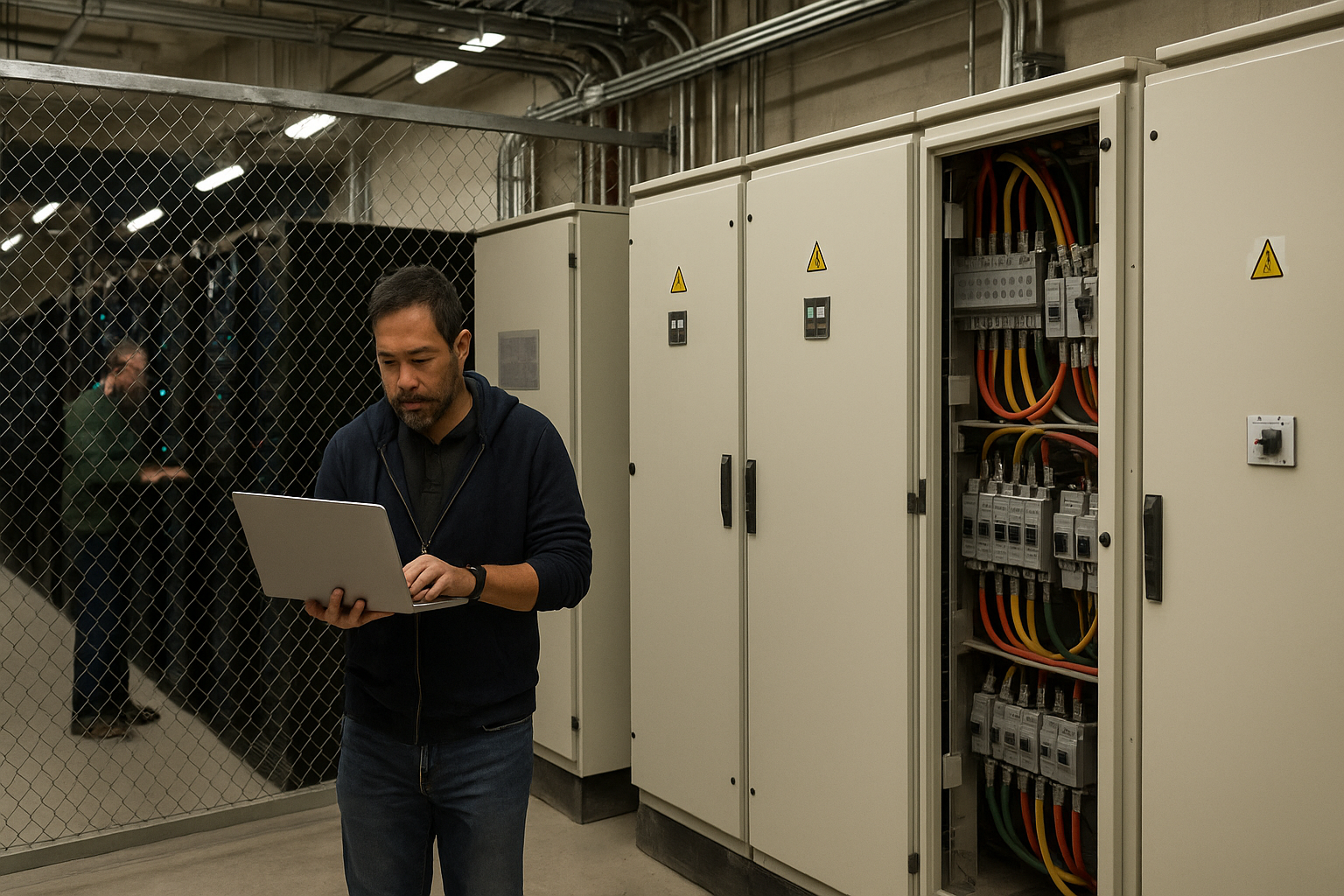
AI is not running out of clever software. It is running into the far less glamorous problem of getting enough reliable electricity to the machines.
That is why Eaton just agreed to pay €810 million for an Italian electrical-equipment business with roughly 400 employees. Not a frontier-model company. Not another GPU darling. Switchgear. Grid automation. Modular power systems. The boring bits are where the serious money is going.
The €810 million deal is a bet on electricity, not hype
On September 25, Eaton announced an agreement to acquire COL Group from Oaktree’s Power Opportunities strategy for an enterprise value of €810 million, or about US$923 million. COL makes medium-voltage electrical-distribution equipment, including SF₆-free switchgear, grid automation technology and modular power systems. The transaction is expected to close in the first quarter of 2027, subject to the usual conditions and regulatory approvals.
COL forecasts €250 million in sales for 2027. Do the simple maths: Eaton is paying about 3.2 times that forecast revenue.
That is not pocket change for a business most people have never heard of. But Eaton is not buying a brand story. It is buying manufacturing capacity, engineering capability and a European footprint at a time when data centres and utilities are both asking for more power infrastructure than the market can comfortably deliver.
COL has facilities in Turin, Milan, Bergamo and Catania. It has spent more than a century in electrical distribution. That is precisely the point. You cannot conjure qualified engineers, tested equipment, customer relationships and production capacity from a pitch deck because AI investors have become impatient.
Eaton’s stated rationale is blunt: expand its European power-distribution capabilities and manufacturing footprint to serve growing demand from data-centre and utility customers. That is the whole game. AI may get the headlines, but electricity is what turns a model demo into a working business.
Everybody wants AI. Nobody wants to talk about the plumbing.
The market has spent years treating AI like a software story. Buy the chips. Build the model. Sell the subscription. Lovely.
Reality is more physical than that.
A serious AI deployment needs compute, storage, networking, cooling, backup systems and a stable path from the grid through substations, switchgear and distribution equipment to the rack. Every one of those layers has its own constraints. A data centre cannot monetise a single GPU if it cannot get reliable power to it.
That makes a company like COL far more interesting than its public profile suggests. Its products sit in the part of the stack where capital expenditure becomes operational capacity. Switchgear is not sexy. It is, however, the equipment that manages and protects electrical systems. Grid automation is not a dinner-party topic. It is useful when a network has to respond intelligently to increasingly complex demand.
This is why I like the deal more than the fashionable AI acquisitions grabbing the same oxygen. Eaton is not trying to guess which chatbot will still matter in three years. It is buying a supplier to the people spending real money on physical infrastructure now.
There is a difference between buying a narrative and buying a bottleneck.
Oaktree is selling capacity at exactly the right moment
Oaktree’s Power Opportunities strategy is selling COL into a market where strategic buyers can see the next order book more clearly than financial buyers can. Eaton has a much better reason to own this asset than a fund does: it can plug COL’s products, factories and engineering capability into a broader power-management platform.
That does not make the price cheap. At roughly 3.2 times COL’s forecast 2027 sales, Eaton is plainly paying for future demand as well as the existing business. But it is also buying something that is hard to replicate quickly.
A new factory is not just a building. It needs trained people, supplier networks, quality control, safety processes, certifications, customer trust and years of learning from things going wrong. Anyone who has built a real business knows this. The spreadsheet crowd often forgets it because the spreadsheet does not include the pain.
COL’s approximately 400 employees are therefore not a footnote. They are a meaningful part of what Eaton is purchasing. In infrastructure markets, the team that knows how to deliver reliably is often more valuable than the patent everyone is bragging about on LinkedIn.
Eaton is already a large operator: it reported US$27.4 billion in 2025 revenue and serves customers in 180 countries. That scale matters because large customers do not merely want a component. They want someone who can supply, support and stand behind a system across markets. COL gives Eaton more local capacity in Italy and more capability in European medium-voltage distribution.
That is a practical advantage, not a PowerPoint advantage.
The overlooked angle: this is also a grid deal
Most commentary will call this an AI-infrastructure acquisition. Fair enough. Data centres are explicitly part of Eaton’s rationale.
But the smarter reading is that this is an AI-and-grid deal.
Data centres increase demand for electricity. Utilities must handle that demand while also dealing with electrification, ageing infrastructure and the growing complexity of power networks. Eaton is buying equipment that is relevant to both sides of the equation: the customer consuming more power and the system trying to supply it.
That matters because it gives the deal more than one way to work.
If AI infrastructure spending keeps roaring, Eaton has additional manufacturing capacity and products to sell into data-centre projects. If the AI trade cools off, utilities still need distribution equipment and grid automation. The deal is exposed to a major growth theme without being entirely dependent on one model provider, one chipmaker or one giant cloud company continuing to spend like a sailor on shore leave.
That is the sort of optionality I prefer. Not fake optionality, where a company slaps “AI” on a presentation and hopes the share price does the rest. Real optionality, where the same physical capability can serve multiple durable sources of demand.
The contrarian view: the danger is not that Eaton bought too much AI
The obvious risk is that Eaton has overpaid because everyone has decided data-centre infrastructure is the new gold rush. That risk is real. Forecast revenue is still forecast revenue. A €250 million sales projection for 2027 is not cash in the bank.
But I think the more interesting risk is execution.
Eaton must integrate COL without slowing down the very factories and engineers it is buying for speed and capacity. It must retain the people who understand the products. It must translate broader corporate scale into more customer wins without suffocating a specialised Italian operator in process, reporting and internal politics.
Big companies often buy entrepreneurial capability, then bury it under meetings and procurement manuals. That is how a sensible acquisition becomes an expensive lesson.
The winner here will not be the company with the best press release. It will be the one that shortens customer lead times, keeps quality high, gives engineers room to work and converts demand into revenue before rivals build competing capacity.
That is why I would watch the boring indicators after the deal closes: production output, delivery reliability, hiring and retention, customer backlog, factory expansion and margin discipline. Those tell you whether the acquisition is becoming a machine or merely a trophy.
What this means for you
If you are a founder, stop assuming the best business opportunities live at the shiny end of a trend. Ask a simpler question: where does growth physically break?
When everyone is chasing AI models, look at power, cooling, installation, maintenance, compliance, data movement and workflow integration. The money often pools around the constraint, not the celebrity.
If you are an operator, map the dependencies that could stop your business cold. Not the abstract risks. The real ones. Which supplier has a 12-month lead time? Which capability depends on three people? What infrastructure is scarce enough that a larger competitor could buy it before you can access it?
Then build options before you need them. Secure suppliers. Develop second sources. Hire people who understand the unglamorous parts of the system. Pay attention to the businesses your competitors dismiss as boring.
And if you are an investor, be careful with the word “AI.” It is becoming a lazy bucket. Separate companies selling hope from companies selling the picks, shovels, wires and systems required to turn AI spending into reality.
Eaton’s €810 million purchase of COL Group is a reminder that the next fortune is not always made by inventing the glamorous thing. Sometimes it is made by owning the equipment everyone else suddenly cannot operate without.