EliseAI’s $350M Raise Proves Boring AI Is Worth $4B
The AI winners won’t be the firms making clever demos. They’ll be the ones buried inside expensive, ugly workflows nobody else could be bothered fixing.
If your AI startup cannot save a customer money, make them money, or stop a costly mess, it is probably a very expensive toy. EliseAI has just raised $350 million at a $4 billion valuation because it chose the messy work everyone else ignored.
The $350 million vote for work nobody brags about
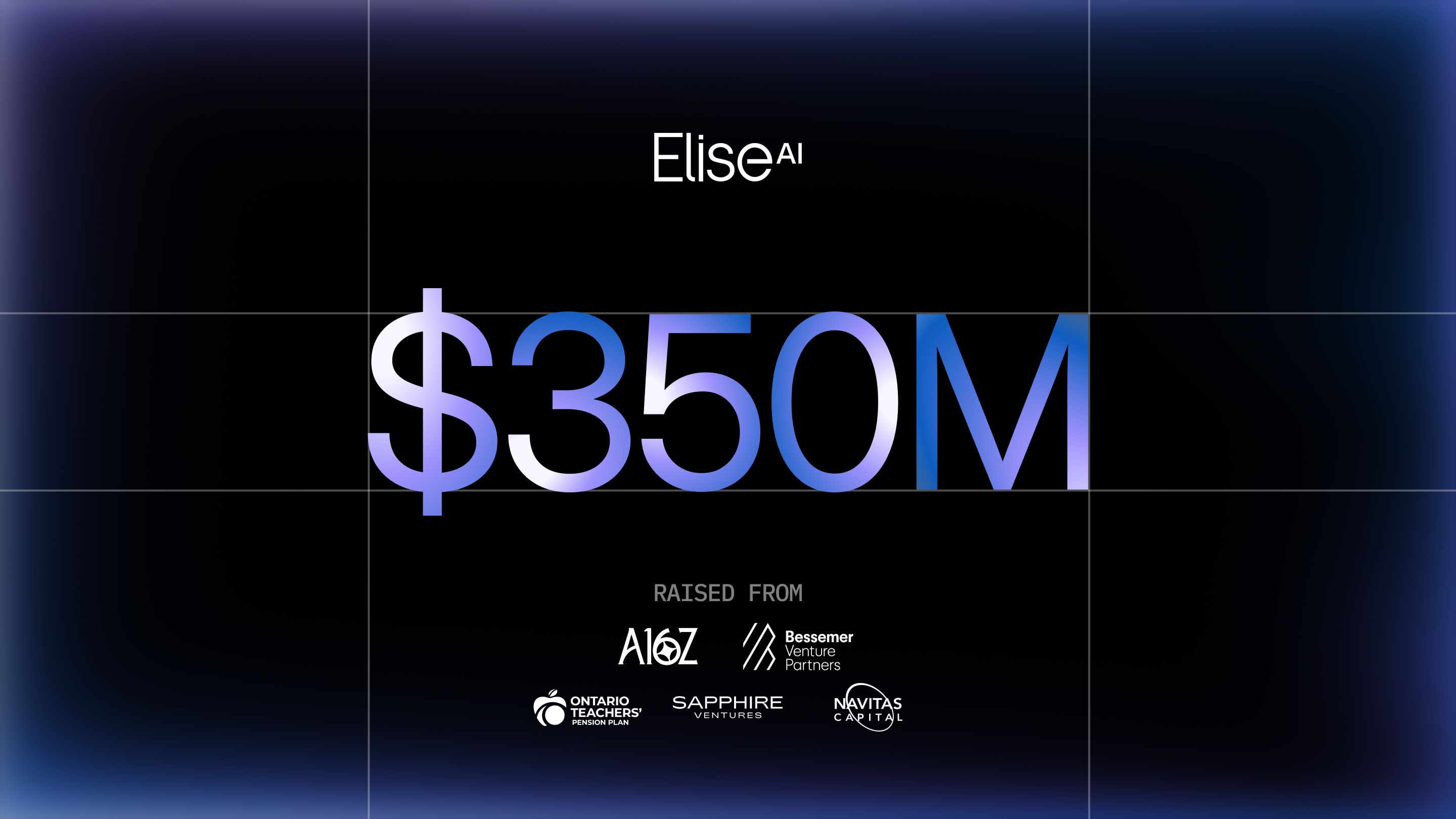
On September 29, EliseAI announced a $350 million financing at a $4 billion valuation. Andreessen Horowitz and Bessemer Venture Partners co-led the round, with Ontario Teachers’ Pension Plan, Sapphire Ventures and Navitas Capital participating. The company said the cash will go into product development and hiring across engineering, deployment and sales, while it establishes San Francisco as a second engineering hub alongside New York. ([fortune.com](https://fortune.com/2026/09/29/elise-ai-4-billion-valuation-funding-round-housing-unicorn-andreessen-bessemer/?utm_source=openai))
That valuation is nearly double what EliseAI was worth roughly 13 months earlier, when its $250 million Series E put a $2.2 billion price tag on the company. This latest round is entirely primary capital, according to cofounder and CEO Minna Song. That matters. The money is not just early investors selling shares to the next bloke in line; it is fresh capital going into the operating business. ([fortune.com](https://fortune.com/2026/09/29/elise-ai-4-billion-valuation-funding-round-housing-unicorn-andreessen-bessemer/?utm_source=openai))
EliseAI’s job is not glamorous. It automates the administrative machinery of apartment operators and specialty healthcare groups: leasing enquiries, maintenance, renewals, billing, intake, referrals, scheduling, insurance verification, chart preparation and follow-up. In other words, it targets the work that drains staff, annoys customers and quietly wrecks margins.
The company says it crossed $200 million in annual recurring revenue in June 2026, has doubled revenue year over year for five consecutive years, powers one in six US apartments, and has been used by more than 30 million Americans since it started. Those are company-reported numbers, naturally, but they explain why serious investors are prepared to pay serious prices. ([globenewswire.com](https://www.globenewswire.com/news-release/2026/09/29/3370681/0/en/eliseai-raises-350-million-at-4-billion-valuation-to-bring-ai-deeper-into-housing-and-healthcare-operations.html?utm_source=openai))
Here is the blunt bit: EliseAI is not being rewarded for saying “AI” more loudly than everyone else. It is being rewarded because its software sits close to money.
The real product is not AI — it is operational trust
Founders love to talk about models. Customers care about whether the thing works at 7:15pm on a Sunday when a renter wants to inspect a flat, a lease is about to lapse, or a patient needs an appointment without being bounced around a phone tree.
That is EliseAI’s actual moat. Not that it has access to artificial intelligence — everyone does now. Its advantage is years spent embedded in specific, highly repetitive workflows where a mistake costs a property manager occupancy, a healthcare practice revenue, or a patient timely care.
The company was founded in 2017. That date matters because it tells you this was not a business cooked up in a hotel lobby after ChatGPT made AI fashionable. It built before the current frenzy, in sectors full of fragmented systems, compliance constraints and people who do not have time for a technology experiment. ([techcrunch.com](https://techcrunch.com/2026/09/29/a16z-backed-eliseai-raises-350m-doubles-valuation-to-4b/?utm_source=openai))
EliseAI recently introduced Apollo, an AI “teammate” designed to act within the EliseAI platform across property-team tasks. That is a much more valuable proposition than bolting a chat box onto old software and calling it transformation. The ambition is for the system to complete work across the tools customers already use, rather than merely suggest what a human should do next. ([techcrunch.com](https://techcrunch.com/2026/09/29/a16z-backed-eliseai-raises-350m-doubles-valuation-to-4b/?utm_source=openai))
This is the dividing line many operators still miss. A useful AI product does not just generate an answer. It changes the workflow, handles the hand-offs, leaves an audit trail and gets the job to done.
That is harder to sell, harder to build and harder to copy. Which is exactly why it is worth doing.
Why housing and healthcare are such a serious prize
Housing and healthcare are not sexy categories in the way consumer AI is sexy. Good. Sexy is usually crowded.
Both industries are huge, administratively heavy and painfully dependent on people relaying information between systems. Apartment operators deal with leads, tours, applications, resident questions, maintenance, renewals and payments across thousands of units. Healthcare practices juggle patient calls, eligibility checks, referrals, scheduling rules, clinical paperwork and follow-ups.
The core pattern is the same: important work gets delayed because staff are overwhelmed by predictable work.
EliseAI’s strategy is to go deep rather than broad. It first built meaningful penetration in housing, then applied the same operating logic to healthcare administration. That is a better play than trying to be the all-purpose AI assistant for every business on earth. “Horizontal” is often founder shorthand for “we haven’t decided who will pay us yet.”
There is another lesson here for investors. The best software businesses do not necessarily begin by changing an entire industry overnight. They win one ugly, high-frequency problem, become trusted with adjacent jobs, then expand their share of a customer’s operations.
That is what makes the valuation interesting. At $4 billion against more than $200 million in reported ARR, investors are not underwriting a novelty product. They are underwriting the possibility that EliseAI becomes a deeper operating layer inside two industries where customers have already accepted its presence. ([fortune.com](https://fortune.com/2026/09/29/elise-ai-4-billion-valuation-funding-round-housing-unicorn-andreessen-bessemer/?utm_source=openai))
The overlooked angle: this round is a bet on deployment, not just software
Most people see a $350 million AI round and assume the money is for chips, model training and some bloke’s grand plan to outspend OpenAI.
Not here.
EliseAI says it will expand engineering, deployment and sales across North America. That middle word — deployment — deserves more attention than it gets. In complicated industries, selling software is only half the battle. Getting it integrated, adopted, governed and used correctly is where the value is created or destroyed. ([globenewswire.com](https://www.globenewswire.com/news-release/2026/09/29/3370681/0/en/eliseai-raises-350-million-at-4-billion-valuation-to-bring-ai-deeper-into-housing-and-healthcare-operations.html?utm_source=openai))
A brilliant product with a weak deployment function is just a polished demo. Customers do not buy demos. They buy outcomes.
That is also why the move to build a San Francisco engineering hub is logical, even though the company is headquartered in New York. The business needs technical talent, yes, but it also needs enough operational muscle to keep turning customer complexity into repeatable implementation.
I have seen this in businesses far outside software. The shiny front-end gets attention. The boring system behind it determines whether you make money. Your customer does not care how clever your technology is if their team cannot implement it without a six-month migraine.
The contrarian takeaway is that AI may make product development faster, but it makes distribution and implementation more important, not less. When everyone can build a prototype, the operator who can install it reliably wins.
The valuation is not a licence to get lazy
Now, let’s not get carried away. A $4 billion valuation is a scorecard, not a finish line.
EliseAI has big expectations attached to it: maintain growth, prove that its housing success travels cleanly into healthcare, keep product quality high as it expands, and avoid the classic growth-company disease of hiring faster than it can manage. Its investors have paid up because they expect the company to turn workflow depth into a much larger and more durable revenue base.
The company also operates in domains where errors matter. A bad answer in a marketing chatbot might be embarrassing. A bad workflow in housing can lose a lease; a bad workflow in healthcare administration can create far more serious consequences. As AI takes on more tasks, reliability, oversight and clear escalation paths become commercial requirements, not legal fine print.
That is why I would be more interested in EliseAI’s retention, expansion rates, implementation timelines and customer economics than the headline valuation. The $4 billion number grabs attention. The boring operating metrics will decide whether it was clever or stupid.
What this means for you
If you are a founder, stop asking, “How do we add AI?” Ask, “Which repeated job is expensive enough that a customer will pay to remove it?” Be painfully specific. Pick a workflow with volume, urgency and a measurable financial consequence.
Then do three things tomorrow:
1. Map the full job, not the first click. Find every hand-off, exception and approval after your product produces an output. That is where real enterprise value lives. 2. Sell an economic result. Do not pitch “automation.” Pitch faster leasing, fewer missed appointments, lower admin cost, higher renewal rates or more revenue collected. If you cannot put a number on the outcome, you have homework to do. 3. Treat implementation as product. Build onboarding, integrations, auditability and human escalation into the offer from day one. A customer paying you to change a critical workflow is buying confidence as much as software.
If you are an investor, be wary of AI businesses that have audience but no operational foothold. The next serious winners will not necessarily have the flashiest consumer brand or the loudest founder. They will own a dull, costly workflow so thoroughly that removing them becomes unthinkable.
EliseAI’s $350 million round is not proof that every vertical-AI startup deserves a unicorn valuation. It is proof of something more useful: the money gets very real when AI stops performing tricks and starts doing the work.