Enbridge’s US$2.55B Tallgrass Deal Buys the Tollbooth, Not Oil
The clever money isn’t betting on oil at US$100. Enbridge just paid US$2.55 billion to own the tollbooth while everyone else argues about the traffic.
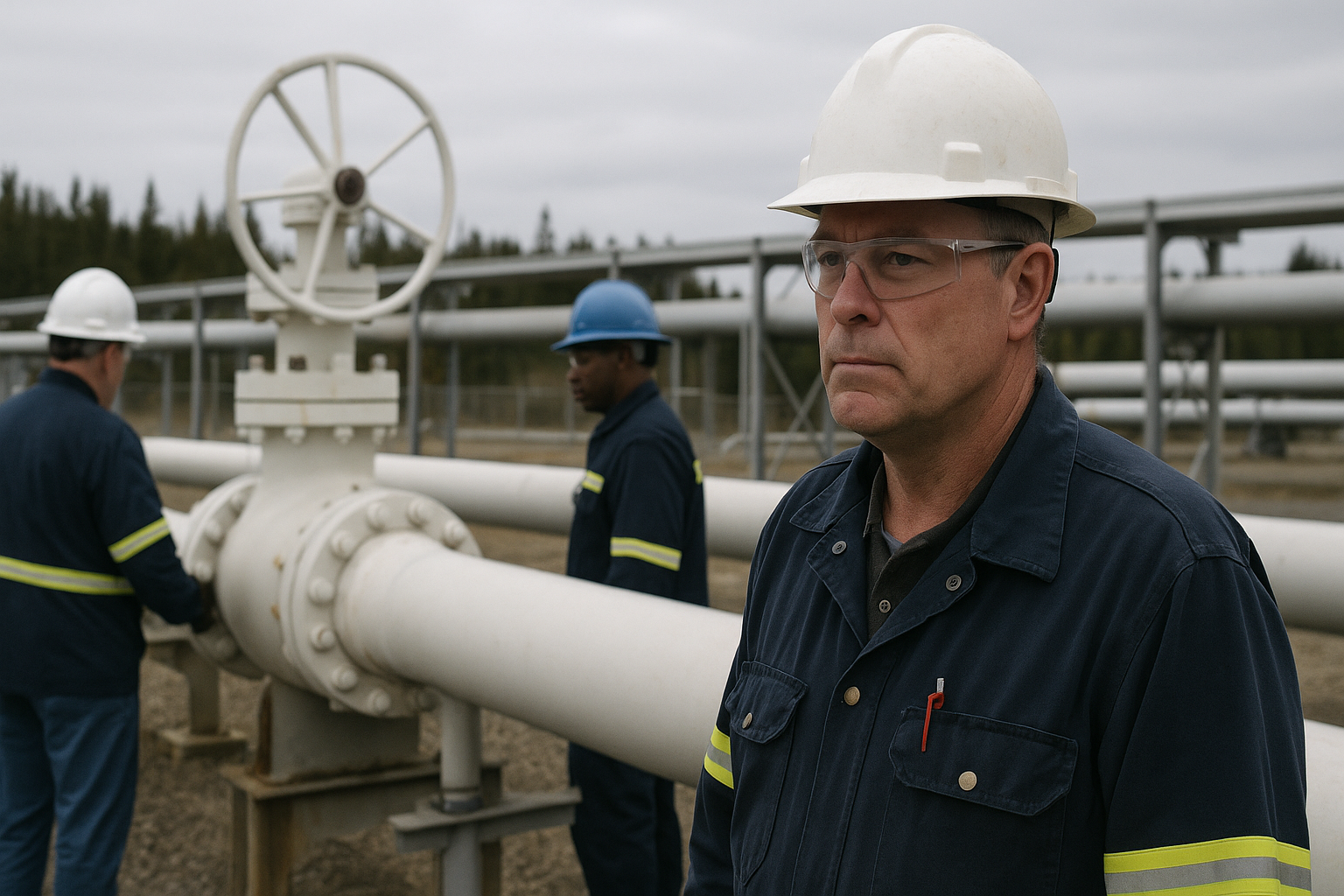
The clever money isn’t betting on oil at US$100. Enbridge just paid US$2.55 billion to own the tollbooth while everyone else argues about the traffic.
That distinction matters. Commodity prices make headlines, wreck forecasts and send grown adults on television into a panic. The boring bloke who owns the route from the oil field to the customer gets paid for moving the barrel. That’s where Enbridge is putting its money.
What Enbridge actually bought
On September 9, Enbridge entered a definitive agreement to buy Blackstone-owned Tallgrass Energy’s crude transportation business for US$2.55 billion in cash. It is expected to close later in 2026, subject to regulatory approval and customary conditions.
This is not a cute bolt-on. Enbridge is buying a controlling 75% interest in the Pony Express Pipeline, a 1,050-mile crude system linking Rockies production to Cushing, Oklahoma. Pony Express has average annual capacity of roughly 460,000 barrels a day and direct access to about 500,000 barrels a day of refining capacity.
It is also buying a 51% stake in Powder River Gateway, which includes the Iron Horse and Powder River Express pipelines. Together, those lines can move about 240,000 barrels a day into Pony Express.
Then comes the bit that spreadsheet tourists routinely undervalue: 8.4 million barrels of storage across nine terminals connected to the system, including a 60.3% non-operating interest in the Deeprock Crude Terminal at Cushing. Enbridge also gets Stanchion Energy, the crude marketing business attached to the network.
In plain English, Enbridge is not merely purchasing pipe in the ground. It is buying a connected system: gathering, transport, storage, market access and a commercial arm that helps keep barrels flowing through the lot.
That is a far better business than owning one lonely asset and praying volumes turn up.
The number that matters is 10–11x
Enbridge says the acquisition is priced at an estimated 10–11 times forward enterprise value to EBITDA. At first glance, that will make plenty of people spit out their coffee. Paying more than 10 times for an old-economy asset does not sound sexy in a market trained to clap for anything with “AI” stapled to the front of it.
But a multiple without context is just a number people use to sound clever at lunch.
Pony Express is highly contracted through the decade, according to Enbridge, with predominantly investment-grade counterparties. The PXP2 expansion project is backed by take-or-pay contracts and is expected to cost US$300 million, lifting Pony Express capacity to roughly 515,000 barrels a day when it enters service in late 2027.
That is the heart of the deal. Enbridge is paying up for contracted, difficult-to-replicate capacity with a defined growth project attached.
Anyone can announce a pipeline. Building one is another matter entirely. You need rights-of-way, permits, financing, engineering, customer commitments, local support and the stomach to spend years being yelled at by people who want the benefits of infrastructure but hate infrastructure being built anywhere near them.
Existing, contracted infrastructure is valuable precisely because it is hard to create from scratch. That is the moat. Not the steel. Not the pumps. The moat is the permissions, connections, customers and operating history wrapped around them.
Blackstone is selling an asset, not admitting defeat
There is another useful lesson here for founders and investors who think every sale must mean somebody lost.
Blackstone Infrastructure agreed in 2019 to acquire Tallgrass’s general partner and roughly 44% economic interest for about US$3.3 billion in cash. Seven years later, it is selling Tallgrass’s crude business to Enbridge while Tallgrass retains other operations.
That is what sensible portfolio management looks like. You buy a platform, build or improve it, harvest value where a strategic buyer sees more value than you do, and keep capital moving.
Private equity gets plenty of criticism, some of it deserved. But this is not financial engineering disguised as genius. Enbridge has an existing North American liquids network and an obvious reason to stitch the Tallgrass assets into it. It already operates the Express-Platte system, which runs crude from Hardisty in Alberta to Wood River in Illinois through parts of the northern United States.
A standalone owner sees one collection of assets. A strategic owner can see routing options, customers served across multiple systems, operating overlap, expansion opportunities and a stronger negotiating position with shippers.
That is why strategic buyers can sometimes pay a price that looks rich to a financial buyer and still make a perfectly rational return.
The overlooked angle: storage is not the side dish
Most of the chatter will focus on the Pony Express Pipeline because it has the memorable name and the big mileage number. Fair enough. But I would spend just as much time looking at the storage.
Pipelines move product. Storage creates optionality.
When markets get dislocated, timing matters. A shipper with access to storage can manage scheduling, match supply with refinery demand, and avoid being forced into the worst possible commercial decision on the worst possible day. The barrels still need to move, but where they sit and when they leave can carry real value.
Cushing is not some random dot on a map. It is a major oil-storage and trading hub. Owning connected terminal capacity there makes the rest of the network more useful. And in infrastructure, usefulness compounds. A pipeline tied to storage is worth more than a pipeline without it. Storage tied to several delivery points is worth more again. Add a marketing business that can optimise throughput, and the pieces start reinforcing each other.
This is the same principle I look for in any business: don’t buy a feature if you can buy the system around the feature.
A restaurant with a famous chef is a feature. A restaurant with an unbeatable site, a trained team, loyal customers, supplier relationships, booking demand and disciplined unit economics is a system. One survives the chef leaving. The other probably doesn’t.
Enbridge is building a network, not collecting trophies
The Tallgrass deal is also not happening in isolation. Enbridge announced the acquisition of Salt Creek Midstream’s crude-gathering assets in late August for US$600 million. Those Permian assets connect gathering systems to Enbridge’s Gray Oak Pipeline and, ultimately, its Ingleside export terminal.
Different basin, same playbook: own more of the valuable route without pretending you need to own every metre of pipe in North America.
Enbridge says it will partially fund the Tallgrass and Salt Creek purchases with an equity offering. That will annoy investors who treat every new share as a personal insult. But management is trying to preserve balance-sheet flexibility while it funds a C$41 billion secured growth backlog and targets leverage of 4.5 to 5.0 times debt to adjusted EBITDA.
That is not glamour. It is capital allocation.
The temptation in a hot market is to lever up, declare yourself a visionary and let the next bloke worry about refinancing. The better operators fund growth in a way that leaves them able to buy the next obvious asset when everyone else is overextended.
Enbridge expects the Tallgrass acquisition to be accretive to distributable cash flow per share in the first full year of ownership. That is management’s forecast, not a law of nature. The deal still has closing risk, regulatory risk, integration risk and the usual risk that projected synergies remain a lovely PowerPoint slide.
But the thesis is clean: contracted throughput, linked storage, expansion capacity and strategic fit.
What this means for you
You probably cannot buy a US$2.55 billion pipeline network. Good news: you do not need to.
The useful lesson is to stop obsessing over the product and start looking for the tollbooth.
If you run a business, ask three questions tomorrow morning:
1. Where do customers get stuck without us? Find the painful hand-off, bottleneck, compliance step, distribution channel or operational workflow that customers cannot casually skip.
2. What makes our revenue contractual or habitual? Enbridge is not paying for hope. It is paying for capacity backed by customer commitments. Your version might be annual contracts, embedded workflow data, replenishment behaviour or switching costs.
3. Are we building a feature, or a connected system? The highest-value businesses do more than solve one problem. They own the junction between multiple useful things: demand and supply, data and decisions, production and distribution, cash and compliance.
And for investors, quit chasing every exciting commodity forecast. The better question is often: who gets paid whether the commodity is loved, hated, expensive or cheap?
Enbridge’s Tallgrass deal is a blunt reminder that wealth is frequently made in unglamorous places. Not by predicting the next barrel price perfectly, but by owning the infrastructure everyone needs after the prediction turns out wrong.