EQT’s A$9.3B Cleanaway Deal Buys Australia’s Rubbish Moat
EQT is paying A$9.3 billion for Cleanaway because rubbish is a better business than most founders realise. You can disrupt an app; you cannot easily replace 6,200 trucks, landfills and council contracts.
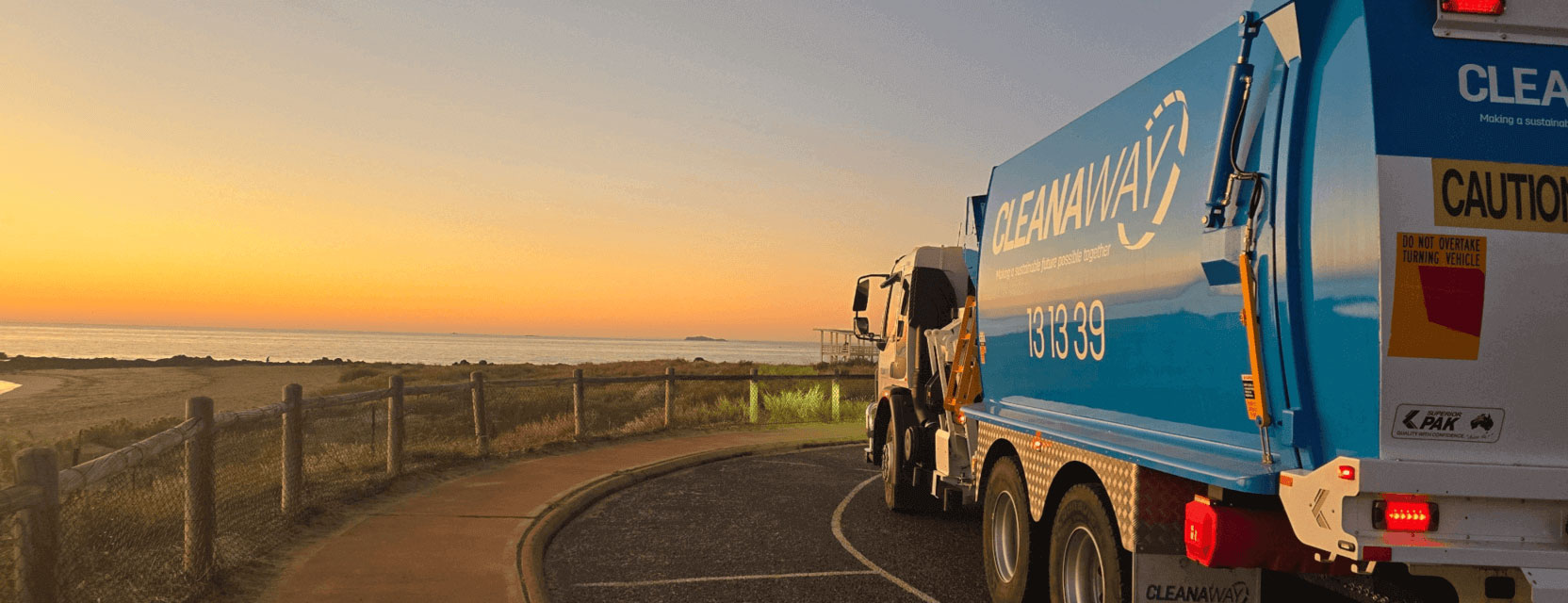
Australia has spent years pretending the exciting money is in software. EQT has just put A$9.3 billion on the table to remind everyone that the bloke collecting your rubbish may own the better business.
On 19 October, EQT Infrastructure signed a binding deal to buy Cleanaway Waste Management, valuing Australia’s biggest waste outfit at roughly A$9.3 billion including debt. It is not sexy. That is precisely the point.
The deal: A$3.095 a share for a business nobody can switch off
EQT Infrastructure VI has agreed to acquire 100% of ASX-listed Cleanaway through a scheme of arrangement. Shareholders are set to receive A$3.095 cash per share, adjusted down by the value of any dividends paid before completion.
The headline offer had been A$3.13 per share. Cleanaway’s 3.5-cent final dividend, paid on 8 October, reduced the cash scheme consideration to A$3.095. That distinction matters: investors do not get to count the same dollar twice, even if press releases make it easy to miss.
The original A$3.13 proposal represented a 32.1% premium to Cleanaway’s A$2.37 closing price on 12 August, the last full trading day before the market learned EQT was circling. On the day the binding deal landed, Cleanaway shares jumped nearly 20% to A$2.96 — their best session since October 2011.
Cleanaway’s board unanimously recommends shareholders vote yes, provided no superior offer turns up and the independent expert continues to say the deal is in shareholders’ best interests. It still needs shareholder approval, Federal Court approval and regulatory clearances. If those hurdles are cleared, implementation is expected by the end of March 2027.
That is the mechanics. The real story is what EQT is buying.
EQT is not buying bins. It is buying permission, density and inconvenience
Cleanaway operates across more than 350 locations in Australia, New Zealand and the Middle East. It has more than 9,700 people, a fleet of more than 6,200 vehicles, plus landfills, transfer stations, recycling facilities, liquid-treatment plants and refineries.
If that sounds like a pile of industrial assets, good. It is. But it is a very specific kind of industrial asset: one tied into daily life, regulated heavily, expensive to replicate and deeply local.
A startup can launch a nice-looking app from a co-working space and call itself a marketplace. It cannot wake up tomorrow and build a permitted landfill, recruit thousands of drivers, negotiate council contracts, establish transfer-station networks, sort contaminated waste at scale and convince customers that it will still be there on Christmas week.
That is why waste is a proper moat business.
The conventional view is that a moat comes from intellectual property or clever code. Sometimes it does. More often, the durable moat is boring operational reality: licences, routes, depots, contracts, fleet maintenance, customer habits, regulatory compliance and physical assets positioned where people actually need them.
EQT knows this game. Its waste and environmental-services investments have included Urbaser, ReWorld, Encyclis and Arcwood. This is not a private-equity tourist buying a green-themed asset because circular economy sounds good in an investor deck. It is a specialist infrastructure investor seeing an Australian platform where asset density can compound.
Why Cleanaway was ripe for a bid
Cleanaway was not some sleepy company going backwards. Its FY26 numbers show why a buyer could see a platform worth owning.
For the year ended 30 June 2026, gross revenue rose 13.5% to A$4.37 billion. Net revenue rose 13.1% to A$3.74 billion. Underlying EBIT increased 14.2% to A$470.2 million, while underlying EBITDA reached A$892.6 million. Free cash flow jumped 63.7% to A$213.8 million.
Those are the numbers of a business getting more productive, not merely more promotional.
Cleanaway’s core Solid Waste Services division generated A$405 million of underlying EBIT, up 9.1%. Its Contract Resources and Industrial Services unit delivered A$55.9 million, up 134.9%, helped by the Contract Resources acquisition. Management also guided to FY27 underlying EBIT of A$500 million to A$530 million.
At the A$9.3 billion enterprise valuation, EQT is effectively paying about 10.4 times FY26 underlying EBITDA. That is not a bargain-bin price. Nor should it be. EQT is paying for essential services, entrenched infrastructure and an earnings base with obvious levers: better utilisation, pricing, network optimisation, procurement, energy recovery and bolt-on acquisitions.
The public market often wants every quarter to be a magic trick. Private equity can take a longer view, provided it believes the cash flow is sturdy enough.
And rubbish is sturdy. Economies wobble. Consumer trends come and go. People still generate waste. Councils still need collection. Businesses still need disposal, treatment and compliance. That does not make the sector risk-free; it makes the demand much less optional than a lot of fashionable growth stories.
The overlooked angle: the prize is resource recovery, not just disposal
The lazy take is that EQT has bought a truck-and-landfill company. That misses where the upside sits.
Waste businesses are increasingly resource businesses. The commercial prize is not merely collecting material and burying it. It is extracting value through recycling, container-deposit schemes, landfill gas, recovered materials, oil re-refining and higher-value industrial-services work.
Cleanaway’s FY26 results make that clear. Its core landfill portfolio benefited from higher project volumes, pricing and landfill-gas revenue. Its resource-recovery operations reported growth in container-deposit-scheme volumes and efficiency gains. Its oils and technical-services business benefited from higher prices for re-refined base oil.
This is the bit founders should study. The best operators do not just sell a service once. They look at the by-products, data, infrastructure and customer relationships around that service and ask: where else can we earn?
A rubbish collection is the start of a value chain, not necessarily the end of one.
That is a much better way to think about your own business. If you only see your headline product, you are probably leaving money on the table. The real margin may sit in the workflow before the transaction, the asset created after it, the compliance burden around it, or the recurring operational headache nobody else wants to touch.
The contrarian view: private equity is not automatically the villain here
People hear “private equity buys essential infrastructure” and immediately reach for the pitchfork. Fair enough — there are plenty of cases where financial engineering has been used as a substitute for building a better business.
But ownership structure is not the whole story. The useful question is simpler: will the new owner invest enough to improve the asset while keeping the balance sheet sane?
Cleanaway has a national network that requires ongoing capital expenditure. In FY26 alone, total capital expenditure including non-cash leases was A$374.3 million. Waste infrastructure is not a laptop business. Skimp on trucks, facilities, safety, compliance or capacity and the damage shows up quickly — often in public.
EQT’s upside depends on making the platform work harder, not running it into the ground. That should mean more volume through the right facilities, better fleet productivity, smarter pricing, selective acquisitions and investment in recovery infrastructure. It should not mean pretending the assets can run forever on a spreadsheet and a motivational email.
The deal will deserve scrutiny through the approvals process. It should. But the broader thesis is rational: valuable physical networks can become more valuable as regulation tightens, recovery expectations rise and new supply becomes harder to permit.
What this means for you
Here is the practical lesson: stop confusing novelty with durability.
If you are a founder, ask whether your business is building a real operating moat or just renting attention from Google, Meta, Apple or the next algorithm change. A flashy front end is not a moat. Customer switching costs, embedded workflow, regulatory know-how, physical density, contracts and trusted execution are.
If you are an operator, go hunting for your version of Cleanaway’s network effect. Where do more customers make your routes, fulfilment, data, purchasing or service team more efficient? That is the compounding engine. Build it deliberately.
If you are an investor, do not ignore the boring sectors. Look for essential services with pricing power, recurring demand, hard-to-replicate assets and management that turns earnings into free cash flow. Cleanaway’s A$213.8 million of FY26 free cash flow mattered far more to EQT than a thousand pieces of LinkedIn theatre.
And if you are selling a business one day, remember this: buyers pay the biggest premiums for certainty. Cleanaway did not get a A$9.3 billion enterprise valuation because waste is glamorous. It got there because the company built an irreplaceable operating platform in a market where doing the job properly is difficult.
That is the sort of boring you want. Boring, essential and bloody hard to copy.