Ericsson’s $6.2B Vonage Bet Gets a New CEO—and a 138-Day Handover
Most CEO handovers are expensive theatre followed by a mess. Ericsson has given Vonage’s new boss 138 days of overlap to prove it understands the cost of getting one wrong.
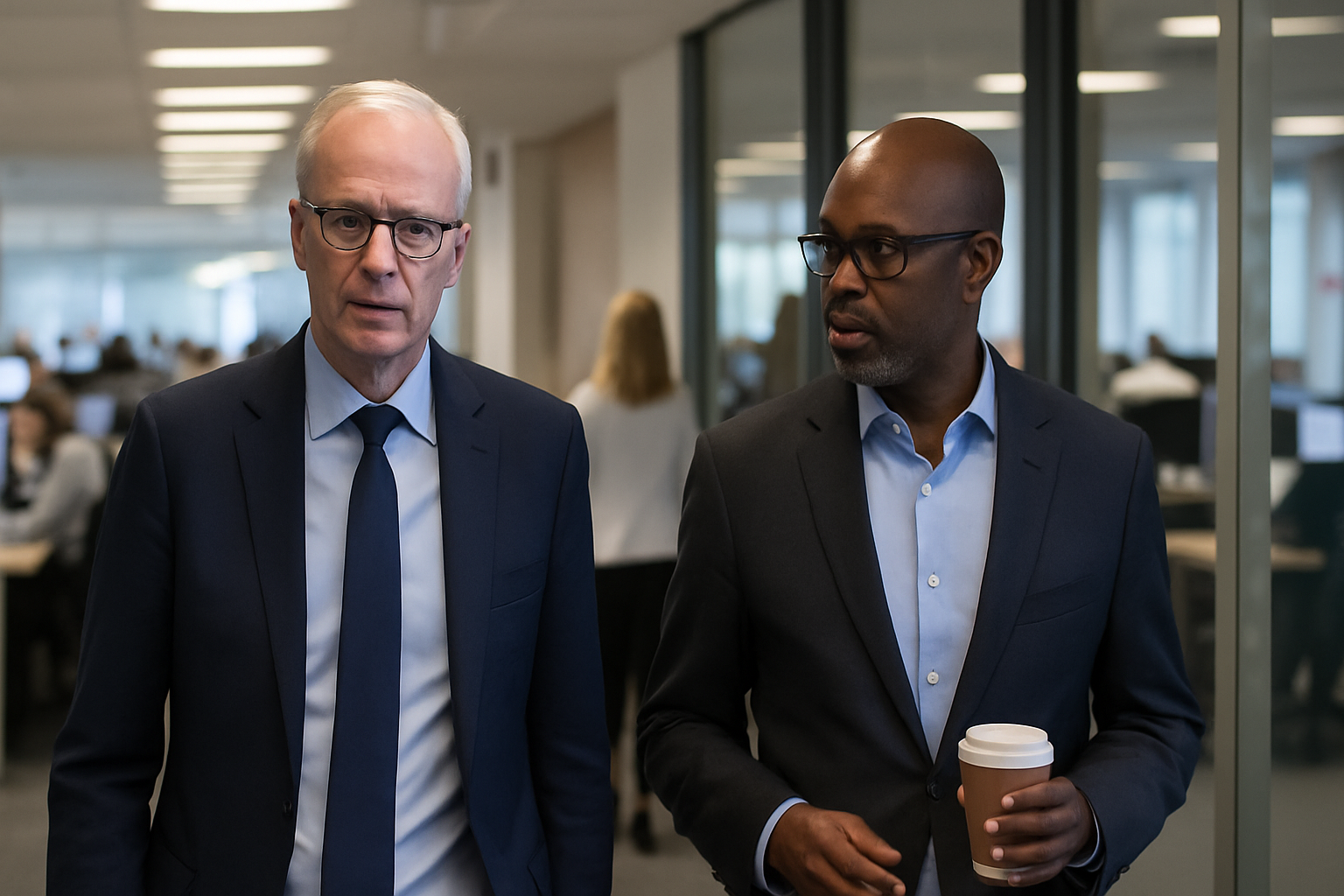
Ericsson paid $6.2 billion for Vonage. If it botches the leadership handover now, don’t blame the market, the AI cycle or some consultant’s slide deck. Blame management.
Today, August 15, 2026, Christophe Van de Weyer takes over as CEO of Vonage and head of Ericsson’s Global Communications Platform business. Niklas Heuveldop, who has run Vonage since February 2024, steps down from the job but remains available through December 31, 2026 to support the transition.
That is a 138-day overlap after the formal changeover. It is not sexy. It will not make a keynote reel. It is, however, one of the more sensible things a big company can do when there is real money, real customers and a strategic turnaround on the line.
Too many boards treat succession as a press release. Name the replacement, pose for the photo, wish everyone luck, then act surprised six months later when decisions stall, good people leave and the new boss spends half their week finding out where the bodies are buried.
Ericsson is at least trying not to be that stupid.
This is not a normal CEO shuffle
Vonage is not some side project Ericsson can afford to misplace in a quarterly report. Ericsson completed its all-cash acquisition of the cloud communications company in July 2022 for about $6.2 billion. The original strategic pitch was clear enough: Ericsson wanted to move beyond selling telecom gear and build a global communications platform that developers and enterprises could use to build services.
That is a big swing. It also means the leadership job is awkward by design.
You are running a software and communications-platform business inside a Swedish telecom giant. You need the pace and commercial aggression of a software firm, but you also need to work with telcos, enterprise buyers, developers and the bureaucracy of a global public company. That is not a job for someone who merely looks good in a navy suit and says “synergies” without laughing.
Van de Weyer is an internal appointment, which matters. He joined Vonage in 2025 and was leading its API business unit before this promotion. Ericsson says that unit had returned to growth under his leadership. Before Vonage, he had been CEO of Telesign and held senior roles at Proximus; earlier, he spent nearly two decades at Bain & Company.
The important point is not the CV. Every executive CV is a graveyard of inflated job titles. The important point is that Ericsson did not parachute in an outsider who needs nine months to learn the acronyms, customer tensions and internal politics. It picked the executive closest to the commercial engine it wants to improve: programmable communications, network APIs and profitable growth.
That is a proper succession decision: promote the person already carrying the part of the business you need to win.
Ericsson is trying to turn a costly acquisition into an operating business
The headline number is still brutal: $6.2 billion. Big acquisitions do not get judged on the day the deal closes; they get judged years later, when the buyer has either built a stronger business or admitted, quietly and expensively, that the spreadsheet got ahead of reality.
Ericsson’s wider numbers show why Vonage cannot be allowed to drift. In its second-quarter 2026 results, Ericsson reported sales of SEK 52.7 billion, down 6% year on year on a reported basis, while adjusted EBITA was SEK 6.9 billion, producing a 13.1% margin. It also returned SEK 8.2 billion to shareholders during the quarter, including SEK 3.2 billion in share repurchases.
That is a business with genuine financial muscle. But a strong core business can also hide a problem for too long. When the legacy machine throws off cash, management can keep calling an acquisition “strategic” without being sufficiently ruthless about whether it is becoming commercially useful.
Ericsson says its Enterprise business grew organically by 3% in the second quarter, with growth in Global Communications Platform and Enterprise Wireless Solutions. Good. But “growth” is not the finish line. The question is whether the platform can grow profitably, build developer relevance and give Ericsson a credible way to participate in the value created on top of networks—not merely sell the pipes underneath them.
That is the real task Van de Weyer inherits.
He is not being hired to preserve Vonage. He is being hired to make the acquisition make sense.
The 138-day overlap is the actual story
Most leadership transitions fail in the boring bits.
A departing CEO knows which customer is threatening to leave. They know which product roadmap is fiction, which executive has quietly stopped performing, which partnership is held together by one relationship and which internal metric is being flattered for the board.
None of that sits neatly in a handover document.
So Ericsson keeping Heuveldop available until December 31 is not sentimental. It is operational risk control. The company gets a period in which the new CEO has formal authority while the old CEO remains accessible for context, introductions and the ugly details that do not appear in the quarterly pack.
There is a catch, though: overlap only works if authority is unambiguous.
The new boss cannot be running every significant decision past the old boss. That produces a ghost CEO, confuses the executive team and tells employees that the board is not quite sure who is in charge. Van de Weyer must own the calls from day one. Heuveldop’s role has to be knowledge transfer, not unofficial veto power.
This is where plenty of companies get cute and ruin it. They announce a “smooth transition,” then keep the predecessor hovering around as executive chair, adviser, special counsel or whatever title sounds least awkward. Suddenly every manager has two centres of gravity. Meetings become political. Decisions get slower. The good operators start taking recruiter calls.
Ericsson has a chance to avoid that because the arrangement has a defined end date. December 31, 2026 is a line in the sand, not an invitation to prolong indecision forever.
The overlooked angle: succession is a product-management problem
Here is the bit most leadership articles miss because they would rather talk about charisma.
Succession is product management.
A company has a customer problem, a strategic direction, an operating model and a set of constraints. The board’s job is to choose a leader whose demonstrated strengths fit those conditions—not pick the most famous person available or the candidate who interviews best over dinner.
Ericsson’s decision implies that network APIs and communications-platform growth are central to the next stage of the Vonage plan. Van de Weyer’s background is directly tied to that territory. The company has effectively said: this business does not need a caretaker; it needs someone who can turn technical capability into commercial adoption.
That is more useful than the usual obsession with whether a CEO came from inside or outside. Internal versus external is a lazy argument. The real question is whether the person has already shown they can solve the company’s next problem.
If you run a business, write that next problem down in one sentence. Not your mission statement. Not your values poster. The commercial problem.
For example: “We have product demand but cannot onboard customers fast enough.” Or: “Our best salespeople are carrying the number while the middle of the team is dead weight.” Or: “We built a decent product but have no distribution advantage.”
Then ask whether your next leader has solved that exact problem before. If not, stop pretending pedigree is a substitute for fit.
Don’t confuse continuity with caution
Some founders and boards hear “internal successor” and assume it means safe. That is nonsense.
An internal appointment can be the boldest option if it puts a capable operator in charge of a business that has been moving too slowly. It can also be a cowardly choice if the board simply cannot stomach the disruption of bringing in someone who will challenge the furniture.
The difference is what happens next.
Van de Weyer should not spend the next six months proving he is a polite continuation of the previous regime. He should use the transition period to make hard calls quickly: which products get investment, which customers matter most, where the sales motion breaks, what talent is missing, and which reports are producing activity rather than outcomes.
The predecessor can provide context. The successor must supply judgement.
That is the deal.
What this means for you
You do not need Ericsson’s budget to steal the useful part of this playbook.
First, build successors before you need them. If the only person who can run a function is the current head of it, you do not have a leadership team. You have a hostage situation.
Second, give the successor a real operating patch before the top job. Van de Weyer was already running Vonage’s API business. Put your likely next leader in charge of a revenue line, a difficult customer segment or a broken process. Let them carry consequences, not just attend strategy meetings.
Third, make every transition date-specific. “We will support the handover” is corporate fog. Write down: who owns decisions from day one, what the predecessor remains responsible for, what information must be transferred, and the exact date the overlap ends.
Fourth, judge a handover by business continuity, not ceremony. Did key staff stay? Did customers hear one clear story? Did decisions speed up? Did revenue, margin, product delivery or retention improve? If you cannot answer those questions, you are managing appearances.
And finally: when you make a big bet, stop treating the person running it as an HR decision. A $6.2 billion acquisition is not redeemed by a nice announcement. It is redeemed by a leader who can turn strategy into cash.
Ericsson has given Vonage’s new CEO a clean title, a relevant operating background and 138 days to extract the institutional knowledge he needs. That is the easy part.
Now comes the only bit investors, employees and customers will actually care about: making the business worth what Ericsson paid for it.