Evergrande’s $300B Collapse Is Now a Liquidation Test for China
A $300 billion property disaster does not become safer because the founder goes to prison. Evergrande’s main mainland unit is now in liquidation—and investors should pay attention.
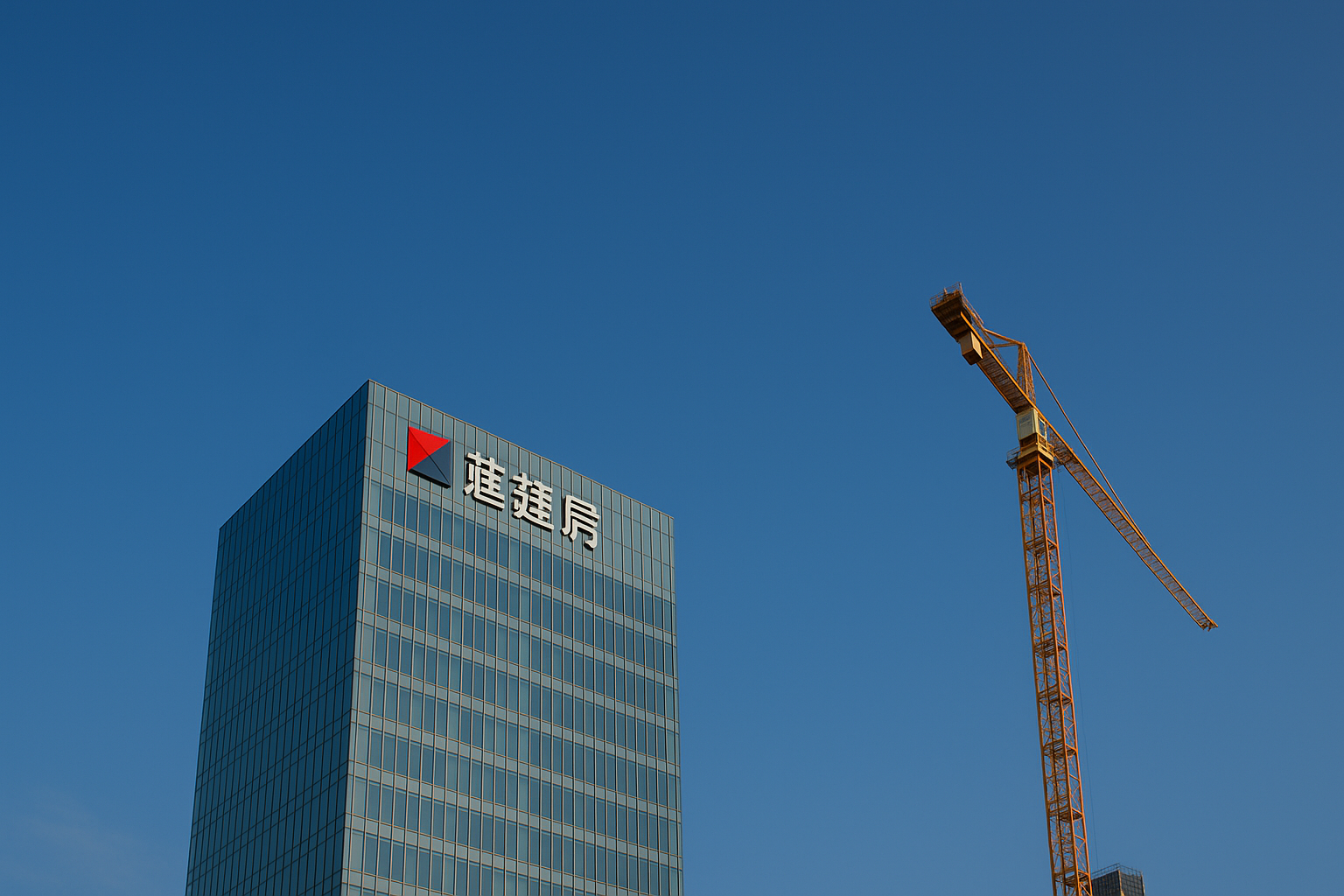
China Evergrande’s founder has been handed life in prison. The next day, its main mainland property unit was pushed into bankruptcy liquidation. If you think that is the end of the story, you have learned precisely nothing from real estate.
On August 21, the Guangzhou Intermediate People’s Court accepted a bankruptcy-liquidation case against Hengda Real Estate Group, Evergrande’s main onshore property unit. The application came from Guangzhou Rural Commercial Bank, which said Hengda could not repay debts as they fell due and did not have enough assets to cover its liabilities. ([ae.marketscreener.com](https://ae.marketscreener.com/news/chinese-court-in-guangzhou-accepts-bankruptcy-case-of-evergrande-unit-ce7859d3d181f723))
That is the real headline. Not because Evergrande is newly broken—it defaulted in 2021 and the Hong Kong parent was ordered into liquidation on January 29, 2024—but because the wreckage has moved further into the mainland operating machine where the apartments, land, local creditors and unfinished obligations actually sit. ([hkexnews.hk](https://www.hkexnews.hk/listedco/listconews/sehk/2025/0812/2025081201148.pdf))
The prison sentence is theatre. Hengda is the balance-sheet event.
A Shenzhen court sentenced Hui Ka Yan, Evergrande’s founder, to life imprisonment on August 20. Evergrande was fined 8.82 billion yuan, or about US$1.31 billion, and Hengda Real Estate was fined another 7 billion yuan, about US$1.04 billion. The court said Hui and the companies used large-scale financial fraud, inflated assets and concealed liabilities between 2016 and 2021. ([court.gov.cn](https://www.court.gov.cn/zixun/xiangqing/509281.html))
That is a spectacular personal downfall. It is also, bluntly, the easy bit.
Putting the bloke at the top in prison makes a clean public statement: the government has identified wrongdoing and punished it. Liquidating an operating property business is uglier. It means working out which assets exist, who has a claim on them, which projects can be finished, which creditors get paid first, and how much value remains once the legal bills, political priorities and decay of time have had their go.
Evergrande had more than US$300 billion in liabilities when its crisis exploded. This was never a normal corporate insolvency where a lender takes the keys to a few buildings, sells them and moves on. It was a property-and-finance machine built across thousands of legal entities, cities and counterparties. ([reuters.screenocean.com](https://reuters.screenocean.com/record/1763394?utm_source=openai))
Anyone who tells you liquidation automatically produces clarity has never had to unwind a complicated company. Liquidation produces a queue. The clarity arrives much later, after everyone discovers how little is left.
Why August 21 matters more than the 2024 Hong Kong order
The Hong Kong court’s January 2024 liquidation order mattered because it marked the failure of Evergrande’s offshore restructuring effort. The company had not produced a workable plan after years of negotiation. But a court order over the listed parent in Hong Kong was never the same thing as control over the mainland assets.
Most of the real-world value—and most of the pain—sits on the mainland: projects, subsidiaries, buyer obligations, local banks, suppliers, land interests and local-government relationships. That is where a developer either turns half-built concrete into homes or leaves a financial and social mess behind.
Evergrande’s liquidators said in their August 2025 progress report that the group comprised well over 3,000 legal entities across multiple jurisdictions. It had around 1,300 projects under development in more than 280 cities, plus 3,000 projects in its property-management business. The liquidators also said the group’s asset and liability position was so uncertain that they could not estimate a creditor payout. ([hkexnews.hk](https://www.hkexnews.hk/listedco/listconews/sehk/2025/0812/2025081201148.pdf))
Read that again: after more than 18 months of liquidation work, the people appointed to find the money could not responsibly say what creditors might get back.
That is not incompetence. It is what happens when a business becomes too indebted, too opaque and too sprawling before the music stops.
The new Hengda proceeding matters because it is another step away from a symbolic offshore wind-up and toward the domestic legal process governing the company at the heart of Evergrande’s onshore property operations. It does not promise quick recoveries. Quite the opposite. It confirms that a major lender has gone to court arguing the unit cannot pay its debts and lacks sufficient assets to meet its total liabilities. ([ae.marketscreener.com](https://ae.marketscreener.com/news/chinese-court-in-guangzhou-accepts-bankruptcy-case-of-evergrande-unit-ce7859d3d181f723))
Property investors keep making the same stupid mistake
Here is the comfortable belief I want to kill: property is safe because it is backed by bricks.
No. Property can be useful collateral. It is not a force field.
The building may be real, but the value you expect to recover depends on cash flow, buyer demand, legal ranking, debt seniority, construction costs, local approvals, time and the condition of the asset when you finally get control of it. If a developer has spent years using new sales and new borrowings to plug old holes, the bricks are often the last part of the problem.
Evergrande is the industrial-scale version of a mistake I have watched ordinary investors make for years. They see a tangible asset and stop asking hard questions. They do not ask who sits ahead of them in the capital stack. They do not ask whether presold homes create obligations that outrank their return. They do not ask whether the stated asset value assumes a buyer exists at yesterday’s price.
Then they call it bad luck when the spreadsheet turns into toilet paper.
The Chinese court said Evergrande and Hengda had inflated assets and hidden liabilities. The AP reported that authorities found Evergrande had prematurely recognised revenue from property sales before apartments were completed and delivered, overstating revenue by roughly US$80 billion across 2019 and 2020. ([court.gov.cn](https://www.court.gov.cn/zixun/xiangqing/509281.html))
That detail matters far beyond China. Revenue is not cash. A presale is not a completed home. An appraisal is not a sale. And a debt-funded growth story is not an investment thesis merely because someone puts a glossy tower on the front of the deck.
The overlooked angle: this is a lesson in jurisdiction, not just debt
The contrarian read is that Evergrande is not chiefly a warning about Chinese property prices. It is a warning about enforceability.
Sophisticated investors love to talk about yield, leverage, cap rates and replacement cost. Fair enough. But when things go wrong, the decisive question is often much less glamorous: which court controls the assets, which creditors have priority, and can the people holding your claim actually enforce it?
Evergrande’s offshore liquidation was always constrained by the fact that its operational assets were mainly onshore. The liquidators’ own report says that hundreds of creditor actions against mainland subsidiaries had resulted in asset freezes, enforcement actions, trusts taking over projects and bankruptcy proceedings. It also said the liquidators believed a whole-group restructuring was likely out of reach. ([hkexnews.hk](https://www.hkexnews.hk/listedco/listconews/sehk/2025/0812/2025081201148.pdf))
That is why a headline number is a lousy substitute for deal structure.
A US$300 billion liability figure gets attention. But the return is determined in the fine print: entity-level guarantees, security interests, intercompany loans, local priority rules, covenants, cash controls and whether the asset can legally be sold without somebody else blocking the gate.
For foreign investors, this is the bit that should make you sit up straighter. You can own a bond, a fund unit or a stake in a vehicle with a very respectable name on it and still be miles away from the actual property and its cash flow when enforcement begins.
China’s problem is bigger than one failed developer
Evergrande was once the loudest symbol of China’s property boom. Now it is the audit trail.
The company’s collapse followed Beijing’s 2020 crackdown on excessive developer borrowing. That crackdown exposed how dependent the sector had become on leverage, presales and ever-rising confidence. Evergrande defaulted in 2021, and the broader property downturn has dragged on since; AP reported that home prices had fallen 20% or more since 2021. ([apnews.com](https://apnews.com/article/5573868904b3ced0c5c9b0314c56ae5a))
The second-order problem is confidence. Buyers do not rush to buy off-the-plan apartments when they worry the developer may not finish them. Banks do not lend freely when collateral values are falling. Local governments do not enjoy the same land-sale revenue when developers are cautious. Suppliers do not extend credit when they have been burned. Every participant becomes more conservative, which makes the recovery slower.
That is the vicious circle. And it is why investors who are waiting for one neat “all clear” signal from China’s property market will be waiting a bloody long time.
What this means for you
You do not need exposure to Chinese property to use this lesson tomorrow.
First, stop calling an investment ‘asset-backed’ unless you can explain the debt stack in plain English. Who gets paid before you? What collateral secures the debt? Is it held by the borrower you are lending to, or some related entity three boxes away on an org chart?
Second, treat reported asset values as opinions until proven by actual transactions. Ask what happens if prices fall 10%, sales take 12 months longer, or refinancing costs 300 basis points more. If the deal only works in the sunny scenario, it does not work.
Third, match your leverage to the liquidity of the asset. A listed share can be sold in seconds. A half-finished apartment project in a weak market cannot. The less liquid the asset, the more margin for error you need.
Fourth, make legal enforceability part of underwriting—not a footnote for the lawyers after you have fallen in love with the yield. Jurisdiction, creditor ranking and control rights matter most when the deal fails, which is precisely when you can no longer negotiate from strength.
Finally, do not confuse punishment with recovery. Hui’s life sentence may satisfy a need for accountability. It does not create cash, complete homes or make creditors whole. Those are separate jobs, and property markets are littered with investors who learned that distinction after their money had already vanished.
Evergrande’s collapse is not an exotic China story. It is the oldest investing lesson in the book: leverage makes good times look smarter than they are, and bad times expose every lie in the structure. Build your portfolio so you can survive the exposure—not admire it from the sidelines.