Fed 60% Hike Odds, Brent Near $100: The Easy-Money Fantasy Is Dead
If your business only works when oil is cheap and money is cheaper, you do not own a business. You own a bet the Fed is now being paid to kill.
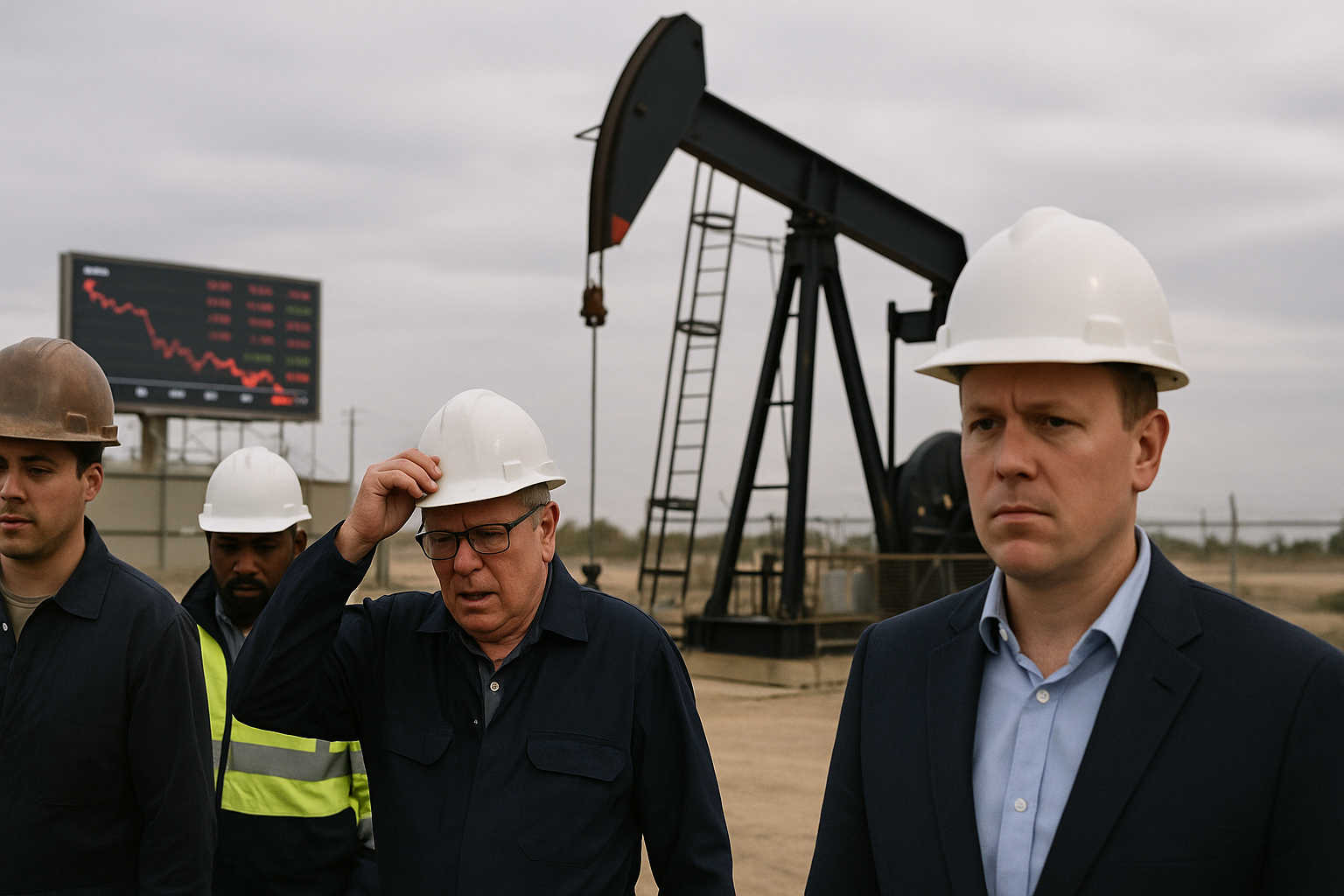
If your business only works when oil is cheap and money is cheaper, you do not own a business. You own a bet the Fed is now being paid to kill.
That is the uncomfortable message from markets on September 9, 2026. Brent crude is crowding the $100-a-barrel mark, the 10-year US Treasury yield is pushing near 5%, and futures markets put the chance of a Federal Reserve rate rise next week at roughly 60%.
Plenty of founders, investors and homeowners have spent years acting as if cheap capital was a law of nature. It is not. It was a temporary pricing error, then a policy choice, then a habit. Now the bill is arriving.
Brent near $100 is not just an energy story
Oil closed around $97.92 a barrel on September 8 after renewed fighting around Iran and disruption fears in the Middle East kept supply routes under pressure. That is a long way from roughly $72 in early July.
People hear that and immediately reach for the obvious conclusion: petrol gets dearer. Correct, but that is the kindergarten version.
Oil is freight. It is plastics. It is packaging. It is air travel. It is fertiliser. It is the cost of getting staff, stock and customers from A to B. It squeezes household cash flow at the exact moment businesses are trying to preserve pricing power.
A $100 oil price does not mean every company falls over. Good businesses pass through some of the pain, reduce waste and protect their margins. Weak businesses discover that their “margin” was merely a favourable commodity chart wearing a business-casual shirt.
The market is worried because an oil shock is now landing on an economy that is not obviously weak enough to force the Fed’s hand in the other direction. August payrolls rose by 162,000, compared with an average monthly gain of 31,000 over the previous 12 months. Unemployment held at 4.1%. Average hourly earnings rose 0.3% for the month and 3.1% over the year.
That is not a recessionary labour report. It gives the Fed room to worry about prices without immediately being accused of kneecapping a collapsing jobs market.
The Fed has a nasty decision, and businesses should stop pretending it does not matter
The Federal Reserve held its policy rate at 3.50% to 3.75% in July. But markets have swung hard since then. A stronger jobs report, elevated energy costs and stubborn inflation have pushed investors toward the view that another quarter-point increase is more likely than not at the September 15-16 meeting.
The next two data points matter more than the commentary circus around them: producer prices on September 10 and consumer prices on September 11.
July CPI was deceptively calm: headline inflation rose 0.1% for the month and 3.4% over 12 months, while core CPI rose 0.2% in July and 2.5% over the year. On the surface, that looks manageable.
But the Fed does not get paid to admire the rear-view mirror. It has to judge whether higher energy and transport costs are about to seep into everything else. And once businesses start raising prices because their inputs are dearer, and workers start demanding more because life is dearer, inflation stops being an oil problem and becomes everyone’s problem.
The San Francisco Fed’s own September assessment makes the bind plain. Real GDP grew at a 1.5% annualised pace in the second quarter and 2.1% over the past four quarters, while headline PCE inflation reached 3.7% in July. That is neither boom nor bust. It is the annoying middle ground where central bankers are tempted to keep squeezing because inflation remains well above their 2% target.
Nobody running a real business should be surprised by this. If your costs rise faster than your target and sales are still holding up, you do not celebrate the resilience. You act before the higher costs become embedded. The Fed is trying to do the same thing, only with 330 million people yelling at it from different directions.
The 5% Treasury yield is the number operators should fear
Forget the daily theatre in stock prices for a minute. The more important number is the 10-year Treasury yield approaching 5%.
That yield is the gravitational pull beneath commercial property loans, private-credit deals, venture valuations, acquisition models and the return investors demand before they hand over a dollar.
For years, a mediocre deal could survive because its spreadsheet assumed refinancing would be easy, money would stay cheap and someone else would pay a fatter multiple later. That era produced a lot of paper wealth and more than a few founders who mistook access to capital for talent.
At 5%, the arithmetic changes.
A buyer using debt has less room to overpay. A property owner rolling a loan faces a sharper jump in interest expense. A growth company with distant profits becomes harder to value. A private-equity fund can no longer rely on leverage and multiple expansion to manufacture a heroic return from an ordinary business.
This is not the end of capitalism. It is a return to it.
Businesses that make real cash, retain customers, price properly and carry sensible debt will still be valuable. In fact, they will become more valuable relative to the mob of companies that have been living on adjusted EBITDA, inspirational LinkedIn posts and another funding round.
The overlooked risk is not one rate rise. It is the new hurdle rate.
The contrarian point here is that a single 25-basis-point Fed increase is not the big issue. Anyone panicking over one quarter-point move is probably overleveraged already.
The real issue is that markets are resetting the hurdle rate for nearly everything.
If investors can earn materially more from government bonds, they become less willing to fund moonshots at silly valuations. If lenders can lend at higher rates with lower risk, they become fussier about the borrower. If consumers are paying more for fuel, credit and insurance, they become less tolerant of price rises from brands that have not earned them.
That creates second-order effects which take time to show up in headlines:
- Hiring decisions get slower because payroll is a fixed commitment, not a motivational poster. - Inventory gets tighter because carrying stock costs more and demand becomes less predictable. - M&A gets harder because buyers and sellers anchor to different valuations. - Startups with low gross margins find out that “growth” does not impress anyone when every new customer consumes cash. - Asset owners discover that an inflated valuation does not help when the debt must be refinanced in cash.
I have lost money learning versions of this lesson. When capital is plentiful, nearly every decision can look smart for a while. You can hire too early, buy too much, expand too fast and call it ambition. Then the cost of money rises and suddenly the market asks the rude but useful question: does this thing actually work?
That question is not a disaster. It is a filter.
Do not confuse a harder economy with a bad opportunity
Here is where most people get it wrong. They hear “higher rates” and “$100 oil” and freeze. That is just as lazy as assuming markets only go up.
A tougher capital environment is brilliant for disciplined operators.
When competitors cannot fund discounts forever, customer service matters again. When acquisition finance is expensive, building capability internally becomes attractive. When consumers trim waste, companies with a clear value proposition gain share. When weak players are forced to sell, patient buyers get opportunities they could not touch during the bidding-war years.
The winners will not necessarily be the biggest companies. They will be the ones with the cleanest numbers and the least self-deception.
If you are building a business, know your gross margin by product or customer segment, not just in a pretty monthly board deck. Know exactly how much cash you burn if revenue drops 10%. Know the date and rate at which every piece of debt matures. Know which price increases customers will accept and which ones are merely wishful thinking.
If you are investing, stop treating every dip in a flashy growth stock as a bargain. Ask a more basic question: can this company fund itself without issuing expensive equity or raising costly debt? A strong balance sheet has become interesting again. Bloody revolutionary.
What this means for you
Do three things tomorrow.
First, run a proper stress test. Model oil at $100, borrowing costs 1 percentage point higher and revenue 10% lower. Do not delegate this to someone who will soften the answer to protect feelings. You want the ugly truth.
Second, fix your cash conversion cycle. Collect receivables faster, reduce dead inventory, renegotiate supplier terms where you genuinely can, and stop funding customer indecision with your own balance sheet. Cash is not cowardice. Cash is optionality.
Third, separate essential growth from vanity growth. Keep spending that improves product, retention, unit economics or distribution. Cut spending that exists to make the company look bigger than it is. The market has become much less interested in theatre.
Brent near $100 and a 60% chance of a Fed hike are not signals to hide under the doona. They are signals to get serious.
The easy-money fantasy is dying. Good. The next cycle will reward people who can actually operate.