Fed: $752B Equipment Beats $748B Housing
America put $752 billion into information-processing equipment and $748 billion into housing. If you think property automatically gets the best capital, you’re investing in yesterday’s story.
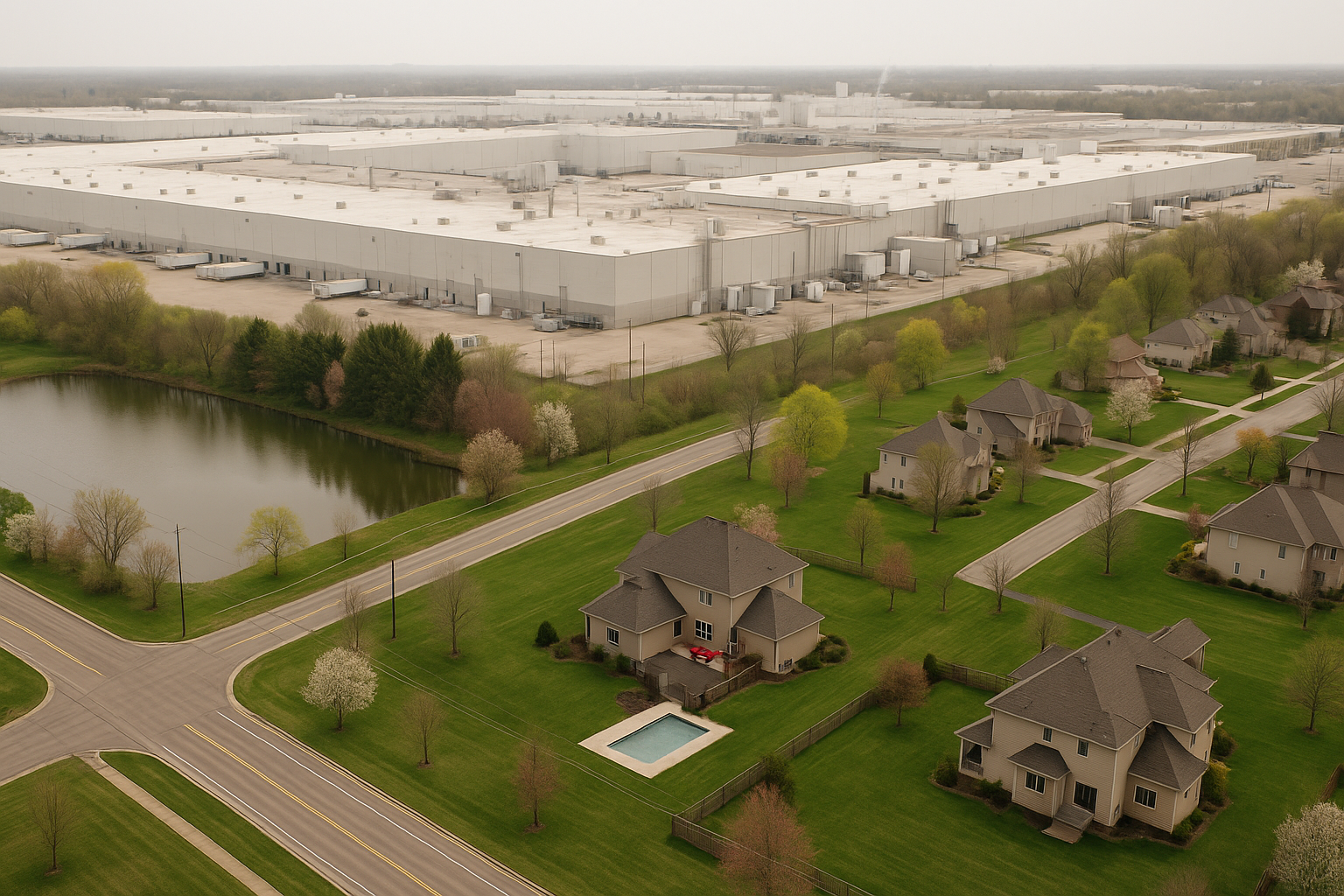
The property market isn’t merely competing with other property deals anymore. It’s competing with $752 billion flowing into information-processing equipment — including data centres and computer hardware — while housing received $748 billion.
That should make every property investor a little uncomfortable. For decades, real estate sat near the centre of the wealth playbook: buy well, borrow sensibly, wait, let inflation and population do the heavy lifting. Now the United States is directing more inflation-adjusted investment into information-processing equipment — including data centres and computer hardware — than into residential property. The gap is small, but the message is not.
The $752 billion number property investors should not ignore
The latest comparison is brutally simple. Real private residential fixed investment in the US was $748 billion in the second quarter of 2026, down 18% from its early-2021 peak. Investment in information-processing equipment reached $752 billion, up 51% over the same period.
That does not mean every dollar of the $752 billion is an AI data centre. It includes computer hardware and related equipment. But AI is plainly the force turning this from a spreadsheet curiosity into a major capital-allocation event. The hyperscalers are spending at a rate that has changed the economics of construction, power, land and credit.
This is the bit most property people miss: capital doesn’t care about your nostalgia.
If a developer can build a warehouse, apartments, an office block or digital infrastructure, capital will increasingly ask which asset has the strongest tenant demand, the best pricing power, the most strategic land position and the cleanest path to financing. In plenty of markets, a data-centre project is now winning that argument before the residential developer has finished the feasibility study.
I’m not saying houses are finished. That would be nonsense. People need somewhere to live, and land in the right location remains scarce. I am saying the old assumption that housing is automatically the economy’s preferred destination for capital is dead.
That changes the game.
Higher rates are not just hurting buyers — they are reshaping supply
The obvious explanation is interest rates. Residential property is wildly sensitive to the cost of money because most buyers need debt and most projects need debt before they earn a cent.
The Federal Reserve lifted its target range to 3.75% to 4.00% in September. By October 1, the Mortgage Research Center’s daily reading had the average 30-year fixed conforming mortgage rate at 7.433%. That is a savage number compared with the cheap-money years people still talk about as though they were normal.
On a $300,000, 30-year mortgage at that rate, Fortune calculated lifetime interest at roughly $450,200. That is not a typo: more interest than the original loan principal.
So buyers pull back. Builders pull back. Apartment developers rework projects or mothball them. Sellers sit on low-rate mortgages rather than move. Transactions dry up. Everybody waits for rates to fall, while the shortage of new homes makes rents stickier than policymakers would like.
Apollo chief economist Torsten Slok has called it a higher-rates, higher-rents “doom loop”: high rates mean less construction; less construction means tighter rental supply; tighter rental supply feeds rent inflation; rent inflation makes it harder for the Fed to ease. Whether you love that label or not, the underlying logic is hard to argue with.
Meanwhile, the AI build-out has a different funding profile. The biggest players have enormous balance sheets, strategic reasons to build and a willingness to spend now because computing capacity is a competitive weapon. They are not deciding whether to buy a first home. They are deciding whether being short of capacity hands an advantage to Microsoft, Google, Amazon, Meta or the next bloke with a server farm and a big cheque book.
That is a very different buyer.
The overlooked fight is for power, not property
Here’s the contrarian bit: the best real-estate opportunity may not be the data centre itself.
Everyone has spotted the shiny bit. Data centres are hot. Fine. But a lot of investors are treating them like a new version of industrial property — find land, put up a box, collect rent, retire early. That is how people get themselves cleaned up.
A data-centre site without secure power, transmission access, water planning, fibre connectivity, permits and a credible construction pathway is not a data-centre opportunity. It is just expensive land with a PowerPoint attached.
The next generation of US data centres is expected to consume, on average, 2.5 times as much power as facilities opening in 2026. That is where the bottleneck lives. In July, spending on AI data-centre shells rose at an annualised rate of nearly 60% from a year earlier. The shell is the easy part compared with getting reliable electricity to the site without years of queueing, local backlash or infrastructure upgrades that blow out the economics.
This creates second-order winners: industrial land near power, grid infrastructure, specialist contractors, cooling systems, fibre routes, energy storage and communities that can approve projects quickly without turning every planning meeting into a gladiator contest.
It also creates losers. Residential areas near large data-centre clusters can face noise, visual impact, pressure on land values and political fights over power and water. Northern Virginia — the world’s biggest concentration of data centres — is already seeing resident opposition influence where and how much further development can occur.
That is why I would be very cautious about buying “AI exposure” just because a broker says the word data centre three times in a pitch deck. The returns will not be evenly distributed. The money will flow to scarce infrastructure and capable operators, not to every industrial shed within 100 kilometres of a substation.
Housing is not dead. Lazy property investing is.
There is a huge difference between saying housing has lost the capital-allocation contest for now and saying property is a bad investment.
A well-bought residential asset can still work beautifully. But it needs to work as an operating business, not as a religious belief.
The investor who bought a mediocre home in a mediocre suburb at any price because “they’re not making more land” is about to learn that land scarcity does not solve a bad entry price, weak rental yield, rising insurance, maintenance, council charges and expensive debt.
Likewise, the developer relying on falling rates to rescue a skinny feasibility is not investing. They are buying a lottery ticket with a hard hat on.
The better opportunities are likely to be more specific:
- Rental housing where jobs, transport and supply constraints are real rather than imagined. - Smaller projects where a competent operator can move faster than institutional capital. - Assets with genuine income resilience, not merely a hopeful valuation. - Land or property linked to infrastructure demand, but only where power, access and approvals are genuinely bankable. - Public REITs and listed infrastructure where the market offers liquidity and diversification that a single overleveraged building cannot.
There is another uncomfortable truth here. A home is a place to live first and an investment second. Americans have historically bundled those decisions together because leverage made the returns look heroic when prices rose. A 10% rise in house prices can look like a 50% gain on a 20% deposit. But the reverse is also true, and the asset is single, illiquid and geographically concentrated.
That does not make home ownership stupid. It makes pretending it is a risk-free wealth machine stupid.
What this means for you
First, stop asking whether property is “up” or “down.” Ask where capital is being pulled, where supply is being constrained and who has pricing power.
Second, if you own property, run the numbers with boring honesty. Refinance at a higher rate. Add realistic maintenance. Add vacancy. Add insurance increases. If the deal only works with heroic rent growth and rate cuts, it does not work.
Third, if you are buying residential property, separate the lifestyle decision from the investment decision. Buy the home because it suits your life and you can comfortably carry it. Invest your surplus capital based on expected risk-adjusted returns, not because your parents told you property always wins.
Fourth, if you want exposure to the infrastructure boom, do not chase a glossy “AI real estate” label. Ask four questions: Is power contracted? Is the site permitted? Who is the customer? What happens if construction costs or financing costs rise again? If the answer is vague, walk.
Finally, remember what this $752 billion versus $748 billion crossover is really telling you. The economy has put more investment into information-processing equipment than homes.
You do not need to panic-sell your property or become a data-centre cowboy. You do need to stop investing as if the world is still handing cheap debt to anyone with a deposit and a motivational quote about bricks and mortar.
That world is gone. Good operators adjust before the market forces them to.