Federal Reserve 25bp Hike: Why 5% Yields Matter
A 25bp Fed hike is not what should worry you. A 5% 10-year Treasury yield is the bill arriving for every business built on cheap money.
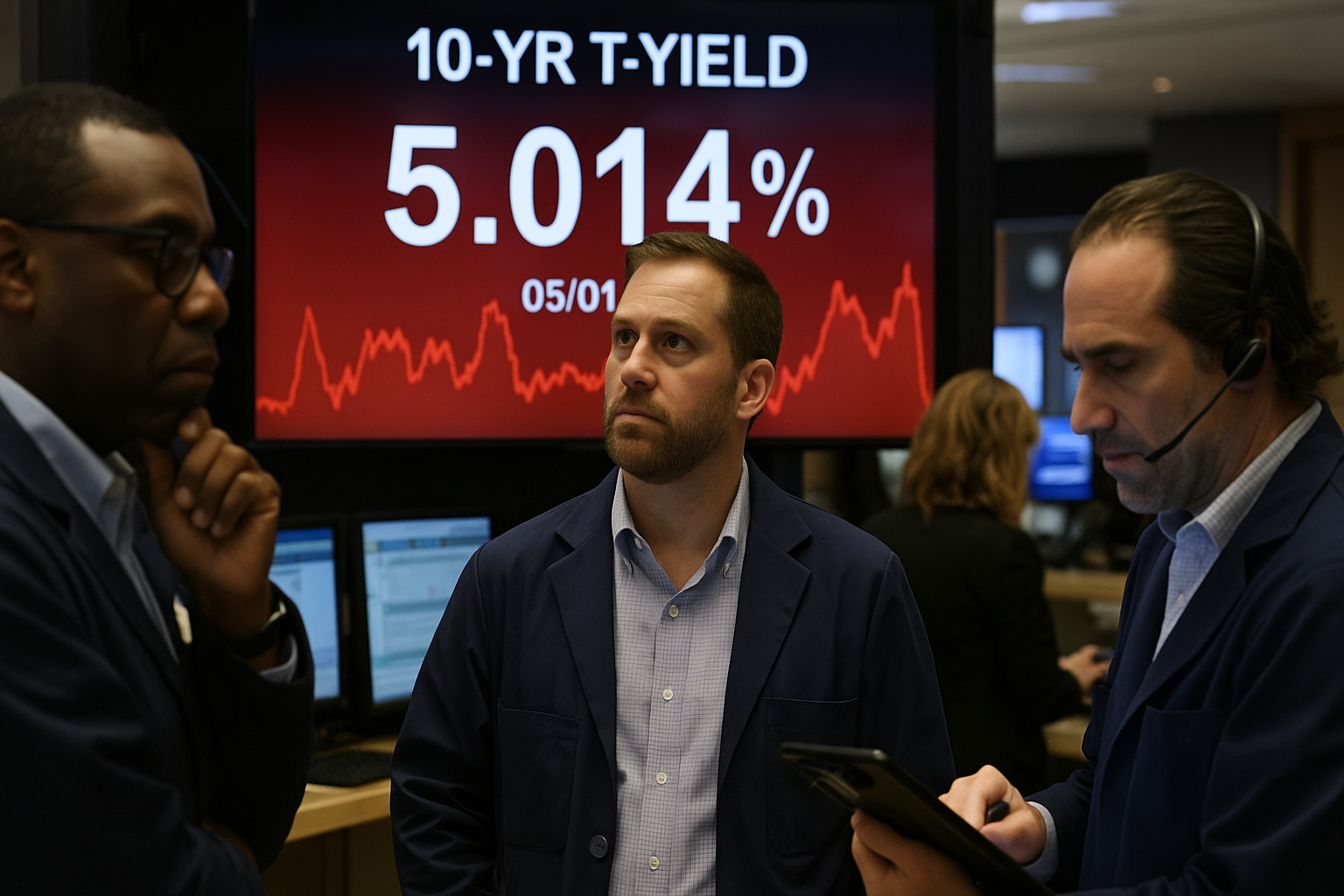
The Federal Reserve’s 25-basis-point rate hike is not what should worry you. A 5% 10-year Treasury yield is the bill arriving for every business built on cheap money.
The Fed has stopped pretending this is a temporary problem
On September 16, the Federal Reserve lifted its benchmark rate by 25 basis points to a 3.75%–4.00% range — its first increase in more than three years. It was unanimous. More importantly, 16 of 18 policymakers projected at least one more quarter-point increase before the end of 2026. ([axios.com](https://www.axios.com/2026/09/16/fed-rates-warsh-trump?utm_source=openai))
That is not central-bank theatre. It is the Fed admitting that inflation has remained stubborn enough to justify making money more expensive again, even after years in which markets became addicted to the opposite story: rates down, liquidity up, multiples higher, everyone happy.
Kevin Warsh has made his first big call as Fed chair, and it matters precisely because it was politically awkward. President Donald Trump had repeatedly pushed for lower rates. Warsh raised them anyway. That does not mean the Fed is suddenly heroic. It means inflation became sufficiently unpleasant that doing nothing would have looked worse. ([axios.com](https://www.axios.com/2026/09/16/fed-rates-warsh-trump?utm_source=openai))
Markets initially did what markets do: threw a small tantrum, then looked for a reason to carry on. The S&P 500 rose 1.1% and the Nasdaq 100 gained 1.7% on September 17 as oil fell and investors decided the immediate uncertainty had at least been removed. ([bloomberg.com](https://bloomberg.com/news/articles/2026-09-17/us-stocks-primed-to-rebound-from-fed-day-slump-as-futures-rally?utm_source=openai))
Then reality showed up again on Friday.
The 10-year Treasury yield hit 5.00%. Stocks finished mixed, with most shares declining as yields rose and oil swung around. ([apnews.com](https://apnews.com/article/da0dbe004b6f83c36e7d1626a9741a92?utm_source=openai))
That 5% number is the one I would pin above the desk. It affects mortgage rates, commercial-property valuations, business lending, venture funding, private-equity underwriting and the return investors demand before they part with a dollar. The Fed controls overnight money. The bond market decides whether the whole economy gets expensive.
Why oil, rates and debt are now joined at the hip
The immediate culprit is energy. Escalating conflict in the Middle East has pushed oil above US$100 a barrel and renewed inflation pressure just as investors had been hoping central banks were finished tightening. Reuters reported that rising energy prices and global borrowing costs are creating a credible stagflation risk: slower growth paired with stubbornly high inflation. ([marketscreener.com](https://www.marketscreener.com/news/rising-oil-rates-and-yields-brew-up-stagflation-cocktail-for-markets-ce785bd3dd8ef522?utm_source=openai))
That is a rotten combination because there is no painless button to press.
If central banks ease because growth weakens, they risk validating higher inflation. If they keep tightening to deal with inflation, they make borrowing costs worse for households, governments and businesses that have spent years assuming capital would remain cheap. Either way, somebody gets hurt.
For the moment, equity investors are behaving as though this can all be contained. That is understandable. The US economy has held up better than plenty of people expected, and AI spending has kept a serious amount of cash flowing through technology, data-centre and infrastructure supply chains. Reuters noted that this investment surge has helped keep growth resilient even as energy and yields climbed. ([marketscreener.com](https://www.marketscreener.com/news/rising-oil-rates-and-yields-brew-up-stagflation-cocktail-for-markets-ce785bd3dd8ef522?utm_source=openai))
But resilient is not the same thing as invincible.
A higher oil price is effectively a tax. Families pay more at the bowser. Freight costs rise. Manufacturers pay more to move inputs. Airlines, retailers, restaurants and anyone with a real-world supply chain eventually have to decide whether to absorb the cost or pass it on. Neither choice is much fun.
Then comes the second punch: higher yields raise the discount rate used to value everything from listed growth stocks to a warehouse development in Brisbane. You do not need an economics degree to understand it. If investors can get around 5% from US government bonds, the bar for backing a risky business gets higher. As it should.
The second-order damage will not be evenly shared
The mistake people make in these moments is treating “the market” as one thing. It is not. Higher rates are an inconvenience for a cash-rich business with pricing power and little debt. They are a potential death sentence for a business that needs to refinance soon, has skinny margins and sold investors a dream based on revenue five years from now.
That distinction is about to matter more than the latest AI demo or a founder’s LinkedIn post about culture.
The Reuters market coverage pointed to rising Treasury yields, high oil prices and uncertainty over the number of future Fed hikes as the issues investors will be weighing next. It also noted fresh concerns around a possible slowing of AI investment. ([investing.com](https://www.investing.com/news/economy-news/investors-focus-on-rate-path-ai-slowdown-after-fed-hike-4906951?utm_source=openai))
That last bit deserves more attention. AI has become a kind of economic antidepressant: whenever something looks ugly, people point at data centres and declare the growth story intact. There is real capital expenditure behind the boom. There are real chips, power contracts, construction projects and software budgets.
But when financing costs rise, investors stop asking only, “How big can this become?” They start asking the question that actually matters: “When does this thing make money?”
I like ambition. I have built businesses and invested in them. But I have also watched cheap-money periods convince perfectly intelligent people that negative unit economics were a personality trait rather than a flaw. A higher long-term yield has a wonderful way of making arithmetic fashionable again.
For public markets, that means the gap between companies with actual earnings and companies with expensive promises could widen. For private markets, it means lower valuation expectations, longer fundraising cycles and much nastier diligence. For operators, it means the businesses that know their gross margin, customer payback period and cash runway will have options. The rest will have stories.
The overlooked angle: the Fed may not be the main event
Everyone will obsess over whether the Fed hikes again in October or December. Fair enough — futures markets have moved sharply toward another increase. ([uk.marketscreener.com](https://uk.marketscreener.com/news/wall-st-mixed-as-benchmark-treasury-yields-reach-5-oil-takes-a-pause-ce785adadc8ef62c?utm_source=openai))
But I would not make the classic amateur mistake of watching only the central bank while ignoring the bond market.
The Fed can raise by 25 basis points and still fail to bring long yields down if investors think inflation will persist, government borrowing will stay enormous, or geopolitical risk will keep energy expensive. In that world, short rates and long rates can both hurt at the same time. That is the environment that wrecks the easy playbook.
The contrarian point is this: a measured Fed hike could actually be good news if it restores confidence that inflation will not be allowed to run wild. That is why stocks bounced after the decision when oil retreated. ([bloomberg.com](https://bloomberg.com/news/articles/2026-09-17/us-stocks-primed-to-rebound-from-fed-day-slump-as-futures-rally?utm_source=openai))
The problem is that credibility is not a press conference. It is earned in bond yields, inflation expectations and the price people pay for energy next month. Until those settle down, the market is not pricing a clean soft landing. It is pricing a nervous bet that one still might happen.
What this means for you
If you run a business, do four boring things this week. Boring is underrated when money gets dear.
First, stress-test your cash flow at interest rates 1% higher than today. Not because that is definitely where rates go, but because surprises are what kill companies. Look at every facility, every lease, every planned refinance and every customer payment assumption. If the model breaks, fix it before the lender finds it.
Second, separate growth from vanity. Growth that requires permanent subsidy is not growth; it is a delayed invoice. Work out which acquisition channels produce customers who pay back quickly, stay longer and buy again. Cut the rest, even if it bruises the ego.
Third, protect pricing power. If higher energy, logistics or financing costs hit your business, do not wait until margins are wrecked to have a pricing conversation. Better customers understand honest price rises when you explain the value. Bad customers complain loudly and leave eventually anyway.
Fourth, if you are investing, stop treating every dip as a bargain. A company can be down 30% and still be wildly overpriced if its cash flows sit years in the future and the discount rate has changed. Favour balance sheets, free cash flow, sensible debt and management teams that do not need capital markets to stay alive.
The Fed’s 25bp hike is a headline. The 5% 10-year yield is the operating environment.
Build, invest and borrow accordingly.