Federal Reserve Faces $107 Oil and 5.4% Inflation: Cheap Money Is Dead
Cheap money is not coming back because you want it to. With Brent at $107 and US wholesale inflation at 5.4%, the Federal Reserve has a very ugly decision.
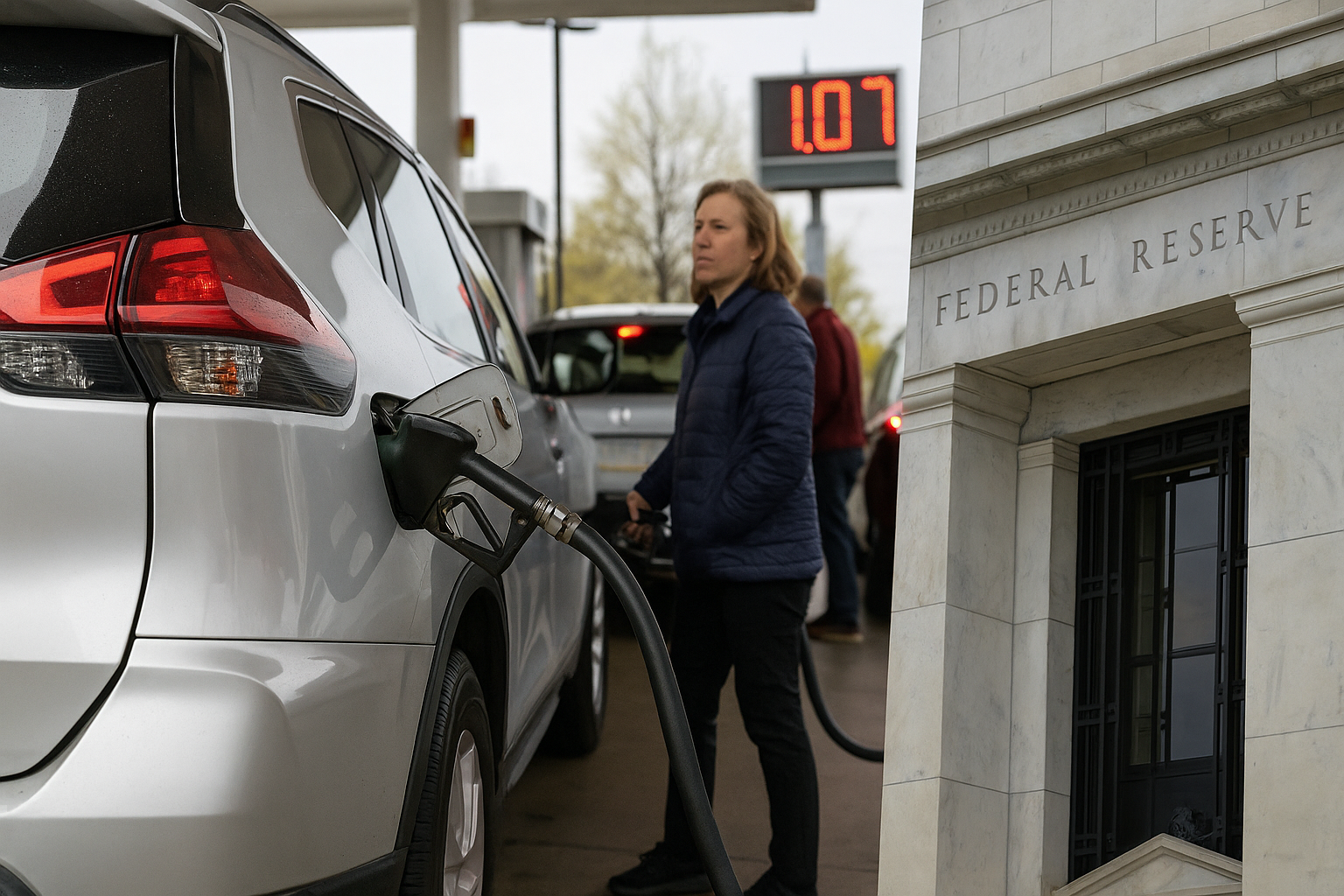
Cheap money is not coming back because you want it to. With Brent crude at $107 a barrel and US wholesale inflation running at 5.4%, the Federal Reserve is staring at the sort of decision that ruins the comfortable stories investors tell themselves.
This is not a minor market wobble. It is the bill arriving for everyone who assumed inflation had been tamed, rates would drift down, and expensive assets could keep floating upwards forever.
The $107 problem nobody can diversify away
On September 10, Brent crude jumped 6% to $107 a barrel as disruption hit shipping routes through the Strait of Hormuz and the Red Sea. That is not merely an energy-sector headline. Oil is the economic equivalent of a bloke kicking the front door in: it gets into freight, airlines, plastics, chemicals, food distribution, manufacturing and household budgets.
The market had already had its warning. Brent crossed $100 on September 9 for the first time since July. The next day, it moved higher again. Investors did what investors do when the maths gets uglier: they sold shares and demanded more yield from government bonds.
The 10-year US Treasury yield jumped to 4.95% on September 10. The 30-year yield hit its highest level in more than 19 years. That matters more than the daily noise in the Nasdaq because Treasury yields are the price of money underneath nearly everything else: mortgages, corporate loans, private-equity deals, venture funding and the valuation models used to justify very optimistic share prices.
If you own a business, higher yields mean your future cash flow is worth less today and your next debt refinance costs more. If you are an investor, the same rule applies: a risk-free government bond yielding close to 5% is serious competition for a speculative growth stock promising profits somewhere over the horizon.
For years, plenty of people were effectively running the same trade: borrow cheaply, buy duration, own assets that benefit from low rates, and assume central banks would blink first. That trade gets nasty when oil and bond yields rise together.
The inflation data has stopped being theoretical
The August producer-price index rose 5.4% from a year earlier, up from 4.8% in July. Producer prices are not the same thing as consumer inflation, but they are a bloody useful warning label. Businesses can absorb higher costs for a while. Then margins get pinched. Then prices go up. Or jobs and investment get cut. Usually some unpleasant blend of all three.
The August consumer-price report is due at 8:30 a.m. Eastern Time on September 11, just days before the Federal Reserve meets on September 15 and 16. That timing matters. This is the last big inflation read before the decision.
July’s numbers had looked comparatively benign: headline CPI rose 0.1% for the month and 3.4% over 12 months, while core CPI was up 2.5% annually. But July also captured falling energy prices. Energy fell 1.5% that month, and gasoline dropped 2.9%.
That tailwind has now turned around hard.
You do not need to be an economist in a suit to understand the risk. If energy costs are accelerating, producer inflation is re-heating and employers added 162,000 jobs in August, the Fed has less room to pretend the economy needs cheaper money immediately. The unemployment rate was 4.1% in August. That is not a collapse screaming for emergency rate cuts.
It is an economy handing central bankers a very annoying combination: growth resilient enough to survive tighter policy, and inflation stubborn enough to make easing look reckless.
Why Wall Street is suddenly nervous about the wrong thing
The lazy market narrative is always the same: bad news means rate cuts, rate cuts mean stocks go up, and therefore bad news is somehow good news. It is cute until inflation becomes the bad news.
When inflation is the problem, weaker markets do not automatically buy you lower rates. They can produce the opposite. The Fed may have to keep policy tight precisely because higher oil prices are filtering through the system.
That is why the latest sell-off deserves more respect than a routine pullback. The S&P 500 was down nearly 3% from its August 13 record close by September 10, even though it remained up 11% for 2026. The Dow, S&P 500 and Nasdaq had each been sliding as crude rose and yields climbed.
Energy shares have been the obvious short-term winner. Most other sectors have not enjoyed the party. Chipmakers, which have carried a ridiculous amount of the market’s optimism, came under pressure on September 10: Nvidia fell 2.1% and Micron dropped 4.5%.
That is the second-order effect people miss. A higher discount rate does not merely make borrowing expensive for weak companies. It also forces the market to interrogate the valuations of great companies. A brilliant business can still be a stupidly priced share.
I have lost money learning variations of that lesson. You can be right about the company, right about the product, right about the long-term trend — and still overpay badly enough to have a miserable few years.
The contrarian point: this is not automatically a recession trade
Here is where I disagree with the doom merchants enjoying themselves on television.
Higher oil, higher inflation and higher yields are bad ingredients. They are not, by themselves, proof that a recession is imminent. The US labour market is still adding jobs. The Fed has not made a decision. And the market is not even fully aligned on what happens next: a Reuters poll found most economists expected the Fed to hold rates steady at the September meeting.
That uncertainty is the whole game.
Markets hate uncertainty because pricing an asset requires assumptions about cash flow, inflation and the discount rate. Right now, all three are moving around. Oil makes future costs harder to estimate. Inflation makes pricing power more valuable. Bond yields make every long-duration asset less forgiving.
The overlooked opportunity is not to make a heroic bet on one CPI print. It is to own or build businesses that can cope with a range of outcomes.
Companies with real pricing power, modest debt, repeat customers and short cash-conversion cycles become more valuable when the money gets tighter. Businesses reliant on endless external capital, wafer-thin margins or a refinancing miracle become less attractive very quickly.
That is true whether you are buying public shares, assessing a private deal or deciding how aggressively to hire in your own company.
What this means for you
First, stop making plans based on the hope that rates will rescue mediocre economics. Run your business model at current borrowing costs, then run it again at another 1 percentage point higher. If that breaks the company, the company was already fragile.
Second, review debt now, not when the banker rings. Know every maturity date, every floating-rate exposure, every covenant and every interest-cost step-up. Founders love talking about revenue. Smart operators know exactly when their debt becomes a problem.
Third, separate a great asset from a great entry price. Do not buy shares simply because they are down for three consecutive days. Ask what earnings multiple you are paying if the 10-year Treasury yield stays near 5%, not if it magically falls back to the low-rate world everyone misses.
Fourth, protect your cash flow. Negotiate supplier terms, examine freight and energy exposure, and push for price discipline before costs force your hand. The best time to improve gross margin is before you are desperate.
Finally, keep some dry powder. Cash is not cowardice when the price of money is high and the range of outcomes is wide. It is optionality. And optionality is what lets you buy good assets when everyone else is forced to sell.
The market is not panicking because oil hit $107. It is panicking because $107 oil exposes how much of the last few years depended on the belief that money would only get cheaper from here.
That belief is looking expensive.