FIFA’s $20B World Cup Sell-Off Failed Because Gianni Infantino Sold Trust
Gianni Infantino tried to turn the World Cup into a $20 billion private-equity wrapper. He discovered that even in football, you can’t invoice people for trust after you’ve torched it.
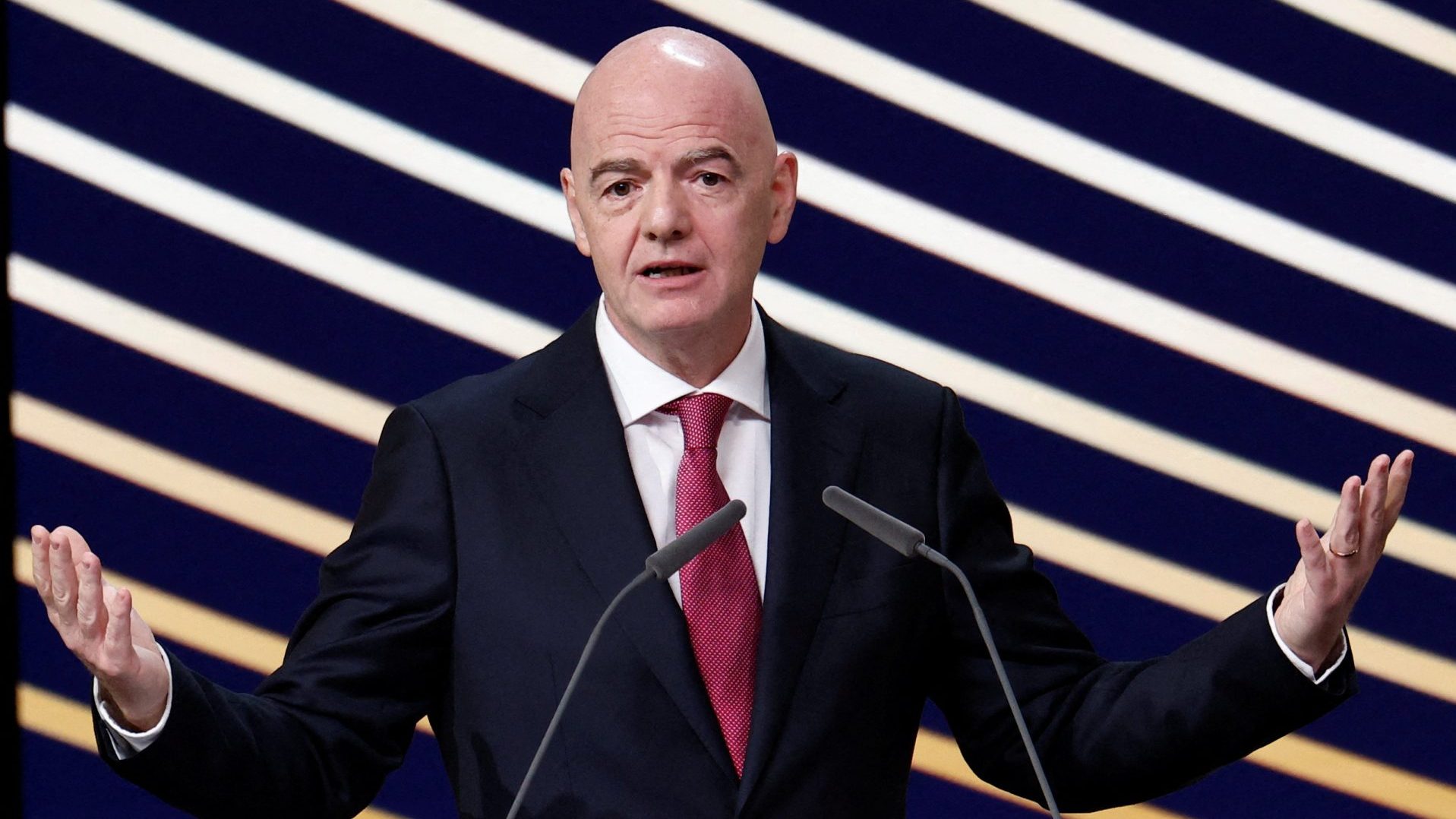
Gianni Infantino tried to put a $20 billion price tag on the World Cup. The money was never the stupid part. The way he went about it was.
FIFA’s now-abandoned FIFA Forward Enterprise proposal would have bundled the commercial rights and event operations around FIFA competitions into a new entity valued at $20 billion. It aimed to raise up to $4.2 billion from outside investors while FIFA retained control.
On paper, that is not some mad idea dreamed up after three martinis. Plenty of serious sporting assets have taken private capital. Leagues, clubs, media businesses and event operators do it every year.
But FIFA is not just another asset. It is the landlord, referee and supposed custodian of the biggest tournament on Earth. That creates a higher bar. Gianni Infantino treated the proposal like a financing round. His stakeholders treated it like an attempt to flog off part of the family silver without asking the family.
They were right to be furious.
The $4.2 billion deal that became a governance crisis
The proposed vehicle, FIFA Forward Enterprise, or FFE, was meant to consolidate FIFA’s commercial rights and tournament operations. FIFA said the entity would cover competitions, broadcast, sponsorship, licensing and future ventures, while the governing body would keep majority board representation and exclusive authority over football’s rules and sporting decisions.
The sales pitch was simple: bring in long-term minority investors, unlock capital now, grow commercial income later, and send more money to football’s 211 member associations.
FIFA said a $20 billion valuation had been determined by JPMorgan and that it intended to raise up to $4.2 billion. The published plan promised materially larger development funding across future cycles, including an optional $20 million per member association for special projects and an increase in core Forward funding from $8 million per association in the 2023–26 cycle to $20 million for 2027–30.
That is a seductive offer if you run a smaller federation. A national training centre, better pitches, grassroots programmes, stadium upgrades — these are not abstract things when you operate on a tight budget.
But here is where the deal started smelling funny.
If you say an entity is worth $20 billion and you want to raise $4.2 billion, the basic arithmetic points to roughly 21% of the economics. Reuters reported FIFA was exploring the sale of as much as a 20% stake. That might sound like a minor drafting issue. It isn’t. When you are inviting outsiders into the commercial engine of global football, precision is not a luxury. It is the whole job.
Then came the bigger problem: process.
The consultation began on July 28. According to reporting on the backlash, senior football figures felt the plan had been kept from key stakeholders, including FIFA Council members, confederations and member associations, before pressure was applied for rapid support. UEFA, Concacaf and the Asian Football Confederation later accused FIFA of deception and a fundamental breach of trust.
The proposal was shelved within days.
That is not a market rejection. It is worse. It is an own goal by management.
Gianni Infantino confused control with consent
This is the bit every founder, investor and operator should understand: having the legal power to do something is not the same as having the practical permission to do it.
FIFA’s argument was that it would retain control. Fair enough. Minority capital does not automatically mean minority control. Good businesses raise capital without surrendering the wheel all the time.
But control was never the only issue.
The World Cup is not merely a revenue line. It is the central trust asset of world football. Its economic value depends on a giant and fragile coalition: national federations, confederations, players, clubs, broadcasters, sponsors, host countries and supporters all need to believe the system is broadly legitimate.
You can write “non-controlling interest” in a deck as many times as you like. It does not answer the real question: who gets the upside from the next 20 years of World Cup growth, and who gets to shape the decisions that create it?
That question matters even more because the proposal arrived after a hugely lucrative World Cup, won by Spain over Argentina. When an organisation has just had its best commercial moment, stakeholders expect confidence, transparency and a considered long-term plan. They do not expect to learn that the crown jewel may be put into a newly engineered financial vehicle with outside investors circling.
Infantino’s mistake was not ambition. Ambition is useful. Football needs more capital in places where a few decent fields, coaches and facilities can change thousands of lives.
His mistake was believing the cheque would make the politics disappear.
It never does.
The overlooked angle: the plan had a legitimate business case
Here is the contrarian bit: FIFA was not necessarily wrong to explore a commercial subsidiary.
In fact, separating commercial operations from governance can be sensible. A focused business arm can hire specialist operators, run media rights better, package sponsorship more intelligently, build licensing revenue, and make event delivery less clunky. Plenty of organisations would benefit from that discipline.
And there is a serious argument for getting more funding to smaller football nations. The 211-member structure means football is not just England, Spain, Brazil, Argentina and the usual rich suspects. For many associations, FIFA money is the difference between having a proper youth system and having a bloke with a clipboard and a dodgy van.
The failure was that FIFA tried to leap from a reasonable strategic question — how do we professionalise and finance football’s commercial growth? — to a highly political capital transaction without earning buy-in first.
It also tied itself in knots with the name. Calling it FIFA Forward Enterprise was meant to connect the vehicle to development funding. But it made the pitch feel like this: approve an opaque financial structure now, and we’ll give you more money later.
That is not partnership. That is a hostage note wearing a corporate polo shirt.
The most durable commercial deals make every major stakeholder feel they have more to gain by supporting the structure than by blowing it up. FFE did the opposite. It gave smaller federations a cash incentive, but it gave powerful confederations a reason to fear strategic dilution and institutional irrelevance.
No wonder it detonated.
Private capital does not fix a trust discount
Investors love recurring revenue, global audiences, scarce rights and long-term contracts. The World Cup has all of that in spades. That is why a $20 billion valuation was plausible enough to get serious people into the room.
But a brilliant asset can still be a terrible transaction.
In business, trust has a price. When it is high, you can move quickly, make big decisions and ask people to accept uncertainty. When it is low, every number gets interrogated, every adviser looks suspicious, every meeting leaks, and every stakeholder assumes someone else is getting a better deal.
That is exactly what happened here.
The capital itself was not free money. Outside investors would want returns. Those returns would ultimately need to come from growing revenue, controlling costs, extending commercial rights, finding new inventory, or some combination of all four.
In plain English: more sponsorship, more media monetisation, more tickets, more hospitality, more commercial packaging, perhaps more events. None of those things are inherently bad. But every one comes with trade-offs for fans, players, clubs and national associations.
FIFA needed to explain those trade-offs before asking anyone to bless the structure. Instead, its leaders ended up apologising for the rollout while opposition to Infantino gathered pace ahead of the March presidential election.
That is the real cost of a botched deal. Not just the lost $4.2 billion. It is the management time, political capital and strategic freedom you burn cleaning up after it.
The second-order problem for FIFA
This episode will not stop private capital from chasing sport. If anything, it proves the opposite: investors see global sport as one of the few remaining pools of premium, live, emotionally sticky intellectual property.
But it could change the terms on which FIFA can pursue future deals.
First, any revived commercial subsidiary will face tougher scrutiny. FIFA may still build one. It probably should consider it. But the next version will need a transparent mandate, a proper timetable, clear economics, independent governance safeguards and real consultation before bankers start making calls.
Second, Infantino’s political position is weaker. FIFA’s 211 member associations each have a vote, and he has historically built support by expanding funding and opportunity for smaller nations. The FFE mess has exposed the limits of that coalition-building model when the issue is not just money but legitimacy.
Third, potential investors have learned something uncomfortable: the World Cup may be a magnificent asset, but the governance around it can create execution risk that no spreadsheet can solve. A buyer does not just underwrite revenue. They underwrite the people who control it.
That should matter to every investor reading this. Never value a sports asset solely on audience, broadcast rights and brand heat. Value the decision-making system around it. A messy cap table is annoying. A messy political ecosystem can kill a deal entirely.
What this means for you
If you run a business, take the lesson before you need it.
Do not confuse a good idea with a saleable transaction. Your plan may genuinely create value. That does not mean the people affected by it will accept it without clarity on what changes, who wins and what they give up.
Get the governance right before the valuation. A $20 billion number gets headlines. A credible approval process gets deals done. Before you hire bankers or announce a strategic review, map the people with formal votes, informal influence and the ability to wreck your plan in public.
Never use upside as a substitute for explanation. “You’ll make more money” is not a strategy. It is an invitation for smart people to ask what you are hiding. Show the mechanics. Show the downside. Show the alternatives you rejected.
Make the maths boringly exact. In any capital raise, ambiguity around ownership, control, distributions or timing is poison. If your numbers need a three-minute explanation, they are not ready for the boardroom.
And finally: protect the asset that makes all the numbers possible. For FIFA, that asset is not the World Cup trophy, the broadcast package or a JPMorgan valuation. It is trust that the World Cup belongs to football before it belongs to financiers.
Once you forget that, $4.2 billion can disappear very quickly.