Figure’s $3.5B Nscale Deal Is a CEO Bet Most Founders Can’t Afford
Figure has committed $3.5 billion to Nscale—nearly twice the capital it has ever raised. That is either elite conviction or a very expensive way to discover your strategy was theatre.
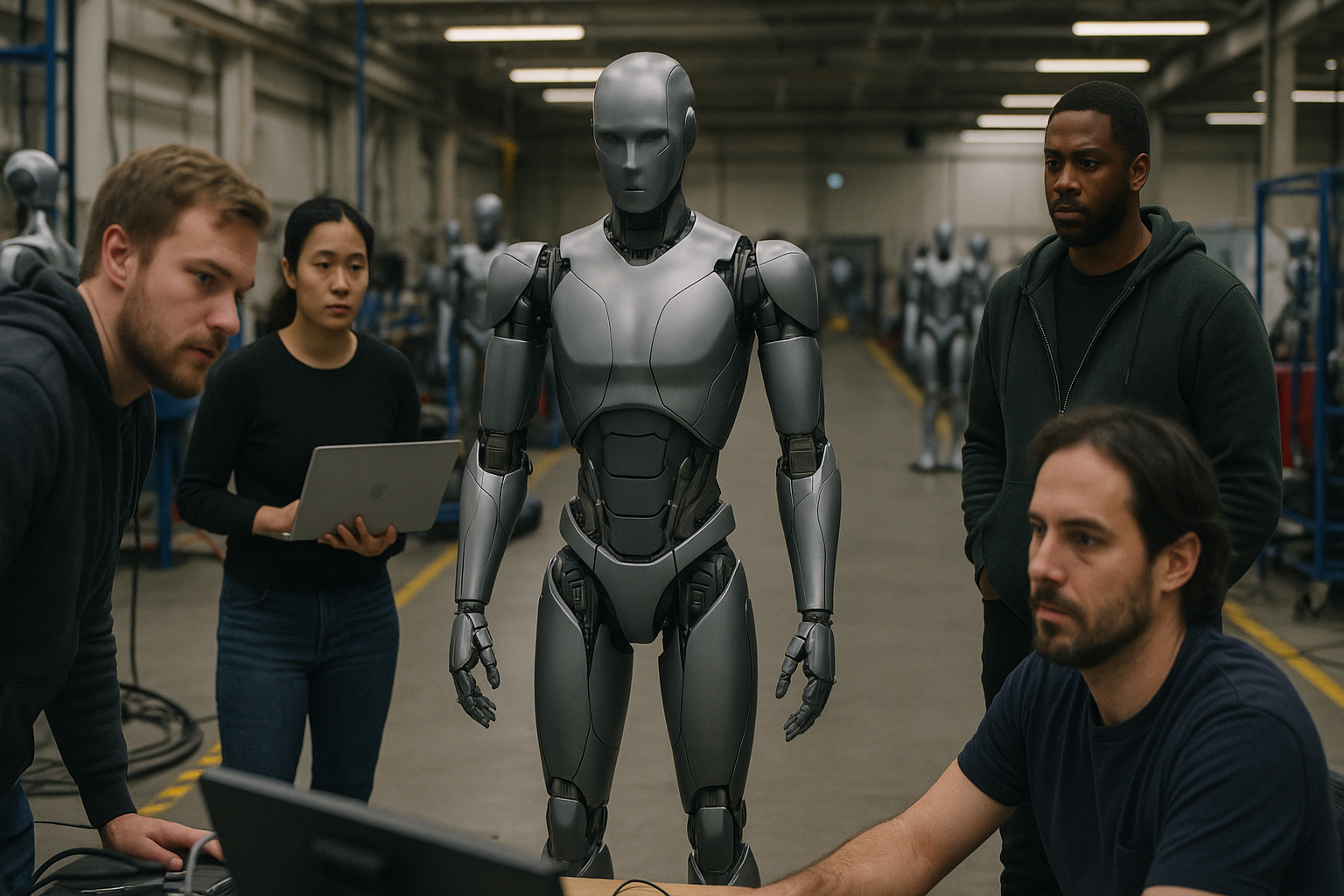
Figure has committed $3.5 billion to AI compute while having raised about $1.9 billion in its entire life. Most founders would call that reckless. Brett Adcock is calling it the price of building a robot for every home.
And before anyone gets carried away: this is not a $3.5 billion cheque being wired this week. It is a multi-year compute commitment, with the first systems targeted for the second half of 2027. But that detail does not make the decision small. It makes it more interesting.
This is a leadership story disguised as an infrastructure deal. It is about what happens when a CEO stops treating technology as an expense line and starts treating it as the thing the entire company will either compound around—or die under.
The deal: $3.5 billion now, more than $6 billion if the plan works
Figure, the humanoid-robotics company led by founder and CEO Brett Adcock, has signed a multi-year strategic partnership with AI cloud business Nscale. The initial commitment is $3.5 billion in compute, with stated intent to grow it beyond $6 billion. The arrangement could involve up to 100,000 Nvidia Vera Rubin GPUs, with deployment targeted at Nscale’s Barstow, Texas site from the second half of 2027. ([nscale.com](https://www.nscale.com/press-releases/nscale-and-figure?utm_source=openai))
Nscale, led by founder and CEO Josh Payne, will also make an undisclosed strategic investment in Figure and become its preferred compute provider. That matters. This is not merely a vendor contract. It is a supplier becoming financially tied to the customer it will be reporting as contracted demand.
Figure wants the capacity to train its Helix models—the AI systems meant to let humanoid robots operate in the messy physical world rather than perform a polished trick in a controlled demo. Adcock’s argument is straightforward: the company is constrained by data and compute. More of both should produce more capable robots. ([nscale.com](https://www.nscale.com/press-releases/nscale-and-figure?utm_source=openai))
Fair enough. But a CEO’s job is not simply to identify the bottleneck. It is to decide whether eliminating that bottleneck creates a business—or just a larger bill.
Figure’s commitment is roughly double the capital Forbes reports it has raised to date. The company has not disclosed revenue. That gap is the whole story. A founder can sign a giant future contract because the market believes the company will be enormous. The hard part is making sure the operating reality catches up before the financing music stops. ([forbes.com](https://www.forbes.com/sites/johnkoetsier/2026/09/04/how-figure-committed-35-billion-for-ai-compute-after-raising-only-19-billion/?ss=ai-holiday-shopping&utm_source=openai))
Brett Adcock is buying optionality, not GPUs
People will look at the $3.5 billion number and immediately ask whether Figure can afford it. That is the wrong first question.
The first question is: what has Adcock bought?
He has bought an option on scale. If Figure’s models improve, its robots become useful, and customers start paying for fleets rather than prototypes, compute could become the limiting factor. In that world, locking in access early is not extravagant. It is sensible. You do not wait until demand arrives to discover you cannot train the models that satisfy it.
That is how serious operators think. They secure the scarce input before the market makes it impossible to get.
But optionality only has value when the downside is genuinely contained. This deal has several protections baked in. The GPUs are not due to begin deployment until the second half of 2027. The $6 billion figure is an intention to expand, not a completed purchase. And neither company has publicly said that $3.5 billion is cash paid upfront.
That gives Figure room to earn, raise, restructure or renegotiate as reality arrives. It gives Nscale a very large headline and a marquee customer as it reportedly explores a public listing and additional financing. TechCrunch reported on September 4 that Nscale was seeking up to $3.5 billion in pre-IPO financing, split between proposed convertible notes and financing it was seeking from Nvidia. ([techcrunch.com](https://techcrunch.com/2026/09/04/ai-compute-provider-nscale-is-looking-for-3-5b-in-pre-ipo-financing/?utm_source=openai))
That is not a criticism. It is the game. But founders and investors should call it what it is: a high-stakes alignment of future promises, not proof that billions of dollars of current economic value have already been created.
Josh Payne’s real management challenge is hiding in plain sight
Nscale’s Payne is making a much bigger bet than selling cloud capacity.
He is trying to build a vertically integrated AI infrastructure company: power, data centres, GPUs, software and customer relationships in one machine. Nscale bought Anyscale in July to add the software layer behind AI workloads, and the Figure partnership is another move toward owning more of the stack rather than being a bloke renting out chips by the hour. ([nscale.com](https://www.nscale.com/press-releases/nscale-acquires-anyscale?utm_source=openai))
The strategy is logical. Commodity providers get squeezed. Integrated providers have more ways to make money, more data on customer use, and more leverage over the experience.
But vertical integration is one of business’s favourite ways to lose money with confidence.
When you own every layer, you also own every cock-up. Power delays are your problem. Construction costs are your problem. Hardware timing is your problem. Customer concentration is your problem. Software reliability is your problem. And if the client whose future commitment supports the narrative cannot grow into the contract, that becomes your problem too.
This is why the Figure deal is a management test, not merely a sales win. Payne needs Nscale to build capacity at the right time, finance it without setting fire to the balance sheet, and avoid mistaking contracted future revenue for cash in the bank.
That last point is worth tattooing on the forehead of every founder pitching an AI infrastructure business. A signed commitment can be valuable. It can also be conditional, delayed, repriced, financed, revised or never fully consumed. Revenue is not revenue because it looks good in a slide deck.
The overlooked angle: this is supplier finance wearing a robot costume
Everyone loves the humanoid-robot story because it is sexy. Robots in homes. Robots in factories. Robots doing physical work that humans do not want to do.
Fine. But the more revealing part of this deal is the capital structure.
Nscale is Figure’s preferred compute provider. Nscale is also taking an equity stake in Figure. Nvidia is central to the hardware platform and has backed Nscale, while Figure’s prior fundraising has included major technology investors. The incentives are obvious: Figure needs vast compute to pursue its ambition; Nscale needs large, credible customers to support expansion; hardware suppliers need demand for the next generation of chips. ([nscale.com](https://www.nscale.com/press-releases/nscale-and-figure?utm_source=openai))
None of that means the arrangement is dodgy. It means the leaders involved must be brutally honest about what is actual demand, what is anticipated demand, and what is strategic financing dressed up as demand.
That distinction becomes painful when markets turn. During easy-money periods, companies can fund one another’s growth stories and everybody looks clever. When capital tightens, the businesses with real customers, real gross margins and contracts that convert to cash are the ones still standing.
This is precisely why founders should admire the ambition without copying the optics.
You do not need to sign a billion-dollar infrastructure agreement to be decisive. You need to know which constraint will stop your business from winning, then secure that constraint with terms you can survive if your rosy forecast turns into landfill.
The contrarian view: the size of the commitment may be the responsible bit
Here is the unpopular take: the $3.5 billion commitment may be more rational than the cautious version.
A lot of CEOs underinvest because they want to look prudent this quarter. They delay hiring the critical team, postpone systems upgrades, buy capacity after it is scarce, and then act shocked when the business cannot move fast enough. That is not prudence. That is timid leadership wearing glasses.
If Adcock genuinely believes data and compute determine whether Figure reaches commercial usefulness, then nibbling around the edges would be worse than making a very large, structured commitment. You cannot build a category-defining physical-AI company on spare capacity and motivational quotes.
The catch is brutal: Figure now needs operational milestones that justify its appetite. Better models are not enough. It needs robot reliability, manufacturing progress, paying deployments, safety credibility and customers willing to buy outcomes rather than applaud videos online.
The company’s leadership has effectively raised the standard for itself. Good. Big promises should come with big internal scoreboards.
What this means for you
You probably do not run a humanoid-robotics company. Lucky you. But the management lesson applies whether you run a startup, a division or a local business with 12 staff.
First, identify your actual constraint. Not the complaint repeated in Monday meetings—the real constraint. Is it sales leads? A weak manager? Product speed? Inventory? Cash conversion? Founder indecision? Pick one. If you name six things, you have named none.
Second, buy capacity ahead of the curve only when it is directly tied to a measurable commercial outcome. Figure is betting compute will improve Helix and ultimately make robots valuable. Your equivalent might be a senior salesperson, a new production line, a better CRM or a customer-success team. Write down the exact result the spend must produce and the date it must produce it by.
Third, separate commitments from results. A signed customer, a partnership announcement, a hiring plan and a pipeline forecast are not cash flow. Manage the business on what has happened, not on what makes the board deck look pretty.
Fourth, make your suppliers earn strategic status. If a supplier has influence over your ability to grow, negotiate more than a price. Negotiate capacity, service levels, data access, implementation support, exit rights and what happens when their promise does not arrive on time.
Finally, be ambitious enough to make people uncomfortable—but structured enough to survive being wrong. That is the difference between a bold CEO and a bloke playing founder dress-ups on LinkedIn.
Figure and Nscale have made a huge bet on physical AI. The rest of us should watch the important bit: not whether the announcement was impressive, but whether Adcock and Payne turn future commitments into durable operating results.