Fox’s $22B Roku Deal Buys America’s TV Front Door
Fox is paying $22 billion for the screen you see before you choose what to watch. That is a brutal reminder: distribution beats content when the money is on the line.
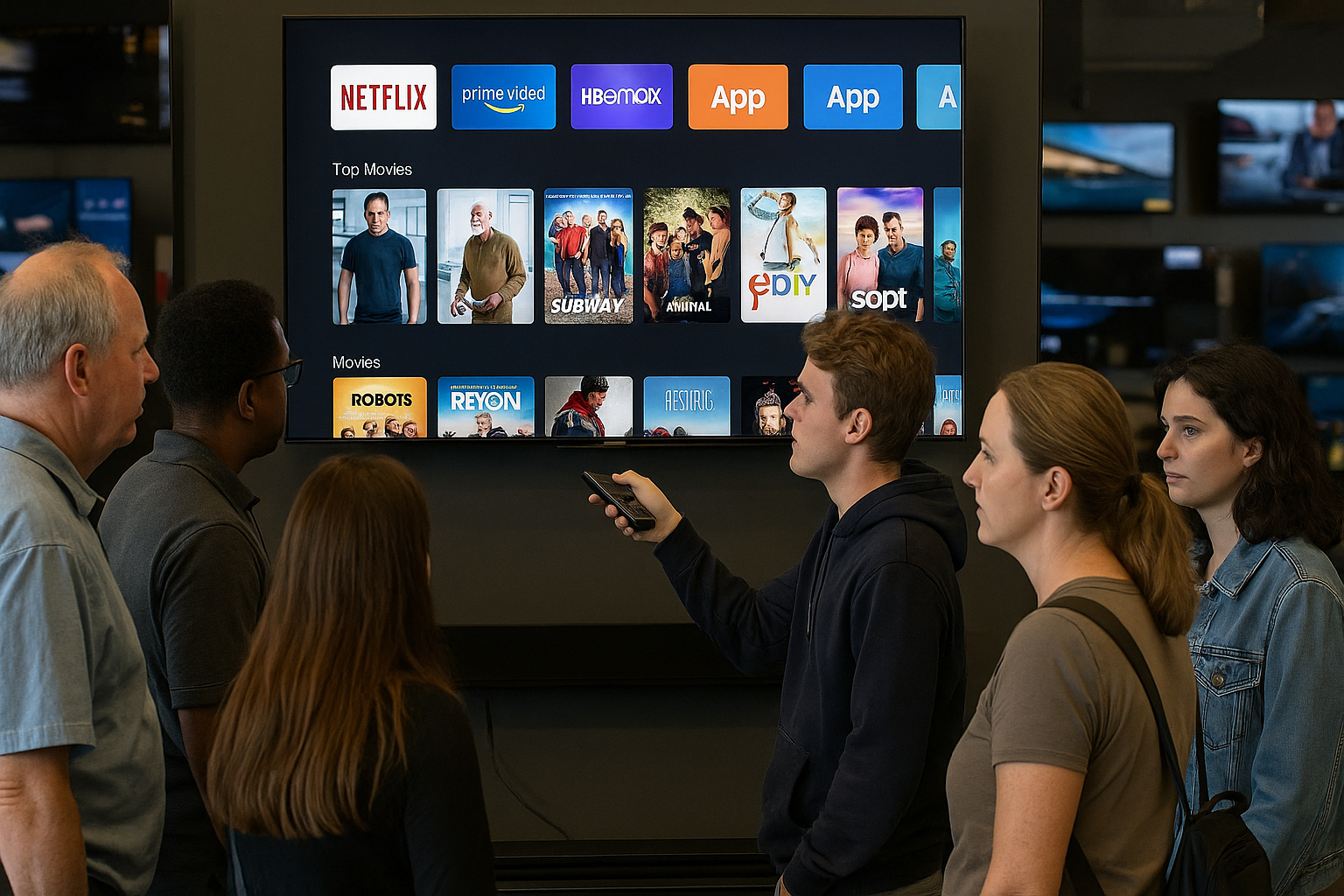
Fox is paying $22 billion for the screen you see before you choose what to watch. That is a brutal reminder: distribution beats content when the money is on the line.
Tonight, September 8, is a meaningful checkpoint in Fox Corporation’s proposed acquisition of Roku. The Hart-Scott-Rodino waiting period is scheduled to expire at 11:59 p.m. Eastern Time unless US regulators extend it. That does not mean the $22 billion deal closes tonight. It means the deal moves one large step closer to becoming a very different beast: a media company that owns premium live content and the digital front door into more than 100 million streaming households.
That is not a normal content acquisition. It is a distribution land grab.
The deal on the table is bigger than the $160 headline
Fox agreed on June 14 to acquire Roku in a cash-and-stock transaction worth $160 per Roku share, implying roughly $22 billion in enterprise value. Roku shareholders are set to receive $96 in cash plus 0.9693 Fox Class A shares for every Roku share they own.
That distinction matters. The $160 number gets plastered across headlines because it is clean. The actual value received by Roku shareholders moves with Fox’s share price until closing. Based on Fox’s August 27 closing price, the merger consideration was worth $161.16 per Roku share. Before the deal announcement, using Fox’s June 11 closing price, it was worth $162.20.
So this is not a simple cash exit. Roku holders are swapping a chunk of their upside for a stake in the combined company. Former Roku investors are expected to own about 27% of Fox after the transaction, with existing Fox holders retaining about 73%.
Fox is not merely paying for a streaming-stick business. It is buying Roku’s operating system, home screen, advertising technology, first-party data, The Roku Channel, device relationships and direct consumer access. Hardware is the bait. Control of the viewing environment is the prize.
The companies expect the transaction to close in the first half of calendar 2027, subject to shareholder votes and remaining regulatory approvals, including in the United Kingdom and Germany.
Fox is buying distribution because content alone is a hard business
Content is expensive, unpredictable and perishable. You can spend a fortune on sports rights, dramas, news talent or a direct-to-consumer app — then discover viewers cannot be bothered finding it.
Distribution is different. Distribution lets you decide what gets surfaced, bundled, recommended and sold. It lets you understand who is watching, when they leave, what they search for and what advertisers will pay to reach them. That is why the home screen matters more than most investors realise.
Fox already owns assets that benefit from reach: live sport, news, broadcast television, Tubi and the newer FOX One service. Roku brings the connected-TV platform where streaming is discovered and consumed. Put the two together and Fox gets a more direct route from its content inventory to viewers and advertisers.
That is the strategic logic in one sentence: Fox is trying to stop renting attention from other platforms and start owning more of it.
The official pitch includes about $400 million of expected run-rate cost synergies, mainly from public-company costs, overhead, vendor arrangements and corporate efficiencies. Fine. Every large deal comes with a synergy slide, and plenty of those slides deserve to be used as drink coasters.
But $400 million is not the heart of this acquisition. If it were, Fox could find cheaper cuts. The big bet is that a combined Fox-Roku can build a more valuable advertising and subscription machine than either company can build alone.
That is a far more ambitious proposition — and far harder to execute.
September 8 matters, but do not confuse a regulatory milestone with a finished deal
Fox and Roku filed their US notifications on July 6. Fox then voluntarily withdrew its filing on August 5 to give the Department of Justice more time to review the transaction, before refiling on August 7. The resulting HSR waiting period is due to expire at 11:59 p.m. Eastern Time on September 8 unless it is terminated early or extended.
That tells you two things.
First, this was never a deal regulators would simply wave through without looking at properly. Fox brings content and advertising clout; Roku brings streaming-platform reach, consumer data and a major connected-TV advertising business. The overlap is not a classic merger of two identical television networks, but it absolutely raises questions about who gets leverage over advertisers, streaming services and the digital television interface.
Second, a scheduled expiry is not the same as an approval certificate framed on the wall. The merger still requires other approvals, no legal restraint, and shareholder sign-off. The definitive proxy set special meetings for October 14, 2026.
Still, the September 8 date is important because the deal’s regulatory risk becomes less theoretical if the US waiting period passes without an extension. That does not make the transaction inevitable. It does make the road shorter.
The shareholder vote looks less dramatic than the headlines suggest
Roku’s shareholders must approve the merger. Normally, that is where a blockbuster deal can get lively: activist campaigns, hostile letters, noisy retail investors and last-minute complaints about price.
This one has a big structural advantage. Anthony Wood and other Roku supporting shareholders have agreed to vote in favour of the deal. Together, they held approximately 54.80% of Roku’s voting power as of August 27.
That does not make the vote meaningless. It does mean the practical odds are not evenly balanced. A majority voting bloc has already shown its hand.
Wood is also slated to join Fox’s board after closing. That is sensible. Roku without Wood’s product instincts would be like buying a pub and immediately sacking the person who knows where the good customers sit. Fox needs continuity while it integrates a founder-led technology company into a much older media organisation.
The bigger governance question sits on the Fox side. Fox Class B holders vote on the stock issuance required for the deal; Class A holders do not vote at the special meeting. For Fox shareholders, this is a major capital-allocation call: accept dilution and additional debt in exchange for a business that changes the company’s long-term growth profile.
The overlooked risk is not the debt. It is the temptation to get greedy.
Fox has lined up up to $12 billion in senior unsecured bridge financing, later reduced to $11 billion after a $1 billion term-loan facility became effective. Fox says the acquisition is not conditional on obtaining financing, which is what you want to see as a seller. Nobody wants a buyer who discovers halfway through the wedding that their credit card has been declined.
Debt is a risk, obviously. Higher leverage removes room for error. But the more interesting risk is strategic overreach.
Roku works because consumers and streaming services broadly treat it as a relatively neutral gateway. Fox is buying that gateway precisely because it wants the economics that come with it. The danger is that it starts treating Roku like a captive funnel for Fox programming, Fox advertising inventory or Fox bundles.
That would be short-sighted.
The value of Roku is not that it can push Fox content. The value is that millions of households and content partners use it because it offers choice. If Fox weakens that perception, it risks damaging the asset it just paid $22 billion to acquire.
This is the contrarian point: Fox should be careful not to “synergise” the personality out of Roku. A platform wins by being useful to everyone, not by making it obvious who owns the shop.
Why this deal matters beyond Fox and Roku
The streaming war was supposed to be about who had the best shows. It is increasingly about who owns the customer relationship, the advertising data and the discovery layer.
Netflix owns a powerful subscription relationship. Amazon bundles entertainment into a broader retail ecosystem. YouTube owns attention at absurd scale. Apple owns devices. Google owns advertising infrastructure. Roku owns a place on the television set itself.
Fox has looked at that board and decided content ownership without more control of distribution is not enough.
For advertisers, this deal could create a more formidable seller of connected-TV ads, live sport, news and audience targeting. For smaller streaming services, it is a reminder that platform relationships matter just as much as making decent content. If the platform controls discovery, it can influence the economics of everyone who depends on it.
For founders, there is another lesson: companies with a direct customer relationship are usually worth more than companies that merely supply a component. Roku’s hardware may be low-margin. Its control point is not.
What this means for you
If you are an investor, do not lazily treat this as “Fox buys Roku.” Ask what Fox is actually buying: a distribution position that could improve its advertising economics and reduce its dependence on traditional television. Then ask whether management can preserve Roku’s neutrality while extracting the promised value. The acquisition thesis lives or dies there.
If you are a founder, stop obsessing over features and ask a harder question: do you own a point of distribution, or are you permanently paying someone else for access to customers? The second business can work. The first business usually commands the better multiple.
Here is the practical test: if another company can change your discovery, customer access or economics with one product decision, you do not own distribution. You rent it. Build the direct relationship, the trusted workflow or the platform position that makes customers come to you first.
If you are an operator, remember that synergies are not strategy. Cutting duplicate costs is easy to put in a spreadsheet. Protecting customer trust while combining cultures, incentives, data and product road maps is where deals become fortunes or bonfires.
And if you run a platform, do not mistake your users for hostages. The moment people think your front door is rigged for the owner’s benefit, they find another door.
Fox is spending $22 billion because it understands that distribution is power. Its job now is not to abuse that power before it earns the return.