G42’s 5GW AI Campus Is Getting a Missile-Proofing Rewrite
A 5-gigawatt AI campus sounds like the future—until a few missiles make it a very expensive target. G42’s rethink is a warning: centralised compute is now a board-level risk.
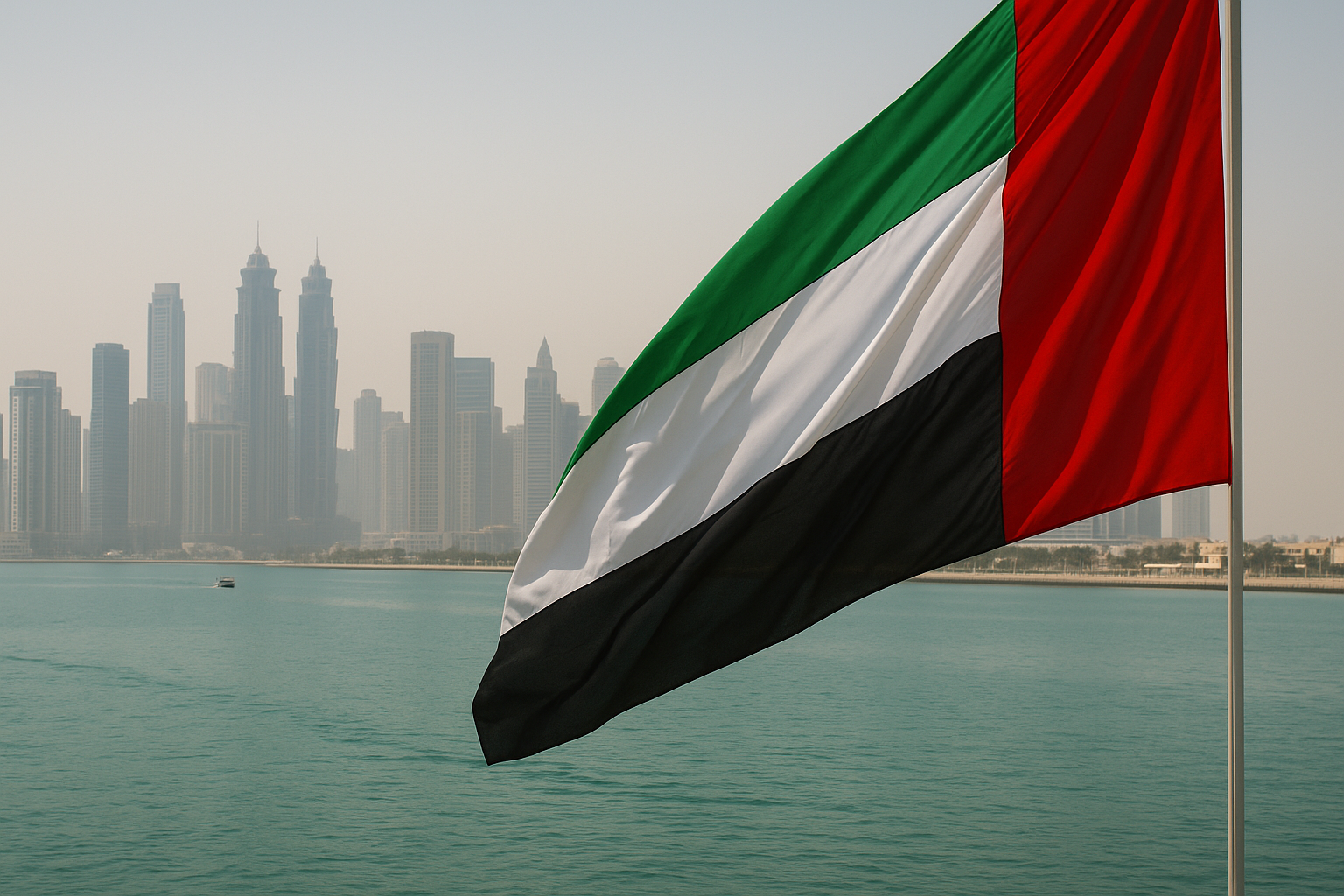
A 5-gigawatt AI campus sounds like the future—until a few missiles make it a very expensive target.
Abu Dhabi’s answer is reportedly to stop putting quite so much of its AI future in one place. And every founder, investor and operator building on centralised cloud infrastructure should pay attention.
The 5GW dream has met the real world
Reuters reported on September 11 that the United Arab Emirates is revising plans for its 5-gigawatt UAE–US AI Campus after Iranian attacks forced a hard rethink about where strategic computing infrastructure should sit.
The original idea was enormous: a 10-square-mile campus in Abu Dhabi designed to provide 5 gigawatts of AI data-centre capacity—the largest such deployment outside the United States. Within it sits Stargate UAE, a 1-gigawatt compute cluster being built by Abu Dhabi AI company G42 and operated by OpenAI and Oracle, with Nvidia, Cisco and SoftBank also involved. The first 200-megawatt cluster was expected to come online in 2026. ([wam.ae](https://www.wam.ae/en/article/bjswsb3-global-tech-alliance-launches-stargate-uae?utm_source=openai))
Now, according to Reuters’ sources, the UAE is considering a different architecture: a network of data centres spread across the country rather than one giant concentration of machines. The discussions reportedly include extra air defences and potentially underground construction. G42 said work was proceeding and that project specifics were subject to continuous review. ([tbsnews.net](https://www.tbsnews.net/worldbiz/middle-east/uae-revises-ai-data-centre-plan-after-iranian-attacks-sources-1540236?utm_source=openai))
That is not a minor engineering tweak. It is a very expensive admission that AI infrastructure has crossed a line.
We used to talk about data centres as industrial real estate with better cabling. Build a big shed near cheap electricity, fill it with chips, sell computing power, repeat. The biggest risks were power prices, construction blowouts, supply-chain delays and whether Nvidia could deliver enough hardware.
Those risks have not gone away. But now a data centre at national-AI scale can also be a strategic target.
A 5GW site is not just a business asset. It is a giant, fixed, very visible concentration of electricity, cooling, fibre, chips and economic importance. In a tense region, that is a hell of a bullseye.
Why the biggest campus is no longer automatically the smartest campus
The AI industry has become obsessed with scale because scale has worked. Bigger clusters train bigger models. Bigger clusters support more inference. Bigger commitments attract more capital, more chip allocation and more political attention.
Fair enough. Nobody builds a global AI business by thinking small.
But there is a difference between scale and concentration. Too many people in tech treat them as the same thing. They are not.
Scale means having a massive amount of capacity. Concentration means putting too much of that capacity behind one fence, one grid connection, one water system, one fibre corridor, one regulatory regime or one geopolitical bet.
The UAE’s reported rethink is really a lesson in correlation risk. A single large campus can be brilliantly efficient right up until the event that knocks it over affects everything at once.
This is the same mistake businesses make with cloud providers. They say they are “in the cloud” as though that automatically means resilient. Then you look under the bonnet and discover the supposedly robust global platform is actually one cloud provider, one region, one identity system and one payment processor.
That is not resilience. That is outsourcing your single point of failure.
The difference with AI is that the stakes are rising fast. Training clusters, model-serving systems and the applications built on top of them are moving from useful toys to essential business machinery. If your company’s sales support, pricing, code generation, fraud checks, customer service and internal decision-making all lean on a handful of AI endpoints, an outage is not an IT annoyance. It is an operating problem.
And at 5GW, an outage can become a national problem.
The overlooked cost is not concrete. It is optionality.
Here is the contrarian bit: a distributed network of data centres may look less impressive in a press release than one gigantic AI citadel. It may be more complicated to manage. It may cost more per unit of capacity. It may create duplicate systems, more security work and more operational headaches.
Good.
Redundancy is meant to feel inefficient until the day it is the only thing standing between you and disaster.
The most dangerous phrase in growth businesses is, “We’ll deal with that when we’re bigger.” By the time you are big enough to be a target—commercially, politically or literally—you cannot bolt resilience on cheaply. You are trying to rebuild a plane while passengers are throwing drinks at the cabin crew.
The UAE has money, partners and strategic urgency. It can afford to revisit a giant design. Most startups do not get that luxury.
That is why founders should read this story less as geopolitics and more as a warning about architecture. The centralisation trade-off exists at every level:
- One giant customer creates terrific revenue—until procurement changes its mind. - One acquisition channel creates impressive growth—until the algorithm shifts. - One key employee becomes irreplaceable—until they leave. - One model provider powers the whole product—until pricing, access or performance changes. - One giant compute location promises efficiency—until something breaks around it.
The asset that looks most efficient in a spreadsheet is often the asset most likely to ruin your quarter.
AI infrastructure is becoming a security product
There is another implication here that I think the market is underestimating.
For years, cloud buyers mostly cared about performance, price, compliance and uptime. They will still care about all four. But AI customers—especially governments, banks, health systems, defence contractors and large enterprises—will increasingly ask a nastier question:
What happens if this location becomes unavailable?
Not, “Do you have a nice dashboard?”
Not, “Is your SLA 99.9%?”
What happens when the power, network, physical site or surrounding region is compromised? Where does the workload go? How long does it take? What data crosses borders? Does the model still work? Who is liable when it does not?
That shifts the competitive game.
The winners in AI infrastructure will not merely sell the cheapest GPU hour. They will sell credible continuity. They will have geographically separated capacity, tested failover, contracts that mean something, clear data sovereignty rules and systems that do not require a heroic engineer to wake up at 3am and manually save the day.
It also means the strategic value of sovereign or regional compute is going up. Countries do not want all the intelligence infrastructure powering their industries, public services and defence sitting in someone else’s jurisdiction. The UAE–US project was already a major bet on becoming a regional AI hub. The reported redesign shows that owning access to compute is not enough. You need it to survive a bad week.
Don’t confuse a giant capex number with a moat
Investors love a giant infrastructure announcement because the number is easy to understand. Five gigawatts. One gigawatt. Ten square miles. Billions of dollars. Big number, big moat—done.
Not quite.
Capital intensity can create barriers to entry, but it can also create fragility. The bigger and more specialised the asset, the less forgiving the mistakes. If demand disappoints, financing costs rise, chip generations shift, power availability changes or the security environment deteriorates, a grand plan can become an anchor.
That does not mean the UAE is wrong to build. It means infrastructure investors should stop applauding scale without asking where the risk sits.
A proper investment memo on AI infrastructure now needs more than a demand forecast and a chip-supply schedule. It needs answers on energy diversity, physical security, insurance, regional exposure, connectivity, recovery capacity, customer concentration and whether the economics still work after you pay for redundancy.
The boring questions are where the money is made—or lost.
What this means for you
You probably are not building a 5GW data-centre campus. Thank God. But you are almost certainly carrying some version of the same risk.
Do this tomorrow.
First, make a one-page dependency map. List the five external systems your business cannot operate without: cloud provider, AI model provider, payment platform, CRM, messaging tool, logistics partner, whatever applies. Then write the consequence if each disappears for 24 hours.
Second, find the concentrated failure. If one vendor, one customer, one staff member or one location can stop revenue cold, you have identified a risk—not a strategy.
Third, price redundancy honestly. Do not ask whether a backup is annoying or expensive. Ask what one week of downtime, lost trust or forced scrambling would cost. Most businesses underinsure against operational embarrassment because the spreadsheet does not capture panic.
Finally, separate scale from resilience. You need both, but they are different muscles. Scale makes you bigger. Resilience keeps you alive long enough to enjoy being bigger.
G42’s reported rewrite is not a story about construction plans in Abu Dhabi. It is the latest proof that AI is leaving the software-only world. The machines are now tied to power grids, national security, supply routes and physical geography.
The companies that understand that early will build tougher businesses. The rest will keep celebrating efficiency—right up until efficiency turns out to be a single point of failure.