GE Aerospace to Acquire CPP for $11.75B
GE Aerospace just paid $11.75 billion because it no longer trusts the market to make enough metal. If your business relies on one hard-to-replace supplier, that should make you uncomfortable.
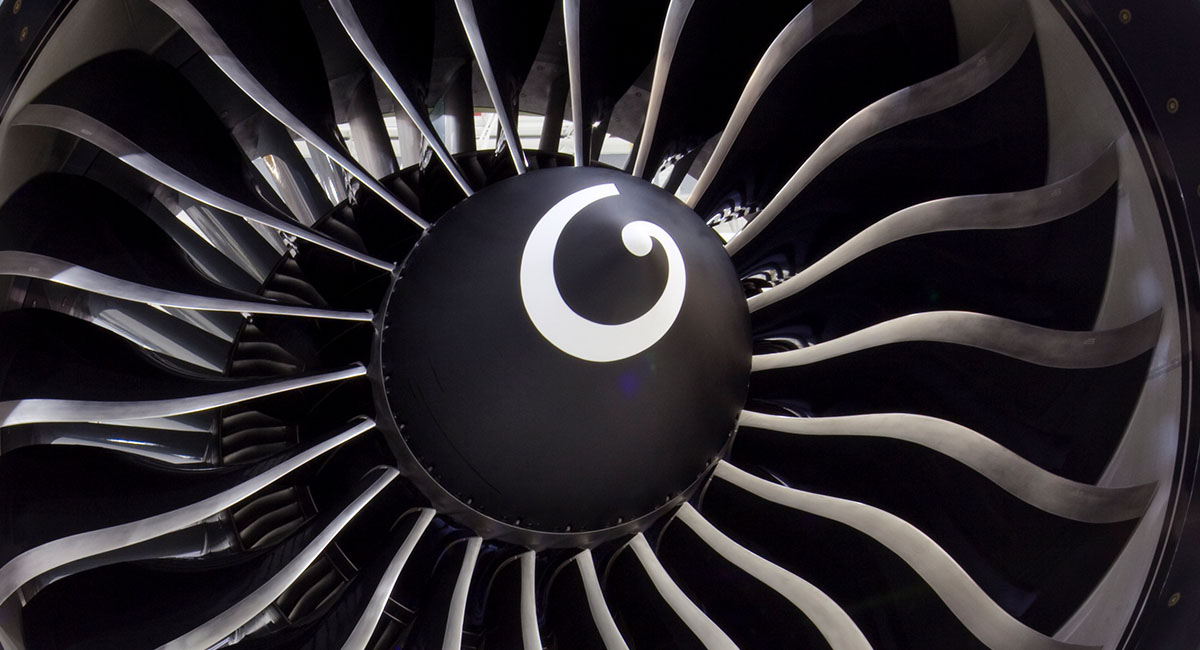
GE Aerospace just paid $11.75 billion because it no longer trusts the market to make enough metal.
If your business relies on one hard-to-replace supplier, that should make you uncomfortable. The winners in the next industrial cycle will not be the companies with the prettiest strategy decks. They will be the ones that own, lock up or become the bottleneck.
GE Aerospace has bought capacity, not a story
On September 8, GE Aerospace agreed to acquire Consolidated Precision Products, or CPP, from Warburg Pincus and Berkshire Partners for $11.75 billion in cash. GE will fund $7 billion from cash on hand and the remaining $4.75 billion with new debt. Closing is expected in the second half of 2027, subject to approvals.
CPP is not a sexy consumer brand. Most people will never hear its name, let alone ask for it at a barbecue. It makes highly engineered castings and sub-assemblies: the difficult metal parts that go inside commercial aircraft engines, military aircraft, helicopters, weapon systems and industrial gas turbines.
That is precisely why GE wants it.
CPP has roughly 6,600 employees across more than 20 facilities globally. It produces complex parts in superalloy, titanium, aluminium, magnesium and steel. GE has been buying from CPP for more than 15 years, and CPP supplies castings used in several important GE engine programmes, including LEAP, GEnx, T700, F110 and F404.
This is not a company buying an adjacent business because bankers convinced management that “scale” sounds strategic. GE knows this supplier. It knows where the pain is. And it has decided that the pain is expensive enough to justify an $11.75 billion cheque.
The company says demand for its airfoils will grow more than 30% from 2026 to 2030 across commercial engines, aftermarket and defence. CPP is expected to generate about $2 billion in 2027 revenue, with around 60% tied to commercial aerospace, 20% to defence and 20% to power and other markets.
That makes the transaction a loud statement about what GE thinks will constrain its growth: not demand for engines, but the ability to make the bloody parts.
The price tells you just how painful the bottleneck has become
GE values CPP at about 18 times projected 2027 EBITDA including expected net synergies. Without those synergies, the multiple is about 26 times.
That is a hefty number. You do not pay 26 times EBITDA for a mature manufacturer because you have found a bargain in the bargain bin. You pay it because the cost of not owning the asset is higher.
GE expects roughly $200 million in net synergies, driven by productivity, supply-chain and procurement improvements. It says the deal should add to adjusted earnings per share and free cash flow in the first year, excluding one-off costs and deal-related amortisation. It is targeting a double-digit return on invested capital by year five.
Fair enough. Every buyer says the spreadsheet will behave itself. I have bought businesses, and I have learned this the expensive way: synergy projections are not cash. They are a management promise with a countdown clock attached.
But the useful question is not whether GE’s model lands perfectly on day one. The useful question is why it was prepared to pay up so aggressively for CPP in the first place.
The answer is control.
In aerospace, a jet engine is not a single product rolling neatly down a production line. It is thousands of specialised components, certifications, materials, skilled workers, testing processes and supplier relationships. A missing casting is not an inconvenience. It can hold up an engine. A delayed engine can hold up an aircraft delivery. And a delayed aircraft can upset an airline’s route plan, financing and profitability.
One awkward component can jam an entire value chain worth billions.
GE is buying a supplier that already serves nearly every major current-generation commercial aircraft programme. It is buying manufacturing know-how that is hard to recreate quickly, at a time when commercial aviation, aftermarket servicing and defence are all asking for more output.
That is the real deal thesis. Not “vertical integration” — that is banker wallpaper. GE is buying less uncertainty.
Why this matters beyond jet engines
The old business-school fantasy was that companies should stay asset-light, outsource everything non-core and let a global supplier network do the heavy lifting.
That worked beautifully when capacity was abundant, logistics were predictable and suppliers had spare people, machines and working capital. It breaks down when demand rises across several markets at once and the supplier making your critical part is already flat out.
GE’s move is another reminder that strategic assets are often hiding in plain sight. They are not always software platforms, brands or proprietary algorithms. Sometimes they are a furnace, a foundry, a quality system, an experienced production manager and a workforce that knows how to get yield from difficult materials.
The castings business is brutally unglamorous. It is also difficult to fake. You need qualifications, equipment, process discipline, customers willing to approve the parts, and people who understand the physics rather than just the PowerPoint.
That is why the price is so instructive.
If an asset can be rebuilt cheaply in two years, you do not pay $11.75 billion for it. If it requires years of operating experience and sits in the path of a decade-long demand ramp, suddenly a high multiple can be rational.
This matters for founders and operators well outside aerospace. Think about your own business. What stops revenue from turning into cash? It may be manufacturing capacity. It may be a compliance approval. It may be a data set. It may be a distribution relationship. It may be one senior employee who understands the system everyone else pretends is documented.
That thing is probably more valuable than your marketing plan.
The overlooked angle: GE is also buying speed of learning
The obvious read is that GE wants more casting capacity. Correct, but incomplete.
GE says it wants to integrate design and manufacturing to accelerate the deployment of enhanced airfoil technology. The company believes the combination can shorten development cycles by using connected data and AI, improve yield and machine utilisation, and reduce scrap and rework.
That is where the strategic upside sits.
Owning a supplier does not magically create more finished parts next Tuesday. In fact, acquisitions can temporarily make operations worse if management turns up with new reporting lines, a new operating model and a heroic integration timeline.
But if GE can combine its engine design knowledge with CPP’s manufacturing experience, it may learn earlier which designs can be made reliably at scale. That matters because the best design in the lab is worthless if it cannot be produced repeatedly, at the right quality, on time.
This is the bit plenty of people miss: manufacturing is not just capacity. It is feedback.
The distance between the person designing a part and the person discovering that it warps, cracks, fails inspection or takes too long to produce is a tax on every industrial business. GE is trying to shrink that distance.
There is also a risk here. CPP serves customers beyond GE, and GE says it intends to continue supporting external customers, pointing to its experience operating other manufacturing businesses that serve the wider market. But competitors will still be watching carefully. When a major engine maker owns a critical supplier, every outside customer must ask whether capacity allocation, pricing and technical priorities will remain genuinely even-handed.
GE’s reputation now depends on proving that owning the bottleneck does not mean abusing it.
The contrarian view: this deal may be sensible precisely because it looks expensive
Markets love cheap deals because cheap feels safe. Often it is not.
A cheap acquisition can be cheap because the asset is declining, replaceable or riddled with problems. A pricey deal can be smart when the buyer understands something the market undervalues: the cost of delay, the value of reliability, or the scarcity of a capability that cannot be ordered from a catalogue.
GE is not acquiring CPP because it expects a financial-engineering miracle. It is buying a business that its own production system already relies on, in a market where it sees airfoil demand rising more than 30% by 2030.
The price still creates pressure. GE needs to deliver the promised output gains, productivity improvements and capital returns. It also needs to avoid letting debt and integration distraction spoil a business that has been performing strongly since its separation from the old General Electric conglomerate.
But I would rather see an industrial company pay up to solve a real constraint than spend billions buying back shares while telling customers to wait for engines.
One creates optionality. The other creates a press release.
What this means for you
You probably cannot buy your biggest supplier for $11.75 billion. Neither can I. But you can steal the useful part of GE’s logic tomorrow morning.
First, identify the one constraint between customer demand and delivery. Not the thing people complain about most. The thing that genuinely stops money moving through the business.
Second, measure your dependence honestly. How many suppliers can make the critical input? How long would qualification take if your current supplier failed? What is the real lead time, including approvals, testing and mistakes?
Third, build leverage before you need it. Secure longer-term supply agreements. Prepay selectively. Develop a second source. Invest in a supplier’s capacity where it makes commercial sense. Or bring the capability in-house if it is truly strategic and you can operate it better than you can buy it.
Finally, do not confuse ownership with competence. GE is buying CPP after a 15-year customer relationship, with a clear operating thesis and a stated plan to invest in people and capacity. If you acquire a business just to feel in control, you can inherit a larger, more expensive problem.
The lesson is simple: find the bottleneck before it finds you. Then make yourself harder to hold hostage.
That is not corporate strategy. That is survival — and, when done properly, it is where the serious money gets made.