General Dynamics’ $118B CEO Handover Is What Succession Should Look Like
Most CEO succession plans are corporate necromancy: the board waits until the body is cold, then pretends the panic was a strategy. General Dynamics just handed Danny Deep a $118 billion backlog without blowing up the place.
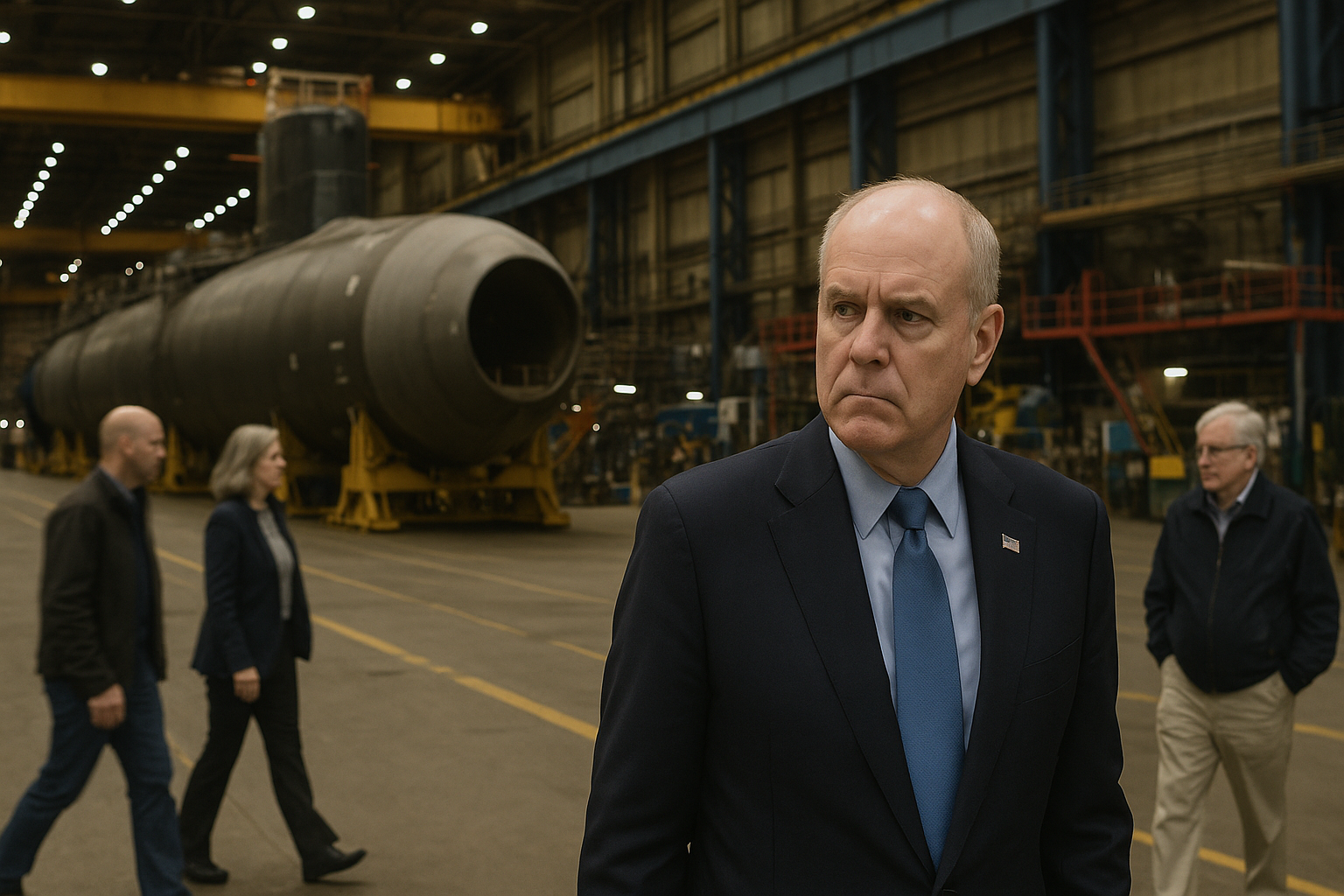
Most CEO succession plans are corporate necromancy: the board waits until the body is cold, then pretends the panic was a strategy.
General Dynamics has done the opposite. On October 7, it named President Danny Deep as its next CEO, effective January 1, 2027, while Phebe Novakovic moves from chairman and CEO to executive chairman. Deep inherits a business with $118 billion in backlog, $52.6 billion in 2025 revenue and more than 120,000 employees. That is not a handover. That is a live-fire management test with submarines, fighter-adjacent systems, armoured vehicles, Gulfstream jets and government contracts in the background.
And here is the bit founders and boards should pay attention to: the company did not discover succession on a Friday afternoon after a bad quarter. It built the runway.
Danny Deep is not a gamble. That is the point.
Deep, 56, has been at General Dynamics for 25 years. Before becoming president in December 2025, he ran Global Operations, led Combat Systems and was president of General Dynamics Land Systems. In August 2026, the board elected him as a director. Two months later, it named him CEO-elect.
That sequence matters.
The board has had time to see the bloke operate across the business, not just present polished slides at quarterly meetings. Deep has run the parts of the company where leadership gets very real, very quickly: production capacity, supply chains, customer demands, cost, schedules and people. Combat Systems delivered record orders of $19.5 billion in 2025, with a 2.1-to-1 book-to-bill ratio. It also had to operate through the US Army’s termination of the M10 Booker programme.
That is useful scar tissue. Anybody can look sharp while demand is rising and everyone is clapping. The better test is whether you can keep the machine moving when a major customer changes its mind, inputs get expensive and the production plan has a hole in it.
Novakovic has been CEO since 2013. She is not being pushed out, and Deep is not being dropped in as an outsider with a 100-day PowerPoint deck. The board has chosen continuity deliberately. Reuters noted the transition comes while demand remains strong across General Dynamics’ portfolio, from Gulfstream aircraft to submarines, combat vehicles and information-technology services.
That is not glamorous. It is very often the right call.
The $118 billion number is the real boss
People get too romantic about chief executives. In businesses like General Dynamics, the real boss is the operating system: contracts, factories, engineering talent, procurement discipline, customer trust and capital allocation.
A $118 billion backlog means the company has years of promised work to deliver. It is a magnificent asset and an unforgiving obligation. Backlog is not revenue. It is revenue with conditions attached. Deliver late, blow costs out, miss quality targets or fail to hire the people required to do the work, and that lovely headline figure turns into a pain in the neck.
General Dynamics produced record 2025 revenue of $52.6 billion, up 10.1% from the previous year. Net earnings reached a record $4.2 billion, while operating earnings were $5.4 billion. Free cash flow was $4 billion. Its company-wide book-to-bill ratio was 1.5-to-1, meaning new orders exceeded revenue recognised during the year.
That is a strong business being handed to Deep. But it is precisely when a business is strong that boards are tempted to get lazy. Everyone starts believing the machine runs itself. It does not.
The next CEO has to turn that backlog into cash while handling the old industrial headaches: specialised labour, supply-chain bottlenecks, production ramp-ups, government procurement cycles, tariffs and inflation. The 2025 proxy statement makes it plain that those pressures were already part of the operating job.
Deep’s background suggests the board understands this. It has picked an operator, not a celebrity.
The best succession plans are boring before they become impressive
There is a fashionable belief that every big-company succession needs a dramatic outsider: someone from Silicon Valley, private equity or a rival with a leather jacket and a new vocabulary for firing people.
Sometimes that is necessary. If the model is broken, the culture is rotten or the company has missed an industry shift, bringing in an outsider can be the only honest move.
But that is not the situation here.
General Dynamics is not a turnaround story. Its 2025 revenue grew across all segments, with Aerospace up 16.5% and Marine Systems up 16.6%. Gulfstream delivered 158 aircraft, up 16.2% year on year. Meanwhile, Deep’s former Combat Systems area helped ramp output to 36,000 155mm artillery rounds per month at a Northeast Pennsylvania site, exceeding contract requirements.
You do not fix a business like that by barging in and “disrupting” it. You fix it by improving the hand-offs, removing bottlenecks, putting capable people in hard jobs and refusing to let success make everyone soft.
The overlooked lesson is that succession is not mainly about replacing the CEO. It is about proving whether the company has built a leadership bench at all.
General Dynamics had Deep in operating roles, elevated him to president, put him on the board, then gave the market a clear effective date. That is a visible chain of evidence. Anyone inside the company can see how the next boss earned the role. Anyone outside can assess the choice without needing to decode a corporate press release written by lawyers wearing mittens.
The executive-chairman arrangement is smart — and risky
Novakovic will become executive chairman on January 1. That gives Deep access to the person who led the company for 14 years, knows the customers and understands where the bodies are buried — figuratively, this is defence contracting, so let’s be precise.
There is value in that continuity. Big defence and aerospace businesses are relationship-heavy, capital-intensive and long-cycle. A clean break can be idiotic if it throws away institutional knowledge for the sake of a tidy org chart.
But executive-chairman structures come with a catch: the incoming CEO must actually be allowed to be CEO.
A former CEO who remains too involved creates a shadow command centre. Senior executives start taking decisions upstairs to the old boss. Customers work around the new boss. The board gets two versions of every story. Nobody says it openly because everyone is too polite, then the company gets slow and political.
My read is that General Dynamics has reduced this risk by choosing an internal successor with 25 years inside the business. Deep is not a stranger being supervised by the predecessor. He knows the company and has already held enterprise-level responsibility. Still, the test starts in January: Novakovic needs to provide judgment and air cover, not run a second CEO office from the chairman’s seat.
That distinction will decide whether this is a model transition or an expensive overlap.
What this means for you
If you run a business, do not wait until you need a successor to start looking for one. By then, you are not planning; you are shopping under pressure. That is when boards overpay, founders make emotional decisions and everyone hires the best interviewee rather than the best operator.
Do three things this week.
First, name the two or three people who could run your business if you were unavailable for six months. Not eventually. Now. If the answer is nobody, your business is more fragile than you think.
Second, give those people genuine operating exposure. Let them own a difficult division, a supplier negotiation, a hiring plan, a turnaround project or a customer relationship that matters. Titles are cheap. Decision rights are the training.
Third, make succession a measurable operating process. At General Dynamics, Deep’s path was visible: business-unit leadership, enterprise operations, president, board director, then CEO-elect. Build your own version of that map. What experience must the next leader have? What numbers must they deliver? Who gets to assess them honestly?
The blunt truth is this: a business that cannot survive the absence of its founder or CEO is not a serious company yet. It is a well-paid dependency.
General Dynamics has not solved every problem by naming Danny Deep. It has done something more valuable: it has shown that the biggest leadership decision in a company can be made before there is smoke coming out of the building. That is what competent adults do.