Google €13B Finland AI Investment: Power Is the Bottleneck
Google is spending €13 billion on AI infrastructure in Finland over 2027 and 2028. If you think AI is still a chatbot race, you are watching the wrong bottleneck: power.
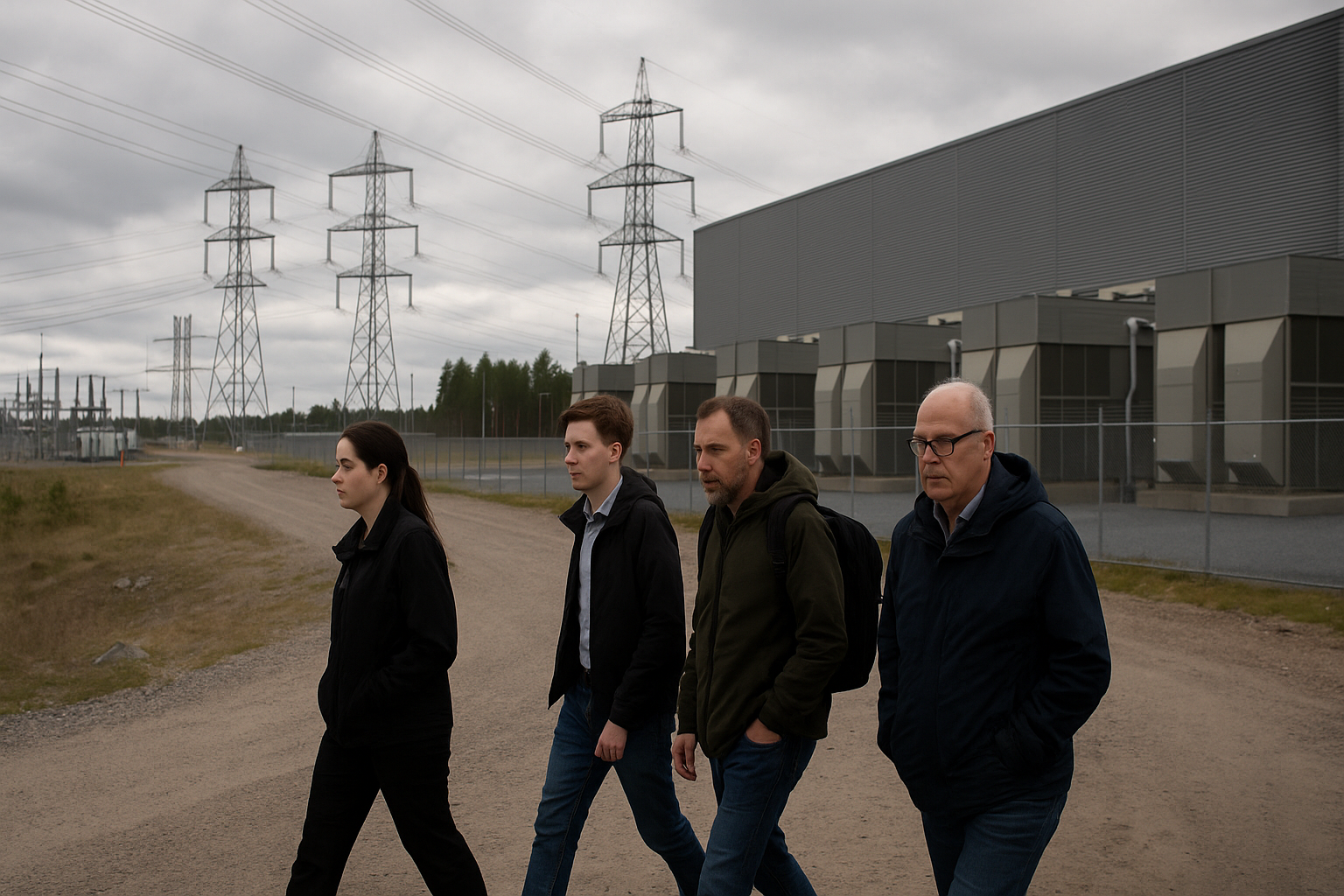
Google is spending €13 billion on AI infrastructure in Finland over 2027 and 2028. If you think AI is still a chatbot race, you are watching the wrong bottleneck: power.
Most people are still arguing about which model writes better emails. Meanwhile, Alphabet is locking down nuclear generation, wind capacity, battery storage and physical sites in one of Europe’s coldest countries. That is where the serious money has gone. ([blog.google](https://blog.google/innovation-and-ai/infrastructure-and-cloud/global-network/google-ai-commitment-to-finland/))
The comfortable belief is that AI winners will be decided by smarter engineers, better prompts or prettier consumer apps. All useful, sure. But they are not the bottleneck when training and serving models requires industrial quantities of power, cooling, fibre and permission from governments that would quite like the lights to stay on for voters.
Google gets it. That is why this deal matters.
Google is buying infrastructure, not just GPUs
On September 9, Google said it would invest at least €13 billion in Finnish digital infrastructure, clean-energy projects and local partnerships across 2027 and 2028. The company says this is its largest single investment in Europe. The build-out spans Hamina, Kajaani, Muhos and Vaala, and supports services including Gemini, Search, Maps and YouTube. ([googlecloudpresscorner.com](https://www.googlecloudpresscorner.com/2026-09-09-Google-Deepens-Commitment-to-Finland-with-Two-Year-EUR13-Billion-investment-in-AI-Infrastructure))
Reuters reported the package at roughly $15.1 billion and described it as a major European AI push, with new data-centre development in Finland’s north. The appeal is hardly mysterious: colder weather makes cooling cheaper, while Finland offers substantial carbon-free power and a political environment willing to build. ([reuters.com](https://www.reuters.com/world/europe/google-invest-15-billion-ai-infrastructure-buy-nuclear-power-finland-2026-09-09/))
But the sharp end of the announcement is the power deal.
Google signed a 22-year power-purchase agreement with Finnish energy company Fortum to support the life extension and upgrade of the Loviisa nuclear plant. The agreement can cover up to 50% of the plant’s capacity. Fortum says Loviisa supplies about 10% of Finland’s electricity, employs roughly 580 people, and could not continue beyond 2030 without the life-extension investment programme. The operating licences run through 2050. ([fortum.com](https://www.fortum.com/en/media/2026/09/inside-information-fortum-and-google-partner-drive-sustainable-growth-finland-sign-nuclear-power-purchase-agreement))
That is a proper commercial arrangement. Google is not just buying renewable-energy certificates and polishing an ESG slide deck. It is giving a nuclear asset the revenue certainty required to stay online for another couple of decades.
Google is also backing wind agreements that bring its supported new-to-grid Finnish onshore wind capacity to 629 megawatts, and it has contracted a 94-megawatt battery system near Kajaani that is expected to operate in late 2027. ([googlecloudpresscorner.com](https://www.googlecloudpresscorner.com/2026-09-09-Google-Deepens-Commitment-to-Finland-with-Two-Year-EUR13-Billion-investment-in-AI-Infrastructure))
That combination matters: steady nuclear power, incremental wind and batteries for flexibility. Not sexy. Very valuable.
The AI arms race has moved from code to concrete
Here is the bit founders and investors need to tattoo on the inside of their eyelids: compute is not an abstract cloud menu any more.
For years, software businesses could scale with credit cards, AWS accounts and a bit of bravado. You could rent the infrastructure as needed, call yourself asset-light and let someone else own the boring stuff.
AI has ruined that neat little story.
At the frontier, reliable AI capacity depends on access to chips, data centres, transmission, electricity generation, cooling, land, construction teams and permits. Any one of those can become the constraint. You cannot prompt your way around a grid connection. You cannot use a clever product launch to conjure a substation.
Google’s Finnish package is a reminder that the hyperscalers are becoming infrastructure companies with software attached — not the other way around. They still want brilliant researchers and useful products, obviously. But their practical advantage increasingly comes from owning or contracting the physical system needed to make those products work at scale.
That changes how you should read every AI headline. A new model release might grab attention for 48 hours. A 22-year nuclear agreement changes a company’s ability to operate for decades.
Google says the construction phase will support more than 37,000 jobs nationwide in 2027 and 2028 and contribute €3.6 billion annually to Finland’s GDP. Those are company projections, so take them as an ambition rather than gospel. But the direction is dead right: this is industrial investment, not merely a cloud-region press release. ([blog.google](https://blog.google/innovation-and-ai/infrastructure-and-cloud/global-network/google-ai-commitment-to-finland/))
Finland is selling something more valuable than cold weather
Everyone will say Google chose Finland because it is cold. That is true, and also a bit lazy.
Cold air helps reduce cooling costs. Fine. But a chilly climate without dependable electricity, credible institutions and workable grid planning is just a place where your expensive servers freeze while waiting for approvals.
Finland’s real product is the ability to connect large demand with a plan to add supply and flexibility. Google says it is working with grid operator Fingrid and Business Finland to identify grid-friendly locations, including northern sites near existing infrastructure and carbon-free generation. ([googlecloudpresscorner.com](https://www.googlecloudpresscorner.com/2026-09-09-Google-Deepens-Commitment-to-Finland-with-Two-Year-EUR13-Billion-investment-in-AI-Infrastructure))
The overlooked brilliance is that Google is attempting to arrive with some of its own answer to the obvious public objection: “Will your data centres nick our power and send household bills through the roof?”
The company is pairing its growth with nuclear life extension, more wind and a battery system. That does not mean there will never be local tension — giant data centres always create it — but it is a much better strategy than turning up as a massive new buyer and pretending the grid is somebody else’s problem.
That is the new licence to operate. If you consume industrial-scale resources, bring industrial-scale solutions.
The contrarian take: this is bad news for lazy AI investors
A lot of AI investing has been remarkably lazy. Buy the chip leader. Buy the cloud providers. Buy any software firm that says “agentic”. Then wait for the magic.
That trade may still make money. But it misses where the bargaining power is heading.
The scarce asset is not intelligence in the broad sense. Plenty of firms can rent models, fine-tune them and wrap them in a decent interface. The scarce assets are increasingly cheap, dependable compute and the physical permissions behind it.
That makes companies with long-term power access, data-centre land, grid connections, cooling capacity and permitting expertise more strategically important than the market has historically treated them. It also means the cloud giants with balance sheets big enough to fund both chips and energy are gaining a structural advantage over smaller model builders.
The catch is brutal: not every €13 billion cheque creates a moat. Capital expenditure can be a vanity project in a nice suit. A data centre is only valuable if demand arrives, utilisation stays high and power economics remain sensible. Google has not revealed the exact economics of every site or contract, so nobody outside the company can declare this a guaranteed win.
But the direction is clear. Google is using its balance sheet to reduce a constraint before it becomes catastrophic. That is what competent operators do.
Europe should pay attention, and so should Australia
Europe spends plenty of time talking about digital sovereignty. Fair enough. But sovereignty is not achieved by issuing another policy document with twelve fonts and no megawatts.
It comes from having energy, networks, chips, data centres and skilled people on the ground. Google’s investment does not make Europe sovereign — it is still a US giant building the capacity — but it does show where the next strategic contests will be fought.
Australia has a version of the same opportunity and the same headache. We have renewable resources, land, engineering talent and plenty of demand for AI infrastructure. We also have grid constraints, approval delays and an unfortunate habit of announcing ambitions years before anything is connected.
The winners will be the places that make energy abundant, reliable and investable. The losers will hold conferences about innovation while their power projects wait in a queue.
What this means for you
If you are a founder, stop treating infrastructure risk as something only the big end of town needs to care about. Ask three blunt questions before you build an AI-heavy product:
1. What does my compute bill look like if usage rises tenfold? Do the maths before the launch party, not after your gross margin gets mugged in an alley. 2. Which part of my stack is genuinely defensible? If your only edge is an API call to a model everyone else can access, you do not have much of an edge. 3. Can I lock in strategic supply early? That could mean cloud commitments, proprietary data rights, distribution partnerships or specialist hardware access. Do not wait until you are desperate.
If you are an investor, look past the demo. Find out whether the business can afford its inference costs, whether it has customer demand that survives price increases, and whether management understands its dependency on a handful of infrastructure suppliers.
And if you run a larger company, take the lesson from Google: secure the bottleneck before it becomes fashionable. The best time to arrange critical supply is when everyone else thinks it is boring.
AI will produce brilliant products. But the biggest fortunes may go to the people who quietly control the electricity, land, contracts and capacity that make those products possible. Google just put €13 billion behind that view. I would pay attention.