Google Gemini: 63% Voice Use Reveals a Brand Problem
63% of Gemini users speak to it aloud. Yet Google now asks them to understand Spark, Daily Brief and Personal Intelligence — how a useful product becomes hard to buy.
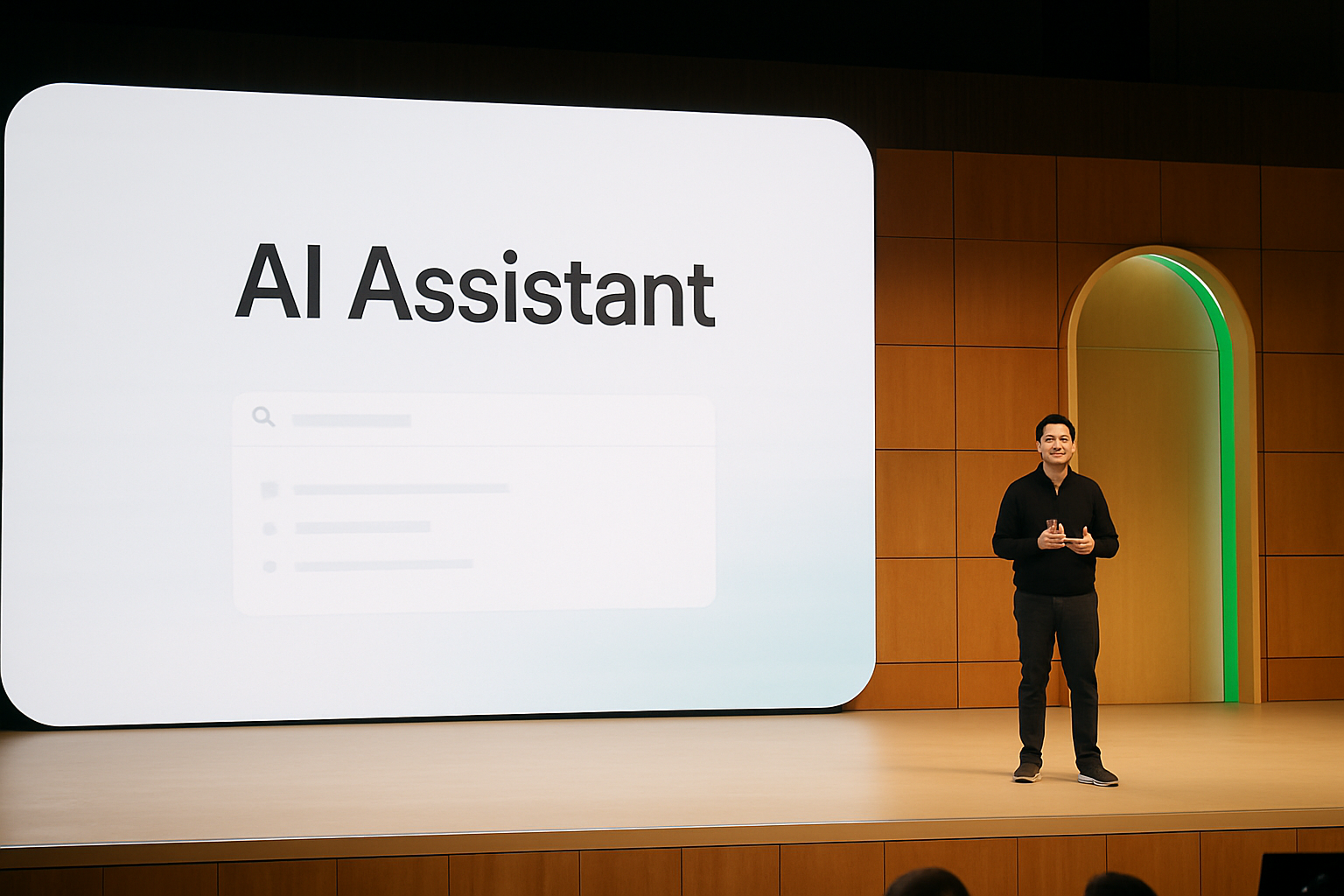
63% of Gemini users speak to it out loud. On August 26, Google gave them Spark, Daily Brief and Personal Intelligence to think about — a textbook case of a smart company making a useful product harder to understand.
That is not a technology problem. It is a branding problem. And it is one founders keep creating because they confuse naming things with making things clearer.
This is not a test of whether voice works. Google’s own figure says it already does for plenty of people. It is a test of whether Google can make voice useful without making customers decode the product first.
Google has built a product menu when customers want a result
Google’s Gemini Live update is genuinely ambitious. The company says users can use voice to organise work across Docs, Sheets, Drive and the web; have multi-step jobs run in the background; get a spoken digest of Gmail and Calendar; manage email hands-free; and draw on past chats and connected Google services.
Fair play. That is useful territory.
But look at the language Google has put in front of ordinary people. Spark is the agentic workhorse. Daily Brief is the morning digest. Personal Intelligence is the connective layer drawing from chats and selected Google apps. And Gemini Live is the voice interface that supposedly ties the whole thing together.
That is four concepts before the customer has even asked the bloody thing to move a meeting.
Google’s own announcement says people should not need to work out whether a task requires Spark, a Daily Brief or an inbox search. Correct. They should not. But the product structure itself is broadcasting precisely those distinctions. TechCrunch noted that Gemini users can encounter separate chat, Spark and Daily Brief surfaces inside the app, with their own branding and navigation.
The contradiction matters. Google is selling the promise of a single assistant while teaching customers a taxonomy of internal machinery.
Customers do not buy machinery. They buy relief.
Nobody wakes up and says, “I’d love an agentic orchestration layer.” They say, “Sort my inbox, tell me what matters, and make this annoying task disappear.”
That gap between how a company describes its system and how a customer experiences a problem is where marketing budgets go to die.
The AI industry is behaving like an org chart
This is bigger than Google.
AI businesses are currently naming every capability as though the customer is an engineer choosing components from a catalogue. Chat, Work, Cowork, Deep Research, memory, agents, projects, assistants, modes, tools. It is a parade of nouns.
Anthropic provides a useful comparison. On August 25, it updated Claude so its Chat and Cowork experiences could share memory. Before that, a customer could develop an idea in chat, switch to Cowork to act on it, and have to explain the whole thing again. That is not an intelligence problem. It is a product-boundary problem the customer should never have been asked to care about.
Anthropic’s update moves in the right direction: one ongoing relationship rather than two products awkwardly shaking hands.
The winner in consumer AI may not be the company with the cleverest collection of branded features. It may be the company that makes the feature names disappear.
That is the uncomfortable bit for marketing teams. A lot of their work is spent inventing launches, labels and glossy diagrams to explain why the product is complicated. The better job is often to make it feel so obvious that the explanation is unnecessary.
Apple has understood this for decades. It rarely asks a mainstream customer to admire the plumbing. A camera feature is just in the camera. Search is where search belongs. The brand promise is familiarity made better, not a forced course in product architecture.
Google has the ingredients to do this brilliantly. It owns the apps where work, information and intent already live. Gmail, Calendar, Docs, Drive, Search, Photos and YouTube are not fringe products begging for attention. They are daily habits for a massive audience.
That should be an unfair advantage. Yet an unfair advantage can be squandered if every new capability arrives wearing a name badge and demanding a separate explanation.
Brand architecture is not free
Every product name creates a cost.
It costs attention because a customer must notice it. It costs memory because they must retain it. It costs confidence because they must decide whether it is relevant. It costs acquisition because your ads, landing pages, demos and sales teams now have another thing to explain.
Most importantly, it costs action.
If I am unsure whether I need Chat, Spark or Daily Brief, I do what people always do when software makes them work: I postpone it. Then I go back to the old way.
This is why feature proliferation can quietly wreck adoption even when the underlying technology is excellent. Founders tend to measure what shipped. Customers measure whether it helped them in under a minute.
There is also a financial cost that operators routinely underestimate. Multiple branded features invite multiple roadmaps, multiple landing pages, multiple campaign concepts, internal turf wars and separate success metrics. Before long, the marketing team is not clarifying the product. It is managing a small United Nations of product names.
I have seen versions of this in businesses well outside AI. Someone launches a “platform,” then adds bundles, sub-brands, packages, tiers and programmes because each sounds strategically sophisticated in a boardroom. Six months later, prospects cannot tell what the company actually does.
That is not sophistication. That is self-inflicted friction.
The overlooked risk is trust, not clutter
The sharper problem in Gemini’s update is not merely that the labels are clunky. It is that Personal Intelligence connects past chats with services including Gmail, Photos, Search and YouTube when users choose to connect those apps.
Google positions that as a way to give more helpful answers. Of course it does. The commercial logic is obvious: an assistant becomes more valuable when it has context.
But context is also intimate.
A daily brief that resurfaces something from your search history may be technically impressive and emotionally unsettling. The line between “helpful” and “why is this thing reminding me of that?” is thin. Once a customer feels watched rather than served, the brand damage arrives much faster than any product team expects.
This is where bland reassurance will not cut it. “Personalised” is one of the most abused words in marketing. Customers now know it can mean anything from genuinely useful to deeply creepy.
The winning brands will not just ask for more data. They will make the exchange painfully clear: what is connected, what is used, what is remembered, what is not, and what immediate benefit the customer gets in return.
Trust is not the legal team’s footnote. It is part of the product.
The contrarian view: stop launching features
Here is the advice that will annoy plenty of product people: sometimes the right marketing move is to kill the launch.
Not the capability. The launch.
Keep Spark as an internal product name if engineers need it. Keep Daily Brief as a useful module in the codebase. But do not make the customer learn the furniture arrangement of your company.
Say this instead: “Tell Gemini what you need. It handles the rest.” Then prove it with three real outcomes:
- “Turn these rough notes into a client brief.” - “Tell me what I have missed today.” - “Find the school email and put the event in my calendar.”
That is a product story. It is concrete, human and easy to repeat.
The irony is that the more powerful AI becomes, the less visible its complexity should be. We do not want to become better at operating software. We want software to become better at operating on our behalf.
A clean interface is not dumbing down. It is respect for the customer’s time.
What this means for you
If you are building or marketing a product, do this tomorrow.
First, write the one sentence a customer should use to describe your business to a mate. If it contains more than one branded feature name, you probably have a clarity problem.
Second, audit every name in your product. Ask one brutal question: Does this name help the customer choose, or does it help us feel organised internally? If it is the latter, hide it.
Third, lead campaigns with an outcome, not a capability. “Cut month-end reporting from three days to three hours” beats “Introducing Autonomous Reconciliation Engine.” Every time.
Fourth, make privacy and permission part of the promise. If your product uses customer data to be more useful, explain the trade honestly and in plain English before the customer feels ambushed.
Finally, measure time-to-first-value. Not clicks on a launch video. Not press mentions. How quickly does a new customer get a result they would miss if you took the product away? That number tells you whether your branding is opening the door or blocking it.
Google’s 63% voice figure points to the real prize: people want help that fits naturally into life. The brand that wins will not be the one with the most named AI tricks. It will be the one customers barely have to think about at all.