Google’s $400B Ad-Tech Monopoly Escapes DOJ Breakup
Google was found to have run an illegal ad-tech monopoly — then avoided the one remedy that might have changed the game. If you buy digital ads, that is not a win. It is a warning.
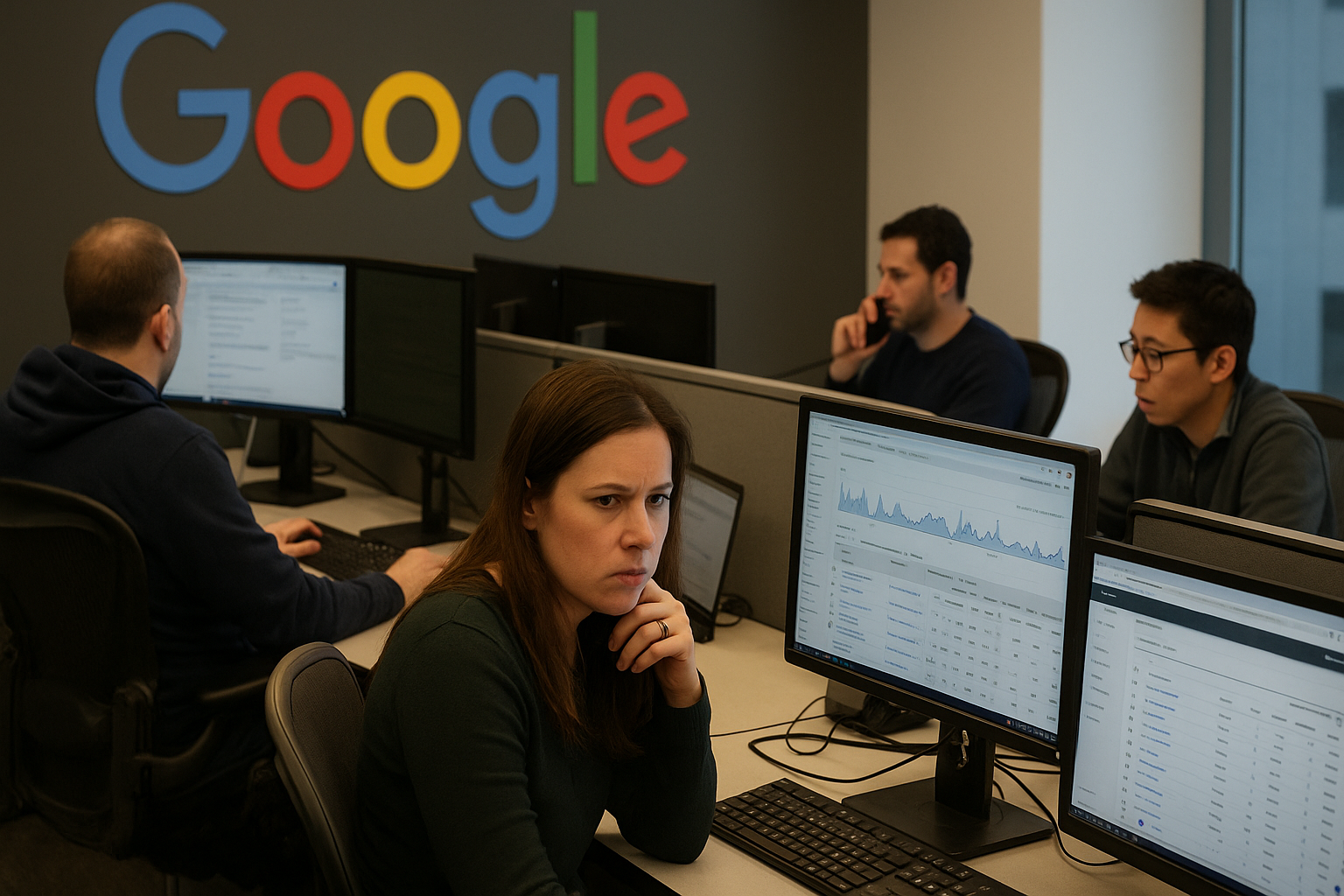
Google was found to have run an illegal ad-tech monopoly — then avoided the one remedy that might have changed the game. If you buy digital ads, that is not a win. It is a warning.
On September 2, U.S. District Judge Leonie Brinkema rejected the Justice Department’s push to force Google to sell part of its advertising-technology operation, including the AdX exchange at the centre of the case. Google will face behavioural changes instead — although the detailed ruling is sealed for 14 days while the parties propose redactions. ([apnews.com](https://apnews.com/article/d294d31fee27c45b14d5ce2196cdd80a))
That distinction matters more than most founders, operators and investors realise. A forced sale would have changed who owns the plumbing of internet advertising. A set of rules about how the plumbing is operated may improve things — or it may become another compliance document that Google’s lawyers and engineers learn to live around.
Google called it a victory. The sharemarket will probably see it that way too. But for anyone who has ever stared at a media dashboard and wondered why customer acquisition costs keep rising while reporting gets murkier, this is not the moment to crack the champagne.
The court found the monopoly. Then spared the machine.
Let’s be clear about what has happened.
The Justice Department and 17 states sued Google in 2023, alleging it monopolised important parts of the technology that publishers use to sell display advertising and advertisers use to buy it. In April 2025, Judge Brinkema found Google had illegally monopolised the open-web publisher ad-server and ad-exchange markets. ([axios.com](https://www.axios.com/2026/09/02/google-ad-tech-antitrust-remedies))
The government’s argument was not that Google merely had a big business. Plenty of companies are big. The allegation — accepted by the court in the liability ruling — was that Google’s control across the ad-tech stack let it tilt the market in its own favour.
That stack is the invisible bit between an advertiser wanting an impression and a publisher wanting to sell one. It decides which bids enter, which bid wins, what data is available and how much of every advertising dollar gets to the publisher. It is not sexy. Neither is a sewer system, until it backs up into your house.
The DOJ argued that Google’s common control of DFP, AdX and AdWords gave it the ability and incentive to entrench its power. In its remedy filing, the department said structural separation was needed because it would remove Google’s control over the core tools involved in the conduct the court found unlawful. ([justice.gov](https://www.justice.gov/atr/media/1420131/dl))
Judge Brinkema declined to order that breakup.
Instead, Google keeps the business while being ordered to change its conduct. As of September 5, the public does not yet know the precise terms because the full opinion remains sealed. That is not a minor footnote. It is the entire ball game. ([apnews.com](https://apnews.com/article/d294d31fee27c45b14d5ce2196cdd80a))
Why this is a $400 billion branding problem
Alphabet is not a small bloke being picked on by regulators. Its ad business generates nearly $400 billion in annual advertising sales, according to the Associated Press. The technology targeted in this case processes an estimated 55 million requests every second. ([apnews.com](https://apnews.com/article/d294d31fee27c45b14d5ce2196cdd80a))
When a company sits at that scale, market structure becomes marketing strategy whether you like it or not.
Every brand wants to believe its media plan is a triumph of clever targeting, sharp creative and a brilliant growth team. Sometimes it is. But the harsh truth is that much of digital advertising is an auction inside systems you do not control, measured by reporting you cannot independently audit end to end, and governed by incentives you can only partly see.
That does not mean Google ads do not work. They plainly work for plenty of businesses, including small ones. Google’s Lee-Anne Mulholland argued that breaking up the tools would hurt the small businesses that use them to find customers. ([axios.com](https://www.axios.com/2026/09/02/google-ad-tech-antitrust-remedies))
But “it works” and “the market is properly competitive” are not the same sentence.
A casino can be very useful if you want entertainment. It can also be rigged. Those are separate questions.
Google’s network ad business represented roughly 12% of Alphabet revenue at the time of the case, Axios reported. That is enough money to explain why the company fought so hard to keep the machine together — and enough money to make every behavioural remedy worth reading with a magnifying glass. ([axios.com](https://www.axios.com/2026/09/02/google-ad-tech-antitrust-remedies))
The overlooked problem: behavioural remedies are easy to announce and hard to police
Here is the contrarian view: a breakup may not have been the clean victory its loudest supporters imagined.
Ad-tech infrastructure is ugly, complex and wired into countless publishers, agencies, advertisers and technology partners. Google warned that splitting it apart could harm publishers and disrupt a system that has to operate at enormous speed. The 55 million requests per second figure is a useful reminder that this is not a simple “sell it on Friday, competition arrives Monday” exercise. ([apnews.com](https://apnews.com/article/d294d31fee27c45b14d5ce2196cdd80a))
Fair enough.
But complexity is also the best hiding place a dominant platform could ask for.
A behavioural remedy says, in effect: “You can keep owning the engine, but you must drive fairly.” Great. Who is checking the engine? Who gets access to the data? How quickly can a rival identify discriminatory auction behaviour? What happens when the advantage lives not in one obvious rule but in thousands of technical choices, defaults, integrations and product-roadmap decisions?
The DOJ warned precisely about that risk, arguing Google could continue manipulating the algorithms powering its monopolies in ways that would be difficult to detect. ([apnews.com](https://apnews.com/article/d294d31fee27c45b14d5ce2196cdd80a))
That is why the sealed detail matters. A meaningful remedy needs more than broad promises about interoperability and fairness. It needs enforceable technical standards, independent monitoring, access to usable data, consequences for breaches and enough speed that challengers can actually compete before they run out of cash.
Otherwise, the regulator has not changed the market. It has simply added a very expensive instruction manual.
The second-order consequence: don’t build your growth plan on borrowed land
The bigger lesson is not “stop advertising on Google.” That would be silly. Google Search remains one of the highest-intent customer-acquisition channels on earth for many businesses.
The lesson is that a channel that controls its own demand, auction, measurement, rules and customer access is never really your channel.
Founders get seduced by clean dashboards. Put in $1, get back $3, scale it. Lovely. Then the platform changes attribution, raises prices, tightens targeting, introduces an AI answer box, adjusts an auction rule or prioritises a new product. Suddenly your tidy spreadsheet has the structural integrity of a wet Weet-Bix.
I have seen businesses mistake platform performance for brand strength. They are not the same thing.
Brand strength means a customer searches for you. It means your email list converts. It means people return without being chased. It means you can launch a product and get attention without begging an algorithm for permission. It means a publisher, creator, retailer or community wants to work with you because you bring demand to the table.
That is why this decision should make operators more disciplined, not more fatalistic. Google is still a massive part of the advertising economy. The case will not change that overnight. But it is a flashing sign telling you that the pipes beneath your marketing are concentrated, contested and political. ([axios.com](https://www.axios.com/2026/09/02/google-ad-tech-antitrust-remedies))
What this means for you
If you are a founder, marketer or investor, do these five things this week.
1. Calculate your platform dependency honestly.
Split new revenue by channel: Google, Meta, marketplaces, affiliates, email, direct, retail, partnerships and organic. Then ask the uncomfortable question: if your biggest paid channel got 30% worse tomorrow, what breaks first? If the answer is “everything,” you do not have a growth strategy. You have a rental agreement.
2. Measure incrementality, not dashboard theatre.
Your ad platform is grading its own homework. Run geographic tests, holdouts, time-based tests or spend reductions where practical. Find out how many sales vanish when ads vanish — not how many sales were conveniently claimed by an attribution model.
3. Build owned demand every time you spend paid money.
Every campaign should capture something durable: an email address, SMS permission, a repeat purchase, a referral, a branded search, a community member or a retail relationship. If a campaign delivers only rented clicks, it is less valuable than it looks.
4. Keep your creative and customer insight in-house.
Agencies and platforms can buy reach. They cannot own your understanding of why customers choose you. Keep a live record of objections, language, winning offers, retention reasons and bad reviews. That is the stuff that makes advertising cheaper because it makes advertising better.
5. Treat concentration as a margin risk.
When assessing a business, I would now ask the same question I ask about a sole supplier: what happens if this counterparty changes the deal? If 70% of customer acquisition runs through one platform, that is not merely a marketing detail. It belongs in the risk section of the board pack.
Google avoiding a breakup is not proof the system is fine. It is proof that regulators find it hard to unwind a machine after the machine has become essential.
Your job is simpler: do not let your business become equally trapped inside someone else’s machine.
Sources
- Google won't be forced to break up its ads business — Axios
- Judge orders changes to Google's digital ads business but spares it from a breakup — AP News
- Google spared from ad-business breakup, but judge orders changes to how it operates — TechCrunch
- Department of Justice Prevails in Landmark Antitrust Case Against Google — U.S. Department of Justice