GTA VI’s 31.1M Netflix Views Turned an Ad Into Appointment TV
31.1 million people watched a 27-minute advertisement for GTA VI on Netflix. Most brands cannot hold attention for six seconds — and that is precisely why Rockstar won.
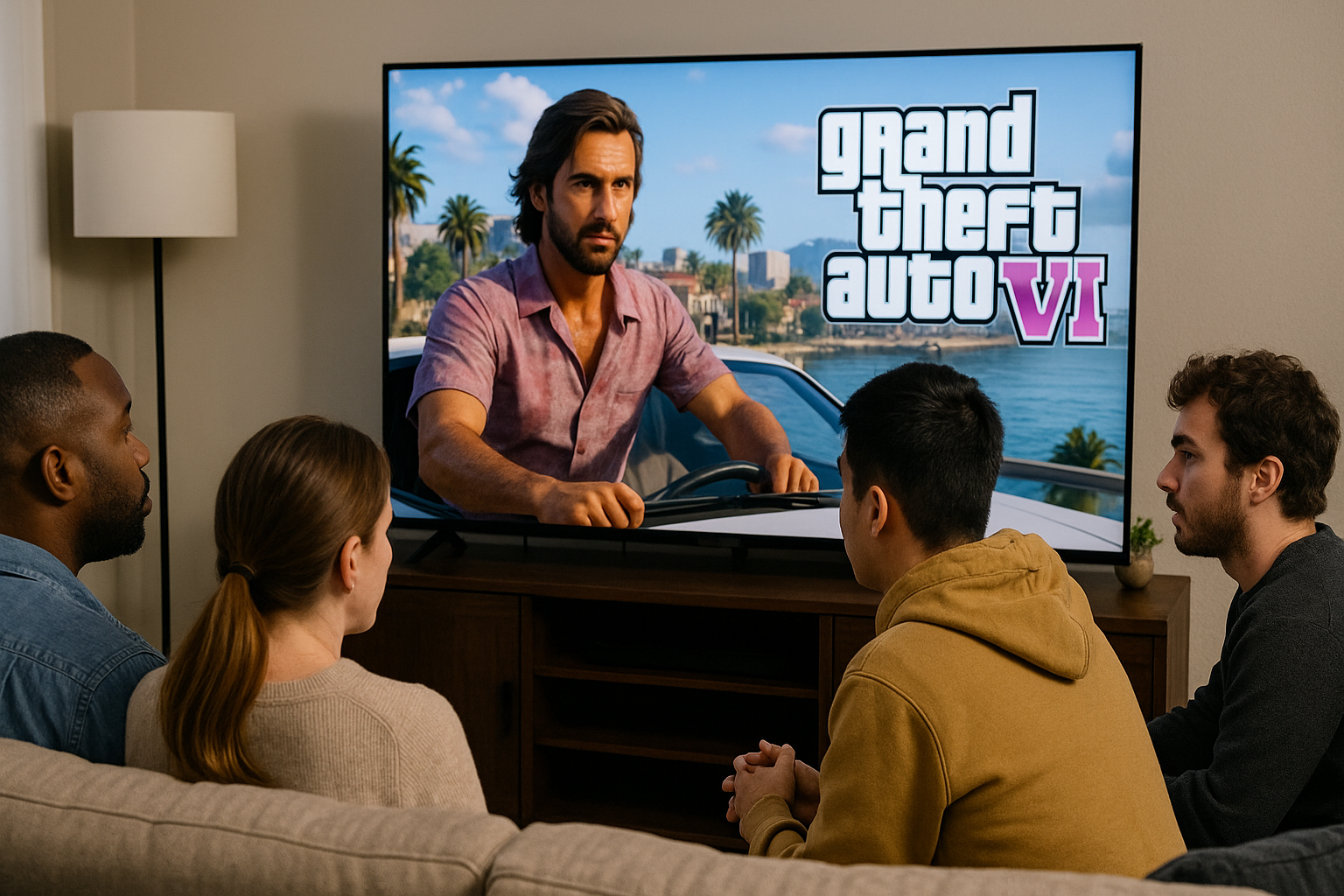
31.1 million people watched a 27-minute advertisement for Grand Theft Auto VI on Netflix in five days.
Most brands can’t hold attention for six seconds without resorting to a dancing intern, a discount code or a Labrador in sunglasses. Rockstar Games got people to effectively queue up for a long-form sales pitch — and it has just made a lot of marketing departments look very ordinary.
Rockstar Games made an ad people chose to watch
On August 27, 2026, Rockstar premiered Grand Theft Auto VI: An Extended Look on Netflix at 3 p.m. Eastern. It remained exclusive to Netflix for six hours before landing on Rockstar’s YouTube channel at 9 p.m. The preview ran for 27 minutes. It was not a film, a series finale or a sporting event. It was marketing for a game due to launch on November 19.
Yet it became Netflix’s most-watched title for the week of August 24, pulling 31.1 million views through August 31 and reaching No. 1 in 87 of the 93 countries Netflix tracks. The YouTube release had reached 17 million views when TheWrap reported the figures. ([thewrap.com](https://www.thewrap.com/creative-content/tv-shows/grand-theft-auto-6-footage-ratings-netflix/?utm_source=openai))
Axios rightly called it a reversal of the old advertising model. For decades, advertisers rented audiences around live television people already wanted to watch. Rockstar made the promotion itself the appointment viewing. Sensor Tower data cited by Axios showed the event drove a surge in Netflix traffic and sent GTA VI preorders sharply higher. ([axios.com](https://www.axios.com/2026/09/01/grand-theft-auto-gta-advertising-tv?utm_source=openai))
That is the story here. Not that GTA is popular — we knew that. Not that Netflix can attract an audience — obviously. The useful lesson is that Rockstar did not treat attention as something to buy after the product was finished. It treated anticipation as a product in its own right.
The six-hour Netflix window was not a paywall. It was a status signal.
Plenty of people initially called the Netflix-first release a mistake. Why put your most anticipated game footage behind a subscription wall, even temporarily, when YouTube is free and global?
Because free distribution is not the same thing as valuable distribution.
A standard YouTube upload says: “Here is our trailer. Watch it whenever.” A six-hour Netflix exclusive says: “This is happening now, and you either join the moment or arrive late.” That is a very different psychological proposition.
Rockstar did not permanently withhold the footage. That would have been stupid. It created a short period in which watching early carried a tiny bit of social currency. Fans could be among the first to see it, creators could react in real time, and every gaming group chat suddenly had a deadline.
The exclusive window also gave Netflix something it desperately values: an event that makes people open the app with intent. In a world where streaming services are drowning in interchangeable content, a 27-minute GTA VI preview gave Netflix an extraordinarily efficient reason for people to show up.
For Rockstar, the calculation was equally clean. The company already had the hardcore audience. GTA VI’s first trailer became a monster precisely because millions of people were actively waiting for it. The Netflix launch was about expanding the ritual beyond the usual YouTube-first gaming crowd — without giving up YouTube’s massive reach later that night. ([forbes.com](https://www.forbes.com/sites/brianmazique/2026/08/07/gta-vi-full-extended-reveal-date-time-and-how-to-watch/?utm_source=openai))
That is good distribution strategy: use exclusivity to create urgency, then use broad availability to compound reach.
The real asset was not the trailer. It was 13 years of stored-up demand.
Here is the inconvenient bit for every founder about to pitch a “Netflix moment” for their protein bar, fintech app or mediocre AI tool: Rockstar did not invent attention on August 27. It collected attention it had been earning for more than a decade.
Grand Theft Auto V launched in 2013. GTA VI arrives on November 19, 2026 — a 13-year gap between mainline releases. That wait created scarcity, speculation, fan theory, memes, creator content and an enormous amount of unpaid cultural distribution.
You cannot copy that by booking a livestream.
The mechanics are copyable. The underlying asset is not. Rockstar had a product with deep cultural memory, a fan base that feels ownership over the franchise, and a release people regard as an entertainment event rather than another item in a content queue.
That distinction matters because too much modern marketing has confused channels with leverage. A founder sees a viral launch and says, “We need TikTok.” A retailer sees a celebrity collaboration and says, “We need a celebrity.” A brand sees Rockstar use Netflix and starts wondering whether it needs a streaming partner.
No. You need a reason for people to care before you choose the microphone.
The microphone merely makes the existing demand louder.
Why this matters far beyond video games
Rockstar has exposed an ugly truth about much of advertising: audiences do not hate ads because they are ads. They hate being interrupted by messages that offer no story, no utility, no identity and no stakes.
A 27-minute preview is absurdly long by normal advertising logic. It only works because it gave fans something they actually wanted: detailed access to a world they have spent years imagining. It did not ask people to endure marketing in exchange for a product reveal. The reveal was the entertainment.
That should make operators rethink the usual performance-marketing treadmill. Most teams are producing endless creative variations because the platform demands feeding. New hook. New crop. New caption. New UGC creator pretending they “just found” your product. Rinse and repeat until your brand becomes visual porridge.
Rockstar went the other way. It made one substantial thing, gave it a hard deadline, let the internet gather around it, then released it into wider distribution. That is not a case for making fewer ads just because you are lazy. It is a case for making fewer things that are more worth talking about.
The second-order implication is bigger: marketing and product are merging again. When the product has a strong enough world around it, the launch campaign does not need to manufacture relevance. It simply opens the door.
This is why the best brands increasingly behave less like advertisers and more like publishers, hosts and organisers of communities. They create something customers want to participate in, not merely scroll past.
The overlooked angle: Netflix got a branding win too
Everyone will talk about Rockstar’s cleverness. Fair enough. But Netflix also got to borrow cultural heat without needing to bankroll a 10-episode series.
A 27-minute GTA VI event generated 31.1 million views and topped Netflix’s weekly viewing list. That makes Netflix look less like a warehouse of old shows and more like a place where cultural events happen. ([thewrap.com](https://www.thewrap.com/creative-content/tv-shows/grand-theft-auto-6-footage-ratings-netflix/?utm_source=openai))
That is valuable positioning. Streaming platforms are increasingly competing not only for subscriptions, but for the role of default screen when something matters. Sport has that power. Awards shows sometimes have it. Major game launches now plainly do too.
The warning for brands is equally plain: do not confuse a borrowed audience with a loyal one. Netflix benefited because GTA arrived with cultural capital already built. If it starts filling the platform with ordinary brand content, viewers will smell the boardroom from the sofa.
The partnership worked because both sides had something scarce. Rockstar had obsession. Netflix had a global premium distribution surface. Neither tried to pretend a normal commercial was entertainment.
What this means for you
You are probably not launching GTA VI. Good. Neither is anyone else.
But you can steal the parts that matter.
First, stop launching when it suits your internal calendar. Launch when you can create a genuine moment. A deadline matters only when there is a credible reason to show up now.
Second, build anticipation before you buy reach. If nobody is asking questions, making predictions or telling mates about what is coming, spending more on media will not fix it. It will just make your indifference more expensive.
Third, create one thing worth completing. Not a pile of 10-second cuts. One useful demo, comparison, reveal, challenge or piece of content that gives a customer enough value to stay. Rockstar did not ask people to watch 27 minutes out of charity.
Fourth, use exclusivity sparingly and briefly. Six hours worked because it created urgency without punishing the broader audience for long. Permanent gatekeeping is vanity. Short-term access can create momentum.
Finally, earn the right to be interesting. The brands that win in a crowded feed will not be the ones producing the most content. They will be the ones with enough product truth, customer understanding and nerve to make the marketing itself worth discussing.
Rockstar’s 31.1 million Netflix views are not proof that every business needs a blockbuster launch. They are proof that attention still goes to whoever gives people a reason to care.
That sounds obvious. It is also the bit most marketers avoid because buying another batch of bland ads feels safer than building something people would actually choose to watch.