Halluminate’s $30M Series A Exposes AI’s 51% Finance Problem
The best AI models scored just 51% on a realistic deal-diligence test. Halluminate just raised $30 million because the real AI bottleneck is no longer the model.
AI has swallowed hundreds of billions of dollars, and it still got 49% of a realistic finance job wrong.
That is the bit the chest-beating crowd would rather skip. Halluminate has raised a $30 million Series A because the next AI fortune may not be made by building another chatbot. It may be made by teaching the existing ones how not to stuff up work that actually matters.
The $30 million bet on AI’s embarrassing gap
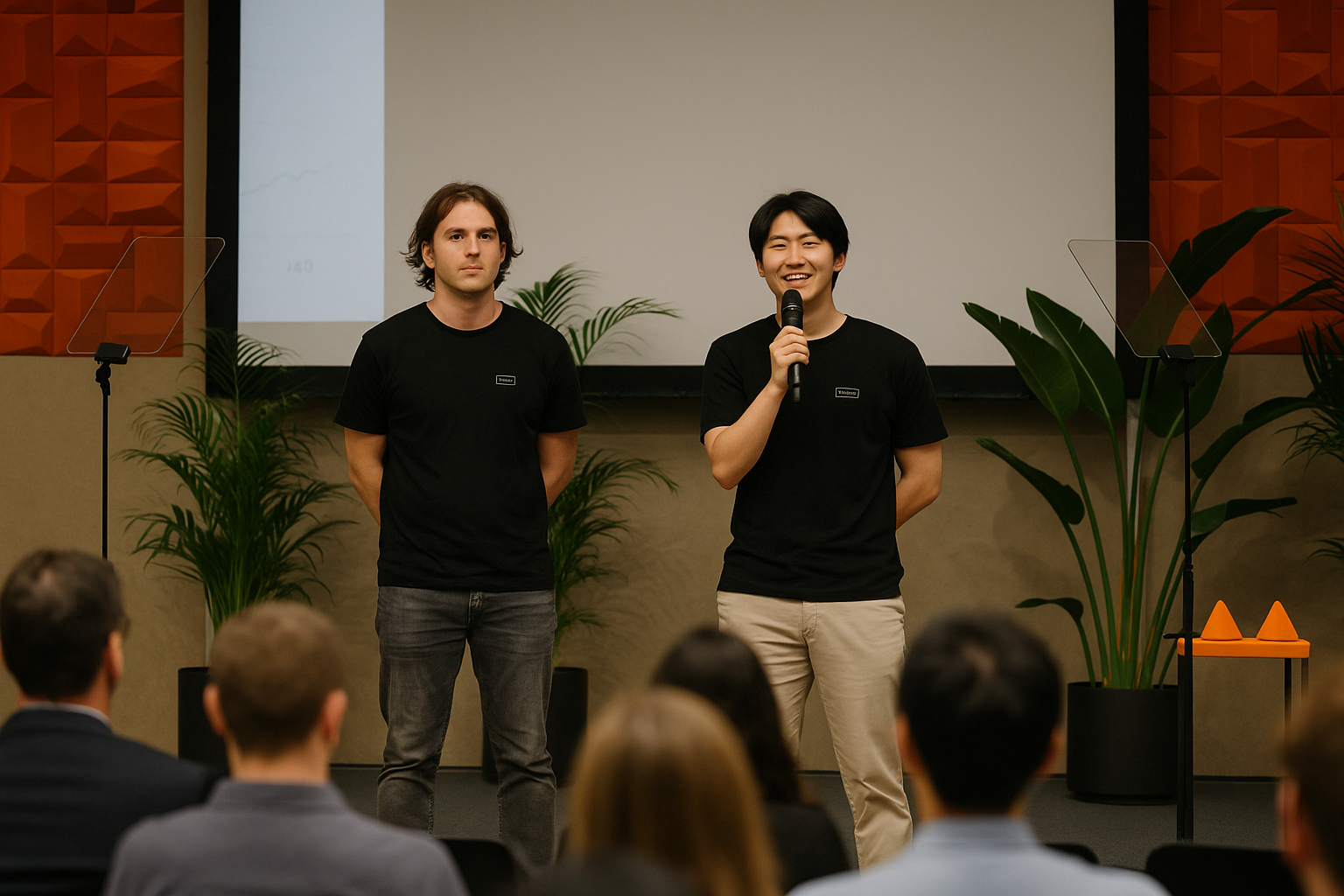
On October 1, San Francisco startup Halluminate announced a $30 million Series A led by Oak HC/FT. It brings the company’s total funding to $38.5 million.
That is a healthy cheque. But the more interesting number is nine: Halluminate reportedly has a team of nine people.
Nine people. A $30 million Series A. Four of the five leading closed-source US AI labs as customers, according to the company. And Halluminate says it has reached a mid-eight-figure annualised revenue run rate while profitable in its first 10 months of commercial growth.
Before anyone starts putting “nine-person startup” on a LinkedIn inspiration poster, slow down. This is not a story about magic. It is a story about being positioned directly in the path of a very expensive problem.
Halluminate builds benchmarks and reinforcement-learning environments for financial work. In plain English: it creates realistic simulated workplaces where an AI agent has to do the kind of messy, multi-step work a banker, private-equity analyst, consultant or finance operator actually does. The agent gets scored on whether it completes the job properly.
That sounds less glamorous than releasing a new model with a sexy demo. It is also much closer to where the money is.
Halluminate’s Westworld Due Diligence benchmark gave seven frontier models a simulated acquisition due-diligence process. There were 88 tasks based on anonymised private-equity transactions, written and reviewed by practising deal professionals. The highest average score was 51%.
That is not “nearly there.” If a junior analyst delivered half the requested changes, used stale instructions and applied the wrong method on a deal, you would not call it artificial intelligence. You would call it a problem.
One task involved redlining a statement of work using a 160-file data room, 21 emails across nine threads and four meeting notes. The model had to work out the latest instructions while preserving terms that were meant to stay. This is the boring, expensive, high-consequence work that fills companies everywhere.
And it turns out the machines are still pretty ordinary at it.
The internet was the easy part
For years, the AI arms race was largely about scale: more data, more chips, bigger models, bigger fundraising rounds. That recipe produced astonishing results. But it also trained machines on a giant pile of public and licensed text that was never designed to capture the reality of professional judgment.
A good finance operator does not merely read a spreadsheet and spit out a summary. They notice that a number has changed three times. They understand that a managing director’s phone note outranks an old email. They know which caveat is boilerplate and which one is a hand grenade hiding in the appendix.
That knowledge is hard to scrape because it is not sitting neatly on the open web. Much of it is locked inside companies, buried in workflows, or stored in the heads of people who have learned through years of being wrong in expensive ways.
Oak HC/FT’s argument for backing Halluminate is straightforward: simulated environments can turn that hard-won professional judgment into a trainable signal. Rather than ask a model a one-shot question, put it in a realistic environment with files, tools, changing instructions and a clear scoring mechanism. Let it attempt the work, fail, receive feedback and improve.
This is reinforcement learning applied to knowledge work rather than chess or video games.
It is also why the clever money is looking beyond the model itself. Compute has attracted the giant capital pools. Models attract the headlines. But the layer that proves an agent can reliably execute valuable work is where the commercial fight will be won or lost.
Halluminate CEO Jerry Wu calls the company’s approach “verticalized data research labs.” Slightly clunky name. Correct idea.
A financial model, a medical workflow, a supply-chain exception and a legal matter are not just different prompts. They are different worlds. Each has its own documents, incentives, terminology, regulations, edge cases and consequences for getting it wrong.
Why specialisation beats generic AI theatre
The fashionable pitch is that one super-capable model will do everything. Eventually, maybe. But founders should not build their businesses around “eventually.” That is how you end up broke with a beautiful slide deck.
Today, the useful opportunity is narrower: take a workflow where failure is costly, define what good looks like, create an evaluation process, and improve the system until it produces an outcome somebody will pay for.
That is what Halluminate appears to be doing in finance. And finance is a logical first target. The work is high-value, document-heavy, repetitive in structure but demanding in detail, and full of experts who know instantly when the answer is rubbish.
The company is not trying to replace every person in a bank tomorrow. It is selling the picks and shovels that help frontier-model labs make agents more capable in financial work.
That distinction matters. Selling directly to enterprises too early can turn a promising infrastructure company into a services business with a fancy coat of paint. Halluminate is deliberately focused on a small group of frontier labs for now. That creates concentration risk, sure. But it also means the company is working where the capability curve is being pushed hardest.
The reported customer list gives Halluminate a powerful position if it is real and durable: learn from the toughest users, build the expertise faster than generalist rivals, then expand into adjacent industries when the product is ready.
That is a far better strategy than trying to sell “AI transformation” to every corporate buyer with a pulse.
The overlooked angle: the bottleneck is verification
Here is the contrarian bit: more intelligence is not the main commercial problem. Verification is.
Businesses will forgive an AI tool for being slow. They will forgive an early interface that looks like it was designed in a shed. What they will not forgive is an agent that confidently sends the wrong version of a contract, misses a critical diligence item or makes up a financial conclusion.
The expensive part of AI is not generating words. It is knowing whether those words led to the right action.
Halluminate’s benchmark result is useful precisely because it strips away the demo nonsense. A model can look brilliant when you ask it to draft a polite email or explain EBITDA. Put it through a long, changing workflow with dozens of source documents and competing instructions, and the gaps become visible.
Wu estimates Halluminate’s environments need to roughly double in complexity every six to eight months to keep testing the frontier. That is a brutal operating requirement. As models improve, yesterday’s test becomes too easy. The company has to keep creating harder tasks, richer worlds and better ways to score the result.
That is not a static data business. It is a treadmill.
But a difficult treadmill can be a moat. If you can consistently recruit domain experts, build realistic simulations, design reliable evaluation systems and feed the learning back into better environments, you own something much harder to copy than a prompt library.
Don’t confuse a big round with a finished business
There is still plenty that can go wrong.
Halluminate’s valuation was not disclosed. Its revenue and profitability figures are company claims, not audited public filings. Its early focus on a handful of frontier labs makes commercial sense, but it gives those customers enormous negotiating power. And every major AI lab has a reason to build more of this capability in-house.
Then there is the uncomfortable question: if the environments are so valuable, who owns the expertise used to make them? The firms, workers and specialists who provide the raw professional judgment will want a share of the upside. They should.
Still, the central thesis is strong. The companies that succeed in AI’s next phase will not be the ones with the loudest launch video. They will be the ones that can prove reliability inside a costly, specific workflow.
That is much less exciting to talk about at a cocktail party. It is considerably more exciting on an invoice.
What this means for you
If you are a founder, stop saying your AI product “saves time.” That claim is cheap and nearly useless. Pick one expensive workflow and define the scorecard: What does correct look like? What is the cost of an error? Who checks the work today? What data or context does the task require?
Then build your product around measurable outcomes, not impressive-looking output.
If you are an operator, do not hand an AI agent a critical process and hope for the best. Start by mapping the failure modes. Give it bounded work. Keep a human review loop. Track accuracy, rework, escalation rates and actual dollars saved. If you cannot measure whether the machine helped, you are not adopting AI. You are playing with it.
And if you are an investor, be wary of businesses whose only edge is access to the same model everyone else can rent. Look for companies that own a difficult feedback loop: proprietary workflow data, expert evaluation, distribution into a painful problem, or a system that gets better every time it is used.
Halluminate’s $30 million round is not proof that every vertical-AI startup will win. It is proof that the easy part of AI is ending.
The next fortunes will go to people who can make the machines useful when getting it wrong costs real money. That is where I’d be looking.