HDFC Bank’s ₹43.6 Trillion Outsider Bet Gives Anup Bagchi 3 Years
HDFC Bank has put a ₹43.6 trillion balance sheet in an outsider’s hands for the first time. Anup Bagchi gets three years to prove fresh blood beats the comfortable internal heir.
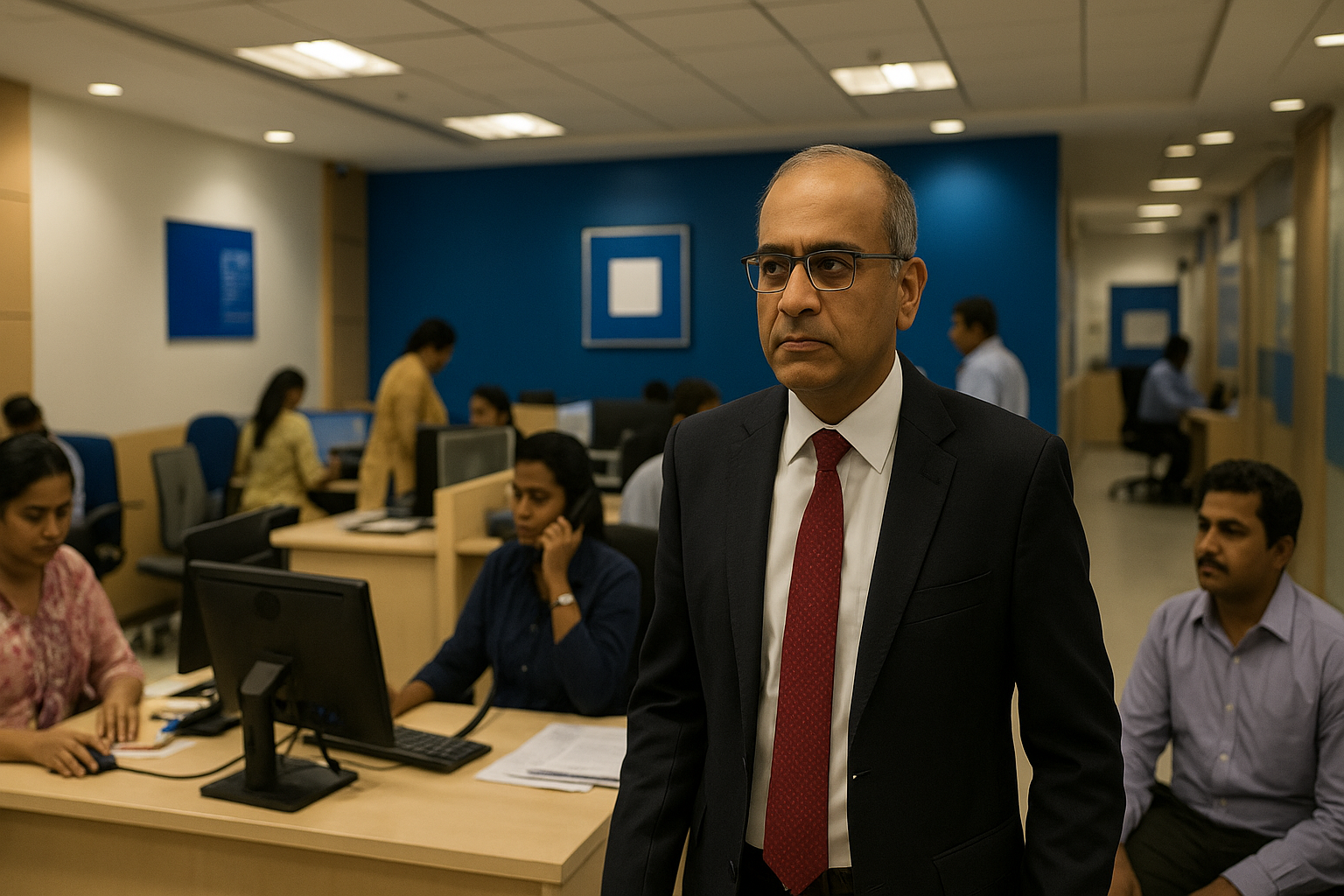
HDFC Bank has put a ₹43.6 trillion balance sheet in the hands of an outsider for the first time. That is not a succession plan. That is a board admitting the old playbook might not be enough.
On October 1, HDFC Bank named Anup Bagchi its next managing director and CEO for a three-year term beginning October 27, 2026. He replaces Sashidhar Jagdishan, whose second three-year term ends October 26. Bagchi is 55, currently leads ICICI Prudential Life Insurance, and comes with a long ICICI Group résumé across retail banking, business banking, treasury, credit policy, data analytics and capital markets.
The headline is simple: India’s largest private-sector bank has chosen its first external chief executive.
The real story is harder: HDFC Bank has chosen an outsider at precisely the moment when an institution of its size cannot afford a polite transition.
This is a bigger call than hiring a new CEO
Big banks do not change chief executives the way startups change product managers. A startup can survive a bad executive hire by changing direction, raising another round or firing quickly. A giant bank cannot. Its product is trust, and trust is painfully slow to build and embarrassingly quick to lose.
HDFC Bank ended the financial year on March 31, 2026 with a ₹43.65 trillion balance sheet, ₹31.05 trillion in deposits and a capital-adequacy ratio of 19.7%. It reported 12.1% growth in advances, 14.4% growth in deposits and a gross non-performing-assets ratio of 1.15% for the year. This is not a turnaround story involving some small lender with a broken spreadsheet and a heroic new bloke in a suit.
It is a scale story.
Bagchi is inheriting an institution whose size turns every management decision into an economic event. Improve deposits a little, and funding gets cheaper across a huge base. Lose discipline on lending, and the damage compounds at a pace that makes most corporate mistakes look quaint. Allow senior talent to drift during a transition, and the market will notice before the annual report does.
That is why the outsider choice matters. Boards do not reach outside a dominant internal franchise because they fancy a change of scenery. They do it because continuity, however safe it looks in the board pack, has started to look like a risk of its own.
An accelerated succession is rarely a relaxed one
Jagdishan decided in August not to seek reappointment after his second term. That forced HDFC Bank into a faster succession process than it would have wanted. The bank submitted two names to the Reserve Bank of India: Deputy Managing Director Kaizad Bharucha and Bagchi.
Bagchi won.
There is a temptation to frame that as a verdict on Bharucha. I would not. It is more useful to see it as a verdict on the job the board believes needs doing next.
Internal candidates are usually chosen when the assignment is: protect the machine, preserve the culture, avoid surprises. Outside candidates get the nod when the board wants a different lens, a sharper challenge function or someone less invested in yesterday’s organisational compromises.
That does not mean Bagchi has been hired to smash furniture and call it transformation. Anyone who tries that in a bank this large will create chaos, not performance. But it does mean he has permission to ask questions an internal successor may have found awkward.
Which businesses are consuming management attention without earning their keep? Where has complexity become an excuse for slow decisions? Which senior executives are genuinely accountable for deposits, margins and customer outcomes, rather than merely presenting very tidy slides about them?
Those are not glamorous questions. They are the questions that make shareholders money.
The job is deposits, margins and management bench
The lazy analysis will obsess over Bagchi’s biography. Yes, he has run ICICI Prudential Life. Yes, he has banking experience from ICICI Bank. Yes, he has worked across financial services. Fine. Credentials get you the keys. They do not drive the car.
The operating scorecard is much clearer.
First, deposits. HDFC Bank’s deposits rose 14.4% in the year to March 31, 2026. Good result. But cheap, sticky deposits are not something a bank wins once and hangs on the wall. They must be defended every quarter, branch by branch, app by app, relationship by relationship. In banking, funding is strategy wearing a boring name.
Second, margin. The bank’s net interest margin was 3.34% for FY2025-26, while the first quarter of the financial year ending March 2027 was reported at 3.26%. That may sound like bean-counter territory. It is not. A small change in margin against a balance sheet this size can outweigh a hundred bits of executive theatre.
Third, integration and execution. HDFC Bank is still living with the practical consequences of becoming larger and more complex after its merger with HDFC Ltd. Bigger organisations do not automatically become better organisations. Often they become slower ones with more meetings, more layers and more people confidently saying “cross-functional alignment” while nothing actually happens.
Bagchi’s job is to make sure scale becomes advantage rather than drag.
Fourth, the management bench. This is the overlooked bit. A first external CEO changes the internal political weather immediately. Some leaders will lean in. Some will wonder whether their future just got shorter. Some will be approached by competitors before they have even updated their LinkedIn profile.
Bagchi cannot spend six months “listening” while the best operators decide whether to leave. He needs a clean assessment of the top team, fast clarity on who owns what, and visible backing for the people who can execute. Not everyone needs to like him. Everyone needs to know where they stand.
The contrarian view: three years may be the real problem
Three years is long enough to be held accountable and short enough to tempt a CEO into managing the optics.
That is the danger.
A three-year mandate can produce sensible urgency. It can also produce a frantic chase for visible wins: faster loan growth, louder digital announcements, cost cuts dressed up as productivity, a few well-timed leadership changes. Markets tend to applaud these things before they understand them.
But the best work in a giant bank often looks boring at first. Tightening credit processes. Removing duplicated technology. Improving branch productivity. Simplifying decision rights. Building a stronger deposit franchise. Fixing incentives so frontline staff do not sell rubbish merely to hit a monthly target.
None of that produces a cinematic launch video. All of it matters more than one.
If I were judging Bagchi, I would not start with the share-price reaction or the first polished investor presentation. I would look at whether, 12 months from now, HDFC Bank is making faster and better decisions without losing its grip on risk. I would watch deposit quality, margin resilience, asset quality and senior-team stability. Those are the boring numbers that tell you whether a CEO is building a business or just decorating one.
The board has put itself on the hook too
Here is the part directors hate admitting: an external CEO appointment is also a performance review of the board.
The board has made a clear choice. It has bypassed the comfort of internal continuity, selected a leader from a rival financial-services ecosystem and done so after an accelerated process. That may prove exactly right. But it means the directors do not get to disappear into the curtains if execution disappoints.
They must give Bagchi enough room to operate, while holding him to an unforgiving scorecard. They must support necessary change without confusing support with cheerleading. And they must ensure the succession after this one is not another scramble.
That last point matters most. A company does not have a succession plan because it can name two candidates to a regulator. It has one when it has spent years building executives who can credibly run the whole machine.
If HDFC Bank’s first outsider CEO succeeds, the bank will not just get better results. It will also get a more honest view of whether its internal leadership system has been producing true enterprise leaders or merely excellent deputies.
What this means for you
Whether you run a 20-person business, lead a division or invest your own money, steal three lessons from this.
First, do not confuse a strong business with a strong succession bench. HDFC Bank is enormous, profitable and well capitalised. It still went outside. Ask yourself bluntly: if you disappeared for six months, who could take over without the business getting worse? If the answer is vague, you do not have depth. You have key-person risk wearing a nice shirt.
Second, appoint leaders against the next constraint, not the last success. Internal candidates are often brilliant at the system that made the company successful. The next job may require someone who can challenge that system. Define the business problem first. Then choose the person. Too many owners pick the familiar face and invent the rationale afterwards.
Third, measure a new leader on operating evidence, not charisma. Make a one-page scorecard before day one. Pick three to five numbers that matter. Add one talent measure and one customer measure. Review them relentlessly. If you cannot explain what success looks like in numbers and behaviour, you are not managing a transition. You are hoping one works out.
Bagchi has until October 26, 2029 to make HDFC Bank’s outsider bet look obvious in hindsight. The rest of us do not need to wait three years for the lesson.
Build a bench before you need one. Hire for the problem ahead. And never mistake a smooth handover for a good decision.