Heineken’s CEO Vote Is a Test of Whether an Outsider Can Reset a Legacy Giant
Heineken’s shareholder vote on Rafael Oliveira is bigger than a succession decision. It is a high-stakes bet that an outsider can make a 162-year-old consumer company faster, leaner and more decisive.
The leadership story that matters today is not really about beer
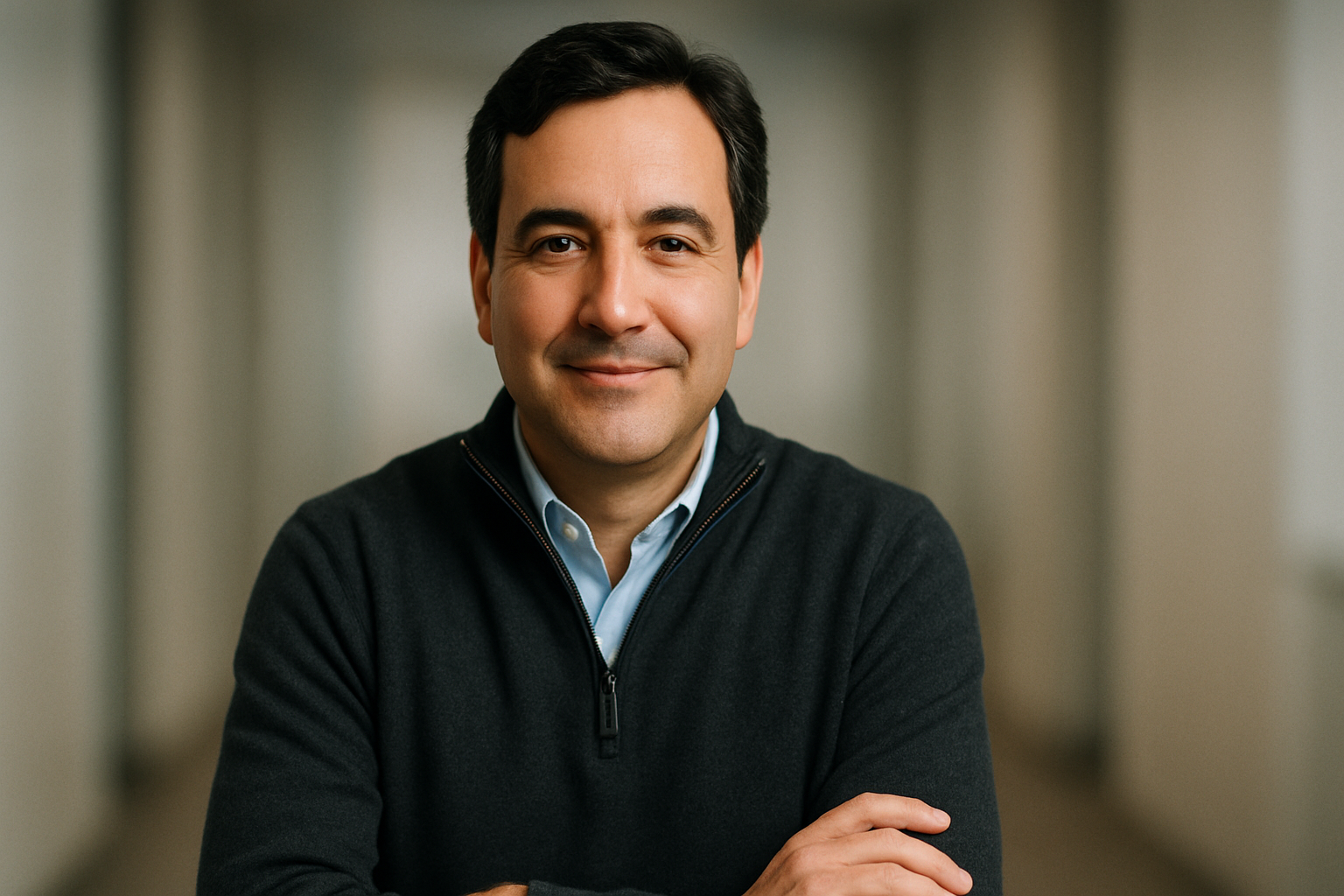
Today, August 5, Heineken shareholders are scheduled to vote on Rafael “Rafa” Oliveira’s appointment as chair of the executive board and chief executive officer, effective October 1. On the surface, it is a straightforward CEO succession at the world’s second-largest brewer by market value.
It is more consequential than that.
Heineken is asking investors to endorse its first chief executive hired from outside the company’s ranks. Oliveira arrives from JDE Peet’s, where he has been CEO since late 2024, after a long operating career at Kraft Heinz. He was also slated to lead Keurig Dr Pepper’s planned Global Coffee Co. after its acquisition of JDE Peet’s. In other words, Heineken is not choosing a caretaker with a familiar internal network. It is choosing an operator whose career was built around portfolio complexity, international markets, capital discipline and consumer-product turnarounds.
That choice tells us what the board thinks the problem is.
The issue is not that Heineken lacks a strategy. It has an EverGreen 2030 plan, premium brands, global distribution and enormous scale. The issue is execution under changing consumer behavior: slower beer demand, uneven regional performance, rising pressure to simplify operations, and an investor base that has watched competitors move faster.
For leaders, the case is a useful reminder: an external CEO hire is rarely about importing fresh ideas. It is a public admission that the organization’s existing operating model may be too insulated to confront its next set of trade-offs.
Oliveira inherits momentum—and a mandate that will test it
The numbers make the tension plain.
Heineken reported 2025 net revenue of €28.89 billion on an organic basis, up 1.6%, while net revenue per hectoliter rose 3.8%. But consolidated volume declined 2.1% for the year. That is the profile of a company successfully managing price and mix while still confronting an underlying demand problem.
The first quarter of 2026 offered a more encouraging snapshot. Total volume rose 1.2% organically, net revenue rose 2.8%, and the flagship Heineken brand grew volume 6.9%. Premium volume increased 5.8%. Those are not trivial gains. They suggest the company can still win where brand equity, premiumization and distribution intersect.
But a new CEO does not get hired merely to preserve pockets of momentum. He gets hired because the company needs to convert them into a more durable economic model.
That means Oliveira will walk into a business already committed to cutting up to 6,000 jobs over two years—nearly 7% of its roughly 87,000-person workforce—after Heineken lowered its 2026 profit-growth expectations amid softer demand. This is where the management challenge becomes much harder than a brand or sales challenge.
Cost reductions can improve margins. They can also make an organization less capable precisely when it needs better local execution, faster product decisions and more disciplined innovation.
The central question is not whether Heineken can remove cost. Large consumer companies can always find cost. The question is whether Oliveira can distinguish between bureaucracy and capability. The former should be cut. The latter is what keeps a global company responsive when tastes, channels and regional economies diverge.
That distinction is the whole job.
Why an outsider, and why a coffee executive?
Boards often describe an external hire as a search for “fresh perspective.” That phrase is usually too vague to be useful. Heineken’s choice is more specific.
Oliveira has led consumer businesses across developed and emerging markets, spent years at Kraft Heinz, and took over JDE Peet’s at a moment when the coffee company was navigating strategic change and eventual absorption into Keurig Dr Pepper. His resume suggests comfort with global matrices, concentrated brands, complex supply chains and the tension between local-market autonomy and central cost control.
Those experiences travel well to beer. The product category does not.
Beer is unusually local. Regulation differs by country. Route-to-market economics differ by country. Drinking occasions differ by country. The importance of returnable bottles, bars, retailers, distributors, sporting events and regional brand identity can vary radically across markets. A CEO who treats Heineken as a global consumer-goods portfolio in the abstract will miss the source of its advantage.
That is the overlooked risk in this appointment: not that Oliveira has never run a brewery, but that Heineken’s historical strength has been the combination of global scale and local legitimacy. A restructuring playbook can accidentally centralize decisions that should remain close to customers and markets.
Still, the outsider argument is compelling. Companies frequently promote insiders during periods when continuity is the priority. They go outside when the board wants to change the questions management asks. Oliveira’s task will be to make Heineken less internally fluent and more commercially demanding.
That means asking uncomfortable questions: Which markets are truly earning their capital? Which brands are growing because of sustainable consumer pull rather than promotional spending? Which layers of management actually improve execution? Where is the company using “local complexity” as an excuse for slow decisions?
Those are not brewery questions. They are CEO questions.
The real management test is sequencing
Most transformation programs fail less because leaders choose the wrong destination than because they choose the wrong sequence.
Heineken has to reduce costs, sustain premium-brand growth, respond to moderation trends, improve productivity and protect culture. Doing all of that at once invites a common failure mode: executives announce a broad transformation, employees hear “headcount reduction,” and the organization becomes cautious, political and slower.
Oliveira needs to avoid that trap.
The first priority should be clarity, not a new slogan. Employees need to understand what decisions will move closer to the market, what work will be automated or consolidated, what capabilities will receive more investment, and how performance will be measured after the cuts. A global workforce can handle difficult news better than vague news. What corrodes trust is a cycle of recurring restructurings with no stable operating logic.
Second, he should resist treating premiumization as a blanket solution. Heineken’s flagship brand is growing, and premium volume is up. That is important. But premiumization is not a strategy if affordability deteriorates or if consumers are simply reducing occasions. The company needs a sharper architecture across premium, mainstream, low- and no-alcohol, and local brands—not a singular fixation on selling more expensive beer.
Third, he should establish a short list of operating metrics that matter across the company: volume quality, revenue growth net of discounting, working-capital discipline, speed of local innovation, and management spans. The last metric is particularly important. Companies pursuing AI and shared-services efficiencies often measure cost savings but fail to measure whether they have created too many layers between frontline signals and executive decisions.
If Oliveira can make accountability simpler while preserving local judgment, he will have done something more valuable than a cost reset. He will have changed the management system.
The contrarian view: Heineken should not overcorrect into disruption
There is a temptation to see an outsider CEO as evidence that the company needs radical reinvention. I would be careful with that conclusion.
Heineken does not need to become a different company. Its 2026 first-quarter performance shows that its brands and commercial engine can still produce growth. The danger is less complacency than overreaction: mistaking a period of low-growth consumer demand for proof that every legacy practice must be dismantled.
The best external leaders do not arrive to prove that insiders were wrong. They identify which institutional strengths are worth defending and then remove the habits that prevent those strengths from compounding.
At Heineken, that probably means protecting brand-building and local commercial muscle while being far less sentimental about duplicated corporate work, slow portfolio decisions and managerial layers that add reporting but not value.
Investors should want that balance. Operators should demand it. Employees should judge the new CEO by it.
What this means for you
If you lead a business, take Heineken’s move as a practical lesson in succession planning.
First, do not wait for a crisis to decide whether your next leader must preserve the model or challenge it. Boards should define that choice explicitly. An insider successor and an outsider successor solve different problems.
Second, when you launch a cost program, specify the operating model that follows it. “Efficiency” is not a management plan. Say what work stops, where authority moves, what teams gain resources and how leaders will be held accountable.
Third, separate category knowledge from leadership capacity. Oliveira’s lack of brewery experience is a real risk, but it is not necessarily disqualifying. The better question is whether he learns the category’s non-negotiables fast enough to avoid destroying its local advantages.
Finally, remember that fresh leadership is not transformation by itself. The value of an outsider is not novelty. It is the ability to make a company confront decisions its internal culture has learned to postpone.
Heineken’s vote today is therefore more than a governance event. It is a wager on whether a legacy global business can become more decisive without losing the operating instincts that made it global in the first place.