Hershey’s 20% Marketing Bet Proves Famous Brands Can Still Go Stale
A brand can sit in every supermarket in America and still quietly lose relevance. Hershey’s is lifting its brand budget 20% after eight years without a new campaign — because familiarity is not growth.
A brand can sit in every supermarket in America and still quietly lose relevance. Hershey’s is lifting its brand budget 20% after eight years without a new campaign — because familiarity is not growth.
That should make plenty of founders uncomfortable.
Most businesses do not have Hershey’s problem. They are not household names. They do not have generations of buyer memory, dominant shelf space, or a product people can identify blindfolded. Yet plenty of them run their marketing as if they have earned the luxury of being boring.
They have not.
Hershey’s is spending more because a famous name is not a strategy
The Hershey Company has increased the marketing budget for its flagship Hershey’s brand by 20% to support its first major new advertising campaign in eight years. The company spent $600 million on advertising overall in 2024, according to The Wall Street Journal.
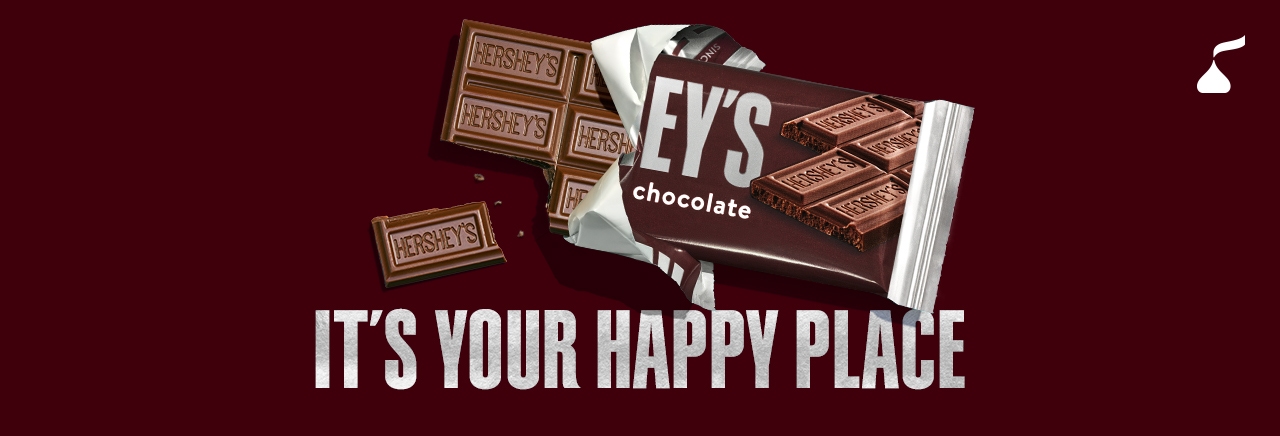
The new platform, “Hershey’s. It’s Your Happy Place,” was launched around the 2026 Olympic and Paralympic Winter Games in Milano Cortina. It is not just a television exercise. Hershey’s is combining traditional and streaming TV with social, TikTok creators, live events, limited-edition products and a run of major cultural moments through the year.
That includes the Olympics, Valentine’s Day, March Madness, Easter, the FIFA World Cup and America’s 250th anniversary celebrations. Hershey has said it plans to activate ten major cultural and seasonal moments in 2026.
Read that again: ten moments.
Not one glossy campaign, launched with great fanfare and then handed to a junior marketer to chop into Instagram tiles. Ten occasions where the brand has a reason to show up, a message tailored to the moment, and an opportunity to earn its way into conversation and purchase.
That is the bit most operators miss. Marketing is not the ad. The ad is merely the receipt for the strategic work.
Hershey’s is effectively admitting that being widely known is not enough. The product may be iconic, but the job of keeping it relevant is never finished. Consumers do not wake up desperate to reward a 130-year-old chocolate company for surviving. They buy what feels familiar, useful, timely, fun, affordable or socially shareable in that particular moment.
The winners make themselves available when those moments occur.
The real problem: brands confuse recognition with demand
I have seen this mistake over and over. A business gets some traction, starts getting referred, perhaps lands in a few retailers or becomes the obvious name in its niche. Then the founder decides the brand is “established.”
What they really mean is: “I’m sick of spending money on marketing.”
Fair enough. Everyone is sick of spending money. But cutting brand investment because people know your name is like cancelling maintenance because your car started this morning.
Recognition is not demand.
Recognition means someone has heard of you. Demand means they think of you at the right time, prefer you to alternatives, and will pay for you without needing a desperate discount shoved in their face.
Those are wildly different things.
Hershey’s move matters because it is a flagship-brand reset, not a rescue mission for an unknown challenger. The company is putting more money behind a brand that has enormous distribution and awareness precisely because it wants to strengthen relevance with modern audiences and create more buying occasions.
That should be a warning to every business owner who says, “Everyone already knows us around here.”
No, they do not. And even if they do, they may not care enough.
Eight years without a major campaign is not a virtue
There is a romantic idea in business that the best brands do not need to advertise. It sounds very Warren Buffett. Very smug. Usually it is rubbish.
The best brands can spend less to get attention because they have built mental availability over decades. But that does not mean they stop earning attention. It means every dollar has more leverage.
Hershey’s went eight years without a major new campaign. That can happen when you own a product category in consumers’ minds. You do not need to explain what a Hershey bar is. But the longer a brand relies on old familiarity, the greater the danger that it becomes background scenery.
Background scenery does not get talked about. It does not get searched. It does not attract the next generation. And it does not automatically win when a competitor launches something more interesting, more culturally current or simply better packaged for social media.
The move into TikTok creators and live events is not Hershey’s trying to look young for the sake of it. It is an attempt to put a very old product inside the places where attention now forms.
That is sensible. But there is an important caveat for founders: do not copy the channels before you copy the discipline.
TikTok will not fix a vague brand. Influencers will not save a product with no clear emotional role. Live events will not matter if the customer cannot explain, in one clean sentence, why your business belongs in their life.
Hershey’s has a simple territory to work with: happiness, small rewards, familiar moments and shared experiences. You may think it is soft. It is also commercially useful. A chocolate bar is not bought through a spreadsheet. It is bought because somebody wants a little hit of comfort, celebration or connection.
Your business needs to know its equivalent.
The overlooked angle: this is a distribution strategy wearing a marketing hat
Most commentary on a campaign like this will obsess over creative, celebrity talent and media channels. That is the shiny stuff. The more important issue is distribution.
A cultural moment only has value if your product is easy to buy when the moment lands.
Hershey can turn the Olympics, Easter or the World Cup into commercial opportunities because it has the machinery behind the campaign: retail presence, e-commerce, seasonal formats, promotional capability and an established route to market. The marketing creates attention; the operating system converts it.
That is why so many small businesses waste money copying big-brand campaigns. They sponsor an event, pay a creator, get a spike in views, then discover their website is slow, their stock is unavailable, their offer is muddy, or their sales team has no follow-up process.
Congratulations: you bought attention and sent it into a ditch.
The contrarian lesson here is that marketing is often blamed for failures created in operations. If the customer journey is clunky, more demand just exposes the clunk faster.
Before you increase your marketing budget, ask three brutal questions:
1. Can customers buy within two clicks or one clear conversation? 2. Can you fulfil what you sell without excuses, delays or quality slipping? 3. Is there a sensible next purchase after the first one?
If the answer to any of those is no, fix that before pretending a bigger media budget is the answer.
The 20% increase is less interesting than where it goes
A 20% increase sounds impressive. But percentage headlines can distract from the hard part: allocation.
Hershey’s is not treating marketing as a single channel. Its plan spans broadcast and streaming video, creator activity, events, product drops and cultural activations. That is not marketing diversification for the sake of a PowerPoint slide. It is a hedge against fragmented attention.
Consumers no longer experience brands in one neat place. They see a creator mention something, spot it in a shop, encounter a clip, receive a recommendation, notice a display, then decide later. Or not at all.
The old habit of declaring one channel “the answer” is lazy thinking. Television is not dead. Creator marketing is not magic. Search is not a brand strategy. Performance ads are not a substitute for preference.
Good operators build a system where each channel has a job.
One channel creates broad awareness. One gives the product credibility. One catches intent. One closes the sale. One brings the customer back.
If you cannot explain the job of each marketing dollar, you are not running a growth plan. You are feeding a casino.
What this means for you
You do not need Hershey’s budget, Olympic rights or a century of brand equity. You need to stop treating marketing as intermittent noise you make when sales get a bit ugly.
Here is what I would do this week.
First, identify the three to five moments each year when customers are most likely to care about what you sell. Not random awareness days. Real commercial moments: a season, deadline, life event, cultural event, industry pain point or buying cycle.
Second, assign one sharp message to each moment. Do not recycle the same generic “we’re here to help” rubbish. Say something that connects your offer to the decision people are making right then.
Third, build the conversion path before you buy reach. Check stock, landing pages, pricing, customer service, email follow-up and retargeting. Boring work. Rich work.
Fourth, keep a base level of brand investment running even when performance marketing is working. Performance harvesting only works while somebody has planted demand upstream.
Finally, measure more than clicks. Track direct traffic, repeat purchase, branded search, conversion by cohort, referral rate and the percentage of buyers who come back without a discount. Those are signs you are building an asset rather than renting sales.
Hershey’s is spending more money not because its brand is weak, but because it understands that strong brands are maintained on purpose.
That is the whole game. Build something people remember, then keep giving them a reason to remember it now.