Hornitos’ $24.99 Reset Exposes Tequila’s 21% Luxury Hangover
Tequila didn’t suddenly become bad. It became bloody expensive, and drinkers have finally noticed. Hornitos is betting $24.99 that better liquid beats another celebrity markup.
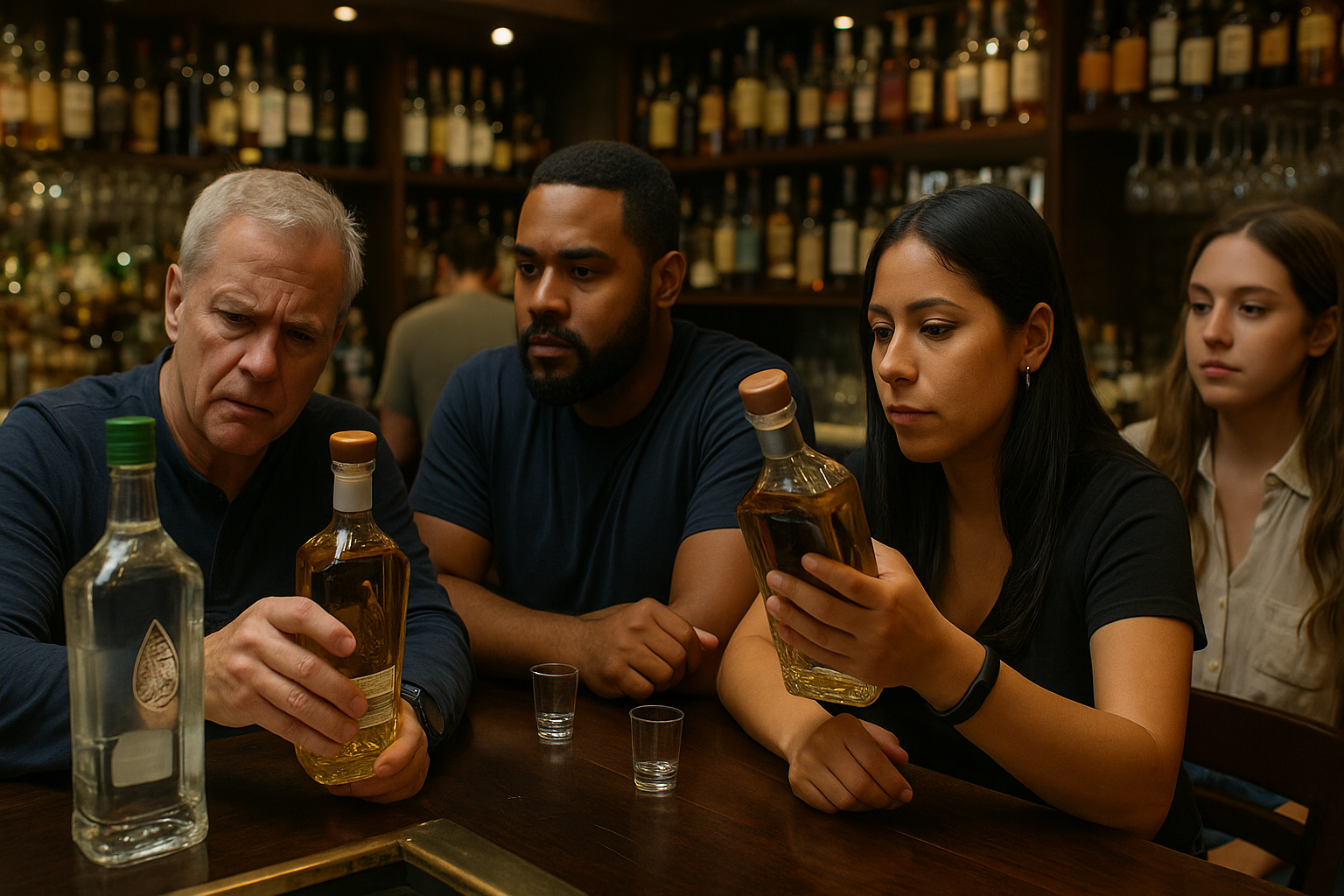
Tequila didn’t suddenly become bad. It became bloody expensive, and drinkers have finally noticed.
Hornitos is betting $24.99 that better liquid beats another celebrity markup. That is not a product refresh. It is a public admission that premium tequila got carried away with itself.
As at September 14, 2026, the most useful tequila story is not another actor launching a bottle or another brand claiming it is “ultra-premium”. It is Suntory Global Spirits taking a mature brand, changing the tequila in the bottle, and refusing to charge more for it.
Hornitos has reformulated its core blanco and reposado while holding the suggested retail price at $24.99 a bottle. The blanco now rests for 10 days in stainless steel before bottling; the reposado uses more mature agave, processes it within 24 hours and spends up to six months in oak. The commercial message is wonderfully unfashionable: make the product better, then leave the customer’s wallet alone. ([forbes.com](https://www.forbes.com/sites/johnkell/2026/09/02/tequila-has-a-pricing-problem-hornitos-thinks-it-has-an-answer/?utm_source=openai))
That should make every founder, brand operator and investor in premium consumer goods sit up a little straighter.
The $24.99 signal is bigger than Hornitos
For years, tequila had the sort of growth story that makes otherwise sensible people forget arithmetic. The category became a status purchase. Celebrity ownership became a shortcut to shelf space. “Premium” became a polite way of saying, “Let’s see how much extra margin we can get away with.”
There was real quality in the boom, of course. Better producers, more educated drinkers, broader appreciation for blanco, high-proof and terroir-led tequila. But when a category gets hot, quality is quickly joined by opportunism. Too many brands confused a beautiful bottle, a famous investor and a $70 shelf tag with a durable business.
Now the bill has arrived.
According to the Distilled Spirits Council figures cited by Forbes, 2025 volumes in high-end tequila and mezcal fell 4.3%, while super-premium volume fell 6.1%. The cheaper end still grew. That is the bit the pitch decks leave out: consumers have not abandoned tequila. They have become less willing to subsidise a brand’s ego. ([forbes.com](https://www.forbes.com/sites/johnkell/2026/09/02/tequila-has-a-pricing-problem-hornitos-thinks-it-has-an-answer/?utm_source=openai))
Hornitos sees the opening clearly. Its answer is not to pretend the consumer is stupid, nor to reach for the usual marketing narcotic: a louder campaign, shinier packaging and a few more influencers near a swimming pool. It has adjusted the proposition itself—more balanced blanco, more developed reposado, same price.
That is the entire game in one sentence: better value, not cheaper theatre.
Diageo’s 21.1% tequila decline is the warning shot
If you want the boardroom version of this story, look at Diageo.
In fiscal 2026, Diageo’s tequila net sales fell 21.1%. Don Julio declined 19.2% and Casamigos declined 27.7%. The company attributed the result to a softer category, stronger competitive pressure and difficult comparisons, and it has begun a price repositioning of Casamigos alongside a refreshed marketing campaign. ([sec.gov](https://www.sec.gov/Archives/edgar/data/835403/000162828026057527/dia045-arax2026annualrep.htm?utm_source=openai))
That is not a small wobble. That is one of the world’s most capable spirits operators acknowledging that price had become part of the problem.
Casamigos is especially instructive because it had all the ingredients people usually worship: celebrity provenance, enormous distribution, cultural visibility and a brand story simple enough to repeat after two drinks. But fame does not exempt a bottle from value maths. At some point, the buyer standing in a liquor store asks a very rude but very sensible question: “Why am I paying this much?”
If the answer is vague lifestyle wallpaper, the sale gets lost.
Diageo had already flagged the issue earlier in fiscal 2026. It said North American weakness was concentrated at the top end of tequila, with consumers downtrading; Don Julio and Casamigos both declined double-digit, while more accessibly priced Astral grew from a smaller base. ([diageo.com](https://www.diageo.com/pdf-viewer.aspx?gid=307336661&src=%2F~%2Fmedia%2FFiles%2FD%2FDiageo-V2%2FDiageo-Corp%2Fpress-release%2F2026%2Ff26-interims-results-press-release.pdf&utm_source=openai))
Read that again: the market did not merely slow. It started sorting brands by whether their price still matched their job.
That distinction matters. A brand can charge a premium when it has genuine scarcity, exceptional production, serious trust, or a product experience customers can feel. It cannot charge a premium forever just because the category once had momentum.
The tequila market is growing up—and thank God for that
The adult version of tequila is better for everyone who plans to be around in five years.
For drinkers, it means more scrutiny of what is actually in the bottle. For producers, it means the liquid and supply chain matter again. For distributors and retailers, it means velocity beats vanity. For investors, it means you can no longer underwrite a brand on category growth and a celebrity photo alone.
The old playbook was brutally simple: find a contract producer, develop a brand identity, raise money, manufacture scarcity, spend hard on social proof, then push price upward before your distribution agreement loses its patience.
That model produced some decent businesses. It also produced a heap of expensive bottles whose real differentiation was a founder’s contact list.
I’m building Agave Finder, so I spend a fair bit of time watching how drinkers search, compare and talk about agave spirits. The shift is obvious: people are asking better questions. Where was it made? What style is it? What does it taste like? Is it worth the money? Those are healthier questions than “Which famous bloke owns it?”
And the brands that answer those questions cleanly will win.
Hornitos is not suddenly becoming a cult, small-batch tequila for obsessives. That is precisely why this move matters. It is a large, recognisable brand making a mainstream value argument. It is saying that better production and sensible pricing can coexist.
That is more strategically important than another $100 bottle winning an award.
The overlooked angle: the middle is where the real money lives
Here is the contrarian view: the biggest opportunity in tequila may not be luxury at all. It may be the increasingly neglected middle.
Every category has a dangerous gap between cheap and aspirational. If the low end feels disposable and the high end feels indulgent, a well-made, credible product at a fair price can own the everyday occasion. Not the once-a-year gift. Not the nightclub flex. The bottle people actually replace.
Replacement is where real businesses are built.
A customer buying one $100 bottle because it photographs well is nice. A customer buying a $25-to-$40 bottle every few weeks because it reliably makes a cracking Margarita or tastes good with mates is far more valuable. The first customer is an event. The second is a habit.
And habits are where margins, retention and forecasting get less stupid.
Hornitos’ $24.99 price is not automatically proof it will win. Product upgrades can be oversold. Shelf pricing varies by market. Competitors will respond. But the direction is dead right: protect consumer trust before fighting for more gross profit per bottle.
The next few years will likely be unpleasant for brands that built their economics on endless premiumisation. They will have to discount, narrow their range, spend more on trade support or admit that their marketing has outrun their product.
Good. Markets need a clean-out occasionally.
What this means for you
If you run a brand, stop treating price as a badge of ambition. Treat it as a promise you must re-earn every time someone reaches for their card.
Do three things tomorrow:
1. Audit the value gap. Put your product beside the three alternatives customers actually consider—not the ones you wish they considered. Compare price, quality, proof, format, availability and the reason to believe. If your answer to “Why us?” is a mood board, you have work to do.
2. Find the repeat purchase, not the applause. Ask where and how people consume the product a second, third and tenth time. A business survives on replenishment. Awards, launches and social reach are useful only if they create it.
3. Improve the product before improving the story. Hornitos’ move is interesting because the company changed the liquid and held the price. That order matters. Better copy cannot permanently rescue a weak proposition. Better product can make your copy almost embarrassingly easy.
For investors, be wary of brands that call every price increase “premiumisation”. Sometimes it is pricing power. Sometimes it is just a management team enjoying last year’s trend line.
And for drinkers, this is a win. The tequila boom made the category bigger. This reset may finally make it better. When the customer starts demanding a real return for every extra dollar, weak brands get exposed and serious producers get a clearer lane.
That is how a category stops being a party and becomes a business.