Hornitos’ $24.99 Tequila Reset as High-End Sales Fall
High-end tequila and mezcal volume fell 4.3% in 2025. Hornitos is holding at $24.99 while improving its liquid — a warning to every brand selling prestige as value.
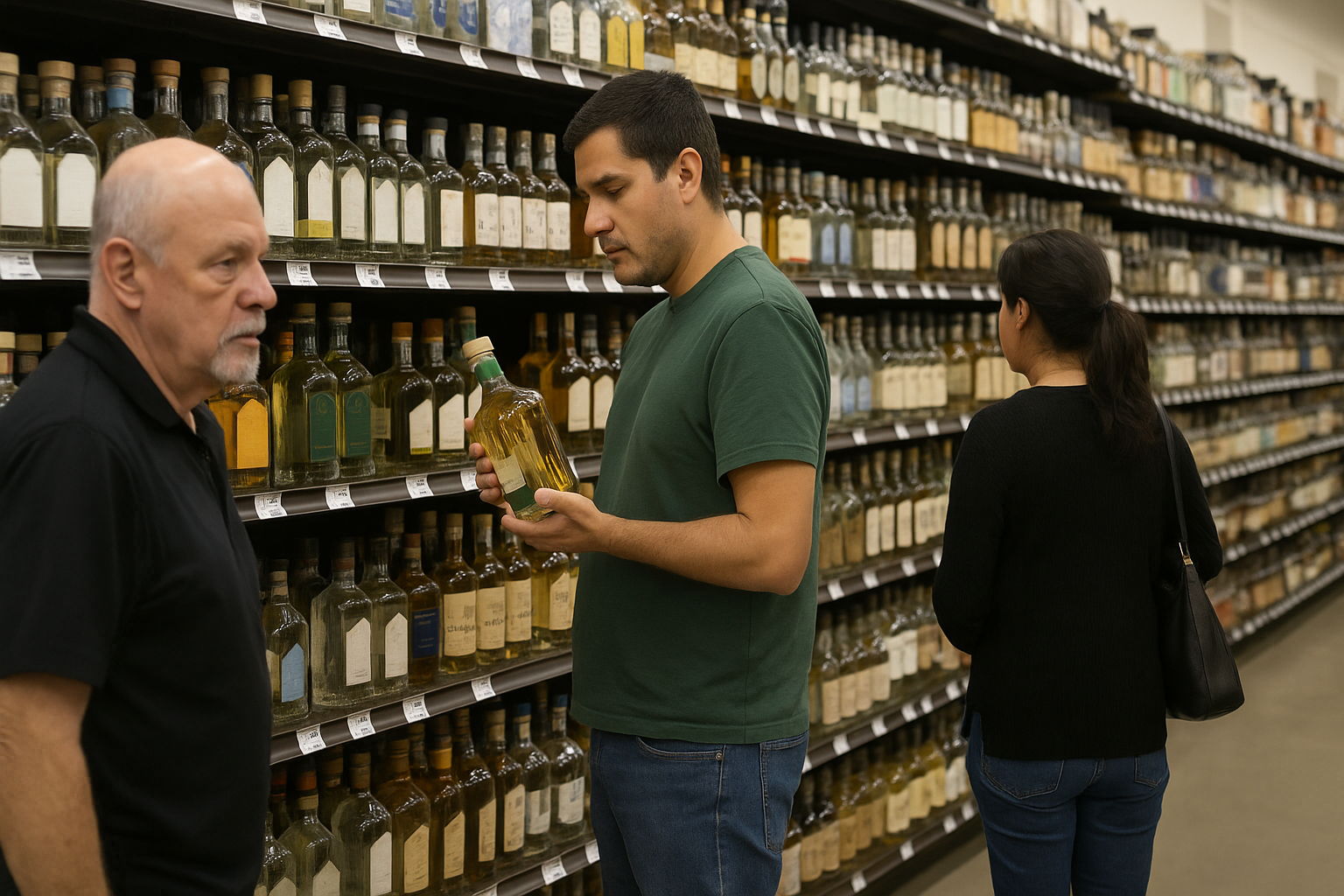
High-end tequila and mezcal volume fell 4.3% in 2025. Hornitos’ response is brutal: improve the liquid and hold the shelf price at $24.99.
Suntory Global Spirits is rolling out refreshed Hornitos Blanco and Reposado at the same $24.99 suggested retail price. That sounds like a minor product tweak. It is not. It is a giant operator quietly admitting that tequila’s premiumisation party went too far, and that the next winner will not necessarily be the brand with the celebrity, the heaviest bottle or the most heroic margin.
Hornitos is changing the liquid, not just the label
According to reporting published on September 2, Hornitos has altered the production approach for its two core expressions after consumer research found its Blanco was too citrus-forward and its Reposado had not spent enough time in oak to appeal to American whiskey and cognac drinkers.
The core recipe remains agave, water and yeast. But the Blanco now rests for 10 full days in stainless steel before bottling. For the Reposado, Hornitos says it is using more mature agave, processing it within 24 hours and extending barrel ageing to as long as six months.
Then comes the bit that matters: Suntory has held the suggested shelf price at $24.99 for both bottles.
That is a proper commercial decision, not marketing confetti. Improving liquid quality while refusing to shove the cost onto the customer is the opposite of what most premium spirits brands have done. The standard playbook has been painfully predictable: add a story, get a famous face, make the packaging look like it belongs in a jewellery shop, then whack another ten or twenty bucks on the shelf ticket.
It worked while consumers were feeling flush and tequila was riding a once-in-a-generation growth run. But markets do not reward laziness forever. Eventually, someone looks at a $70 bottle, looks at the $30 bottle beside it, and asks the nasty question: “Is this actually twice as good?”
Usually, it isn’t.
The numbers say tequila has a value problem
Tequila and mezcal remain enormous in the United States: $6.4 billion in supplier sales during 2025, making the category second only to vodka among spirits categories by revenue. But that figure was down 4.1% year-on-year. The wider U.S. spirits market was also softer, with supplier sales down 2.2%.
More importantly, the pain is concentrated where the industry had been crowing loudest. High-end tequila and mezcal volume fell 4.3% in 2025, while super-premium volume dropped 6.1%. Cheaper tequila, meanwhile, continued to grow.
That is not consumers rejecting tequila. It is consumers rejecting bad maths.
For years, the tequila business confused category momentum with proof that every bottle could charge rent. Celebrity-backed launches multiplied. Contract-produced brands appeared with very little distinction beyond their Instagram feed. Prices crept up because the market allowed them to — until it didn’t.
Hornitos is hardly a boutique underdog. It was the eighth-largest tequila brand in the U.S. in 2025, selling 1.42 million cases, according to Impact Databank figures reported by Shanken News Daily. That scale is exactly why the move matters. A brand with that kind of distribution has no excuse to hide behind vague talk about “premium cues.” It has to win repeatedly, on real shelves, against real alternatives.
At $24.99, Hornitos is trying to give shoppers a simple answer: you can get a more considered tequila without donating money to somebody’s branding department.
The background most tequila founders would rather skip
The long-term tequila story is still extraordinary. U.S. tequila and mezcal volumes have grown 301% since 2003, reaching 32.1 million nine-litre cases in 2025. High-end volume has grown 1,268% since 2003 and super-premium volume more than 1,400%.
Those figures explain why everyone piled in. They also explain why so many people got sloppy.
When an asset class, product category or consumer trend compounds for 20 years, it attracts two groups: serious builders and tourists. Serious builders improve product, supply, distribution and customer trust. Tourists see a chart going up and decide the hard work can be replaced by positioning.
Tequila collected plenty of both.
The category’s premium boom was not fake. Better education, more cocktail occasions, stronger Mexican food culture and consumer interest in agave created genuine demand. But genuine demand does not make every price point sensible. It merely gives you more rope before the market hangs your bad decisions from it.
Suntory’s Hornitos portfolio shows it understands the need to serve more than one customer. The company launched Cristalino Reserve and Añejo Reserve in late 2025 at a $44.99 suggested price, while also pushing smaller formats, flavour extensions and cocktail-oriented packs. That is a sensible portfolio architecture: give customers a ladder, but do not kick away the bottom rung.
Too many brands did precisely that. They abandoned accessible core products in pursuit of luxury margins, then acted surprised when drinkers began trading down or simply buying less.
The second-order implication: liquid quality is becoming the moat
The obvious lesson is “value matters.” True, but incomplete.
The more interesting lesson is that premium tequila is being forced to become better at the actual tequila bit. Not merely louder at the lifestyle bit.
Holding price while improving production means Hornitos is making a bet on repeat purchase. The company is not just chasing a first sale from somebody impressed by a bottle or a display. It is trying to make the customer notice the difference in a Margarita, a Paloma or a pour at home — then buy it again without needing a discount or a celebrity reminder.
That is the kind of boring, beautiful commercial discipline that builds brands.
I see versions of this while building Agave Finder. Once people start comparing bottles properly — production, style, value, availability and what they actually enjoy drinking — the fog clears quickly. A vague “premium” claim has a much shorter life when the customer can see alternatives side by side.
This is bad news for brands whose entire proposition is social proof. It is good news for producers that can explain why their liquid tastes the way it does, where it belongs in a drinker’s life and why the price is fair.
And fair does not mean cheap. It means defensible.
The contrarian point: $24.99 is not a race to the bottom
Some people will hear this and conclude that premium tequila is dead. That is nonsense.
There will always be a market for exceptional, limited, properly aged or genuinely distinctive spirits. People happily pay more when the improvement is obvious, the supply is real and the occasion deserves it. Nobody serious is arguing that every tequila should cost $24.99.
What is dying is the lazy middle: bottles charging luxury prices without delivering luxury pleasure.
That is actually healthy. A market with honest entry points and credible high-end products is stronger than one stuffed with indistinguishable brands all pretending they are scarce. Hornitos’ move could make the middle of the category more competitive, which is precisely what drinkers need.
There is another overlooked advantage. A sharper $24.99 bottle gives bars, restaurants and retailers room to make better recommendations. If staff can confidently pour something that tastes more polished without turning the customer’s round into a financial event, the brand earns trial in the places that matter. That is far more durable than a launch party full of influencers who never buy the product again.
What this means for you
If you are a spirits founder, stop asking whether you can charge more. Ask what the customer can taste, understand or gain for the extra money. If you cannot answer that in one blunt sentence, the price is probably doing more work than the product.
If you are an operator, audit your range this week. Put your bottles into three buckets: clearly great value, clearly special, and neither. The “neither” bucket is where cash gets trapped, staff lose conviction and customers quietly defect.
If you are an investor, be wary of brands that talk endlessly about premiumisation but cannot show repeat purchase, distribution quality or a reason to exist beyond a famous founder. A high retail price is not pricing power. Pricing power is the ability to hold price because people would be annoyed if they could no longer get your product.
And if you are simply buying tequila, use the most useful test in the world: ignore the bottle for a minute. Would you still choose it if it came in a plain glass bottle with the price written in black text? If the answer is no, save your money.
Hornitos has not solved tequila’s problems with 10 days in a steel tank and a few extra months in oak. But Suntory has done something many brands have avoided: it looked at a softer market, improved the product and kept the customer’s bill steady.
That is not glamorous. It is better than glamorous. It is how you win when the easy money has left the room.