IBM’s 10-Person Meeting Rule vs Jamie Dimon’s Phone Ban
A phone ban will not fix a broken calendar. IBM CEO Arvind Krishna’s 10-person test exposes why Jamie Dimon’s device rule misses the real problem.
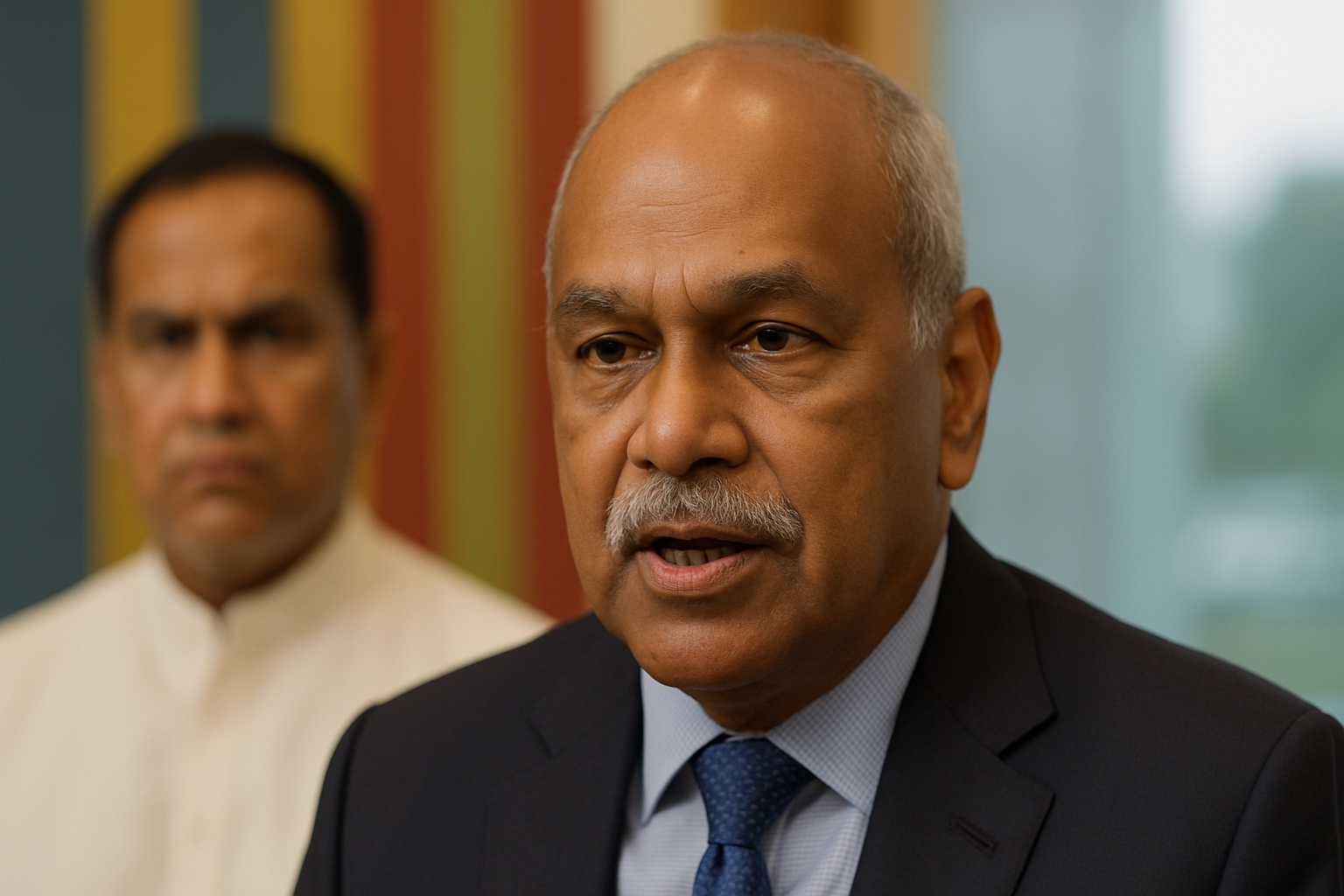
A phone ban is what leaders reach for when they have failed to fix a broken calendar. IBM CEO Arvind Krishna’s 10-person line exposes why Jamie Dimon’s device rule misses the real problem.
Your meeting doesn’t become productive because everyone puts their phone face-down. It becomes productive when it deserves their full attention.
That is the uncomfortable bit in the spat between IBM chief executive Arvind Krishna and JPMorgan Chase boss Jamie Dimon over devices in meetings. Dimon’s view is simple: if someone is reading email or seeing notifications in front of him, shut the device. Krishna’s response is better management: in a meeting with more than 10 people, he is not going to police whether people multitask.
I’m with Krishna — mostly.
Not because Slack during a decision meeting is fine. It isn’t. If I’ve got six people in a room to make a call that affects customers, cash or the team, I expect them switched on. But a blanket phone ban is the sort of rule leaders reach for when they cannot be bothered fixing the operating system underneath it.
It is management by theatre. Everyone looks attentive. Nothing necessarily gets decided.
Jamie Dimon is right about disrespect — and wrong about the cure
Dimon is not wrong that staring at a screen while someone is speaking can be rude. In a small meeting, it also creates a vicious little loop: one person disengages, everyone notices, the presenter loses energy, the meeting becomes less useful, and more people reach for their phones.
That’s real.
But “close the damn thing” is a correction of behaviour, not a diagnosis. Why were they checking it? Were they expected to be in two overlapping meetings? Was the discussion irrelevant to half the room? Was someone reading through a 30-slide deck that should have been a two-page memo? Did the meeting lack an owner, a decision and a deadline?
You can ban devices and still run a dreadful meeting. Plenty of companies do.
JPMorgan Chase is not a small outfit where operational sloppiness is harmless. Its 2025 annual report says it has more than 320,000 employees. Dimon himself describes a machine built around constant business reviews, leadership sessions, town halls, client events and travel. At that scale, meeting design is not an etiquette issue. It is a productivity issue measured in millions of working hours.
That is precisely why the distinction matters. A leader who treats every device glance as a discipline problem will get more compliance. A leader who asks why capable people need to multitask might get a better company.
IBM’s 10-person line is not permissiveness. It is triage.
Krishna’s position is being misread as a defence of half-listening. It is more useful than that. He is acknowledging a basic fact: once a meeting gets big enough, not every attendee can be central to every minute of it.
That is not cultural decay. It is maths.
In a 12-person meeting, there are usually three kinds of people:
1. The people making the decision. 2. The people supplying information needed for the decision. 3. The people invited because somebody was nervous about leaving them out.
Only the first two groups should be there. And even then, only for the relevant part.
If you are running a large meeting and demanding monk-like concentration for an hour, you are effectively admitting the room is poorly designed. You have gathered a crowd, not a working team.
IBM had 264,300 employees in its wholly owned subsidiaries at the end of 2025 and reported $67.5 billion in annual revenue. Krishna is managing an enormous global business built around software, consulting and complex enterprise customers. People in that world have live client issues, technical incidents and teams across time zones. The fantasy that every person in every large meeting can operate with one channel open is just that: fantasy.
The answer is not to celebrate distraction. The answer is to stop using meetings as a substitute for clear written communication.
The overlooked problem: executives create the multitasking they complain about
Here is the part most senior people won’t say out loud: employees text through meetings because executives make them attend too many meetings.
I have done it. You probably have too. You see a calendar packed with updates, pre-briefs, debriefs, status calls and “quick syncs,” then wonder why the team is answering messages in the fourth hour of the day spent listening to other people talk.
It is absurd.
The boss controls the calendar more than anyone. Every recurring meeting is a tax imposed from the top. Every vague invitation tells a person, “Your time is less valuable than my anxiety.” Every meeting with no decision owner gives participants permission to mentally leave the room.
And it gets worse as companies grow. Managers add people to reduce political risk. Someone says, “Let’s include Legal just in case.” Another says, “Bring Product in for visibility.” Finance needs to be aware. Operations wants context. Suddenly 14 people are listening to a conversation that should have involved four.
Then a CEO gets cranky because somebody is on their phone.
Mate, the phone is the smoke alarm. The fire is your calendar.
There are two kinds of meetings. Stop confusing them.
The sensible middle ground between Dimon’s discipline and Krishna’s pragmatism is brutally straightforward: classify meetings before they happen.
Decision meetings should be small, prepared and device-light. Send the material beforehand. State the decision required in the invitation. Name the decision-maker. Put a time limit on discussion. If someone has not read the material, do not spend 20 minutes reading it aloud to them. Reschedule or make the call with the people who did the work.
For these meetings, I am fine with a hard rule: no casual messaging, no inbox grazing, no laptop theatre. You are there to decide. Act like it.
Information meetings are different. Town halls, broad project updates, training and large cross-functional briefings will naturally include people for whom only part of the session matters. Let them take notes, answer an urgent customer message or quietly handle another responsibility. Record the session. Share the written summary. Do not mistake physical stillness for engagement.
The key is honesty. If your meeting is informational, stop demanding the performance of a decision room. If it is a decision room, stop inviting spectators.
That is the 10-person insight in practice. It is not an arbitrary magic number. It is a trigger to ask whether the meeting is doing work or merely displaying work.
The contrarian view: sometimes the phone is telling you who should not be in the room
Most management advice says deal with distracted people. I think leaders should first deal with unnecessary attendance.
If a competent executive repeatedly has to split attention in a particular meeting, don’t immediately question their commitment. Ask whether their presence is required. They might be signalling — badly, perhaps — that the meeting has no clear use for them.
That is not an excuse for bad manners. In a small room, if you disagree with the meeting or do not need to be there, say so before it starts. Decline it. Ask for the notes. Propose a shorter slot. Adults can use words.
But leaders should make that safe. If declining a meeting is viewed as disloyalty, people will attend, nod and multitask. You will have perfect attendance and bugger-all accountability.
The strongest operators I know are not the ones who monopolise calendars. They are the ones who protect their people’s focus like it is cash — because it is.
What this means for you
Starting tomorrow, run a meeting audit. Not a culture survey. An audit.
For every recurring meeting you own, write down five things:
- The exact decision or output it exists to produce. - The one person accountable for that output. - The smallest number of people needed. - What must be read before people arrive. - Whether devices are essential, permitted or out of bounds.
If you cannot answer those in two minutes, cancel the meeting until you can.
Then use one hard rule: no meeting gets more attendees than its purpose can justify. If you invite 11 people, explain why 11 people are needed. “Visibility” is not an answer. Fear is not an answer. Habit is definitely not an answer.
Finally, stop rewarding performative presence. Reward prepared thinking, fast decisions and clear follow-through.
Jamie Dimon is right to expect respect in a room. Arvind Krishna is right that trying to control every screen in a large group is weird — and, more importantly, beside the point. The best leaders do not win meetings by confiscating attention. They earn it by making the meeting worth attending.
That is a much higher bar. Which is exactly why most companies avoid it.