ICON’s $200M Series D Is a $1.4B Bet That Housing Needs Factories
The housing shortage will not be fixed by another government panel or a bloke with a hammer. ICON just raised $200 million because serious money is betting robots can build homes faster than the industry can talk about the problem.
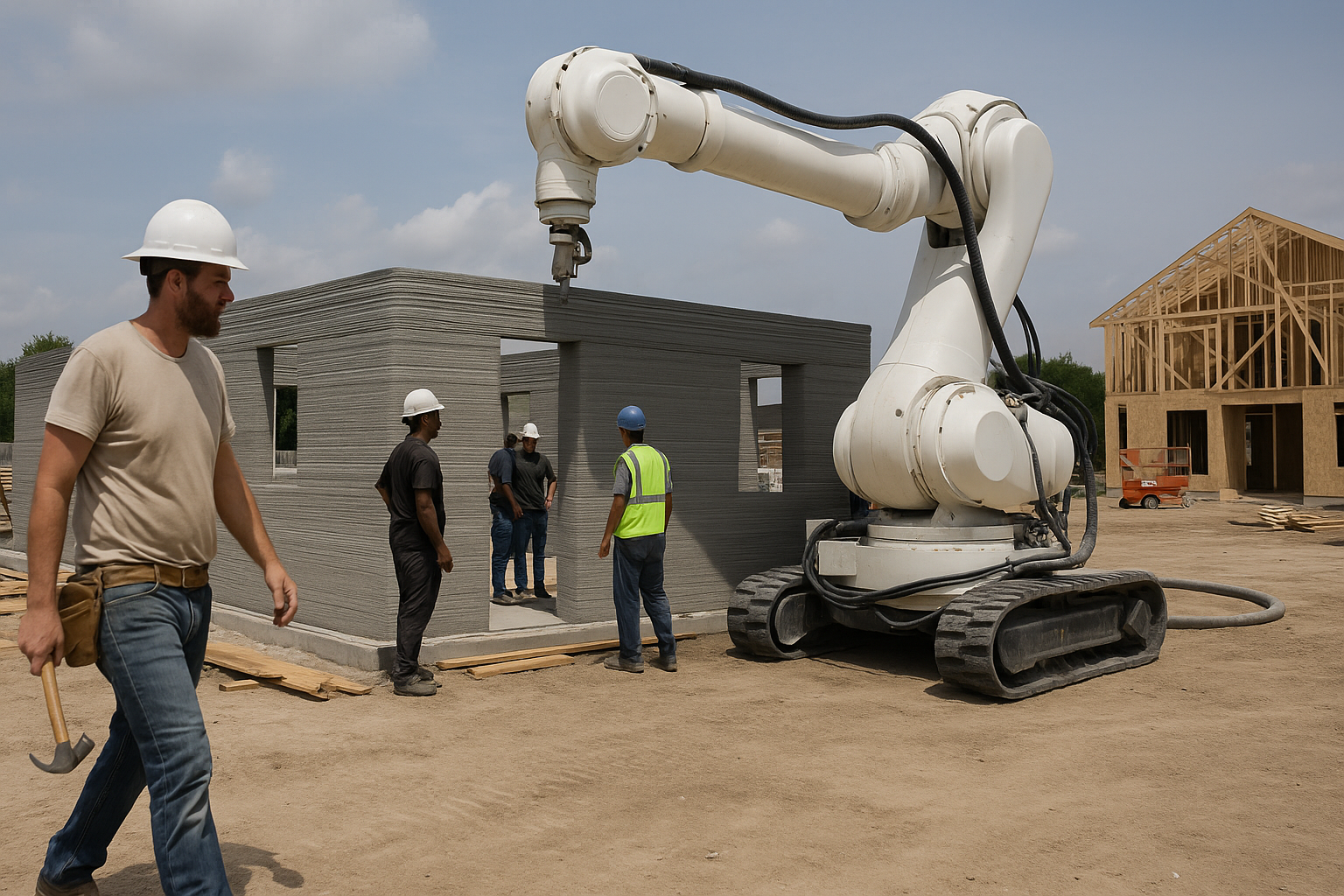
Most builders don’t have a housing problem. They have a productivity problem, and they’ve spent decades pretending it’s someone else’s fault.
That is why ICON’s new $200 million Series D matters. The Austin construction-technology company has been valued at $1.4 billion after a round co-led by Baillie Gifford and funds managed by BlackRock. That is not a cute punt on 3D-printed novelty homes. It is a hard-dollar wager that construction — one of the world’s biggest, slowest and most stubborn industries — is finally ready to behave more like manufacturing.
And it bloody well needs to.
ICON has raised $700M because construction is ripe for an ambush
ICON says the latest funding takes its total capital raised to $700 million. The company plans to use the money to manufacture and deploy Titan, its multi-storey robotic construction system; build out research and development in Austin; and expand across Texas, Florida, Washington, D.C. and additional US markets.
The investor list tells you what has changed. Baillie Gifford is known for taking long-duration bets on companies that can compound for years. BlackRock manages enormous pools of capital tied to real assets, infrastructure and property. These are not investors looking for a flashy app with 18 months of growth and a broken business model underneath it.
They are backing a company trying to sell machinery and systems into an industry that spends real money, has real assets and cannot simply “pivot” when the market gets tough.
ICON has already built more than 270 homes and structures across five US states and two countries, according to the company. Its work includes the Wolf Ranch development in Georgetown, Texas, built with Lennar, as well as housing at Austin’s Community First! Village and projects for the US Army. It says it is on track for four-times revenue growth in 2026.
That last number is management’s forecast, not gospel. But the important point is that ICON is no longer selling the idea of a printer that might one day build houses. It is trying to become the company that equips other builders to do it.
That distinction is everything.
The real product is not a printed wall
People get distracted by the printer. Fair enough — a giant robot laying down concrete is more interesting than a bloke framing timber in 38-degree heat.
But the printer is not the business. The business is a repeatable construction system: robotics, software, materials, building design, approvals, project delivery and builder adoption. Miss any one of those pieces and you have an expensive machine sitting around for LinkedIn videos.
ICON’s Titan system is designed to print multi-storey structures. The company says it can reduce the construction time of an average home by six weeks and lower costs by 40% against the national average. Treat those as company claims, not a universal promise. Housing costs differ wildly by land, finance, permits, labour, location, finishes and whether a council officer decides your plans need another six months of interpretive dance.
Still, the direction is obvious. If a builder can standardise more of the physical build, reduce exposure to labour shortages and complete projects with more certainty, the economics get interesting quickly.
The old housing model is largely artisanal at industrial scale. Thousands of small decisions. Too many handoffs. Materials arriving late. Trades scheduled around weather, availability and somebody else’s delay. Everyone takes a margin, nobody owns the whole problem, and the buyer wears the final bill.
That model worked when labour was plentiful, materials were cheap and homes did not need to be delivered at speed. Those days are gone.
Why BlackRock’s involvement is more important than the 3D printing headline
The overlooked part of this deal is not the machine. It is the capital.
Construction technology has spent years in the “interesting but risky” basket. Plenty of founders have raised money to digitise a corner of the job site, make prettier drawings or create software for paperwork. Some have built solid businesses. Very few have changed how a building physically gets made.
That is because atom-by-atom disruption is harder than software disruption. You cannot ship a bug fix to a half-built apartment block. You cannot A/B test a roof. You cannot declare product-market fit because a pilot project looked good on Instagram.
Physical-world businesses need patient money. They need factories, supply chains, compliance, insurance, equipment finance, trained operators and customers prepared to reorder. They need to survive the period between “the tech works” and “the tech is normal.” That period burns cash and eats weak founders for breakfast.
A $200 million round from investors with patience and real-estate exposure gives ICON more than runway. It gives the company a chance to cross that ugly middle.
It also signals something bigger: capital is hunting for businesses that can modernise physical bottlenecks, not just generate another AI wrapper. AI will be useful in design, scheduling, procurement and project management. But housing does not become cheaper because a chatbot writes a cheerful email to your architect. It becomes cheaper when somebody changes the cost curve of building.
That is the bet here.
The contrarian view: cheaper construction does not automatically mean cheap homes
Now for the bit that property-tech evangelists tend to leave out.
Even if Titan genuinely cuts build time and construction costs, that does not mean homebuyers instantly get cheap houses. Developers price homes according to what buyers can pay and what the market will bear, not according to a moral duty to share every efficiency gain.
Land remains expensive. Debt remains expensive. Planning restrictions remain absurd in many places. Infrastructure charges, inspections, insurance and local approvals do not disappear because a robot can print a wall.
So no, one funding round will not solve the housing crisis. Anyone telling you otherwise is either selling something or has never tried to get a development approved.
But that is not a reason to dismiss the technology. It is a reason to measure it properly.
The first win is likely to be better project economics for builders: faster delivery, fewer delays, more predictable labour needs and stronger margins. The next win could be more supply in categories where speed matters — entry-level housing, build-to-rent, workforce accommodation, disaster recovery, defence infrastructure and remote projects.
Only after scale, competition and regulatory acceptance kick in do consumers have a real shot at capturing a meaningful share of the savings.
That may sound less sexy than “robots solve housing.” It is also how markets actually work.
ICON is trying to become a platform, not a builder with a gimmick
ICON now describes its business through three units: Build, Tech and Prime. Build handles delivered projects. Tech is the platform it intends to put in other builders’ hands. Prime targets defence and space-related work.
The Prime piece is worth watching. ICON says it has received more than $370 million in government contracts and broke ground in January on 10 barracks at Fort Bliss. Government and defence projects can provide revenue, credibility and difficult operating environments in which to prove a system. They can also be slow, political and lumpy. That is why a company cannot rely on them alone.
The real commercial test will be whether independent builders buy Titan, use it repeatedly and make more money with it than without it.
That is the only scoreboard that counts. Reservations, demonstrations, strategic partnerships and press releases are all nice. Reorder rates are nicer.
If ICON can move from operating its own projects to becoming the construction equipment-and-software layer for other builders, the upside is enormous. If it cannot, it risks becoming a capital-intensive specialist builder with impressive machinery and a limited market.
I know which side I’d rather be on. Platform economics beat project economics every day of the week — provided the platform actually works in the hands of customers.
What this means for you
If you are a founder: Stop assuming the next big venture outcome must be pure software. The best opportunities are often where software, automation and ugly real-world operations collide. Find an industry with expensive delays, scarce labour and fragmented processes. Then solve a painful economic problem, not a fashionable technology problem.
If you are an operator: Measure new technology by throughput, margin, reliability and cycle time. Not demos. Not press coverage. Not how clever it looks at a conference. Ask: does it let us complete more work, with fewer mistakes, at a better gross margin?
If you are an investor: Be wary of businesses calling themselves “platforms” before customers repeatedly use the product without founder hand-holding. But do not make the opposite mistake of ignoring physical-world technology because it takes longer. The winners in construction, energy, logistics and industrial automation may be slower to build — and much harder to copy once they work.
If you are trying to get richer: Pay attention when capital moves from attention-grabbing software into businesses that change actual unit economics. The fortunes will not all be made by the company with the flashiest robot. They will be made by the businesses that own the workflow, the customer relationship and the repeat purchase.
ICON’s $200 million round is not proof that robotic construction has won. It is proof that serious investors believe the old way of building is no longer good enough. About time.