Ineffable Intelligence Adds 6 Cofounders After $1.1B Seed Round
A $1.1 billion seed round buys plenty of GPUs. It does not buy a world-class research team — unless the best people decide your old employer is no longer the best place to win.
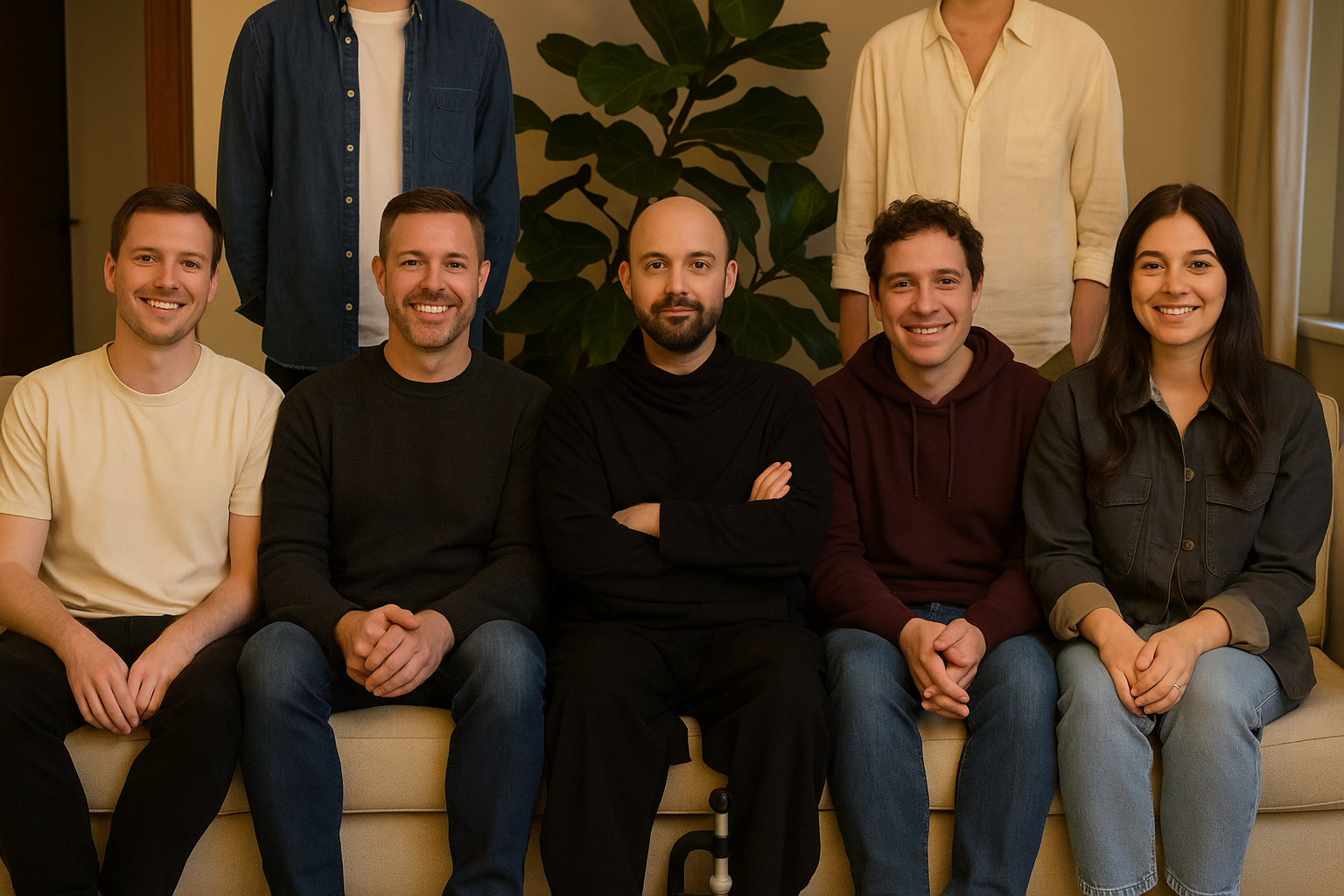
Google did not lose six employees. It may have helped finance the next serious attempt to make its own AI strategy look old.
Ineffable Intelligence, the London AI startup founded by former Google DeepMind researcher David Silver, has added six high-profile “cofounders” after raising a ridiculous $1.1 billion seed round in April. Four came from Google DeepMind. That is not a hiring update. That is a signal flare.
The lazy read is that another AI lab has collected smart people and enormous money to promise “superintelligence.” Fair enough. There are plenty of founders wandering around Silicon Valley wearing that word like a designer jacket.
But the sharper read is this: the frontier-AI race is no longer mainly about who has the biggest model, the flashiest demo or the most capital. It is becoming a fight over whether the people who know how to make machines learn from experience believe their best work can still happen inside Big Tech.
That is a much more expensive question for Google than six salaries.
The $1.1 billion talent raid
Ineffable was valued at roughly $5.1 billion when it raised its $1.1 billion seed round in April 2026. That was described as Europe’s largest-ever seed investment. Sequoia Capital and Lightspeed Venture Partners led the round, with investors including Google and Nvidia also participating.
Yes, read that again: Google has backed a company founded by a former DeepMind researcher that is now pulling senior DeepMind talent out of the building. Capitalism has a sense of humour.
The latest arrivals are Chris Apps, Wojciech Czarnecki, Lasse Espeholt and Junhyuk Oh from Google DeepMind; Alexandre Laterre, formerly InstaDeep’s head of research; and Heather Gorham, previously a partner at venture firm Flying Fish.
The labels matter less than the operating map underneath them.
Czarnecki is set to oversee science. Oh is leading reinforcement learning. Espeholt is focused on compute, infrastructure and engineering strategy. Laterre is overseeing research engineering. Apps is taking on “mission acceleration” — corporate language, admittedly, but someone still needs to make the trains run on time. Gorham’s remit covers compute, fundraising and operations.
That is not six random boffins being handed inflated titles. It looks like a deliberately assembled machine: research, research engineering, computing capacity, programme delivery and capital formation.
Founders should pay attention to that construction. A company does not become formidable by hiring a pile of impressive CVs. It becomes formidable when every vital constraint has an owner before the constraint becomes a crisis.
Why David Silver’s approach is different
Silver is not famous because he wrote nice LinkedIn posts about the future. He was a central figure in the reinforcement-learning work behind DeepMind’s AlphaGo and AlphaStar breakthroughs.
Reinforcement learning is the basic idea that a system improves through trial, error and rewards. Do something useful: reward it. Do something useless: don’t. Repeat at industrial scale.
It is a different philosophical bet from simply feeding ever-larger piles of human-created text, code, images and video into a model and hoping scale carries the day.
Ineffable’s own stated aim is to build a “superlearner” that can discover knowledge and skills through experience rather than relying on human data. The company believes this can produce systems that continually learn and improve.
That is a massive claim. It is not a product. And no sensible operator should confuse an ambitious research thesis with a functioning business model.
Still, it is not a silly thesis. The biggest limitation of training primarily on yesterday’s human output is obvious: eventually you are recycling the available record of what people already knew, made and said. A system that can safely generate useful experience, test ideas and improve from the results could have a much broader runway.
That “safely” is doing a fair bit of work there. More on that in a minute.
For now, the important commercial point is simpler. If the next major AI gains come from learning-by-doing rather than just swallowing more internet, the strategic value shifts towards people who understand environments, rewards, simulations, multi-agent behaviour and computing systems. That is exactly the kind of talent Ineffable is collecting.
Google’s real problem is not money
Google can afford the loss. Alphabet has more money than common sense and more infrastructure than nearly anyone on Earth.
What it cannot effortlessly replace is concentrated context.
A great frontier researcher is not merely a person who can solve equations or write code. They carry years of hard-won judgement: which experiments are rubbish, which benchmarks lie, where compute disappears, how a research programme gets stuck, and which talented people work brilliantly together.
That last part is the killer.
Apps, Czarnecki and Oh worked with Silver on AlphaStar, DeepMind’s system that reached top-level performance in the complex real-time strategy game StarCraft II. Espeholt helped build DeepMind’s MetNet weather-prediction models. These people do not arrive as blank individual assets. They arrive with shared technical language and a record of operating in hard problems together.
Anyone who has built a business knows the difference. Five excellent strangers are not automatically better than three people who have been through the wars together and know who makes good decisions when the plan catches fire.
The best teams compound faster because they spend less time translating themselves.
This is why talent migration is more dangerous than talent turnover. Turnover is normal. Migration happens when a cluster of capable people begins moving toward a new centre of gravity.
The overlooked angle: “cofounder” is a weapon
The interesting word in this story is not superintelligence. It is “cofounder.”
Giving six recruits that title is not just a compliment. It is a commercial instrument.
A standard senior job says: come help us execute someone else’s vision. A cofounder role says: help own the vision, shape the institution and share in the upside if this goes properly mad.
For elite technical talent, especially people who have already seen Big Tech from the inside, that difference matters. A large company can offer huge compensation, safe prestige and very serious compute. A startup can offer identity, autonomy, pace and ownership.
The clever part is that Ineffable is using the title to solve a problem most startups face too late: how do you stop critical early hires from behaving like well-paid employees when you need them to act like builders?
You do not fix that with free snacks or a motivational offsite in Byron Bay. You fix it with real responsibility, real decision rights and upside that means something.
Of course, titles become worthless when everyone gets one. If 40 people are “cofounders,” you have not created ownership; you have created a LinkedIn support group.
But six people, each owning a core bottleneck in a research-heavy company? That is more credible.
The contrarian view: expensive talent does not prove the thesis
Now for the bit the hype merchants skip.
A $1.1 billion seed round and a star-studded team do not validate Ineffable’s scientific approach. They validate that wealthy investors believe David Silver is worth backing while the question is still open.
Those are very different things.
Reinforcement learning has produced extraordinary results in bounded environments with clear objectives: win the game, maximise a score, complete a task. The real world is messy. Objectives conflict. Rewards get gamed. The thing you can measure is often not the thing you actually want.
Every operator has lived a low-tech version of this. Tell a sales team to maximise meetings booked and, surprise, you get meetings with people who should never have been invited. Tell customer support to minimise response time and you get fast, useless responses. Measure the wrong thing and people — or machines — become beautifully efficient at missing the point.
That is the challenge for any company betting heavily on reinforcement learning: defining rewards well enough that the system learns the right lesson, not merely the easiest one.
So I would not invest in this story because the word “superintelligence” sounds sexy. I would watch it because the calibre and structure of the hires suggest a serious group is attacking a genuinely different path.
That alone makes it important.
What this means for you
You do not need $1.1 billion or a former DeepMind researcher to use the lesson here. You need to stop treating hiring as a procurement exercise.
First, identify the three bottlenecks that genuinely determine whether your business wins over the next 24 months. Not the departments on your org chart. The bottlenecks. For Ineffable, they appear to be research, compute, engineering and capital. What are yours?
Second, hire or promote owners for those bottlenecks before you are desperate. Give them a defined outcome, authority to make decisions and economics that reward the right long-term result. If you want founder-level behaviour, offer more than a founder-level workload.
Third, do not hire brilliant people in isolation. Hire small clusters where possible — people with shared standards, complementary skills and proof they can ship under pressure. Chemistry is not soft stuff. It is operating leverage.
Finally, be ruthless about metrics. Before you automate a workflow, hand it to an AI agent or bonus a team against it, ask one blunt question: if this number goes up, can the business still get worse? If the answer is yes, your metric is a trap.
Ineffable Intelligence may build something historic. It may burn an eye-watering amount of money chasing a problem that proves harder than advertised. Both are possible.
But the company has already shown founders something useful: the best people do not follow office perks. They follow meaningful problems, capable teammates, genuine ownership and a place where the work can matter.
Build that, and talent comes to you. Fail to build it, and no amount of money stops them walking out the door.