Intel’s $19.7B Share Sale Is a $20B Bet It Can Finally Build
Intel is raising roughly $19.7 billion because AI has made chip capacity priceless. Shareholders are being diluted because standing still would be far more expensive.
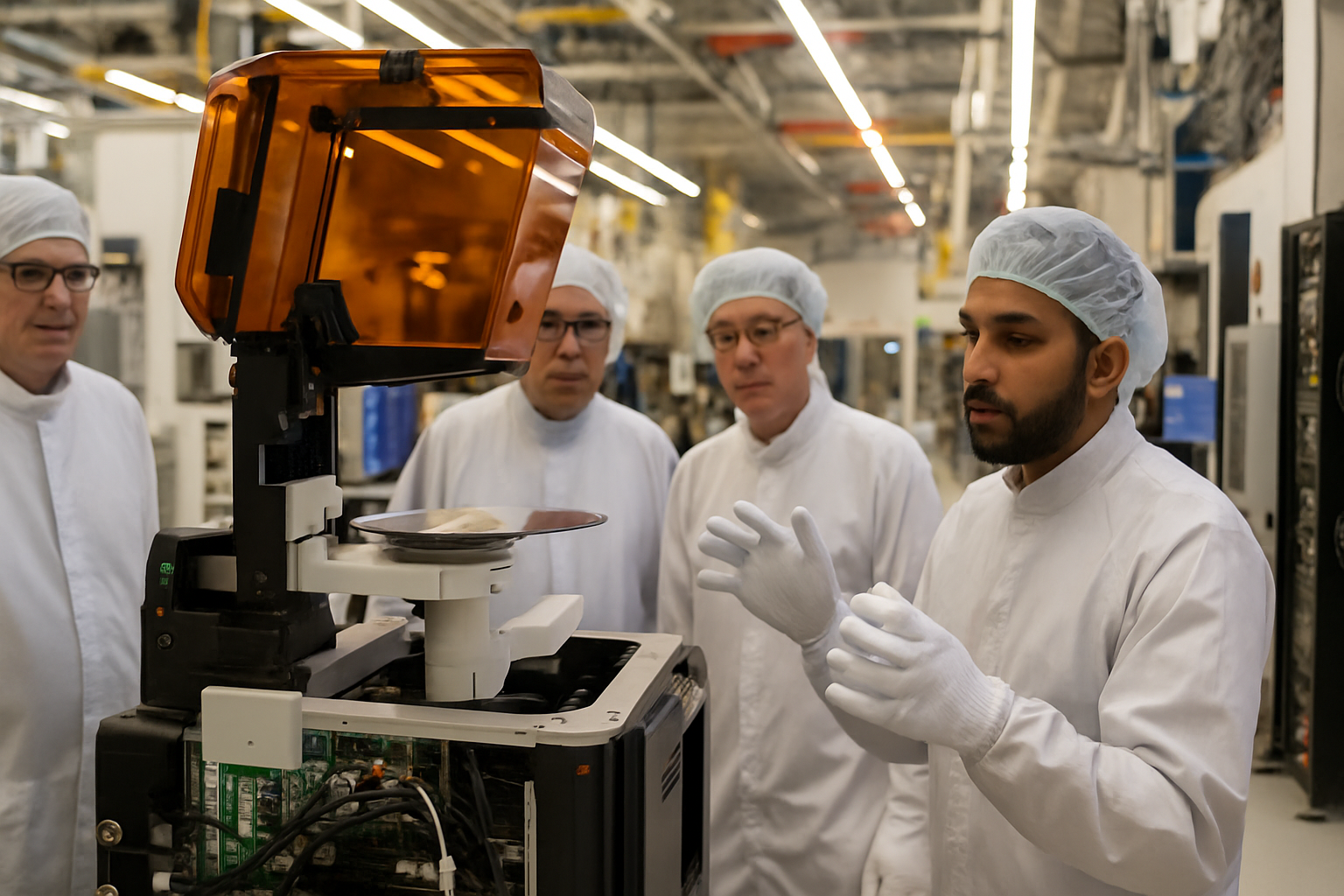
Intel is asking shareholders to swallow roughly $19.7 billion of dilution because the company has finally worked out that a chip factory cannot be funded with optimism, PowerPoint slides and patriotic press releases.
That is the real story behind Intel’s upsized $20 billion common-stock offering, priced at $95 a share this week. The company initially targeted $15 billion, then expanded the deal as demand came in. That is not a tidy capital-markets footnote. It is one of the clearest signals yet that the AI infrastructure race has turned into an industrial arms race — and Intel intends to be in it.
Intel has chosen dilution over falling behind
Intel issued 210.53 million shares at $95 apiece, with underwriters receiving a 30-day option for a further 31.58 million shares. Gross proceeds are about $20 billion; net proceeds are expected to be roughly $19.7 billion after fees.
Plenty of investors hate a share issue on principle. Fair enough. Nobody wants to own a smaller percentage of a company tomorrow than they owned yesterday.
But that is kindergarten thinking if you stop there.
The relevant question is not, “Did Intel dilute me?” It plainly did. The question is: what is Intel buying with that dilution, and is it worth more than the slice you gave up?
Intel is raising the money as it ramps spending on AI-related capacity, foundry expansion, advanced packaging and the manufacturing roadmap that includes its 18A and 14A process technologies. In July, Intel lifted its 2026 capital-expenditure outlook from $18 billion to $20 billion, after forecasting third-quarter revenue between $15.8 billion and $16.8 billion — above the roughly $15.1 billion analysts expected.
That matters because this is not a business raising money merely to plug a hole in the roof. It is raising money because demand, technology and geopolitical pressure are all screaming the same thing: build more capacity.
The market has spent years treating Intel as the fading former king of semiconductors. Sometimes deservedly. Intel lost manufacturing leadership, watched Taiwan Semiconductor Manufacturing Co. become essential infrastructure for the global technology industry, and let Nvidia capture the lion’s share of AI’s early economics.
But chips are not a software business. You do not catch up by launching a nicer app next Tuesday. You catch up by committing billions of dollars years before the revenue arrives, hiring the right people, hitting manufacturing yields, and having the stomach to keep spending while everyone on Wall Street asks whether you have lost the plot.
That is the hard bit. And, frankly, it is the bit Intel avoided for too long.
This is what a serious turnaround actually costs
Building leading-edge chip capacity is brutally expensive because every layer of the business is capital-intensive.
You need the fabs. You need the tools. You need clean rooms, power, water, packaging capability, testing capacity, supply-chain resilience and engineers who know how to make the bloody thing work at scale. Then you need customers willing to trust you with the designs that power their own businesses.
A $20 billion equity raise looks enormous until you remember what Intel is trying to do: compete in a world where AI data centres are swallowing capital at a rate that makes most previous tech booms look quaint.
Intel had around $30 billion in cash and a $10 billion credit line when its finance chief said in July that an equity raise was not out of the question. That is a decent pile of money. It is not unlimited money when your capital expenditure is already expected to hit $20 billion this year and rise meaningfully after that.
The company could have loaded up on more debt. That would have been the easier headline in the short term because debt does not dilute shareholders immediately.
It also would have been a stupid way to finance a multiyear manufacturing gamble.
Debt is wonderful when cash flows are predictable. Semiconductor manufacturing is not that. It is cyclical, technically unforgiving and vulnerable to timing errors. If you fund a huge capacity buildout with too much debt, you risk becoming a hostage to interest costs precisely when the cycle turns ugly.
Equity is more painful upfront but more honest. It says: we need capital, we are going to use it for growth, and everyone — including existing shareholders — will share the risk.
That is the grown-up version of corporate finance.
The US government deal changed the rules
This latest raise does not exist in a vacuum. Intel spent 2025 constructing a very unusual capital base.
In August 2025, SoftBank agreed to invest $2 billion in Intel through a private placement at $23 a share. Days later, the US Department of Commerce entered an agreement to provide Intel with $8.87 billion in disbursements tied to the CHIPS Act and the Secure Enclave program.
In exchange, the US government received a path to up to 433.323 million Intel shares, alongside warrants that could become exercisable under specified conditions. The arrangement gave the federal government a major ownership position in a company that Washington sees as strategically important.
That was already an extraordinary deal. This week’s offering takes the story a step further.
Intel is no longer simply a listed chipmaker trying to make shareholders happy next quarter. It is becoming a piece of national industrial infrastructure with public-market shareholders attached.
That has upside. The company has access to political attention, policy support and a national-security rationale that many competitors would kill for.
It also has a cost. When government is a major shareholder, your strategic choices are never entirely commercial again. Intel itself has warned that the US government’s ownership position could affect future strategic transactions and reduce the willingness of third parties to engage with the company.
In plain English: capital can come with handcuffs.
The overlooked angle: this raise is a confidence test for customers
Most coverage will focus on dilution. That is the obvious angle, and the obvious angle is often the least useful one.
The more interesting point is this: Intel’s willingness to raise $20 billion is a public signal to prospective foundry customers.
If you are a hyperscaler, a big AI company or a chip designer considering Intel Foundry, you do not just care about the sales pitch. You care whether Intel will have the capacity, cash and commitment to support your products for years.
Nobody moves critical chip production to a supplier that might blink halfway through the buildout.
By raising this money, Intel is saying: we have decided not to blink.
That does not guarantee execution. There is a vast graveyard of companies that raised lots of capital and turned it into expensive disappointment. Money is fuel, not proof of a working engine.
Intel still has to deliver competitive process technology, improve foundry economics, win external customers and prove that its manufacturing roadmap is more than a collection of acronyms. The market will rightly demand evidence, not speeches.
But operators should understand the difference between a company raising money because it is cornered and a company raising money because it sees a commercial opening it cannot afford to miss.
Intel’s offering has elements of both. It needs the money because this business is expensive and its position remains fragile. But it also appears to see demand strong enough that not building would be the greater strategic error.
That is why the deal was upsized. The market did not buy the paper because dilution is sexy. It bought it because a properly capitalised Intel could be worth much more than a capital-starved Intel.
Don’t confuse a strong share price with a strong business
There is one warning here for investors, founders and anyone tempted to cheer every giant capital raise.
A successful fundraise is not the same as a successful company.
AI has created a dangerous narrative that every dollar spent on compute is automatically productive. Nonsense. The economics still matter. A fab must run at healthy utilisation. Its yields must improve. Customers must stay. The technology must be good enough that customers choose it for commercial reasons, not because a government would like them to.
Intel has been helped by the AI boom, and its revenue outlook improved in July. Yet investors should remain hard-nosed about the next milestones: external foundry wins, manufacturing yields, gross margins, capex discipline and genuine returns on invested capital.
If Intel spends $20 billion to create scarce, profitable capacity, this share sale will look clever. If it spends $20 billion to build underutilised factories, it will look like a very expensive confession.
The numbers will tell us which one it is. Not the headlines.
What this means for you
Whether you run a startup, manage a portfolio or lead a larger business, Intel’s move is a useful reminder: raise capital before you are desperate, and spend it only where scale changes the outcome.
First, do not worship low dilution. A founder who refuses to raise because they hate dilution can easily preserve 100% ownership of a mediocre business. Better to own less of something that genuinely compounds.
Second, match the capital to the risk. Intel chose equity for a massive, long-duration manufacturing buildout. That is sensible. Do not finance uncertain growth with debt just because debt looks cheaper in a spreadsheet.
Third, treat capital raising as a customer signal. Your customers, suppliers and employees watch whether you have the resources to deliver. A well-funded business can win deals before it ships a thing because people trust it will still be standing in three years.
Finally, demand proof after the raise. Capital buys time. It does not buy competence. If you are investing in Intel, or in any business spending heavily on AI, keep asking one unfashionable question: where will the return on this money actually come from?
That question makes you richer than joining the cheer squad ever will.