Jane Street’s $15B July Loss Exposes AI’s Leverage Problem
Jane Street lost roughly $15 billion in one month. If the cleverest traders on Wall Street can get clipped that badly, your AI portfolio probably isn’t diversified — it’s just dressed up.
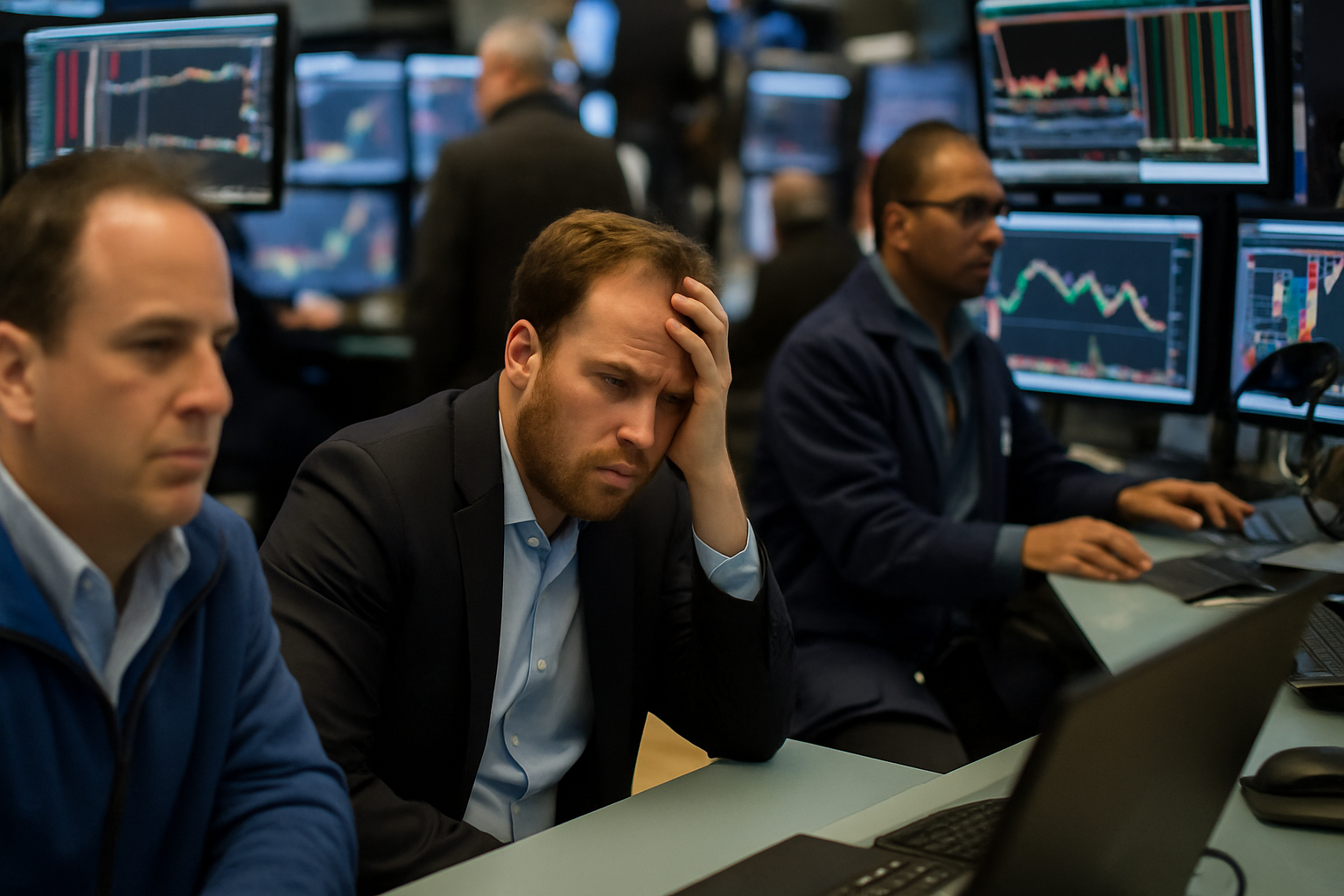
Jane Street lost roughly $15 billion in July. Not a fintech tourist. Not a bloke punting leveraged chip ETFs from his phone. One of the most sophisticated trading firms on Earth.
That is the number investors should sit with this weekend. Because if a firm built to price risk, trade chaos and make money from everyone else’s uncertainty can wear a hit that large, the AI trade is carrying more leverage and more hidden correlation than the cheer squad would like to admit.
The $15 billion warning hiding behind a $40 billion success
The headline is simple: Jane Street took an estimated $15 billion hit in July as the technology sell-off tore through its exposure to AI-focused hedge fund Situational Awareness and other tech positions. The loss was its first negative month of trading revenue since 2016.
That is a hell of a sentence. It is also worth keeping in proportion.
Jane Street has reportedly still generated more than $40 billion in net trading revenue so far this year, even after the July damage. That exceeds what it made across all of 2025. In other words, this is not a story about Jane Street going broke. The firm is still having an absurdly good year.
It is a story about what happens when the biggest, fastest and best-resourced players all end up leaning in the same direction.
The firm’s exposure included Situational Awareness, the AI-focused fund run by Leopold Aschenbrenner. That fund had grown to about $45 billion before its assets fell to roughly $10 billion during July’s turmoil, forcing the sale of much of its public-equity book. When a highly levered fund has to sell, it does not gently rebalance a spreadsheet. It sells what it can, when it can, into a market that can suddenly have fewer natural buyers than everybody assumed.
That is how a correction becomes a plumbing problem.
The casual observer sees Nvidia, memory chips, AI infrastructure and data-centre names move down together and calls it a bad week for tech. The professional version is uglier: concentrated positions fall, collateral values shrink, margin demands rise, funds sell liquid holdings, those sales push prices down further, and the next margin call arrives before lunch.
Nobody needs fraud or a recession for that to hurt. Leverage does the job nicely on its own.
Jane Street is not the problem — it is the x-ray
A lot of people will see the Jane Street loss and draw the lazy conclusion: quantitative trading is dangerous, markets are rigged, AI is a bubble, pack it up.
That is too neat. And usually, when a conclusion is too neat, it is wrong.
Jane Street’s business is built around making markets. It provides liquidity across exchange-traded funds, equities, options, bonds and other markets where somebody needs to buy when somebody else urgently needs to sell. That means it does not just skim pennies with a calculator. It can hold inventory and take risk while the market is moving hard.
That is useful. It is also why the occasional loss can be enormous.
The real issue is not that Jane Street took risk. The real issue is that the AI ecosystem has spent years rewarding anyone who took more of it.
The trade became beautifully simple in people’s heads: buy the chip companies, buy the networking companies, buy the power suppliers, buy the data-centre landlords, buy the private AI funds, then congratulate yourself for owning a diversified basket.
But owning six things that all depend on the same torrent of AI capital expenditure is not diversification. It is a group photo.
When the market starts questioning whether that spending will generate returns fast enough, every part of that group photo gets sold. The chip maker is not suddenly judged only on its own earnings. The data-centre operator is not judged only on occupancy. The fund manager is not judged only on stock-picking. Everyone gets repriced through the same question: how much of this is real demand, and how much is financed conviction?
That distinction matters more than the next quarterly beat.
The overlooked risk is forced selling, not expensive shares
Markets can live with expensive stocks longer than bears can stay solvent. I have learned that one the expensive way.
A company can trade on a mad valuation and still keep climbing if earnings, liquidity and momentum all cooperate. What markets hate is not merely a high price. Markets hate a seller who has no choice.
Forced selling is different from an investor changing their mind. A voluntary seller asks, “What price should I accept?” A forced seller asks, “What can I get out before the next call?”
That is why leverage deserves more attention than price-to-earnings ratios right now.
Situational Awareness was not merely making a bold call on AI. It was operating in an environment where concentrated AI positions, financing arrangements and sharp moves in underlying shares could turn a drawdown into a liquidation event. Jane Street’s July loss shows that the damage does not stay politely contained within the fund that gets the headlines.
It moves through counterparties, lenders, market makers, options desks and anyone who thought a position was safely hedged until the hedge correlated with the problem.
Again, this does not mean the financial system is about to fall over. It means the sensible operator stops mistaking liquidity for safety.
Liquidity is there when you do not need it. When you desperately need it, it gets expensive — or disappears.
AI still matters. The AI trade is another question entirely.
Here is the contrarian bit: this is not an argument against artificial intelligence.
AI will change businesses. It already is. The useful companies will reduce costs, improve decisions, speed up service and build products that were not commercially practical a few years ago. I am building Agave Finder, and I do not need to be talked into the value of better data, better discovery and better software. Technology that makes a customer’s decision easier is valuable.
But “AI changes everything” is not an investment thesis. It is a starting point.
The investment question is harsher: which company gets paid, how much cash does it produce, what is the return on the infrastructure required, and what happens if growth arrives two years later than expected?
The market has been extraordinarily willing to fund the physical layer of AI — chips, power, cooling, fibre, land, servers and data centres. Some of that will prove spectacularly valuable. Some of it will prove to be capacity built on forecasts that were treated as contracts.
Founders should pay attention because this money changes behaviour. When capital is cheap and the narrative is hot, competitors can afford to underprice, overhire and call it strategy. When funding gets selective, the businesses with actual customers and sensible unit economics suddenly look very attractive.
Investors should pay attention because a brilliant technology can be a terrible investment at the wrong entry price, especially if the whole cap table relies on the same bullish assumption.
And savers should pay attention because the AI trade has escaped the tech section. It sits inside broad index funds, superannuation portfolios, private credit, infrastructure funds and plenty of supposedly defensive allocations. You may not own a chip stock directly. You may still be riding the same horse.
Do not confuse a great firm with a safe trade
Jane Street will likely survive this loss comfortably. Its reported revenue this year tells you that. A $15 billion setback is massive, but scale matters, and Jane Street has plenty of it.
The more useful lesson is psychological.
People see sophisticated institutions and assume sophistication removes risk. It does not. Sophistication often means you can take larger risks, faster, with better models and more elegant language around them.
Risk management is not a magic forcefield. It is deciding which risks you are willing to own, how much pain you can absorb, and whether you can survive being wrong at precisely the worst time.
That last bit is the whole game.
A portfolio can be right in five years and still get wrecked in five weeks if it is too concentrated or too levered. A startup can have the right market thesis and still die because it ran out of cash before customers caught up. A property investor can be correct that rents will rise and still get crushed by refinancing.
Being right is lovely. Staying alive is more important.
What this means for you
Here is what I would do tomorrow morning.
First, list every investment you own that depends on the AI boom continuing at full speed. Do not just write “tech.” Include semiconductors, cloud providers, data-centre infrastructure, private funds, broad market ETFs with giant technology weightings and any company whose multiple depends on an AI story.
Then ask one uncomfortable question: if AI infrastructure spending slowed sharply for two quarters, how many of these positions would fall together?
If the answer is “most of them,” you do not have a portfolio. You have one macro bet with several logos.
Second, understand leverage properly. That means debt, margin, options, loans against shares, private-credit exposure and businesses that need constant fundraising. You do not need to avoid all of it. Just stop pretending it is invisible because it is not on your brokerage home screen.
Third, for founders: keep enough cash to survive a funding market that suddenly stops caring about your category. The best time to reduce burn is before the market forces you to do it with a gun to your head. Build revenue that exists without a venture-capital weather forecast.
Finally, do not sell everything because one smart firm had a horrible month. That is emotional investing wearing a sensible-looking jacket. Instead, make sure your upside does not rely on a single story being true, a single fund staying liquid, or a single market staying generous.
Jane Street’s $15 billion loss is not proof that AI is dead.
It is proof that price, leverage and crowded conviction still matter — even when the people losing the money are much smarter than you and me.