Japanese Yen at ¥153.51: The $109B Bet Against It
As much as $109 billion is short the yen. At ¥153.51 per US dollar, that trade is getting squeezed—and leverage never unwinds politely.
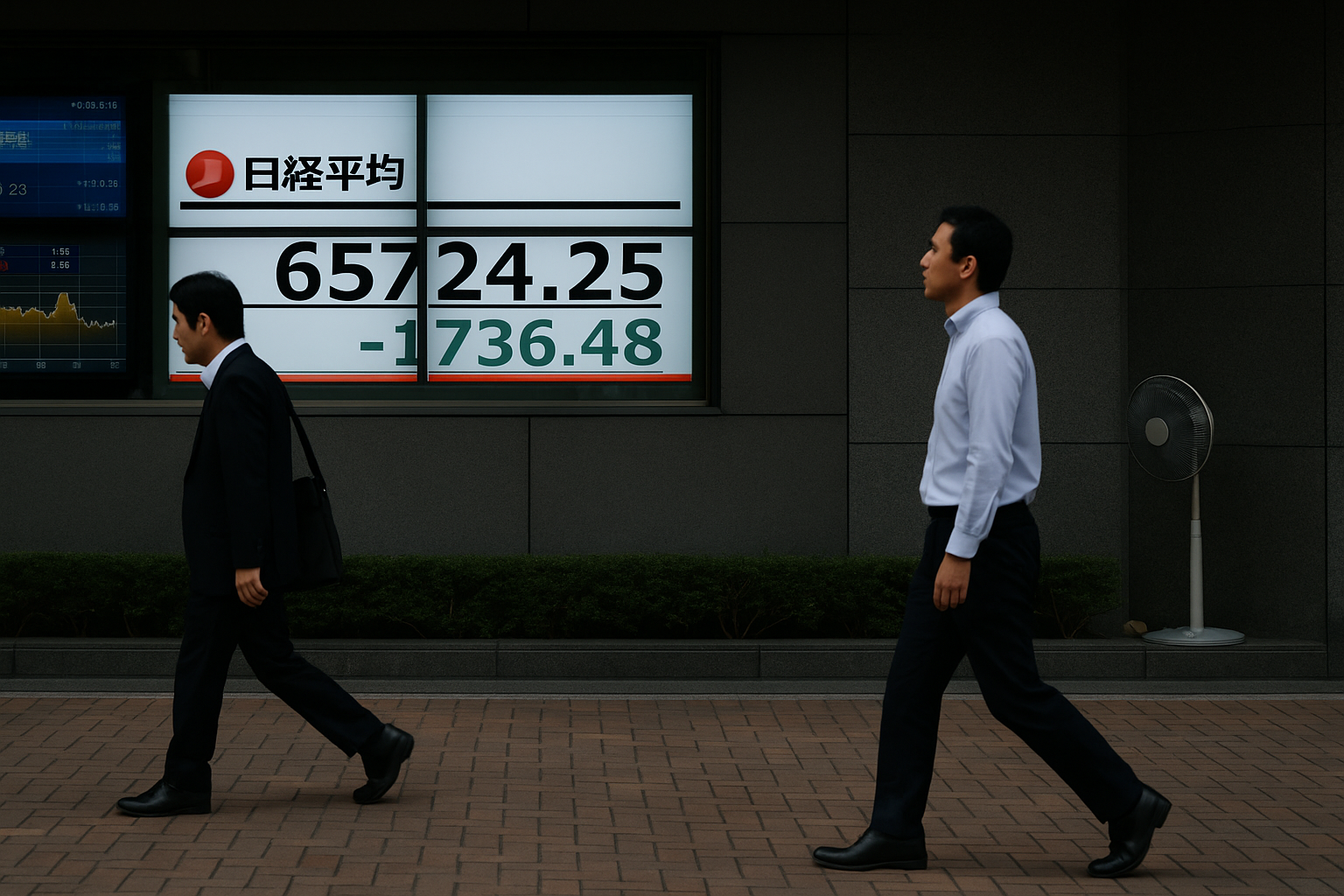
As much as $109 billion is short the yen, and that trade is getting squeezed in real time. At ¥153.51 per US dollar, it is no longer just a currency quote—it is a warning that one of the world’s favourite leveraged trades is getting less comfortable by the day.
The move that should make leveraged investors nervous
On September 8, the Japanese yen strengthened as far as ¥153.51 against the US dollar, its strongest level since February 18. That matters because it came after the currency had traded near ¥160.39 only a week earlier.
A move like that is not meant to happen quietly. It tells you traders are no longer simply debating whether Japan might raise rates. They are scrambling to reassess an assumption that has sat underneath global markets for years: borrow cheaply in yen, buy something higher-yielding elsewhere, and enjoy the spread.
That is the carry trade in plain English. It has funded bets on US bonds, global shares, private credit, emerging-market debt and plenty of things that looked brilliant while the yen was weak and Japanese rates barely existed.
Now the arithmetic is changing.
Markets are pricing a roughly 97% chance that the Bank of Japan lifts its policy rate by 25 basis points, from 1% to 1.25%, at its September 17-18 meeting. Traders are also considering the prospect of further moves after that. Meanwhile, Japanese investors have been selling foreign bonds at their fastest pace in four years, according to Reuters reporting.
The immediate market move may look like a foreign-exchange story. The bigger issue is a capital-flow story. When Japanese investors decide domestic bonds and domestic assets are worth owning again, money does not need permission from Wall Street to come home.
Japan has already shown it is prepared to spend real money
Tokyo is not merely talking tough about the currency. Japan’s foreign-exchange reserves fell by a record $79.6 billion in August, to about $1.208 trillion, after official yen-buying intervention. The decline was driven largely by a reduction in foreign securities—assets held mostly in US Treasuries.
That is real ammunition, not a press release.
Japan and the United States also confirmed coordinated intervention after the yen’s sharp slide earlier this year. Joint action between the two countries is rare; Reuters reported it was the first such coordinated intervention since 2011. On September 8, Japanese Finance Minister Satsuki Katayama said Tokyo and Washington remained aligned on currency policy and would keep communicating to ensure orderly moves.
Here is the part people get wrong: intervention alone is not a lasting investment thesis. Governments can push a currency around for a day, a week or sometimes longer. They cannot permanently defeat a yield gap, a broken fiscal position or market psychology.
But intervention paired with a credible change in monetary policy is another beast entirely.
The Bank of Japan has a chance to do what currency intervention cannot do on its own: change the incentive structure. If the expected return from keeping capital offshore falls while Japan’s domestic yields rise, repatriation becomes rational rather than patriotic.
That is when markets get properly twitchy.
The $109 billion question
JPMorgan estimates that yen short positions built since Prime Minister Sanae Takaichi took office last October total as much as ¥17 trillion, or about $109 billion. Its analysts said a full unwind could send dollar-yen toward a ¥142-¥146 range.
That is not a forecast. Nobody sensible should treat a bank’s scenario analysis as prophecy. But it is a useful stress test.
The point is not whether the yen lands exactly at ¥142, ¥146 or somewhere else. The point is that a crowded trade does not unwind politely. It does not wait for a committee meeting, a Bloomberg alert or your portfolio review next Thursday.
A carry trade contains two bets at once. You are betting that the asset you bought performs. And you are betting that the currency you borrowed does not rise too much against you. Investors tend to focus on the first bet because it is the exciting one. The second sits in the basement until it catches fire.
When the yen strengthens, borrowers need more dollars, euros or Australian dollars to repay the same yen debt. That squeezes returns even if the underlying asset has done nothing wrong. If the asset is also falling—as risk assets often do when leverage is being pulled out—the investor gets hit from both directions.
I have seen versions of this repeatedly in business and investing. The deal everyone calls sophisticated is often just a simple trade with a clever label and too much debt underneath it.
The overlooked issue is not hedge funds—it is Japanese institutions
Everyone loves blaming hedge funds because they make for a neat villain. But the more important question is what Japan’s big domestic pools of capital do next.
Japan’s Government Pension Investment Fund manages about $1.8 trillion. Reuters reported that global markets shuddered in July when Japan floated the possibility that the fund could shift more money into domestic assets. It is not hard to understand why.
For decades, Japan’s pension funds, insurers and banks had a powerful reason to search offshore: domestic yields were miserable. That pushed an enormous amount of Japanese savings toward foreign bonds and other overseas investments.
If that logic weakens, the consequences travel well beyond Tokyo.
This is not a prediction that Japan will dump US assets tomorrow morning. Large institutions move slowly, have mandates, hedge currency risk in different ways and do not turn their portfolios around because a few traders panic. But the direction matters. Marginal buyers set prices. If a reliable buyer becomes less reliable, the market has to find a replacement.
That creates a second-order problem for every asset priced on the assumption that capital will always be abundant, mobile and cheap.
The world has spent years adapting to American capital chasing returns abroad. It may now need to adapt to Japanese capital demanding a better reason to stay abroad.
Why this is bigger than a Japanese interest-rate decision
The lazy take is that a stronger yen is bad for Japanese exporters and therefore bad for Japanese shares. Maybe. But that is too shallow.
A stronger yen can reduce imported inflation in Japan. That gives households more purchasing power. It can also make the Bank of Japan’s job less impossible: a currency that is not constantly importing higher energy and food costs gives policymakers more room to normalise rates without looking like they are fighting the tide with a teaspoon.
For global markets, though, the uncomfortable issue is leverage.
When a funding currency rises, return targets become harder to hit. The first things sold are often not the worst assets. They are the most liquid assets—the things people can actually sell. That is why a currency move in Tokyo can show up as volatility in US technology shares, corporate credit or Australian growth stocks.
The contrarian view is that investors should not overreact to every yen rally. Fair enough. A stronger yen does not automatically produce a global crash. Japan has had false starts before, and central banks have an exceptional talent for complicating clean narratives.
But ignoring the move because “the carry trade has survived before” is equally daft. The price of complacency is usually paid after the trade stops being comfortable, not before.
What this means for you
If you are an investor, founder or operator, do three boring things tomorrow. Boring is underrated when money is on the line.
First, find every place you are relying on cheap money without admitting it. That includes margin loans, floating-rate debt, venture facilities, private-credit loans and any investment strategy that needs interest rates or currencies to remain friendly. If the answer is “I’m not sure,” you have work to do.
Second, run a simple downside case. Ask what happens if the yen reaches ¥145 per dollar, global yields stay elevated and your most liquid assets fall 15% at the same time. You do not need a 47-tab spreadsheet. You need to know whether you would be forced to sell something good at a stupid price.
Third, separate operational currency exposure from investment bravado. If your business buys from Japan, sells into Japan or pays suppliers in foreign currencies, hedge the risk you genuinely cannot afford. Do not hedge because you are trying to outsmart the market. Hedge because your job is to protect the operating business.
The yen is not the whole story in markets this week. But it is a useful reminder of how quickly an old certainty can become an expensive habit. Cheap funding is never permanent. Anyone selling you that idea is either confused or selling the funding.