Joe & The Juice’s $1.8B Deal Proves Boring Store Economics Still Win
A juice-and-sandwich chain just scored a $1.8 billion valuation. That is not a bet on smoothies; it is a bet that disciplined store economics still beat startup theatre.
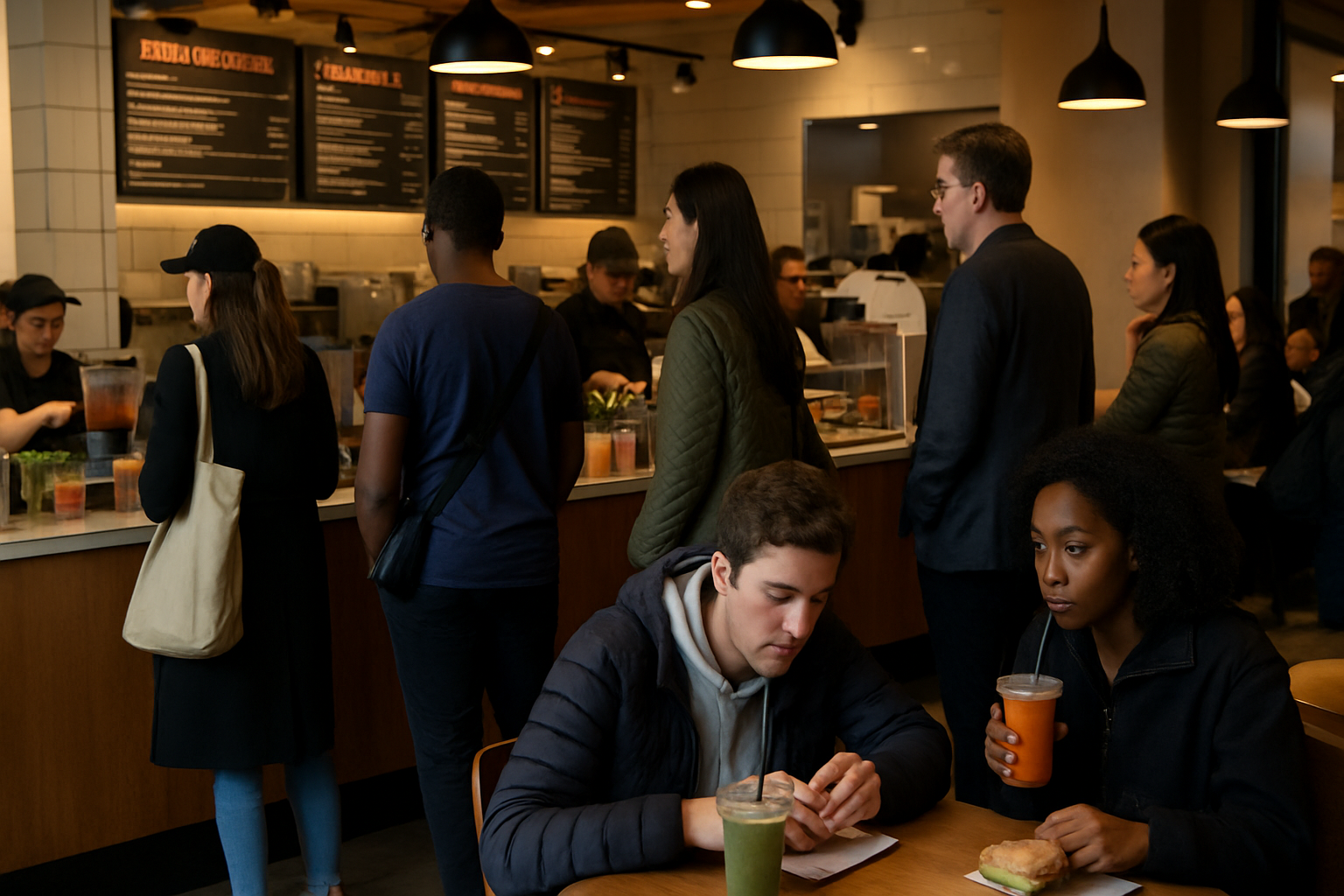
A juice-and-sandwich chain has just been valued at US$1.8 billion. If that annoys you, good — because it should force you to ask why plenty of “innovative” businesses with more software, more hype and more PowerPoint can’t make money like a well-run shop selling coffee before 9am.
Abu Dhabi’s Emirates International Investment Company (EIIC) has taken a strategic minority stake in JOE & THE JUICE, while General Atlantic remains the majority shareholder. The exact size of EIIC’s cheque was not disclosed, but the valuation was: US$1.8 billion. Bloomberg reported that EIIC is buying a portion of General Atlantic’s holding and subscribing for new shares.
That structure matters. This is not a founder cashing out and disappearing to Mykonos. It is an existing owner taking some money off the table, while new capital goes into the business to fund the next leg of growth.
JOE & THE JUICE reported roughly US$500 million in 2025 revenue, operates more than 480 stores across 23 markets, and opened its 100th franchise store last year. On the face of it, the deal values the company at about 3.6 times annual revenue.
That is a serious number for a business selling juice, coffee and sandwiches. But the real story is not whether the multiple is sexy. It is what investors are paying for: a repeatable machine that turns a brand, a location, a menu and a trained team into cash — again and again, in different countries.
This is a deal about rollout, not refreshment
Most people see a JOE & THE JUICE store and see an expensive sandwich and music that is a bit too loud. Investors see a formula.
The company was founded in Copenhagen in 2002. General Atlantic first invested in 2016, then became majority shareholder in November 2023. By that point, General Atlantic said revenue had grown more than fourfold since its original investment, store count had doubled to more than 360 locations, and digital channels represented 30% of sales.
That is the bit founders should study. Not the branding mood board. Not the Instagram posts. The machine underneath.
By the latest announcement, the chain had pushed past 480 stores. It is operating across North America, Europe, the Middle East and Asia. It has company-owned stores, digital ordering and franchising. In plain English: it has multiple ways to grow without relying on one landlord, one country or one customer behaviour.
EIIC says the investment will support faster international expansion and new openings. JOE & THE JUICE says it will use National Holding Group’s experience in consumer and hospitality businesses as it expands its franchised operations.
That last sentence is easy to skim past. Don’t.
A good investor does not merely supply money. Money is everywhere when the story is clean enough. The useful investor brings market access, local operating knowledge, relationships with franchisees, property networks, supply-chain help and patience. If all they bring is a wire transfer and a quarterly slide deck, you may as well borrow from the bank.
The numbers say this is more than a trendy chain
The company’s advisers said its 2025 revenue rose 16.5% to DKK3.3 billion, while EBIT rose 19% to DKK204.6 million. That is not a licence to declare victory. Food, labour, rent and ingredient costs have a nasty habit of humbling hospitality operators.
But revenue growth paired with faster EBIT growth is the right direction. It suggests the business has not simply bought sales with reckless openings and discounting. At least so far, scale is helping rather than crushing it.
That is why the US$1.8 billion valuation cannot be dismissed as another rich investor overpaying for a wellness fad. The valuation is attached to a business that has built a large international estate, expanded its franchise network and kept growing its underlying earnings.
Here is the comparison I would make if I were looking at this as an operator: JOE & THE JUICE is not being priced like a café chain. It is being priced like a global distribution system wearing the clothes of a café chain.
Each store is a point of distribution. The app and digital channels increase customer frequency. Franchisees bring capital and local execution. A recognisable brand lowers the cost of convincing a customer to try the product in a new city. And a relatively tight product range makes operations easier than running a 140-item restaurant menu designed by committee.
I’m building Agave Finder, so I spend plenty of time thinking about consumer discovery in drinks. The lesson here is not that every beverage brand needs 480 physical locations. It is that a consumer business becomes much more valuable when demand, distribution and data reinforce each other. A great product without reliable distribution is a hobby with packaging.
General Atlantic is selling some risk, not abandoning the upside
The overlooked detail in this transaction is the mix of secondary and primary capital.
Bloomberg reported that EIIC is acquiring some of General Atlantic’s stake as well as buying newly issued shares. That is grown-up dealmaking. General Atlantic gets to crystallise part of the gain from an investment it deepened in 2023, but it retains majority control. JOE & THE JUICE gets fresh capital. EIIC gets exposure to a proven global consumer platform without needing to buy the whole company.
Everyone gets something useful.
This is far smarter than the all-or-nothing nonsense founders often romanticise. They say they want investors “fully aligned,” then structure a cap table where nobody can take any liquidity until some distant IPO fantasy. That is not alignment. That is forcing every shareholder to hold their breath at the same time.
Partial liquidity can make owners better partners. It reduces desperation. It lets an investor keep backing the business without treating every decision as a last chance to make the fund maths work.
General Atlantic also has form here. When it became majority owner in 2023, it said part of its investment would reduce debt and support an unlevered store rollout. That is an important phrase. Hospitality businesses can look fantastic right until debt, rent commitments and a softer consumer all arrive at the same party.
Growth funded by operating cash flow, sensible equity and disciplined franchising is not as exciting as “we opened 200 stores on borrowed money.” It is, however, much less likely to end with creditors owning the coffee machine.
The contrarian take: this valuation is also a warning
Now for the part the celebratory press releases will not tell you.
A US$1.8 billion valuation raises the bar brutally. From here, every new store has to justify its capital. Every franchise partner has to protect the brand. Every expansion market has to work without turning the business into a generic international chain with inconsistent service and a bloated cost base.
The danger is not that JOE & THE JUICE grows too slowly. The danger is that it mistakes availability of capital for proof that every location deserves to exist.
International consumer expansion has killed plenty of good businesses. A concept that works in Copenhagen, London or New York can get mauled by different rent structures, labour rules, delivery economics, consumer tastes and local competitors elsewhere. The store format has to travel. The culture has to travel. The unit economics have to travel. One out of three is not enough.
The other risk is multiple compression. A 3.6-times-revenue valuation assumes growth, margins and rollout quality remain credible. If growth slows or store-level returns disappoint, markets get very cold, very quickly. No one cares how much venture capital or private equity you raised when the new stores fail to pay back.
That is why I would not call this a victory lap. It is a scorecard showing that the business has earned the right to attempt the next stage.
What this means for you
If you are a founder, stop obsessing over valuation before you can explain your unit economics without squinting at a spreadsheet.
Know four numbers cold: acquisition cost, gross margin, contribution margin after local operating costs, and payback period on the capital needed to open or acquire a customer. If you cannot say them plainly, you are not ready to scale. You are ready to spend money.
If you run physical locations, build the playbook before you build the empire. One profitable site is encouraging. Ten profitable sites run by people other than you is a system. JOE & THE JUICE’s value comes from evidence that its system can cross borders.
If you are considering outside capital, be precise about what the investor contributes beyond cash. Ask: can they help us enter markets, recruit operators, find franchise partners, improve procurement or avoid expensive mistakes? If the answer is no, negotiate hard on price because money alone is a commodity.
And if you are an investor, do not sneer at “boring” businesses. Boring is often where the money is. A business with real customers, repeat purchases, operating discipline and a credible path to more distribution can be worth far more than a clever app with a dramatic launch video and no idea how it will make a dollar.
JOE & THE JUICE did not get to US$1.8 billion because juice is magical. It got there because somebody built a machine that customers use, operators can repeat and investors can fund without holding a rosary.
That is the standard. Build something that works in the real world — then earn the right to make it bigger.