Jon Rahm Gives Up $100M+ to Escape LIV Golf—and That’s the Real Warning
Jon Rahm is reportedly walking away from more than $100 million. That is not a noble sacrifice; it is what happens when a giant contract is attached to a business running out of cash.
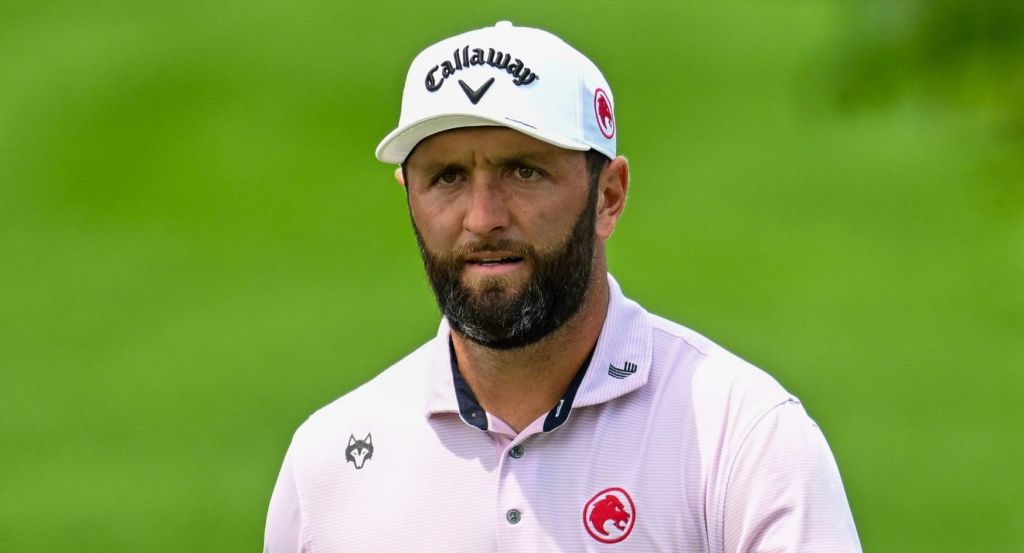
Jon Rahm is reportedly giving up more than $100 million to get out of LIV Golf. If you think that makes him generous, you are reading the wrong lesson.
The lesson is brutal: a contract is only worth what the business on the other side can actually pay. Everything else is glossy paper, loud headlines and blokes congratulating themselves at launch parties.
Rahm has agreed to release LIV from all monetary and economic claims as part of a separation agreement filed in the league’s Chapter 11 case. That includes unpaid fees, bonuses, prize money, annual payments and commitment fees. The arrangement is intended to be a “complete economic walk-away,” with final court approval set for November 5. ([frontofficesports.com](https://frontofficesports.com/article/jon-rahms-liv-settlement-forfeits-all-remaining-payments/))
That is a staggering outcome for one of golf’s biggest names. But it is an even bigger warning for founders, investors, athletes and anyone who confuses a big valuation with a strong business.
Jon Rahm’s $100M+ walk-away is not a victory lap
Let’s call it plainly. Rahm is not turning down a suitcase full of cash sitting on a table.
He is surrendering claims against a company that filed for Chapter 11 bankruptcy on September 8, 2026, after Saudi Arabia’s Public Investment Fund stopped funding it beyond the 2026 season. LIV’s filing estimated liabilities between $500 million and $1 billion, against assets of $100 million to $500 million. ([frontofficesports.com](https://frontofficesports.com/article/liv-files-bankruptcy-fight-survival-continues/))
Rahm was LIV’s largest unsecured creditor, owed $7.47 million in past-due amounts according to the filing. Reporting has put his remaining future guarantees at more than $100 million, while early reports around his 2023 signing suggested a total deal that could have been worth as much as $300 million. The exact original contract value was never publicly disclosed, so the honest figure is this: nine figures were reportedly at stake, and Rahm has chosen certainty and freedom over chasing them through a bankruptcy court. ([frontofficesports.com](https://frontofficesports.com/article/jon-rahms-liv-settlement-forfeits-all-remaining-payments/))
That decision looks less romantic when you understand the context.
Rahm already made more than $106 million in on-course prize money and bonuses during three seasons with LIV, according to Front Office Sports. He is hardly heading for Centrelink. But rich people do not stay rich by becoming emotionally attached to numbers that may never arrive. They work out what is real, cut the dead weight and move on. ([frontofficesports.com](https://frontofficesports.com/article/jon-rahms-liv-settlement-forfeits-all-remaining-payments/))
The real asset Rahm recovered is not cash. It is optionality.
His deal returns his name, image and likeness rights, along with ownership of Legion XIII intellectual property, although he gives up his reported 25% ownership stake in the LIV team. That lets him negotiate his next move without being tied to a league attempting to reinvent itself in bankruptcy. ([frontofficesports.com](https://frontofficesports.com/article/jon-rahms-liv-settlement-forfeits-all-remaining-payments/))
LIV Golf’s $300M rescue tells you what changed
LIV is not simply shutting the doors and turning off the lights. It is trying to become LIV 2.0.
BC Partners Credit is positioned to provide $300 million in financing if LIV emerges from bankruptcy, and an amended restructuring agreement included an initial $4 million loan to support the Chapter 11 process. The Saudi PIF also provided $49.6 million in debtor-in-possession financing to keep the operation running during restructuring. ([frontofficesports.com](https://frontofficesports.com/article/liv-golf-white-knight-bankruptcy/))
But here is the bit everyone should sit with: $300 million sounds enormous until you put it next to the old model.
LIV was built on extraordinarily expensive player guarantees. Rahm was owed more than $100 million. Bryson DeChambeau was listed as owed $5.77 million in overdue claims, Dustin Johnson $5.49 million, Cam Smith $4.83 million and Tyrrell Hatton $3.37 million. Those are only disclosed past-due claims, not the full future obligations that sat inside the league’s old player contracts. ([frontofficesports.com](https://frontofficesports.com/article/liv-files-bankruptcy-fight-survival-continues/))
You cannot run a proper business by pretending a sponsor, sovereign fund or private-equity firm will forever cover the gap between your revenue and your ambition.
Scott O’Neil, LIV’s CEO, described the new chapter as moving from a Saudi-style business plan to a “business” business plan. Fair enough. That is basically an admission that the old plan was not built to survive on commercial fundamentals. ([frontofficesports.com](https://frontofficesports.com/article/liv-golf-white-knight-bankruptcy/))
There is no shame in spending heavily to establish a category. Amazon did it. Uber did it. Plenty of serious businesses did it.
But eventually somebody needs to answer the boring adult question: where does the money come from when the subsidiser gets bored?
In sport, too many people avoid that question because the celebrity, the stadiums and the television production make everything look permanent. It is not permanent. A shiny broadcast set is not a balance sheet.
The players are now being asked to own the risk
LIV’s proposed post-bankruptcy model is built around players becoming majority equity holders. That sounds lovely in a slide deck. “You are not just talent—you are owners.” Very inspiring. Put it on a hat.
But equity only matters if there is a credible path to value creation.
BC Partners Credit’s Ted Goldthorpe has said he can see a route to LIV teams being valued at more than $100 million each in short order. LIV has said it wants to build 13 billion-dollar franchises. Those are aspirations, not completed transactions. LIV has never sold team stakes, which is the market test that would tell us whether outside buyers agree. ([frontofficesports.com](https://frontofficesports.com/article/liv-golf-white-knight-bankruptcy/))
That distinction matters enormously.
A founder can tell me my company is worth $1 billion. Terrific. Find me a buyer, at that price, with money in escrow. Until then, it is a conversation—not wealth.
Rahm’s departure says he has assessed the proposed deal and decided it was unacceptable. His lawyer said on October 7 that he would not participate in LIV 2.0. Rahm has now traded uncertain claims and team equity for control of his brand and the freedom to pursue the next chapter. ([frontofficesports.com](https://frontofficesports.com/article/jon-rahm-planning-to-leave-liv-post-bankruptcy-lawyer-says/))
That is not cowardice. It is capital allocation.
The overlooked angle: Jon Rahm may be buying back his sporting legacy
Most coverage will frame this as a financial story because the numbers are obscene. Fair enough. More than $100 million gets attention.
But the sharper angle is that Rahm may be buying back access to the parts of professional golf that compound over decades.
He remains eligible for the DP World Tour in 2027, while a PGA Tour return would require negotiation and is not automatic. Front Office Sports reported that PGA Tour CEO Brian Rolapp said there were no current plans to bring back the Returning Member Program that helped Brooks Koepka rejoin quickly in January. ([frontofficesports.com](https://frontofficesports.com/article/jon-rahms-liv-settlement-forfeits-all-remaining-payments/))
For a player of Rahm’s calibre, legacy is not fluff. Major championships, Ryder Cups, sponsor relationships, global relevance and the ability to compete in the events fans actually organise their sporting memories around—those are commercial assets too.
A 31-year-old athlete can make a lot of money. A 31-year-old athlete cannot casually replace prime competitive years.
That is the price founders also miss when they stay too long in a bad partnership. You do not merely lose cash. You lose time, attention, reputation and momentum. Money can come back. Your best years often do not.
What this means for you
If you run a business, invest in one, or negotiate your own contract, take Rahm’s mess and use it tomorrow.
First: separate headline value from collectible value. A $10 million contract with a shaky counterparty can be worth less than a $4 million contract paid reliably by a profitable business. Ask who pays, from what cash flow, and what sits ahead of you if things go wrong.
Second: price optionality properly. Rahm gave up a reported nine-figure claim, but regained control over his name, image, future negotiations and sporting direction. Never evaluate a deal only by what you receive on day one. Evaluate what it stops you doing for the next three years.
Third: do not accept equity as a consolation prize without doing the ugly work. What is the cap table? Who controls the board? Is there revenue? Who has bought comparable equity? What are the liquidation preferences? “You will own part of it” is not an answer. It is the start of the questions.
Finally: leave before the courtroom teaches you the lesson. If the fundamentals have changed, admit it early. Cut the deal, preserve your energy and redeploy it somewhere with a real future.
Rahm’s reported $100 million sacrifice is not the story of a bloke walking away from money. It is the story of a very expensive promise discovering it was never cash in the bank.