Kevin Warsh: 85% Odds of a Rate Hike as Oil Hits $110
Traders put an 85% chance on Kevin Warsh raising rates next week. Wall Street calls a 0.9% bounce good news. That is not confidence. It is a plea for the Fed to clean up the mess.
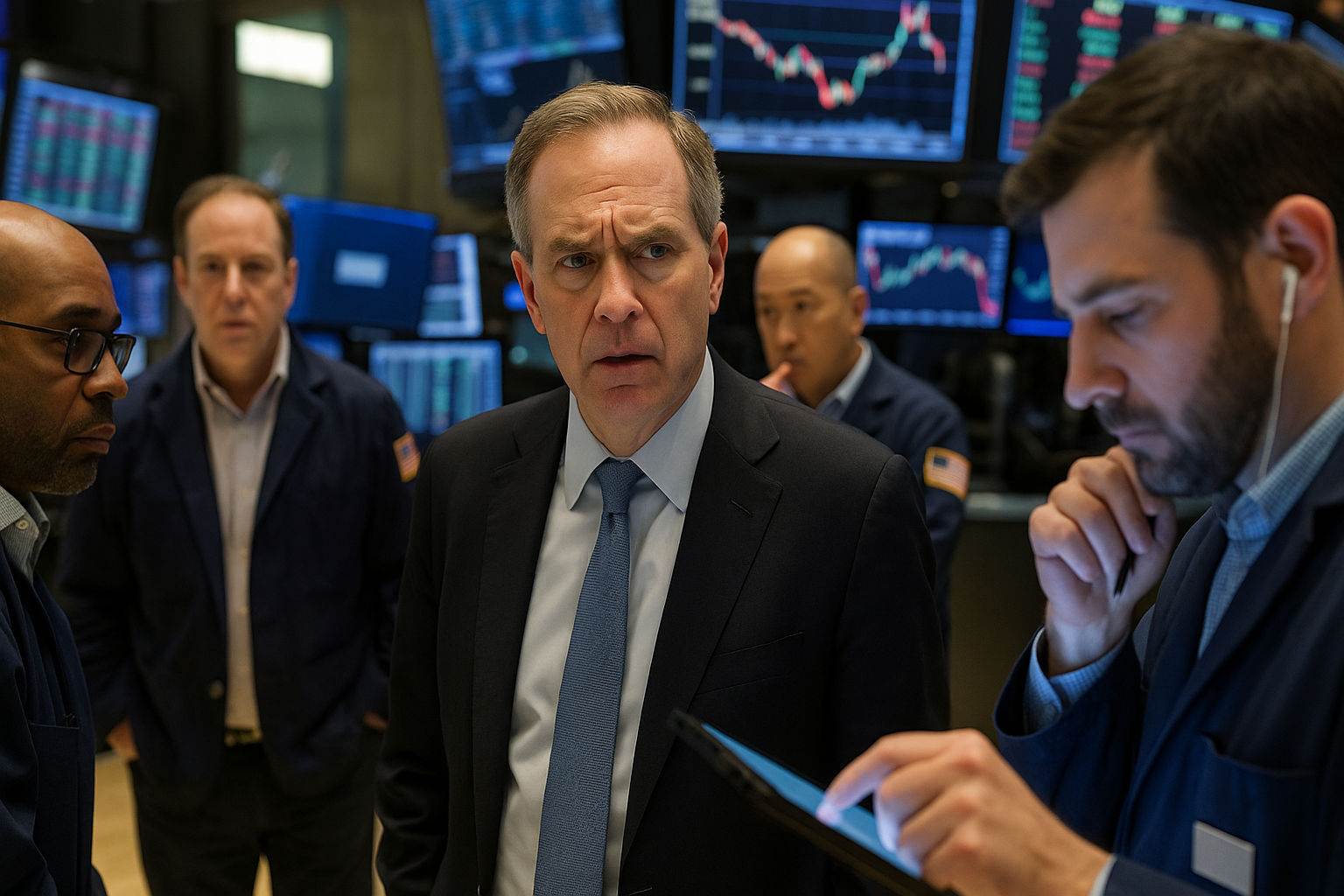
Traders put an 85% chance on Kevin Warsh raising interest rates next week. Wall Street has decided that a 0.9% bounce is good news. That is not optimism. That is a market desperately hoping an adult walks into the room.
On Friday, September 11, the S&P 500 snapped a four-day losing streak, rising 0.9%. The Dow added roughly 509 points and the Nasdaq rose 1%. Investors treated a 2.8% fall in Brent crude — to $104.61 a barrel after it briefly neared $110 overnight — as a reason to breathe again. Fair enough. But nobody should confuse one less-painful oil price with a solved inflation problem. ([apnews.com](https://apnews.com/article/8c3272812f5e9b9238c6a3301921c17a))
The market is pricing a hike because inflation is not behaving
August’s Consumer Price Index rose 0.4% from July, after rising only 0.1% in July. Annual inflation held at 3.4%. The monthly core CPI reading, excluding food and energy, increased 0.3%, a reminder that this is not merely a temporary petrol-station problem. Gasoline mattered, certainly, but the underlying price pressure did not disappear when you stripped energy out of the calculation. ([lse.co.uk](https://www.lse.co.uk/news/global-markets-wall-street-jumps-oil-lower-ahead-of-fed-vote-next-week-7enkgtmlosh9eyu.html))
That matters because the Federal Reserve’s job is not to make traders comfortable. Its job is to stop inflation becoming embedded in the way households, workers and businesses make decisions.
The Fed’s target rate has sat at 3.50% to 3.75% throughout 2026. But after Friday’s data, markets moved from roughly a 67% probability of a quarter-point hike to about 85% for the September 15-16 meeting. The two-year Treasury yield, which is heavily driven by expectations of near-term Fed policy, rose to 4.62% from 4.56%. ([lse.co.uk](https://www.lse.co.uk/news/global-markets-wall-street-jumps-oil-lower-ahead-of-fed-vote-next-week-7enkgtmlosh9eyu.html))
That is the proper story. Not whether a handful of stocks bounced on Friday. The proper story is that the cost of money is rising again because inflation has stayed above the Fed’s 2% target for far too long, and Kevin Warsh now has to prove whether he is willing to act.
President Donald Trump has pushed for lower rates. A hike would put Warsh in direct political conflict with the White House. That is exactly why this decision has become bigger than 25 basis points. Markets do not just want to know where rates land on Wednesday, September 16. They want to know whether the Fed is still independent enough to do an unpopular job. ([apnews.com](https://apnews.com/article/8c3272812f5e9b9238c6a3301921c17a))
Oil is the spark, but debt is the fuel
The immediate trigger is obvious. The Iran conflict has disrupted oil flows through the Strait of Hormuz, while wider regional tension has added another layer of risk to shipping. Brent hit $109.97 a barrel on Friday before retreating. It was still set for a weekly gain of more than 8%. ([lse.co.uk](https://www.lse.co.uk/news/global-markets-wall-street-jumps-oil-lower-ahead-of-fed-vote-next-week-7enkgtmlosh9eyu.html))
Americans do not need a macroeconomics degree to understand what this means. U.S. benchmark crude jumped above $100 a barrel. Average gasoline reached $4.30 a gallon. Diesel crossed $6 a gallon for the first time on record. Diesel is not some niche trader’s concern; it is the cost of moving food, materials and finished goods through the economy. When diesel climbs, somebody pays. Usually the consumer. ([axios.com](https://www.axios.com/2026/09/11/bonds-oil-diesel-costs))
But here is the part too many people are missing: oil did not create America’s higher-cost problem. It exposed it.
The 10-year Treasury yield rose above 4.96% on Thursday and briefly touched 4.9915% after the inflation release. On Friday it ended near 4.97%. The 30-year Treasury yield was still 5.36%. These are not decorative numbers on a Bloomberg screen. They are the base price from which mortgages, corporate loans, commercial property debt, private-credit deals and plenty of government borrowing get priced. ([apnews.com](https://apnews.com/article/8c3272812f5e9b9238c6a3301921c17a))
The 30-year fixed mortgage rate moved above 7% on Thursday for the first time since May 2025. That will squeeze homebuyers, trap more existing owners in cheaper old mortgages and put another dent in transactions, construction and the businesses that depend on both. ([axios.com](https://www.axios.com/2026/09/11/bonds-oil-diesel-costs))
If you run a business, do not wait for the economics section to tell you this is happening. Look at your next refinancing date. Look at every floating-rate facility. Look at the return you assumed when debt was cheap. Then do the maths again without wishful thinking.
The AI boom has made the market more fragile, not less
The S&P 500 is still up about 11% in 2026, driven by strong earnings and massive spending on AI infrastructure. Even after the recent pullback, it sits only 2.7% below its mid-August record. That is a bloody good run. It is also why investors should be careful about assuming the market has already priced in all the bad news. ([kitco.com](https://www.kitco.com/news/off-the-wire/2026-09-11/wall-st-week-ahead-investors-brace-possible-rate-hike-uncertain-fed))
A huge amount of the market’s enthusiasm rests on companies and projects promising cash flows well into the future: data centres, chips, cloud capacity, software platforms and power infrastructure. Higher rates hit those valuations harder because future profits are worth less when the discount rate rises.
There is a second hit as well. Building the AI stack requires an extraordinary amount of capital. Companies are borrowing. Private-credit funds are lending. Utilities are funding power projects. Data-centre developers are funding steel, concrete, land and equipment before the revenue arrives. When Treasury yields rise, all that financing gets more expensive.
This does not mean AI is a fraud. That sort of lazy verdict belongs on social media. It means a great technology can still produce terrible investments when buyers ignore price and the cost of capital.
The overlooked risk is not that Nvidia, Oracle or the broader AI trade falls 5% on a rough day. The real risk is that the market has started treating capital expenditure as proof of success rather than a bill that eventually needs a return. Rising yields force that distinction back into the open. ([axios.com](https://www.axios.com/2026/09/11/bonds-oil-diesel-costs))
The contrarian take: a rate hike may be the bullish outcome
Most people hear “rate hike” and immediately reach for the panic button. I think that is too simple.
A quarter-point increase could hurt stocks in the short term, particularly smaller companies, highly leveraged businesses and expensive growth shares. Reuters notes that smaller companies tend to be more dependent on debt financing, which is precisely why they deserve extra scrutiny in this environment. ([kitco.com](https://www.kitco.com/news/off-the-wire/2026-09-11/wall-st-week-ahead-investors-brace-possible-rate-hike-uncertain-fed))
But a timid Fed carries its own cost. If inflation expectations become unanchored, bondholders demand higher yields anyway. Consumers accelerate purchases because they expect prices to keep rising. Workers push harder for compensation. Businesses raise prices because everyone else is doing it. Then the eventual cure is much nastier.
Friday’s consumer-sentiment survey delivered an ugly warning: expected inflation over the next year jumped to 4.6%, from 4.0% in August. That is the number I would watch more closely than one cheerful trading session. Inflation becomes difficult when it moves from the petrol bowser into people’s assumptions. ([apnews.com](https://apnews.com/article/8c3272812f5e9b9238c6a3301921c17a))
The bond market may be telling us the same thing. On Friday, the two-year yield rose sharply as hike expectations jumped, while the 10-year and 30-year yields were comparatively steadier. My read: investors may accept near-term pain if it improves the odds that the Fed regains control over long-term inflation. That is an inference, not a certainty — but it is more constructive than the usual “Fed hikes, market dies” cartoon. ([apnews.com](https://apnews.com/article/8c3272812f5e9b9238c6a3301921c17a))
What this means for you
First, treat 7% mortgage rates and roughly 5% long Treasury yields as the operating environment, not a brief storm you can ignore. If you are buying property, expanding a business or refinancing debt, stress-test the deal at another 1 to 2 percentage points above today’s rate. If it only works in the sunny forecast, it does not work.
Second, separate fixed debt from floating debt immediately. Know the dollar cost of every 25-basis-point rise. Do not accept “we’ll manage it” from your finance team. Ask for a one-page schedule: balance, rate, maturity, security, covenant and monthly cash impact under higher rates. You cannot manage what you have not bothered to count.
Third, if you run an operating business, inspect your exposure to freight, fuel, packaging and supplier surcharges. Diesel at more than $6 a gallon does not remain contained in transport invoices. Lock in supply where it makes commercial sense, reprice where your contracts allow it, and stop pretending margin pressure is temporary just because it is inconvenient.
Finally, investors should stop rewarding stories that require free money forever. Own quality businesses with real cash flow, manageable debt and pricing power. Be deeply suspicious of any investment case that begins with a giant future market and gets vague when you ask who pays, when they pay and what the debt costs.
The market’s Friday bounce was not a verdict that everything is fine. It was a sigh of relief that Brent crude fell below $105. The bigger test arrives on Wednesday. Warsh can either show the Fed is prepared to defend its credibility, or confirm that the higher-cost world now runs the place.