KKR’s $9B Bid for UGI: Why Boring Energy Beats AI Hype
KKR’s reported $9 billion bid for UGI is a warning to AI-chasing investors: the money may be in the pipes, tanks and regulators nobody wants to talk about.
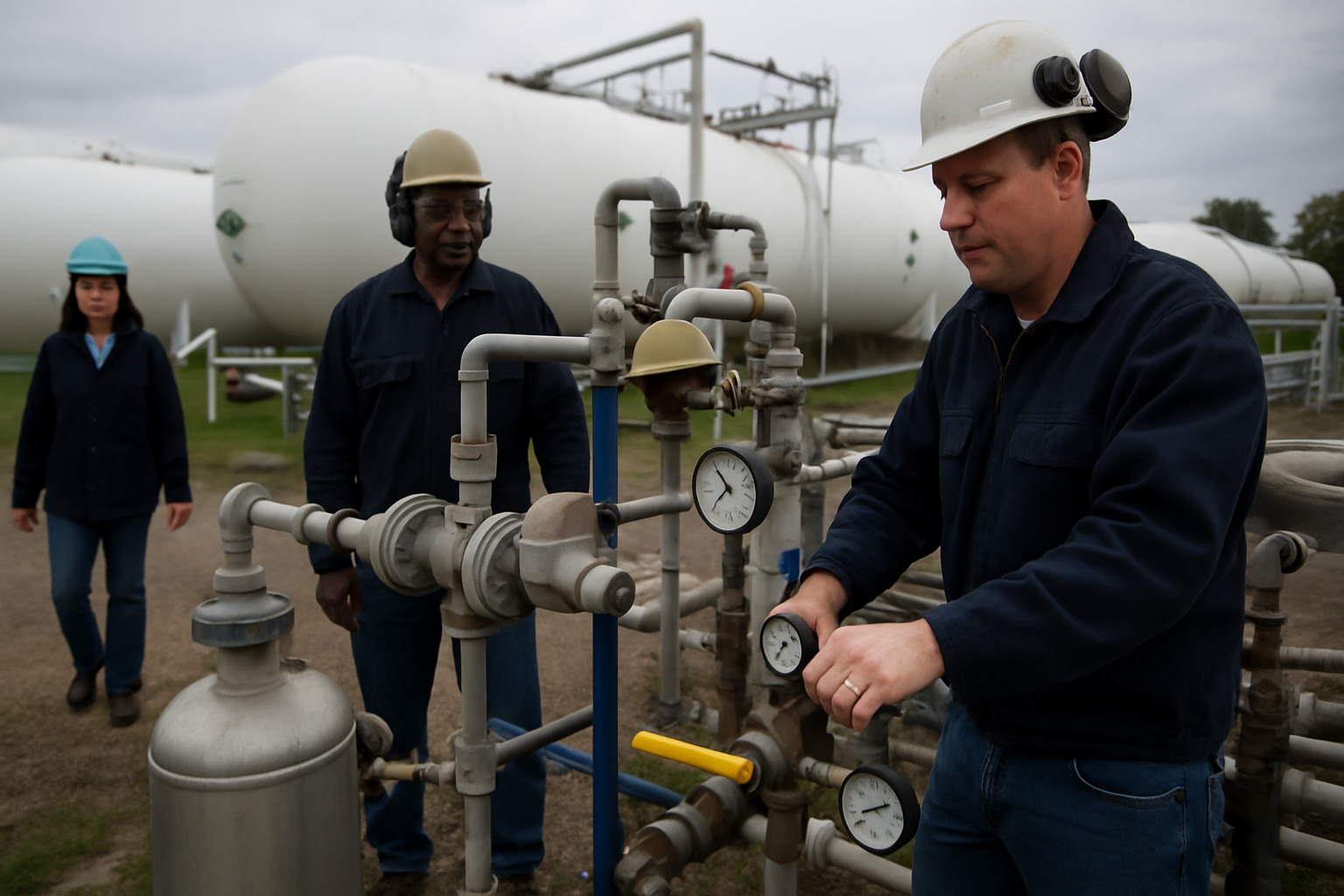
AI investors are staring at chip charts while KKR is reportedly putting $9 billion on a gas bill.
KKR’s reported offer for UGI is not a sexy bet on artificial intelligence. It is a bet that, when the AI crowd needs reliable power at scale, somebody still has to own the pipes, storage, delivery trucks and customer relationships that keep energy moving.
That is the bit most investors miss while staring at the latest chip chart.
On August 18, the Wall Street Journal reported that KKR had offered $42.50 a share for Pennsylvania-based UGI, valuing the natural-gas, electricity and propane distributor at roughly $9 billion. Reuters calculated that represented a 21.1% premium to UGI’s August 17 closing price of $35.09. UGI shares jumped more than 11% after the report. Neither UGI nor KKR confirmed the proposal when Reuters sought comment, so let’s be adults about it: this is a reported approach, not a signed transaction.
But the signal is loud anyway.
KKR is buying the stuff people cannot switch off
UGI is not one clean, simple asset. That is precisely why it is interesting.
The group owns regulated gas and electric utilities in Pennsylvania, Maryland and West Virginia; energy-marketing and midstream operations; a European LPG business; and AmeriGas, its US propane arm. AmeriGas serves more than 1 million customers across all 50 states from roughly 1,390 distribution locations. UGI Utilities says it serves about 760,000 customers across 46 Pennsylvania counties and one county in Maryland.
In plain English: UGI owns a collection of essential, often unglamorous energy businesses that make money because customers need heat, power and fuel whether the market is cheerful or having a nervous breakdown.
That makes it catnip for private equity when the pricing is right.
The public market tends to punish conglomerates. Investors see several divisions, regulated operations, commodity exposure, debt, weather risk and a business that will never make a viral product demo. They decide it is too hard and move along.
A buyer like KKR can see the same mess differently. It can see separate assets with different financing options, different strategic buyers and different cash-flow profiles. One owner’s “boring conglomerate discount” can be another owner’s shopping list.
That is the first lesson here: if a business is hard to explain in a 30-second earnings-call soundbite, it may be undervalued. Or it may be a dog. Your job is to work out which one before the buyout firm does.
This is not really a gas trade. It is a reliability trade.
The lazy version of this story is that KKR is bullish on gas. Maybe. But that is too shallow.
The sharper read is that private capital is chasing reliability. Data centres, factories, electrification and grid strain have made dependable energy infrastructure more valuable. Reuters noted that rising demand from AI data centres and other large users has refocused investors on reliable sources such as natural gas.
There is an uncomfortable truth in that. The economy can talk about an all-electric future until it is blue in the face, but businesses still need power when the wind is not blowing, the grid is congested and the customer expects the lights on.
UGI sits in that unromantic middle ground. It has regulated utility earnings, which are generally more stable but tightly supervised. It has propane, which is seasonal and operationally intensive. It has midstream and energy-marketing exposure, which can produce opportunity but also brings market and commodity risk. It also has European LPG operations, which add geographic reach and complexity.
That mix is not built for a glossy investor deck. It is built for surviving reality.
And reality is where serious money gets made.
The $42.50 question: is the premium enough?
A 21.1% premium sounds generous because percentage premiums are designed to sound generous. But a premium is not a verdict. It is a negotiating position.
The only question that matters to a UGI shareholder is whether $42.50 properly compensates them for handing over the company’s future cash flows, asset value and strategic optionality.
That depends on what sits beneath the surface.
If UGI is merely a slow-growth utility-and-propane bundle with significant capital needs, then a cash offer at a healthy premium may be attractive. Cash today has a nice habit of not requiring management to execute flawlessly for five years.
But if the market has been underpricing UGI’s regulated assets, AmeriGas network and the value of dependable energy infrastructure in a capacity-constrained world, then $42.50 may look more like an opening bid than a finishing line.
The market’s first reaction tells you something. UGI did not trade straight to $42.50 on the report. That gap is the market saying, “Interesting, but show me the paperwork.” It reflects the obvious risks: no public confirmation, no announced financing, no disclosed board support and no deal timetable.
For investors, that distinction matters. Buying a stock because it is “a takeover target” is how people turn a good rumour into a bad investment. The spread between a reported offer and the implied price is not free money. It is the price of uncertainty.
The overlooked angle: regulators, not bankers, may decide the economics
Everyone will focus on whether KKR can afford $9 billion. KKR can arrange capital. That is not the hard part.
The hard part is that regulated utilities are not ordinary businesses. Their returns, rates, capital spending and customer obligations live under the gaze of public-utility commissions. UGI Gas filed for a $99.4 million annual base-rate increase in Pennsylvania in January 2026, while UGI Electric sought a $17.283 million increase in March.
Those filings are a useful reminder: this is not a business where an owner can simply wake up, slash costs and jack up prices because a spreadsheet says so.
A financial sponsor buying UGI would need to convince regulators that ownership changes will not compromise service, affordability, safety or investment in the network. That means deal certainty is not just about debt markets. It is about public trust.
This is where a lot of investors get private equity wrong. They assume the whole play is leverage and cost-cutting. Sometimes it is. But in regulated infrastructure, destroying operational credibility is a quick way to turn a clever acquisition into a political nightmare.
The better operators treat regulation as part of the operating model, not a nuisance bolted on after the investment committee meeting.
KKR may be seeing a breakup opportunity — but that is not guaranteed
Here is the contrarian view: UGI’s value may not come from splitting it up at all.
The temptation in a deal like this is to imagine AmeriGas sold to one buyer, utilities held for yield, European LPG sold to another and midstream packaged separately. It is a familiar private-equity movie. The audience knows the plot.
But integration has value too.
A broad energy platform can share procurement scale, logistics knowledge, customer-service systems, financing capacity and management talent. AmeriGas is not just a logo on a propane tank; it is a national physical-distribution network with local delivery economics. Regulated utilities are not just slow-growth assets; they are long-lived customer relationships and infrastructure embedded in communities.
Breaking up a company can unlock value. It can also create stranded costs, remove useful diversification and make every remaining business more exposed to its own cycle.
The smart question is not, “What can KKR sell?” It is, “Which combination of assets produces the highest durable cash flow after tax, debt, regulation and reinvestment?”
That is a much less exciting question. It is also the one that matters.
What this means for you
You do not need to buy UGI, and you certainly should not chase a reported bid because the chart jumped. That is punting, not investing.
But you should steal the thinking.
First, look for businesses that make the fashionable story possible. AI needs electricity, cooling, fibre, land, transformers, fuel, construction, security and maintenance. Every boom has its shovel sellers, but the best ones are often not obvious until the crowd is already drunk on the headline act.
Second, learn to separate complexity from risk. A complicated business is not automatically dangerous. Sometimes complexity is why public markets misprice it. Read the segments. Work out which assets produce stable cash, which consume capital and which management could sell without crippling the whole machine.
Third, treat takeover speculation as a prompt for analysis, not a reason to press buy. Ask what a buyer sees that the public market missed. Then ask whether you can still own that thesis if no buyer ever appears.
Finally, as an operator, stop apologising for being boring. If your business solves a recurring, expensive, mission-critical problem, you do not need a circus act around it. Build reliability. Build distribution. Build trust with customers and regulators. Make the cash flow durable.
The market loves a magic trick. Private equity often prefers the bloke who owns the power cable behind the stage.
That bloke is usually the one getting paid.